NATO Secretary General Mark Rutte Affirms Unwavering US Commitment Amidst Strategic Autonomy Debate
NATO Secretary General Mark Rutte reaffirms the United States’ commitment to the alliance, countering calls for European military autonomy and emphasizing unity.


The Transatlantic Bond Remains Indissoluble
In a significant diplomatic maneuver aimed at stabilizing the internal tremors within the North Atlantic Treaty Organization (NATO), Secretary General Mark Rutte has issued a staunch defense of the United States’ continued involvement in European security. Speaking on Saturday, Rutte addressed the growing apprehension across European capitals regarding the future of the transatlantic alliance, particularly in light of shifting political winds in Washington. His message was unequivocal: the United States remains firmly devoted to the alliance, not merely out of historical sentiment, but as a matter of strategic necessity and mutual benefit. Rutte, who recently transitioned from his long-standing role as the Prime Minister of the Netherlands to the helm of the world’s most powerful military alliance, emphasized that the bond between North America and Europe is the bedrock of global stability. This sentiment pointedly counters recent calls from some European quarters to seek military autonomy separate from American leadership, a concept that Rutte views as both impractical and potentially dangerous for the cohesion of the West.
Countering the Narrative of European Strategic Autonomy
The concept of ‘strategic autonomy’ has gained considerable traction in recent years, spearheaded primarily by French President Emmanuel Macron and supported by various institutional voices in Brussels. These advocates argue that Europe must develop the independent military capacity to protect its interests and project power, fearing that a potential shift in American foreign policy, characterized by isolationism or a pivot toward the Indo-Pacific, could leave the continent vulnerable. However, Secretary General Rutte offered a firm rebuttal to this line of thinking during his Saturday address. While he acknowledged the absolute necessity for European nations to increase their defense spending and modernize their armed forces, he cautioned against any move that would create a functional or psychological disconnect from the United States. According to Rutte, the security of Europe is inextricably linked to the American nuclear umbrella and the vast intelligence, satellite, and logistical capabilities that only the U.S. military can provide at scale. He argued that pursuing autonomy in a way that excludes or diminishes the U.S. role would be a strategic error, potentially fracturing the unity that has deterred major conflict on the continent for over seven decades. For Rutte, the goal should not be autonomy from the U.S., but a more robust European pillar within the NATO framework.
The Burden-Sharing Debate and Domestic Politics
A central theme of Rutte’s address was the perennial issue of burden-sharing, a topic that has often caused friction between Washington and its European allies. For years, American leaders across the political spectrum have called for European allies to meet the agreed-upon target of spending 2% of their GDP on defense. Rutte addressed this directly, noting that while significant progress has been made, with a record number of allies now meeting or exceeding the target, there is still substantial work to be done. He framed the U.S. demand for greater European investment not as a sign of withdrawal or lack of commitment, but as a legitimate call for a more balanced and sustainable partnership. By taking on a greater share of the financial and operational burden, Rutte suggested that European nations actually solidify the American commitment by proving that the alliance is a shared enterprise rather than a one-sided security guarantee. Rutte’s rhetoric appears carefully calibrated to resonate with the American public and policymakers, emphasizing that a stronger, more invested Europe makes for a stronger NATO, which in turn serves American national interests by maintaining a stable international order that benefits global trade and democratic values.
Geopolitical Realities: Ukraine and the Global Stage
The ongoing war in Ukraine served as the somber backdrop to Rutte’s remarks, providing a real-world validation of his thesis. The conflict has acted as a catalyst for NATO’s revitalization, forcing member states to confront the reality of high-intensity industrial warfare in the 21st century. Rutte highlighted that the U.S. leadership in coordinating aid, providing advanced weaponry, and sharing critical intelligence with Kyiv has been the linchpin of the Ukrainian defense. Without the American logistical engine and its sophisticated hardware, the defense of Ukraine would have faced nearly insurmountable odds. This reality, he suggested, proves that European security cannot be managed in a vacuum or through fragmented local initiatives. Furthermore, Rutte touched upon the broader geopolitical landscape, including the rising challenges posed by an increasingly assertive China and the complexities of the Indo-Pacific. He argued that NATO remains the primary forum where the U.S. and its allies can coordinate responses to global threats, whether they originate from traditional state actors or unconventional challenges like cyberwarfare, disinformation, and the weaponization of energy. The Secretary General’s vision is one of an integrated, globalized NATO where the U.S. remains the ‘first among equals,’ providing the necessary gravity to keep the diverse interests of the 32 member states aligned toward a common purpose.
A Call for Unity in Uncertain Times
As the international community looks toward the upcoming NATO summits and the challenges of the next decade, Rutte’s Saturday address serves as a foundational text for his tenure. He is positioning himself as a pragmatist and a bridge-builder, someone capable of navigating the complex domestic politics of member states while maintaining a laser focus on the alliance’s core mission of collective defense under Article 5. By reaffirming the U.S. dedication to NATO, Rutte is attempting to lower the temperature of the ‘strategic autonomy’ debate and refocus energy on practical integration, military readiness, and the expansion of the defense industrial base across the alliance. His conclusion was a call for steadfastness; he urged allies to look past the transient headlines of political campaigns and recognize the enduring, non-partisan value of the transatlantic pact. In an era defined by rapid technological change and escalating geopolitical tensions, Rutte’s NATO is one that seeks strength through cohesion, firmly anchored by the military might and political will of the United States, complemented by a revitalized and increasingly capable Europe. The path forward, according to the Secretary General, is not one of separation or isolation, but of a more profound and equitable partnership that can withstand the tests of the coming decades.

BC STORIES
What the BC Conservative Leadership Shift and MLA Return Means for the Next Election
B.C. Conservatives name Lorne Doerkson interim leader following Kerry-Lynne Findlay’s resignation as returning MLAs and election rumors reshape the party.

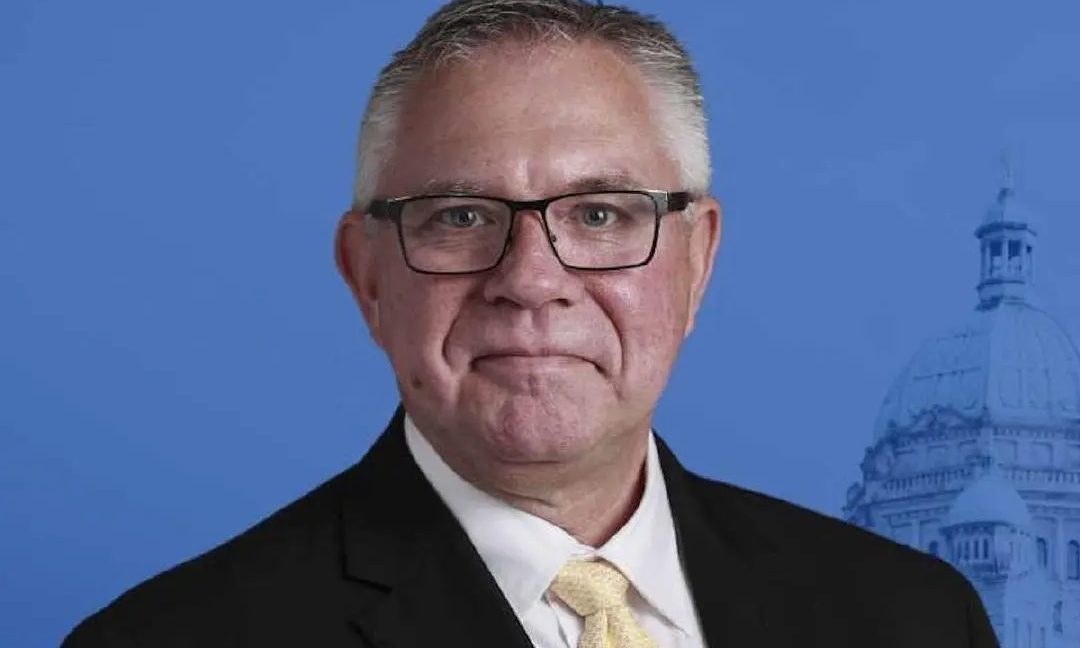
Lorne Doerkson Steps Into Interim Leadership Role
Cariboo-Chilcotin MLA Lorne Doerkson has taken over as interim leader of the Official Opposition following a unanimous vote by the B.C. Conservative caucus. The leadership transition occurred after Kerry-Lynne Findlay tendered her resignation on Sunday afternoon. Doerkson confirmed Monday that his primary focus is moving the party forward while preparing for potential political shifts across the province.
Reunification Efforts and Returning Caucus Members
Findlay’s departure followed weeks of turmoil that saw 14 MLAs exit the caucus through resignations or removals. Rebuilding efforts are already underway under Doerkson, who indicated that several departed members are returning to the fold. Former party leader John Rustad accepted Doerkson’s invitation to rejoin on Monday afternoon, joining other returning figures including former interim leader Trevor Halford, Columbia River-Revelstoke MLA Scott McInnis, Skeena MLA Claire Ratt e, and Surrey-Serpentine River MLA Linda Hepner.
Meanwhile, eight former Conservative MLAs have aligned with Centre BC under new leader Peter Milobar. High-level discussions regarding potential unification between Centre BC and the B.C. Conservative Party are currently taking place. B.C. Conservative MLA Gavin Dew confirmed that communication channels remain open across the factions.
Preparation for a Potential Snap Election
The sudden change in leadership arrives as speculation builds around Premier David Eby potentially calling a snap election. Doerkson stated that the caucus held discussions late into the night on Sept. 21 to ensure complete election readiness. According to former party executive director Angelo Isidorou, if an election is called and the party wins under Doerkson, a simple constitutional amendment passed at a general meeting would likely allow him to permanently retain both the party leadership and the premiership.
BC STORIES
What to Know as B.C. Heads to the Polls in Oct. 24 Snap Election
British Columbia will hold a snap election Oct. 24 as Premier David Eby seeks a mandate amidst B.C. Conservative leadership changes and political disarray.

Early Call Triggers Provincial Vote and Cancels Byelection
British Columbia voters are heading to the polls on Oct. 24 for a provincial snap election. The decision automatically cancels the Abbotsford-Mission byelection scheduled for this Saturday, which was opened when Reann Gasper stepped aside to offer former B.C. Conservative leader Kerry-Lynne Findlay a seat to contest.
Disarray in Opposition Ranks
The election call follows weeks of turbulence, caucus defections, and internal calls for leadership change that led to Findlay resigning as B.C. Conservative leader on Sunday. While some former Conservative MLAs rejoined the party—which recently named Lorne Doerkson as interim leader—eight others joined the Centre BC party prior to her departure. Unification discussions are underway, but having both parties on the ballot threatens to divide the right-of-centre vote.
Premier Cites Mandate; Local Leaders Raise Concerns
Premier David Eby framed the early election as a required step to secure his mandate regarding ongoing trade disputes with the United States. Observers, however, view the move as a strategic effort to capitalize on opposition internal conflicts. Eby is less than two years into a four-year term following the last election on Oct. 19, 2024.
The scheduled provincial vote takes place one week after municipal elections set for Oct. 17. Local officials, including former Union of B.C. Municipalities president Cori Ramsay, expressed concern that a snap campaign will overshadow municipal races, warning that only the “loudest voices” will be heard, and local issues will fall by the wayside. Some municipal candidates contemplating provincial campaigns have already withdrawn from local contests.
SPORTS
Why Hockey Fans in Alberta Can Look Forward to the 2027 World Juniors Schedule
The 2027 world junior hockey championship schedule is set for Edmonton and Red Deer. Canada opens Group B play against Switzerland on Dec. 26 at Rogers Place.
Tournament Schedule Announced for Alberta Hosts
The International Ice Hockey Federation alongside Hockey Canada revealed the schedule on Tuesday for the 2027 world junior hockey championship. Co-hosted by Edmonton and Red Deer, Alta., the action runs from Boxing Day through Jan. 5.
Canada’s Group B Matchups
Canada opens its tournament calendar at Edmonton’s Rogers Place against Switzerland on Dec. 26. Playing out of Group B, the Canadian squad will subsequently face Latvia on Dec. 28, Norway on Dec. 29, and wrap up preliminary-round competition against Czechia on Dec. 31.
Meanwhile, Group A will feature Finland, Germany, Slovakia, the United States, and defending champion Sweden.
Playoff Rounds and Medal Games
On Jan. 2, the schedule features quarterfinal games alongside the relegation match. Rogers Place in Edmonton will then serve as the exclusive venue for the remainder of the event, staging the semifinals on Jan. 4 and concluding with the medal matchups on Jan. 5.
Recent Canadian Results
The announcement comes following Canada’s third-place finish at the 2026 world juniors held in Minneapolis and St. Paul. That bronze marked the country’s first podium placement after a run from 2020 to 2023 that yielded three gold medals and one silver.

What the BC Conservative Leadership Shift and MLA Return Means for the Next Election

What to Know as B.C. Heads to the Polls in Oct. 24 Snap Election
Why Hockey Fans in Alberta Can Look Forward to the 2027 World Juniors Schedule
How Proposed Airport Changes Could Impact Traveller Costs in Major Cities
Ottawa’s Proposed Labour Rules Will Evaluate Strike Interventions Case by Case
Your Current 3 Day Forecast — September 22, 2026

Opinion: John Rustad Has to Go

B.C. Supreme Court Grants Cowichan Tribes Title to Historic Richmond Lands and Fishing Rights

Vancouver Canucks Gear Up for a Make-or-Break 2025–26 Season

Kamloops Blazers Announce Off-Season Changes Ahead of 2025–26 Season

BC Ferries Sparks Outcry Over Contract with Chinese Shipyard

A Taste of Autumn: Fall Okanagan Wine Festival 2025
-
5 days ago
Your Current 3 Day Forecast — September 18, 2026
-
BC STORIES6 days ago
Extortion Gang Threatens Canadian Officials and Communities as Police Probe Reveals Widespread Tactics
-

 BC STORIES6 days ago
BC Conservative Leader Facing Fresh Criticism From Within Her Deeply Divided Caucus
-
BC STORIES6 days ago
Suspected Human Remains Discovered in Wooded Area South of Salmon Arm
-
 BC STORIES4 days ago
Why B.C. Centrists Are Uniting Under Peter Milobar as Election Speculation Grows
-
LOCAL6 days ago
Why B.C. Mayors Are Uniting to Push for Stronger Provincial Safety Measures
-
BC STORIES6 days ago
How International Investment Promotion Could Bring Jobs to BC
-
SPORTS6 days ago
Toronto Blue Jays Wild-Card Standings: 10-1 Loss to Tigers Drops Team in AL Playoff Chase