COMMUNITY
Community Reassurance Following Vancouver Axe Incident and Fast Police Response
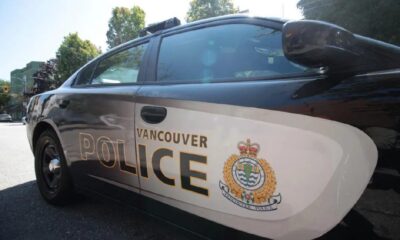
Vancouver police quickly arrested a 29-year-old man who allegedly threatened people with an axe and smashed plates at a local restaurant on August 6.

Quick Response Leads to Arrest Near Main Street
Vancouver officers swiftly apprehended a 29-year-old suspect following reports of dangerous behavior in a local neighborhood on Thursday evening, August 6.
According to a police news release issued Friday, the incident began near Main Street and 24th Avenue. Callers reported that a man was “threatening passersby, throwing cutlery toward a restaurant storefront, and smashing plates on the restaurant’s patio” while allegedly holding an axe.
Suspect Taken to Hospital, Released Pending Court
Responding officers located the individual “within minutes” of receiving the emergency calls. The Vancouver Police Department’s Canine Unit assisted during the apprehension.
The suspect sustained injuries during the arrest and was initially transferred to a local hospital for medical care. Authorities confirmed he was subsequently released on an undertaking and is scheduled to make a court appearance at a later date.



BC STORIES
Why B.C.’s Latest Election Results Are Sparking Renewed Calls for Voting Reform
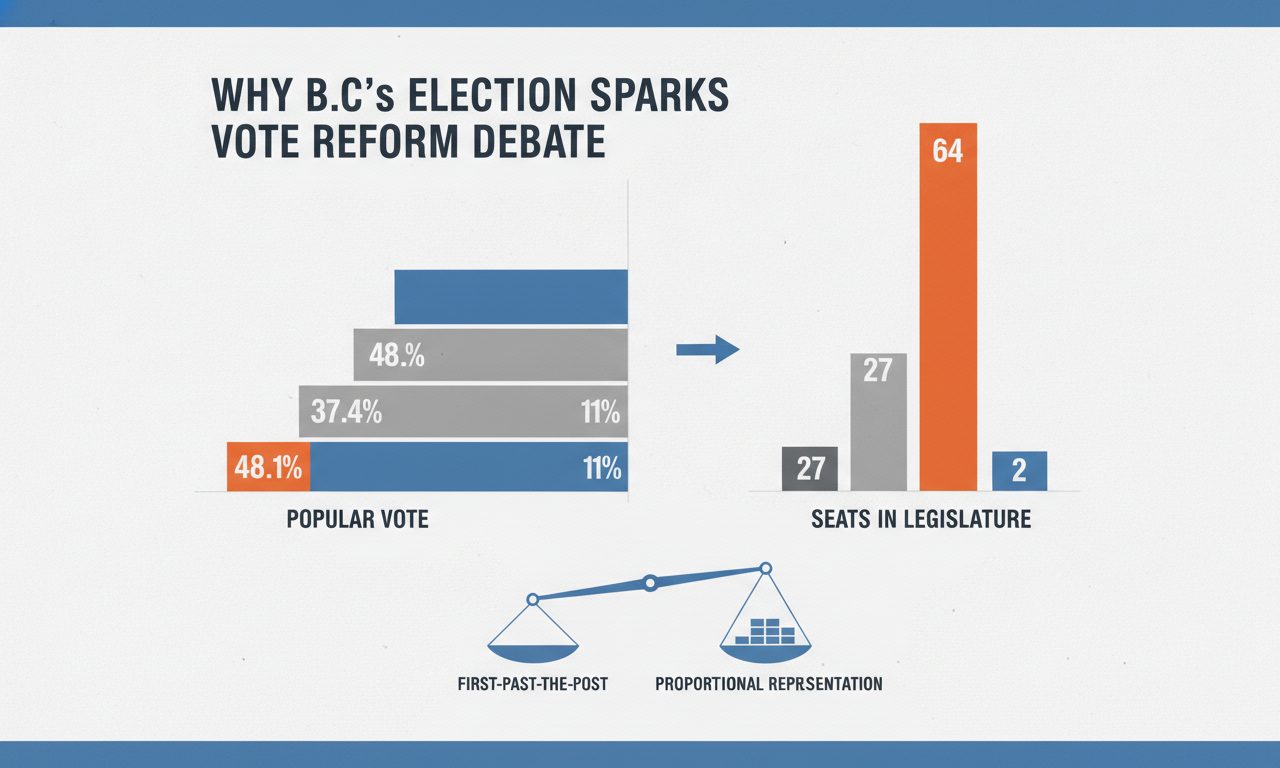
B.C. Conservatives won a majority of seats on Oct. 24 despite getting 48.1% of votes, prompting calls from Fair Vote Canada for voting system reform.
Majority Seat Yield Under First-Past-the-Post
The Oct. 24 British Columbia provincial election concluded with the Conservatives capturing a majority government, securing 64 of the 93 seats in the legislature. The BC New Democratic Party won 27 seats, while the BC Greens won two. However, fewer than half of total voters chose a Conservative candidate, as the party received 48.1 per cent of the popular vote.
By comparison, the BC NDP received 37.4 per cent of the vote, and the BC Greens earned 11 per cent. Additional parties shared the remaining 3.5 per cent of votes, with Centre BC taking 1.6 per cent and OneBC securing 1.5 per cent. Because British Columbia utilizes the first-past-the-post voting system, political parties can secure a majority of legislative seats without obtaining a majority of individual votes.
Advocates Push for Proportional Representation
In response to the outcome, advocacy group Fair Vote Canada renewed its critique of the current electoral model, urging a shift to proportional representation. The organization noted that over 80 per cent of Western democracies employ proportional systems.
“In many countries with proportional representation, cooperation across the aisle is the norm and better long-term outcomes on the economy, health and the environment are the result,” Fair Vote Canada said in a statement. “For the sake of all BC voters, it’s time to put proportional representation back on the agenda.”
Fair Vote Canada pointed to a 2025 poll indicating that 75 per cent of British Columbians back the adoption of a proportional voting model.
Federal Pattern Shows Similar Disparity
Discrepancies between vote share and seat counts also regularly occur in Canadian federal elections. During the 2019 federal election, Justin Trudeau’s Liberals won 157 seats with 33.12 per cent of the vote to form a minority government, despite the Conservatives winning 34.34 per cent of the popular vote and 121 seats.
A similar outcome occurred in 2021 when the federal Liberals retained a minority government by winning 160 seats with 32.62 per cent voter support, while the federal Conservatives won 119 seats with 33.74 per cent of the vote.
BC STORIES
What to Expect as BC Conservatives Take Power with Lorne Doerkson
BC Premier-designate Lorne Doerkson names Kim Henderson to lead transition following a Conservative supermajority win. Read about government plans.
Williams Lake MLA Steps Into Top Role Following Election Victory
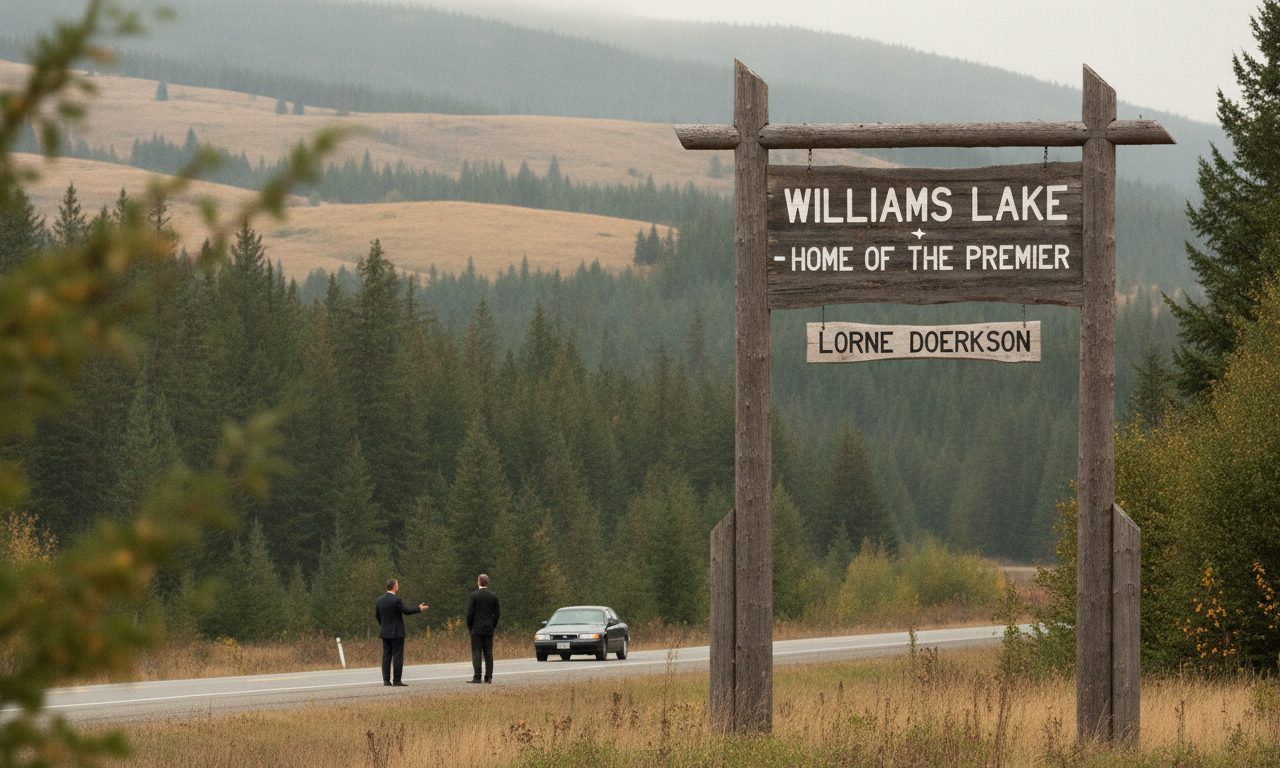
Lorne Doerkson, an MLA from Williams Lake, B.C., is stepping into the province’s highest political role after leading the B.C. Conservatives to a major election victory. Speaking after the results, Doerkson addressed rural and northern B.C. residents directly, noting it has been a long time since a premier hailed from their region and promising they “will never be an afterthought” under his leadership.
The party secured an overwhelming majority, winning or leading in 64 of the legislature’s 93 seats, backed by roughly 48 per cent of the popular vote. In contrast, the outgoing NDP secured about 27 seats with 37 per cent of the vote, prompting NDP Leader David Eby to resign his post despite retaining his seat in Vancouver-Point Grey. Eby’s decision to trigger an election two years early stands as a historical political miscalculation. The Green Party captured two seats, with leader Emily Lowan elected on Vancouver Island, securing 11 per cent of the popular vote. Voter turnout was approximately 48 per cent, with 1.8 million ballots cast across B.C.
Transition Team Formed with Economic and Healthcare Mandates
Moving rapidly to organize his government, Doerkson appointed Kim Henderson to direct his transition team. Henderson, who previously served over a decade as deputy minister and head of the B.C. public service under former Liberal premiers Christy Clark and Gordon Campbell, is taking on the unpaid volunteer role while on leave from her post as interim vice-president at Trans Mountain Corp.
Doerkson stressed the urgency of the transition so his administration can “hit the ground running” once sworn in. Among the government’s immediate priorities are conducting an independent audit of B.C.’s finances, establishing a commission aimed at maintaining operational emergency rooms, and finalizing a plan for tax relief once the legislature opens.
Interprovincial Relations and Federal Attention
Identifying ongoing U.S. trade friction as the primary economic risk facing British Columbia, Doerkson plans early discussions with Prime Minister Mark Carney and Alberta Premier Danielle Smith to reactivate a working group on the Pacific Link pipeline. The Conservative victory also drew comment from U.S. President Donald Trump, who noted on social media that the party had achieved a provincial victory for the first time in nearly a century.
BC STORIES
B.C. Faces an Early and Hard-Hitting Flu Season as Symptoms Intensify
B.C. flu season arrives early as Health Canada reports elevated activity. Learn about the dominant H1N1 strain, severe symptoms, and vaccine availability.

Early Arrival and Severe Symptoms
Influenza activity in British Columbia has surged earlier than usual this year, bringing illness that health professionals describe as particularly intense. According to Health Canada data, flu test positivity across the province is running above average for this time of year, departing from the typical pattern where cases climb slowly toward a holiday peak.
Pharmacists note that the current wave is taking a heavier toll on patients compared to last year. Pharmasave pharmacist Fairuz Siraj stated, “This year it’s hitting hard. We’re seeing a lot of cases of people coming down, feeling ill, and taking more time to recover. A lot more severe type of illness than what we saw last year.”
Dominant Strain and Vaccine Alignment
Data from the Public Health Agency of Canada and the BC Centre for Disease Control show that B.C. registered a “moderate” flu activity level during the first week and a half of October, with wastewater indicators rising at multiple monitoring locations. Meanwhile, other Canadian provinces continue to report “low” or “very low” activity.
The dominant virus strain in circulation is H1N1, a form of Influenza A. On Oct. 7, B.C. Provincial Health Officer Dr. Bonnie Henry announced the launch of the provincial vaccination campaign 10 days ahead of the usual schedule. Because scientists anticipated that H1N1 would lead cases this season, the current vaccine was formulated specifically to target it. Dr. Brian Ward, a scientist at the McGill University Health Centre, noted that “so far, so good,” though he cautioned that flu viruses can mutate as the season progresses. Ward added it remains too early to know if mid-season mutations will occur and stated he is unaware of any predicted mutations that would reduce vaccine efficacy.
Vaccine Access Details
Free influenza immunizations are currently accessible to B.C. seniors and individuals in high-risk categories. Siraj advised that members of the general public seeking early protection may check walk-in clinics for availability or wait for their individual booking notification links, which are expected in late October or early November.

Why the Early Election Gamble Backfired on the NDP

Why Fake Signs Targeted a Small Green Party Campaign on B.C. Election Eve

Why the Conservatives’ Majority Win in Kelowna-Mission Signals Big Changes for Local Healthcare and Economy

Why B.C.’s Latest Election Results Are Sparking Renewed Calls for Voting Reform
Your Current 3 Day Forecast — October 27, 2026
Why First Nations Leaders Are Gathering in Ottawa to Push Back on Fast-Tracked Resource Projects

Opinion: John Rustad Has to Go

B.C. Supreme Court Grants Cowichan Tribes Title to Historic Richmond Lands and Fishing Rights

Vancouver Canucks Gear Up for a Make-or-Break 2025–26 Season

BC Ferries Sparks Outcry Over Contract with Chinese Shipyard

Kamloops Blazers Announce Off-Season Changes Ahead of 2025–26 Season

A Taste of Autumn: Fall Okanagan Wine Festival 2025
-

 SPORTS5 days ago
Why B.C. Lions Starters Are Resting as the Regular Season Concludes Against Winnipeg
-
 BC STORIES5 days ago
BC Conservatives Promise Forestry Overhaul to Revive Jobs as NDP Points to Millions in Existing Investment
-

 OPINIONS5 days ago
How Minor Parties and Strategic Balloting Could Shift the Upcoming B.C. Election
-
 BC STORIES6 days ago
Police Seek Witnesses After Fatal Wrong-Way Collision Near Merritt
-
5 days ago
Your Current 3 Day Forecast — October 22, 2026
-
6 days ago
Your Current 3 Day Forecast — October 21, 2026
-
NATIONAL STORIES6 days ago
Highland Valley Copper Workers Could Strike Saturday as Union Issues Notice
-
 HEALTH6 days ago
Coquihalla Highway Reopens Near Merritt Following Morning Crash That Injured Four