BC STORIES
Why Soaring Diesel Costs Could Soon Raise Your Grocery Bills
Rising diesel prices linked to global conflicts and refinery maintenance in New Brunswick could soon drive up grocery bills for Canadian consumers.

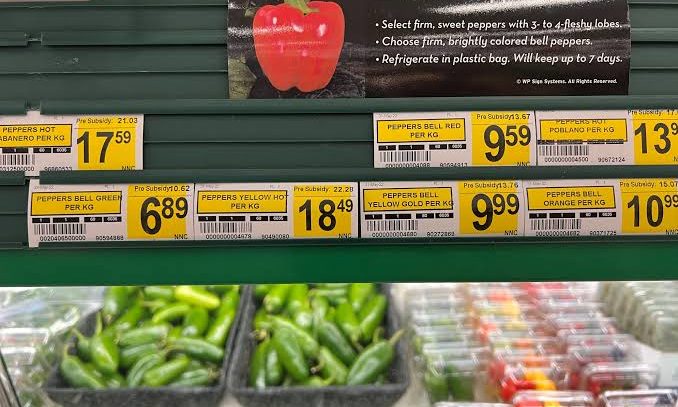
Refinery Closures and Global Conflicts Strain Canadian Fuel Supplies
A temporary shutdown at Canada’s largest refinery, the Irving Refinery in New Brunswick, is compounding an already tight diesel supply. Scheduled maintenance will keep the plant offline until November, limiting domestic production at a time when global energy markets face severe pressure.
Geopolitical tensions are playing a primary role in pushing prices higher. Ongoing conflicts involving the U.S., Israel, and Iran, alongside Houthi threats to shipping routes in the Strait of Hormuz, continue to disrupt crude markets. In addition, Russian export bans following Ukrainian attacks on domestic oil refineries, combined with Persian Gulf diesel exports dropping to just over a quarter of pre-war levels as of August, have created acute supply shortages worldwide.
Tax Relief Extended as Diesel Hits Record Highs
In response to rising energy expenses, the federal government extended the temporary suspension of the federal fuel excise tax through January 2027. The measure includes a four-cent-per-litre reduction on diesel, which was previously set to expire on Sept. 7.
Despite the extension, diesel prices averaged $2.62 per litre across Canada as of Saturday, up from $2.52 the previous week and significantly higher than last year’s levels. In Vancouver, prices reached $2.92 per litre, while U.S. average prices surpassed $6 US per gallon. Although Bank of Canada governor Tiff Macklem noted that proposed tariffs are not expected to deeply impact overall national economic activity, he cautioned that prolonged energy price spikes risk turning into broader inflation.
Surging Transport Costs Threaten Food Prices
Because commercial transport trucks rely heavily on diesel, consuming hundreds of litres every week, rising fuel costs directly affect the supply chain. Tej Dulat of the Canadian Truck Operators Association warned that while companies usually absorb brief spikes, narrow profit margins since 2022 mean these expenses must ultimately be passed on to shoppers.
Evan Fraser from the University of Guelph’s Arrell Food Institute noted that elevated fuel prices impact shipping, storing, and producing food. Paired with extreme weather affecting harvests, experts warn that consumers could face sustained upward pressure on food prices through the winter and beyond.



BC STORIES
False Report of Home Intrusion Prompts Heavy Police Presence and School Closure in Kelowna
A major police response on DeHart Avenue in Kelowna and the closure of Central Secondary School ended after RCMP confirmed a reported break-in was a false alarm.

Emergency Response Triggered by False Report
A massive police presence that shut down a Kelowna street and closed a nearby school on Wednesday morning ended after officers discovered the reported crime never occurred.
Around 8:40 a.m. on Sept. 9, the Kelowna RCMP responded to a call regarding an ongoing break-in along the 700-block of DeHart Avenue. According to Kelowna RCMP media relations officer Cpl. Steven Lang, a resident told authorities an unknown person had entered their residence and barricaded themselves inside.
Tactical Team Deployed to Scene
Officers surrounded the property out of caution and attempted to safely arrest the suspect. When initial attempts to establish contact failed, the Southeast District Emergency Response Team (ERT) was deployed alongside K9 units. Tactical officers set up on the lawn of nearby Central Secondary School, threw flash bangs toward the residence, and ordered anyone inside to surrender over a speaker.
The close proximity of the situation forced Central Secondary School to close for safety, with staff posting warning notices for students and personnel. DeHart Avenue was also blocked off by emergency vehicles while teams managed the scene.
Police Clear Residence and Reopen Area
As the investigation unfolded, officers entered and searched the house, finding no individuals inside and no evidence of forced entry. Cpl. Lang confirmed that the initial report was based on incorrect information and that no break-and-enter took place.
By late morning, police officers and ERT members cleared the scene and DeHart Avenue was reopened to traffic. RCMP confirmed there is no ongoing risk to public safety.
BC STORIES
Why Canadians and Americans Are Gathering at the Border to Remember 9/11 Together
Hundreds gathered at the B.C.-Washington Peace Arch monument for the 25th 9/11 anniversary to honour first responders and showcase cross-border unity.

Cross-Border Gathering Marks 25th Anniversary of 9/11
About 500 people joined a motorcycle procession as part of the annual Northwest 9/11 Memorial ceremony on Friday morning at the Peace Arch monument along the B.C.-Washington state border. Hundreds of attendees from both Canada and the United States assembled to mark the 25th anniversary of the Sept. 11 attacks, putting aside current political and trade friction between the two countries to pay tribute to first responders and those who lost their lives.
Honouring Sacrifices and Shared Bonds
The memorial service, which commemorates the collapse of the World Trade Centre towers in New York City that killed nearly 3,000 people, featured a helicopter flypast, national anthem performances, and a barbeque alongside the procession. Event co-chair Howard Blank emphasized that the spirit of the event surpasses any ongoing disagreements between the nations, stating that they come together as one when necessary.
First Responders Share Memories
Former New York fire department members were among those participating in the event. Retired paramedic Roberto Abril, who arrived at the scene shortly after 9 a.m. ET on Sept. 11, 2001, reflected on the tragic loss of his work partner, Carlos Lillo, who died in the North Tower. Attending the ceremony for his third time, Abril described the two nations as family who will eventually return to their close bond despite temporary disputes. Former firefighter Cody Stamberger, who joined the search efforts later that day, noted that the ceremony highlights the solidarity between both countries during challenging periods and offers an opportunity to honour the sacrifices made.
BC STORIES
BC Ferries’ Overseas Deal Costs $1.5 Billion in Economic Losses, Union Group Warns
Building four new BC Ferries in China will cost Canada $1.5B in lost GDP and 10,000 person-years of employment, a new union-commissioned report finds.


Union Report Details Economic Fallout of Overseas Ship Building
A contract to construct four massive hybrid-electric BC Ferries vessels in China will mean a loss of approximately $1.5 billion in gross domestic product for Canada, according to a report released Thursday by the labour coalition Build Them Here.
The analysis, authored by Jim Stanford of the Centre for Future Work, calculates that building the ships abroad surrenders roughly 10,000 person-years of employment. Additionally, the study estimates that local construction would have generated $413 million in government tax revenues to help offset public costs.
Crown Corporation Defends Overseas Contract Decision
BC Ferries awarded the deal to a Chinese state-owned shipyard in May 2025, maintaining that no domestic shipbuilders submitted a final proposal. The Crown corporation stated that while two Canadian shipyards pre-qualified after criteria were adjusted to encourage participation, neither completed a bid.
Representatives for the ferry operator explained that the company could not delay replacing aging vessels until domestic capacity expanded, nor could it expect ferry passengers to bear the full financial burden of developing Canada’s shipbuilding industry through higher fares alone. The corporation also noted the ongoing local economic benefits generated through domestic maintenance contracts.
Labour Group Calls for Policy Reforms and Transparency
The report argues that provincial leaders had adequate notice over the past decade to prepare local manufacturing for the replacements. It points out that between 2003 and 2018, only two of 11 new vessels were constructed in British Columbia. Seaspan, the sole B.C. shipbuilder with facilities large enough for the job, withdrew from competing due to strict price and scheduling constraints.
Using economic modeling, Stanford’s team estimated the contract’s total value at $1.6 billion and criticized BC Ferries for withholding exact cost details. The coalition, representing 19 labour organizations, recommended seven policy changes, including provincial equity stakes in shipbuilding projects and new legal mandates requiring BC Ferries to maximize local economic returns.

World Mourns on 25th Anniversary of Sept. 11 Terror Attacks

As a New Season Begins. Who Will Win the Stanley Cup in 2027? Our Early Predictions
Rebuilding the Toronto Maple Leafs Is an Obligation Earned Over Time, Says GM John Chayka

Strong Men Don’t Have to Struggle Alone
False Report of Home Intrusion Prompts Heavy Police Presence and School Closure in Kelowna
Dylan Larkin Loses Red Wings Captaincy Following Trade Request Ahead of Camp

Opinion: John Rustad Has to Go

B.C. Supreme Court Grants Cowichan Tribes Title to Historic Richmond Lands and Fishing Rights

Vancouver Canucks Gear Up for a Make-or-Break 2025–26 Season

Kamloops Blazers Announce Off-Season Changes Ahead of 2025–26 Season

BC Ferries Sparks Outcry Over Contract with Chinese Shipyard

A Taste of Autumn: Fall Okanagan Wine Festival 2025
-
LOCAL6 days ago
What’s at Stake for Kelowna as Leaders Debate Closing the Downtown Supervised Consumption Site
-

 OPINIONS6 days ago
Happy Labour Day! B.C. Is Politically Homeless — Can a New Party Finally Give Voters Somewhere to Go?
-
LOCAL6 days ago
Quebec Pause Campaign Trail for Cabinet Talks as U.S. Tariffs Loom
-
6 days ago
Your Current 3 Day Forecast — September 8, 2026
-
7 days ago
Your Current 3 Day Forecast — September 7, 2026
-
NATIONAL STORIES6 days ago
What to Know After a Veteran Vancouver Officer Denies Allegations in $3M Fraud Case
-
NATIONAL STORIES6 days ago
Upcoming Canadian Tariffs Loom as Trump Targets Mark Carney in Social Media Post
-
LOCAL6 days ago
Why Canada’s New Counter-Tariffs May Hinder Local Businesses While Leaving Shoppers Unscathed