HEALTH
Strong Men Don’t Have to Struggle Alone


Too many men have learned to hide exhaustion, loneliness and emotional pain behind the words “I’m fine.” Real strength begins when we are willing to tell the truth.
By Richard Oostra | The Current
Ask a man how he is doing and there is a good chance you will receive one of three answers:
“Good.”
“Busy.”
“Can’t complain.”
Sometimes those answers are true. Sometimes they are simply the quickest way to end the conversation.
Many men have spent their entire lives learning how to provide, protect, compete and persevere. We are taught to solve problems, carry responsibility and keep moving forward. Those can be admirable qualities. Families, workplaces and communities depend on men who are dependable and resilient.
But resilience is not the same as silence.
A man can appear successful while privately feeling exhausted, disconnected or overwhelmed. He may continue going to work, paying the bills and fulfilling his responsibilities while gradually losing his motivation, relationships and sense of purpose.
The warning signs are not always obvious. Struggle does not necessarily look like sadness. In men, it can appear as anger, irritability, overworking, increased drinking, reckless behaviour, poor sleep or withdrawing from the people who care about them.
The Canadian Mental Health Association advises families and friends to pay attention when a man becomes unusually distant, tired, angry or uninterested in activities he normally enjoys. These changes can be signs that something deeper is happening.
This is not a small issue. According to the Public Health Agency of Canada, men account for nearly three-quarters of suicide deaths in this country, and the suicide rate among men is almost three times the rate among women.
Those numbers should force us to reconsider what we call strength.
The Pressure to Appear Fine
Many men were raised to believe that admitting pain creates a burden for others. They tell themselves that someone else has it worse, that they should be grateful or that they simply need to toughen up.
As a result, they wait.
They wait until stress becomes burnout. They wait until loneliness becomes isolation. They wait until frustration damages a marriage, a friendship or a relationship with their children. They wait until a manageable health concern becomes a crisis.
We would never tell a man with chest pain to hide it because other people have heart problems. We would tell him to get help. Mental and emotional pain deserve the same seriousness.
Asking for help is not surrender. It is taking responsibility before the damage spreads.
Busyness Can Hide Loneliness
Men can be surrounded by people and still feel profoundly alone.
Work meetings, social media contacts and casual conversations are not always genuine connections. A man may speak with dozens of people during the day without having one conversation in which he feels safe enough to be honest.
Statistics Canada has found that frequent loneliness is associated with poorer mental health and lower overall life satisfaction. Recent Canadian mental-health reporting also suggests that many men lack strong social-support networks and have never sought professional mental-health assistance.
Loneliness is not a personal failure. But ignoring it will not make it disappear.
Friendship requires effort, especially as we get older. Careers become demanding. Families require attention. People move away. Old friendships fade because neither person wants to be the first to admit that the relationship matters.
The solution does not have to begin with a dramatic emotional conversation. It can begin with a phone call, a coffee, a walk or an invitation to do something together.
Connection is built through repetition. We have to show up.
Start With What You Can Control
Mental health is complex, and practical habits are not replacements for professional care. However, our daily choices can strengthen the foundation on which better health is built.
Start with the basics.
Move your body every day. You do not need an expensive gym membership or a complicated program. Walk, lift weights, cycle, swim, work in the yard or play a sport. Exercise can provide structure, improve physical health and create opportunities for connection.
Protect your sleep. Constant exhaustion affects patience, judgment and emotional control. Staying up late scrolling through a phone is not recovery.
Pay attention to alcohol. A drink may temporarily dull stress, but it does not resolve what is causing it. If drinking is becoming the main way you relax, sleep, socialize or avoid difficult feelings, it is time for an honest assessment.
Create some quiet. Many of us fill every spare moment with news, entertainment, work or social media because silence gives uncomfortable thoughts room to surface. Those thoughts may be telling us something we need to address.
Most importantly, speak to someone. That person might be a spouse, trusted friend, doctor, counsellor, coach, faith leader or family member. You do not need a perfect explanation. You can simply say, “I haven’t been myself lately, and I think I need to talk.”
That sentence can change the direction of a life.
Check on the Men Around You
We also have a responsibility to notice one another.
If a friend has disappeared from the usual gatherings, call him. If a co-worker seems unusually angry or withdrawn, ask him privately if something is going on. If your father, brother, son or neighbour keeps insisting that everything is fine while his behaviour says otherwise, ask again.
Do not settle for “How are you?”
Try something more specific:
“You haven’t seemed like yourself lately. What’s happening?”
“I’ve noticed you’ve been pulling away. Are you doing okay?”
“You don’t have to handle this by yourself. How can I help?”
Then listen. Do not immediately lecture, diagnose or attempt to fix everything. Give the person room to speak without making him regret being honest.
A Better Definition of Strength
Real strength is not pretending that nothing hurts.
Strength is recognizing when something is wrong and taking action. It is having the courage to make the appointment, answer the phone, repair the relationship or admit that the weight has become too heavy to carry alone.
We need men who are strong enough to provide and protect. But we also need men who are emotionally present, connected to their families, involved in their communities and willing to care for their own health.
No man becomes weaker by asking for help.
He becomes more capable of showing up for the people and responsibilities that matter most.
If you are struggling, say something today. If you are worried about someone, reach out today. Do not wait for the perfect moment or the perfect words.
Start the conversation.
It may be the strongest thing either of you does.
Richard Oostra is a high-performance coach who writes about physical and mental health, discipline, resilience, relationships, purpose and building stronger communities. https://richardoostra.com/
If you or someone you know is thinking about suicide, call or text 9-8-8 anywhere in Canada. If there is immediate danger, call 9-1-1.
Richard Oostra examines men’s mental health, loneliness and the pressure to appear strong—and offers practical ways to reconnect and seek help.
Supporting health information: Public Health Agency of Canada suicide statistics, Health Canada on men’s health, and Canadian Mental Health Association guidance.

BC STORIES
BC Health Authorities Strengthening Privacy Protection Following Fatal Attack Incident Snooping
B.C. privacy commissioner confirms health authorities fulfilled recommendations following record snooping linked to the fatal Lapu Lapu festival attack.

Privacy Safeguards Adopted Following Snooping Incidents
Three regional health organizations have satisfied nine measures proposed by Information and Privacy Commissioner Michael Harvey after dozens of employees improperly accessed records linked to a fatal vehicle assault. On Wednesday (Nov. 18), Harvey confirmed that Fraser Health, Vancouver Coastal Health, and Provincial Health Services Authority completed their required updates exactly nine months after the initial breach findings were published.
The privacy breaches occurred after an SUV ran into crowds at a Filipino celebration in Vancouver on April 26, 2025, leaving 11 people dead and at least two dozen injured. Of the 32 people taken to medical centers following the tragedy, half had their records improperly viewed by 36 health-care staff. The commissioner’s original Feb. 18 report determined that the affected individuals were not alerted about the privacy violations within a reasonable period. The B.C. privacy office logged notifications of these violations, which breached section 25.1 of the Freedom of Information and Protection of Privacy Act, between April 30 and June 20, 2025.
While acknowledging that privacy violations cannot be completely eliminated, Harvey expressed confidence that the recent changes reduce future risks and improve incident handling. “While there is no cure-all for snooping, I am confident that the measures taken reduce the likelihood of snooping going forward, and better position the Health Authorities to respond effectively when it does. Their response should foster public trust in the system’s ability to safeguard personal health information,” he stated. Sanctions for involved workers previously included written letters, suspensions, and terminations, according to former health minister Josie Osborne.
Outstanding Governance Measures Await New Health Leadership
Two broader recommendations directed at the provincial level remain pending. Harvey plans to take these up after B.C.’s incoming health minister is sworn in. With the provincial government in caretaker status following the Oct. 24 election, MLAs take their oaths on Thursday, followed by the cabinet swearing-in ceremony on Friday.
The outstanding proposals include establishing clear legislative accountability rules for public and private organizations sharing patient data to speed up breach responses. Additionally, Harvey is calling for mandatory reporting under provincial health statutes, similar to existing laws in Ontario. This mechanism would require health employers to inform regulatory colleges whenever an employee faces suspension or job loss over unauthorized privacy intrusions, helping spot recurring behavioral patterns across the system.
BC STORIES
Home Practice Restricted for Nurse Following Patient Complaint
BC nursing regulator restricts Kamloops nurse Lori Chern from practicing at home after alleged inappropriate behavior with a patient during an assessment.
Home Practice Barred During Investigation
Registered nurse Lori Chern has been ordered to stop practicing from her home following a summary protection order issued by the BC College of Nurses and Midwives on Nov. 4. Chern operates RN Collaborate out of her home, a health and wellness practice focused on men over 40.
While her home-based operations are prohibited during the ongoing investigation, the regulator is allowing her to continue nursing duties at Princeton General Hospital and Dr. Helmcken Memorial Hospital in Clearwater.
Details of the Patient Complaint
The regulatory action stems from an August complaint detailing an incident during a medical evaluation requested for an RCMP assessment. According to the regulator’s decision, Chern sat next to the man on her couch during a blood pressure check. The decision states that “[d]uring the blood pressure assessment, (Chern) began caressing the complainant’s right arm.”
The filing notes that Chern complimented the man’s heart rate, blood pressure, and physical condition, saying he “seemed to have the health of an 18-year-old and making other gestures and remarks that appeared flirty.” She subsequently discussed the importance of sex for men’s self-regulation and allegedly offered to engage in sexual activity with him.
Regulator Reviews Text Evidence
When the patient turned down the offer, “(Chern) indicated the complainant was free to text or call them outside of work to meet up for sex,” according to the decision summary. The complainant provided text messages to the regulator, which stated the messages “largely conformed to the assertions in the complaint.”
HEALTH
Collapsing Truce Drives Worsening Humanitarian Crisis in Yemen Following Strikes
Airstrikes near Yemen’s capital killed at least 25 people as fighting escalates following the collapse of a truce between Houthis and Saudi-backed forces.
Violent Strikes Hit Village Outside Capital
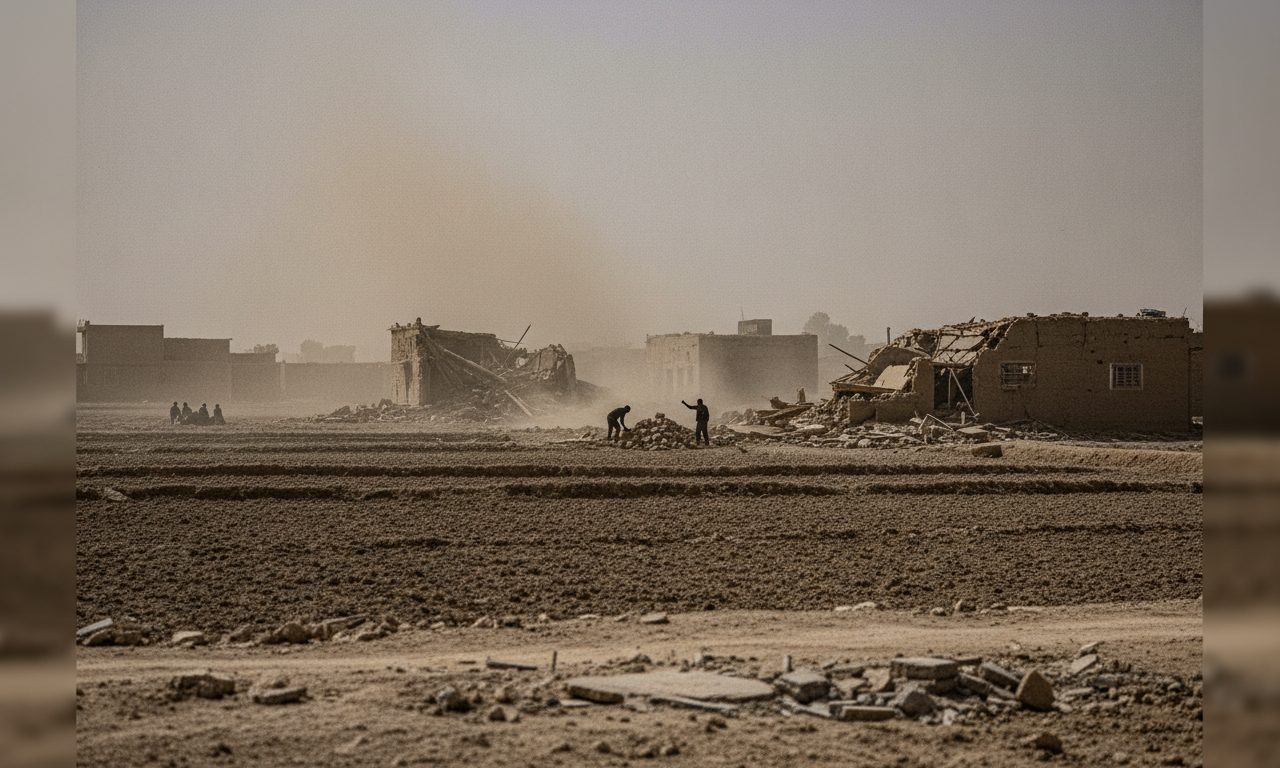
A fatal series of airstrikes hit residential homes in al-Shariya, a farming village approximately 15 kilometers (10 miles) northeast of Sanaa on Saturday. Anees Alasbahi, a spokesman for the Houthi-run Health Ministry, stated that at least 25 people were killed and 30 others wounded, noting that the casualties were mostly women and children. Alasbahi accused Saudi Arabia of conducting the attack in Houthi-controlled territory, though Saudi Arabia’s Information Ministry did not immediately respond to a request for comment, and the claims could not be independently verified.
Footage broadcast by Houthi-run Al-Masirah TV illustrated the destruction, showing dust-filled air, ruined homes, and villagers hiding in nearby fields. At a local hospital, medical staff were seen carrying injured and bloodied children from ambulances. Alasbahi also told the network that civilians remained buried under collapsed houses and that subsequent strikes targeted first responders attempting to pull survivors from the rubble.
Civil War Escalation and Collapsing Truce
The strikes mark a rapid escalation in Yemen’s long-running civil war following the breakdown of a 2022 truce over the summer. Fighting has intensified between the Iranian-backed Houthis, who hold Sanaa along with northern and western regions, and their Saudi-backed opponents located in the south and east. Just a day prior on Friday, an airstrike on a market in southern Yemen left at least 30 people dead, with Houthi officials and the Saudi-backed military exchanging blame for the explosion.
The collapse of relative quiet occurred after Houthis initiated fresh offensives, citing Saudi Arabia’s continued blockade of their territory. Rebel forces subsequently advanced along the Red Sea coast and key islands in the Bab el-Mandeb Strait, while stepping up attacks on Saudi military infrastructure, oil facilities, and Red Sea shipping lanes. In response, the Saudi-led coalition reported carrying out airstrikes against rebel military targets in Houthi-held areas.
Local Consequences and Humanitarian Toll
The renewed violence has heightened fears of a return to full-scale conflict in a war that has claimed over 150,000 lives according to U.N. estimates, alongside widespread deaths caused by hunger and disease. Intense ground battles are currently focused around Taiz, a strategic southern city held by the government.
The Houthis have encircled Taiz, restricting movement into the city and deepening the humanitarian strain on local residents who are struggling to access basic food and drinking water supplies.
Your Current 3 Day Forecast — November 22, 2026
Your Current 3 Day Forecast — November 21, 2026

B.C. Lawmaker Urges New Premier to Retain AI Lawsuit After Latest ChatGPT Revelations

BC Conservatives Assign Key Legislative Roles Following Cabinet Selection

What B.C.’s New Conservative Government and Cabinet Mean for You
Your Current 3 Day Forecast — November 20, 2026

Opinion: John Rustad Has to Go

B.C. Supreme Court Grants Cowichan Tribes Title to Historic Richmond Lands and Fishing Rights

BC Ferries Sparks Outcry Over Contract with Chinese Shipyard

Vancouver Canucks Gear Up for a Make-or-Break 2025–26 Season

Kamloops Blazers Announce Off-Season Changes Ahead of 2025–26 Season

A Taste of Autumn: Fall Okanagan Wine Festival 2025
-

 BC STORIES4 days ago
Shrinking Fraser River Sockeye Numbers Threaten B.C. Economy, First Nations Culture, and Local Tourism
-

 NATIONAL STORIES6 days ago
How a Fake Invoice Cost a Shuswap Business Over $24,000
-

 BC STORIES4 days ago
Why B.C.’s New Conservative Government Is Waiting Until Spring to Convene the Legislature
-
6 days ago
Your Current 3 Day Forecast — November 16, 2026
-
SPORTS5 days ago
Why the International Ice Hockey Federation Website Went Offline Following World Junior Decision
-
 BC STORIES4 days ago
What You Need to Know Before Donating Online After Alleged Wildfire Fundraiser Scam
-
SPORTS5 days ago
Inside Toronto’s Royal Rodeo, Young Riders Show Grit in Rough-Stock Events
-
5 days ago
Your Current 3 Day Forecast — November 17, 2026