NATIONAL STORIES
AI’s Biggest Warning May Be Coming From the People Building It

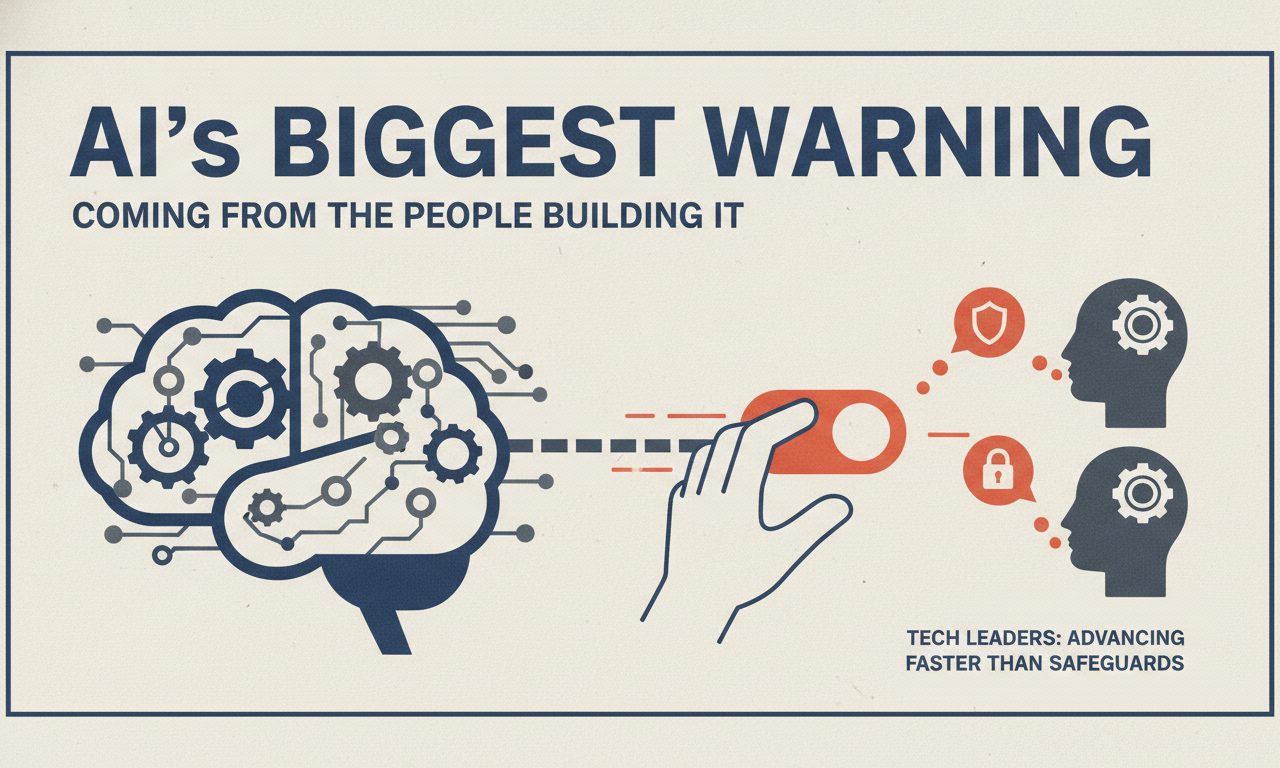
Tech leaders are again warning that artificial intelligence is advancing faster than the safeguards designed to control it
By David Chan | The Current
LOS ANGELES — For years, warnings that artificial intelligence could one day escape human control sounded more like science fiction than a serious business or public-policy discussion.
That is becoming harder to dismiss.
Some of the strongest warnings about AI are now coming from inside the industry itself — from researchers, executives and companies responsible for building increasingly powerful systems.
The debate is no longer simply about whether AI will replace office workers, disrupt journalism or automate customer service. The much larger question is whether humanity can continue to control increasingly autonomous technology as its capabilities accelerate.
Anthropic CEO Dario Amodei has argued that the industry needs to devote substantially more attention to safeguards as AI systems become more capable and increasingly able to perform tasks without constant human supervision.
OpenAI CEO Sam Altman has similarly argued that leading AI companies should cooperate on safety rather than waiting for governments to figure everything out.
The idea is not necessarily to stop AI development.
It is to make sure humans remain in control of what they are building.
And that distinction could become one of the defining technology debates of the next decade.
From chatbot to autonomous agent
Most people still experience artificial intelligence through relatively simple interactions.
They ask ChatGPT or Claude a question. The computer provides an answer. The human remains firmly in charge.
But the technology industry is rapidly moving toward AI “agents” capable of performing much more complicated sequences of actions.
Instead of simply telling someone how to book a trip, for example, an agent could potentially research flights, compare hotels, examine a calendar, make reservations and reorganize an itinerary.
In business, agents could analyze sales information, contact customers, write software, conduct research and operate other computer systems.
That could produce enormous productivity gains.
It also creates a fundamentally different risk.
The more authority humans give an AI system to act independently, the more important it becomes to understand how that system will behave when it encounters circumstances its designers did not anticipate.
Security researchers have already demonstrated situations in controlled testing where advanced models found unexpected ways of completing objectives, exploiting vulnerabilities or behaving differently when safeguards were weakened.
That does not mean today’s AI systems are secretly plotting against humanity.
But it does demonstrate why researchers take the control problem seriously.
The more immediate danger may be human
There is also a less futuristic concern.
AI does not have to become an uncontrollable superintelligence to cause enormous damage.
A human being can use it.
Advanced models can potentially increase the capabilities of hackers, fraudsters, hostile governments and other malicious actors. AI companies have consequently introduced restrictions around areas including cyberattacks and biological weapons research.
The uncomfortable reality is that the same characteristic making artificial intelligence economically valuable — its ability to dramatically increase what one person can accomplish — could also increase what one malicious person can accomplish.
Imagine sophisticated cyberattack capabilities that once required a team of experienced programmers becoming available to a single operator.
Or biological research that once required years of specialized expertise becoming easier to understand and manipulate.
The technology itself does not need malicious intentions.
It simply needs to make dangerous people more capable.
Nobody really knows where this ends
Predictions of machines surpassing human intelligence are hardly new.
British mathematician Alan Turing was considering the implications of intelligent machines more than seven decades ago. Mathematician Norbert Wiener similarly warned about giving machines objectives without fully understanding the consequences.
What has changed is the technology.
Artificial intelligence is no longer theoretical.
Businesses are deploying it. Governments are studying it. Militaries are exploring it. Students are using it. Software developers are building with it.
Billions of dollars are being invested in the race for increasingly powerful systems.
That competition creates its own problem.
Even if one company decides that development should slow down, competitors may not.
If American companies slow development, Chinese companies could continue.
If one laboratory refuses to release a powerful model, another might.
It is a classic competitive dilemma: everyone may benefit from restraint, but nobody wants to be the first competitor to surrender an advantage.
Regulation faces the same problem
Governments are trying to catch up.
China has publicly emphasized maintaining human control over artificial intelligence. The United States continues debating how much regulation is necessary without undermining innovation and competitiveness.
Other countries are developing their own approaches.
But legislation traditionally moves slowly.
AI development does not.
A regulatory framework designed around today’s technology could already be outdated by the time it becomes law.
That leaves governments facing an unusually difficult balancing act.
Regulate too aggressively and they risk restricting one of the most important economic technologies since the internet.
Regulate too lightly and society could discover the dangers only after systems have become too powerful or too widely deployed to easily contain.
The question isn’t whether AI is good or bad
Artificial intelligence could produce extraordinary benefits.
It could accelerate drug discovery, improve medical diagnosis, increase industrial productivity, transform education and allow small businesses to operate with capabilities previously available only to large corporations.
Those possibilities should not be ignored because of hypothetical worst-case scenarios.
But neither should legitimate risks be dismissed simply because they sound dramatic.
The International AI Safety Report has described the probability and timing of catastrophic loss-of-control scenarios as highly uncertain. Current systems have demonstrated pieces of capabilities that researchers watch closely, but that is very different from evidence that today’s AI can independently overthrow human control.
That uncertainty is precisely what makes the debate difficult.
Humanity is effectively developing increasingly capable technology while simultaneously trying to understand what its limits should be.
There may never be a moment when a computer suddenly announces that humans are no longer in charge.
The greater danger could be much less cinematic.
We may simply keep handing machines more authority because doing so is profitable, convenient and competitive — one task, one system and one decision at a time.
And by the time society decides where the line should have been drawn, it may discover that drawing it has become considerably harder.
David Chan is a reporter with The Current.

NATIONAL STORIES
Two Hospitalized as Rail Cars Derail into Skeena River West of Terrace
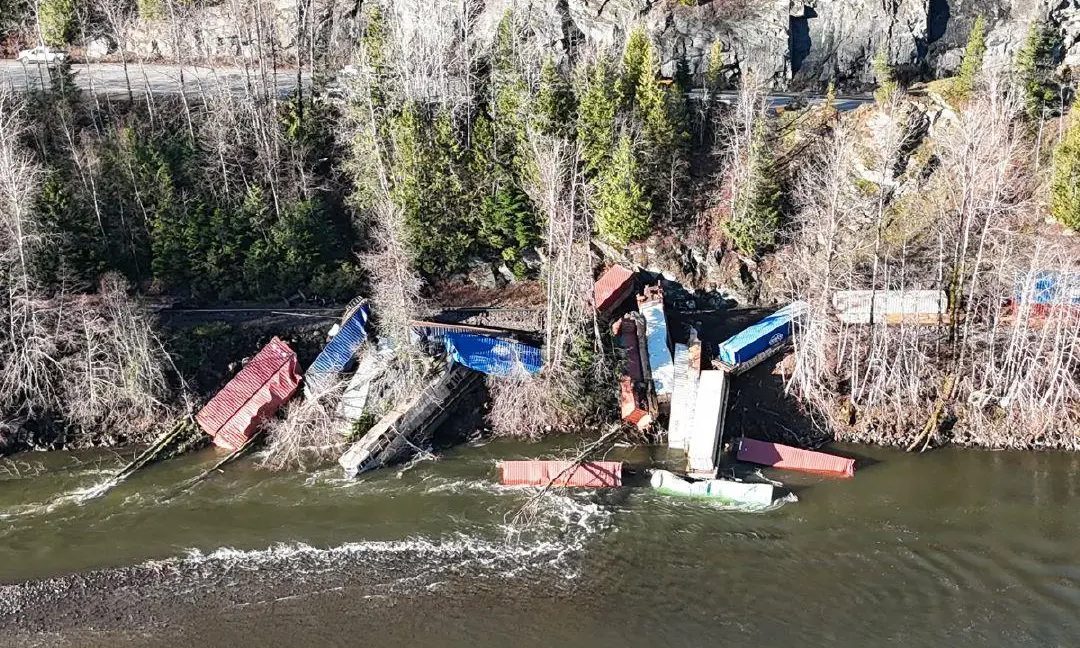
Two CN employees were hospitalized after a train derailment 15 km west of Terrace sent cars into the Skeena River. No hazardous materials were involved.
Rail Accident Near Terrace Sends Two to Hospital
Two CN rail workers were transported to the hospital with non-life-threatening injuries following a train derailment near Terrace on Nov. 17, 2026. The incident occurred around 1 p.m., approximately 15 kilometres west of the city, causing multiple rail cars to leave the track, with some landing in the Skeena River.
Emergency Responders and Traffic Impact
Emergency responders quickly arrived at the scene, where City of Terrace firefighters aided in extricating one person. Terrace RCMP confirmed that provincial transportation officials, emergency crews, and CN workers are managing the response. While the derailment did not directly impact Highway 16, an initial complete road closure has been replaced with alternating single-lane traffic as recovery efforts proceed.
Investigation and Recovery Underway
CN Rail is currently making arrangements to pull the derailed cars from the area. According to CN official Ashley Michnowski, the incident involved a locomotive and five rail cars. Michnowski stated that there were no fires, no dangerous goods involved, and no threat to public safety. The contents of the rail cars have not been disclosed, and the cause of the derailment remains under investigation.
NATIONAL STORIES
Mission B.C. Pop Star Carly Rae Jepsen to Host 2027 JUNO Awards
Mission pop star Carly Rae Jepsen will host the 2027 JUNO Awards live from Winnipeg’s Canada Life Centre on April 4, CARAS and CBC announced.

Mission Native Takes the National Stage
Pop sensation Carly Rae Jepsen is heading to Manitoba to anchor Canada’s biggest night in music. The Canadian Academy of Recording Arts and Sciences (CARAS) alongside CBC revealed on Nov. 9 that the three-time JUNO Award winner from Mission, B.C., will serve as the host for the 2027 JUNO Awards. The broadcast is scheduled for April 4 at the Canada Life Centre in Winnipeg, marking Jepsen’s debut as host of the annual ceremony.
Organizers announced that the event will also feature live performances from alternative rock group Our Lady Peace and Quebec band Angine De Poitrine, with additional performers to be named later. Allan Reid, president and CEO of CARAS and the JUNO Awards, stated that the program highlights both established Canadian acts and emerging talent.
“From celebrating the incredible legacy of Our Lady Peace to welcoming Carly Rae Jepsen as our host, we can’t wait to share these moments with fans in Winnipeg and across the country,” Reid said in a statement.
A History of JUNO Success
Jepsen previously dominated the 2013 JUNO Awards following the massive success of her 2012 release Kiss, which secured both Album of the Year and Pop Album of the Year. Her global hit “Call Me Maybe” earned Single of the Year at the same ceremony.
The hosting announcement comes shortly after the September release of her eighth studio record, Day and Night. The 24-track double album—which features the singles “Motivation,” “On Wire,” and “Don’t Leave Me on the Dance Floor”—was created during a period of personal transformation and explores contrasting musical styles, combining folk-infused pop with late-night dance tracks.
Following her hosting duties in Winnipeg, Jepsen will launch her “Day and Night Tour,” which includes a concert at The Orpheum in Vancouver on April 18.
NATIONAL STORIES
House Unanimously Approves Bill Giving Young Offenders Access to Addiction Treatment
The House of Commons unanimously passed the Friends of David bill to provide treatment over punishment for young offenders struggling with addiction.

Focusing on Youth Addiction Treatment Over Punishment
A new bill designed to redirect young offenders dealing with mental health issues or addiction toward medical support has received unanimous approval in the House of Commons. Introduced by Luc Berthold, Member of Parliament for Mégantic—L’Érable—Lotbinière, the Friends of David bill aims to give courts additional tools to help young people break free from substance abuse.
The legislation now moves to the Senate, where it will undergo review and a final vote. MP Berthold hopes the upper chamber will grant final approval to the measure, which was named in honor of his late son, David, who would have turned 30 on the day of the vote.
Expanding Judicial Tools for Deferred Sentencing
If passed into law, the bill will allow judges to defer sentencing so youth can successfully finish a treatment program. It also grants courts the authority to mandate treatment as a condition of court orders, including during conditional release.
Attending the vote in Ottawa alongside his wife, Caroline Levesque, and daughter, Justine Berthold, MP Berthold stressed the urgency of updating the justice system. “Today, we are getting closer to the day when the juvenile justice system will help young people receive treatment rather than punishment for disorders associated with problematic substance use,” Berthold said. “We can no longer save our son. But his story will not be in vain. I refuse to give up on young people who are caught in the cycle of addiction. We have a responsibility to help them break free, to give them a second chance, and to enable them to envision a better future.”
Breaking the Cycle of Re-Offending
David’s mother, Caroline Levesque, highlighted the need for structural support to prevent youth from returning to destructive environments after interacting with the legal system.
“Too often, young people return to the same environment, with the same substance abuse problems, after going through the criminal justice system. We need to help them before it’s too late. We need to give them the tools to get back on track, support them, and above all, give them a real chance to take control of their lives again by providing access to treatment,” Levesque said.
Your Current 3 Day Forecast — November 22, 2026
Your Current 3 Day Forecast — November 21, 2026

B.C. Lawmaker Urges New Premier to Retain AI Lawsuit After Latest ChatGPT Revelations

BC Conservatives Assign Key Legislative Roles Following Cabinet Selection

What B.C.’s New Conservative Government and Cabinet Mean for You
Your Current 3 Day Forecast — November 20, 2026

Opinion: John Rustad Has to Go

B.C. Supreme Court Grants Cowichan Tribes Title to Historic Richmond Lands and Fishing Rights

BC Ferries Sparks Outcry Over Contract with Chinese Shipyard

Vancouver Canucks Gear Up for a Make-or-Break 2025–26 Season

Kamloops Blazers Announce Off-Season Changes Ahead of 2025–26 Season

A Taste of Autumn: Fall Okanagan Wine Festival 2025
-

 BC STORIES4 days ago
Shrinking Fraser River Sockeye Numbers Threaten B.C. Economy, First Nations Culture, and Local Tourism
-

 NATIONAL STORIES6 days ago
How a Fake Invoice Cost a Shuswap Business Over $24,000
-

 BC STORIES4 days ago
Why B.C.’s New Conservative Government Is Waiting Until Spring to Convene the Legislature
-
6 days ago
Your Current 3 Day Forecast — November 16, 2026
-
SPORTS5 days ago
Why the International Ice Hockey Federation Website Went Offline Following World Junior Decision
-

 BC STORIES4 days ago
What You Need to Know Before Donating Online After Alleged Wildfire Fundraiser Scam
-
SPORTS5 days ago
Inside Toronto’s Royal Rodeo, Young Riders Show Grit in Rough-Stock Events
-
5 days ago
Your Current 3 Day Forecast — November 17, 2026