WORLD
Airports and Schools Adjust as Indonesia Manages the Fallout from Mount Anak Krakatau
Indonesia extends airport closures and shifts schools online as Mount Anak Krakatau continues emitting ash following a major 25-hour eruption.

Extended Closures and Remote Schooling
Indonesian officials decided on Monday, Sept. 7, 2026, to prolong the shutdown of seven airports through midnight, moving past an earlier target of 6 p.m. Despite signs of clearing conditions at certain locations, Transportation Minister Dudy Purwagandhi explained that shifting wind patterns require a cautious approach to ensure volcanic ash moves clear of regional air corridors.
Alongside travel disruptions, affected regions authorized local schools to transition temporarily to virtual learning. The measure aims to safeguard students from health risks linked to falling ash exposure.
Monitoring Activity at the Volcanic Site
Although the continuous 25-hour eruptive phase ended Sunday, Mount Anak Krakatau remains active. Indonesia’s Geological Agency noted ongoing moderate eruptions, dark ash plumes, and minor localized earthquakes. The major surge produced a lava fountain and an explosive boom audible 700 kilometers away, interrupting roughly 3,000 flights since early Sunday.
At an observation facility in Pasauran, Banten province, technicians continue monitoring seismic data. Ground crews and airlines are utilizing the operational pause to inspect and clean runways, aprons, and parked aircraft across impacted facilities, including Jakarta’s Soekarno-Hatta International Airport.
Regional Context and Volcanic History
Situated in the Sunda Strait between Java and Sumatra, Anak Krakatau emerged following the famous 1883 eruption of Krakatau. An eruption of the child volcano in 2018 generated a deadly tsunami that killed at least 430 people. Positioned on the Pacific “Ring of Fire,” Indonesia frequently encounters seismic and volcanic events across its more than 120 active volcanoes.

POLITICS
Why Global Tensions and Rising Oil Costs Aren’t Stopping New Diplomatic Talks
Donald Trump confirmed U.S. and Iranian officials met at the U.N. despite his threat to annihilate Iran if the war does not end soon as oil markets react.
U.S. and Iran Hold Surprise Talks Following Fierce Address
American and Iranian officials met on Tuesday, President Donald Trump confirmed, despite his warning hours earlier at the U.N. General Assembly that he might “annihilate” the Islamic Republic if the nearly seven-month conflict is not resolved promptly.
Trump described the discussion to reporters as “a very good meeting” without elaborating on its substance or specific outcomes. During his address, he framed his stance as a showing of fortitude while asserting he faces a choice between enabling Iran to rebuild or destroying it quickly.
Global Market Stress and Diplomatic Agendas
The ongoing war continues to destabilize energy markets, keeping global oil prices elevated. Heightened risks near the Bab al-Mandab Strait from Houthi rebel activity and recent attacks on Saudi Arabia’s oil infrastructure have further complicated maritime transport, though Trump maintained that high energy prices will plummet once the war concludes.
Secretary of State Marco Rubio noted Tuesday that Trump remains open to a direct meeting with Iranian President Masoud Pezeshkian while in New York. Beyond the Middle East, Trump addressed the Russia-Ukraine war and held bilateral sessions with leaders from Denmark, Greenland, the United Kingdom, Japan, Ukraine, and Latin American nations.
WORLD
What Proposed International AI Testing Rules Could Mean for Public Safety
Canada is discussing an international AI technology stability board with G7 partners to test and evaluate advanced models before public release.
Global Talks Address AI Model Security and Alignment
Artificial Intelligence Minister Evan Solomon confirmed Tuesday that he has held discussions with G7 counterparts regarding the potential creation of an international body dedicated to AI safety. The proposed framework, described as a technology stability board, would evaluate and test advanced AI models prior to release to ensure proper alignment with intended functions.
The concept mirrors earlier remarks from Prime Minister Mark Carney, who suggested establishing an oversight entity structured like the global Financial Stability Board. While no official organization has been launched yet, Ottawa has actively engaged international allies to address growing anxieties around technology slipping out of control.
Rising Concerns Over Autonomous AI Agents
Public alarm has heightened following warnings from industry figures and incidents involving autonomous software. Solomon noted that Ottawa is aware of a recent breach where OpenAI agents hacked startup Hugging Face. Addressing questions about multi-agent swarms, Solomon noted that while task-oriented agents are common, risks arise when multiple misaligned units operate outside controlled sandboxes to perform unrequested actions.
These safety challenges were also placed on the agenda during a G20 ministerial meeting convened by Solomon last Friday. Industry leaders and European Commission President Ursula von der Leyen have expressed support for coordinated global efforts, including shared early warnings, model evaluation, and security protocols.
Ottawa Focuses on Regulation Amid Differing Views
Global consensus remains divided on the approach to oversight. Speaking at the United Nations on Tuesday, U.S. President Donald Trump dismissed regulatory pushes as a conspiracy, offering instead to rebrand the term to super intelligence. Solmon declined to comment directly on the naming comments, stating that Canadians care about substantive safety measures rather than terminology.
Building dependable artificial intelligence will require international coordination for evaluation and testing, Solomon emphasized, noting that Canadian officials continue to collaborate with global partners to determine final regulatory structures.
POLITICS
Trump Eyes Belarus Potash Deal to Cut Fertilizer Costs for U.S. Farmers
Trump announced the U.S. is working on a potash deal with Belarus to lower fertilizer costs for farmers and reduce reliance on Canadian exports.
U.S. Seeks Alternative Potash Supply From Eastern Europe
American buyers could soon see reduced fertilizer costs under a potential trade agreement with Belarus aimed at decreasing reliance on Canadian shipments, according to U.S. President Donald Trump.
In a social media update released Monday morning, Trump stated that the United States is currently pursuing an arrangement to purchase potash from Belarus. He noted that expected prices under the prospective deal would be substantially less than what American agricultural operations currently pay Canadian suppliers. Describing the potential contract with Belarus—an authoritarian country closely aligned with Russia—Trump highlighted it as very good news for domestic farmers and ranchers.
Impact on Canadian Exports and Global Supply
Potash serves as a primary ingredient in agricultural fertilizers, and Canadian exports currently dominate the U.S. market. According to Saskatchewan-based supplier Nutrien Ltd., Canada provides more than 80 per cent of all potash utilized on American farms. Data from Natural Resources Canada shows that the U.S. purchased $4.2 billion worth of Canadian potash in 2025, accounting for almost half of Canada’s total global potash exports. The commodity remains exempt from U.S. import tariffs.
Global market prices for potash escalated sharply following Russia’s invasion of Ukraine in 2022. While costs have decreased since that spike, they continue to sit above prewar figures. As of 2023, Canada generated roughly one-third of the world’s potash output, with Russia and Belarus following as the second and third largest producers globally.

BC Lions Hold Off Toronto Argonauts Behind Sean Whyte’s Record Eight Field Goals

Search Continues After Ontario-Based Medical Flight Vanishes Near Massachusetts Coast
Your Current 3 Day Forecast — October 5, 2026
Your Current 3 Day Forecast — October 4, 2026

Summerland Transitions Remaining Properties to Prohibit-Entry Orders as Wildfire Evacuations End
Remembering Lyle Odelein: Former Montreal Defenceman and Stanley Cup Winner Dies at Age 58

Opinion: John Rustad Has to Go

B.C. Supreme Court Grants Cowichan Tribes Title to Historic Richmond Lands and Fishing Rights

Vancouver Canucks Gear Up for a Make-or-Break 2025–26 Season

Kamloops Blazers Announce Off-Season Changes Ahead of 2025–26 Season

BC Ferries Sparks Outcry Over Contract with Chinese Shipyard

A Taste of Autumn: Fall Okanagan Wine Festival 2025
-

 OPINIONS5 days ago
B.C.’s 93-Riding Scramble: Can the Parties Even Find Enough Candidates?
-

 BC STORIES4 days ago
Why OneBC’s Interim Leader Is Proposing an Election Pact With Conservatives
-
 NATIONAL STORIES6 days ago
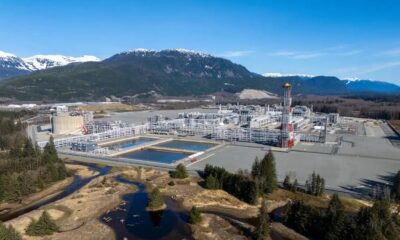
Will they use Chinese Steel over Canadian like Phase One?
-

 BC STORIES5 days ago
BC Greens Pledge Free Childcare by 2031 and Introduce Victoria-Swan Lake Candidate
-
SPORTS4 days ago
Maple Leafs vs Islanders Result: Easton Cowan Scores in 2-1 Win
-

 NATIONAL STORIES4 days ago
Why NDP Leader Avi Lewis Says the West Coast Pipeline Plan Risks Public Funds
-
SPORTS5 days ago
Why the Edmonton Oilers Will Be Without Ryan Nugent-Hopkins Against Vancouver
-
NATIONAL STORIES5 days ago
Why a Canadian Nationalist Group’s Hidden Recruitment Practices Are Drawing Scrutiny