LOCAL
BC Conservative Leadership Race Poised to Ignite Before Legislative Session


Political insiders are speculating that a BC Conservative leadership contest could officially kick off even before the upcoming legislature session begins. With internal momentum building and key MLAs and public figures rallying behind a leadership refresh, the race appears imminent. A rebranding push and strategic positioning ahead of the next election have pundits watching for a surprise head start to the leadership campaign.
Prominent names already floating as likely contenders include:
- Brad West
- Elenore Sturko
- Harman Bhangu
- Peter Milobar
- Yuri Fulmer
Here’s a snapshot of each potential candidate—orchestrating profiles grounded in their public biographies and activities to date:
Brad West
- Position & Background: Long-serving Mayor of Port Coquitlam, first elected in 2018 with the highest vote total in the city’s history, and acclaimed for a second term in 2022
- Leadership & Education: Recognized for pragmatic, family-focused leadership and efficient municipal management. Holds degrees from the University of Victoria, St. Francis Xavier University, and completed a leadership program at Harvard University
- Political Note: In May 2024, he publicly dismissed speculation that he might lead a coalition merger between the BC Conservatives and BC United
Elenore Sturko
- Current Role: MLA for Surrey-Cloverdale, elected under BC United but crossed the floor to BC Conservatives in June 2024. Previously served as MLA for Surrey-South (2022–2024)
- Career Background: Former RCMP staff sergeant with experience in media relations and community policing in both BC and the North. Prior reserve service with the Canadian Forces Air Command
- Trailblazer: A champion for LGBTQ+ rights, her defection was seen as a dramatic shake-up in provincial politics
Harman Bhangu
- Office: Elected MLA for Langley-Abbotsford in the 2024 BC election; serves as the party’s Transportation Critic
- Roots & Career: First-generation Canadian born at Surrey Memorial Hospital. Spent 17 years in heavy-load trucking as an aggregate hauler, managing operations and contract bids for infrastructure projects
- Community: Lifelong sports enthusiast, former minor-league football player and coach—applying lessons in teamwork to his public service
Peter Milobar
- Scape: MLA for Kamloops Centre since 2024; formerly represented Kamloops-North Thompson (2017, 2020)
- Experience: Multi-term Mayor of Kamloops, regional hospital district chair, and local government leader. Held roles on BC Transit board, PRIMECorp, and the Local Government Contract Management Committee
- Focus: Serves as the party’s Finance Critic, with a strong reputation in fiscal oversight and community-rooted governance
Yuri Fulmer
- Profile: Vancouver-based entrepreneur, philanthropist, chancellor of Capilano University, and global chair of United Way Worldwide
- Entrepreneurship: Built Fulmer & Company from a single A&W franchise into a portfolio of restaurant and hospitality ventures across Western Canada
- Philanthropic Impact: A prominent donor and volunteer—Order of BC recipient, involved with Surrey Food Bank, Vancouver Foundation, and Capilano University leadership and capital campaigns
Political Emergence: Nominated in 2024 as the BC Conservative candidate for West Vancouver–Sea to Sky, citing urgency to address fiscal and societal challenges in the province.


LOCAL
Gordie Howe Bridge: Deciphering the High-Stakes Toll Revenue Deal Between Canada and the U.S.
Canada and the U.S. have finalized a new revenue-sharing deal for the Gordie Howe Bridge. Discover how the 2026 pact changes the original 2012 agreement.


A Tale of Two Agreements: 2012 vs. 2026
For over a decade, the Gordie Howe International Bridge has stood as a symbol of North American partnership, yet recent political shifts have complicated its financial future. Following months of uncertainty fueled by geopolitical friction and trade disputes, Canada and the United States have finally released the text of a new ‘agreement in principle.’ This 2026 pact does not replace the original 2012 deal but adds a layer of complexity that impacts how the $6.4-billion project will be paid off.
The Original 2012 Foundation
In 2012, then-Prime Minister Stephen Harper and Michigan Governor Rick Snyder forged a historic partnership to alleviate congestion at the Ambassador Bridge. At the time, Michigan was recovering from the 2008 financial crisis, leading Canada to offer a generous deal: Ottawa would foot the entire bill for construction, land acquisition, and highway interchanges. In exchange, Canada would collect all toll revenue to recoup its investment—a process expected to take 50 years. Only after the debt was fully retired would the revenue be split 50/50 with the state of Michigan.
The New 2026 Revenue Split
The landscape changed significantly following recent political pressure from Washington. Under the newly unveiled pact, the financial flow has been redirected. Before Canada can even begin paying down its multi-billion-dollar debt, net toll revenue—what remains after operating and maintenance costs—will be split immediately. For the first 15 years of operation, 50% of these net funds will go to a U.S.-controlled economic development fund aimed at benefiting American trade interest, while Canada receives the other 50% to service its debt.
Why the Distinction Matters
This shift represents a significant concession by Canada. Under the original terms, Canada had exclusive rights to the revenue until the project was paid off. Now, by sharing the ‘profit’ immediately with the U.S. federal government, the timeline for Canada to recover its $6.4-billion investment will likely be extended. Furthermore, the new agreement grants the U.S. government unprecedented control over toll rate adjustments, a power that previously rested solely with the Windsor-Detroit Bridge Authority. As the bridge prepares for its official opening, these fiscal nuances will dictate the economic health of the continent’s busiest trade corridor for decades to come.
LOCAL
Cross-Border Smoke Crisis: Canada Issues Alerts as U.S. Wildfire Pollution Drifts North
Canada issues air quality alerts as smoke from U.S. fires drifts north, complicating a diplomatic row over Donald Trump’s proposed wildfire tariffs.

A Transboundary Environmental Crisis
The escalating wildfire crisis in North America has taken a complex geopolitical turn as officials in British Columbia issued air quality warnings due to smoke originating from the United States. This development comes just days after U.S. President Donald Trump threatened Canada with additional tariffs, citing the southward drift of smoke from Canadian fires as a form of environmental "invasion."
According to the British Columbia Wildfire Service, a series of lightning strikes in the Pacific Northwest has ignited twenty-two large blazes across Washington and Oregon. The resulting plume of polluted air is now crossing the international border, triggering health alerts in regions such as Kootenay Lake and Cranbrook. The situation highlights the indifferent nature of climate-driven disasters, which increasingly ignore national boundaries despite escalating political rhetoric.
Tariffs and Political Friction
The environmental strain has fueled a diplomatic spat between the two neighbors. President Trump recently took to social media to demand that the cost of air pollution be factored into trade penalties against Canada. The Republican administration has consistently criticized Canadian forest management, even as the U.S. struggles with its own fire containment efforts. In response, Ontario Premier Doug Ford urged for cross-border cooperation over finger-pointing, noting that Canada has historically sent significant resources to assist the U.S. during its fire seasons.
Commitment to Mitigation
While Canadian Prime Minister Mark Carney has attempted to sidestep the tariff threats, emphasizing that climate change is a global responsibility, emergency officials are highlighting the scale of the challenge. Canada currently reports over 800 active fires, with nearly 200 considered "out of control." Eleanor Olszewski, Canada’s Minister of Emergency Preparedness, noted that the federal government has invested C$12 billion in fire prevention over the last five years, asserting that the current crisis is a shared continental burden rather than a unilateral failing.
business
Gordie Howe Bridge Set for July 27 Launch Following Major U.S.-Canada Revenue Renegotiation
The Gordie Howe International Bridge will open July 27 following a new revenue-sharing deal between Canada and the U.S. affecting toll profits and governance.
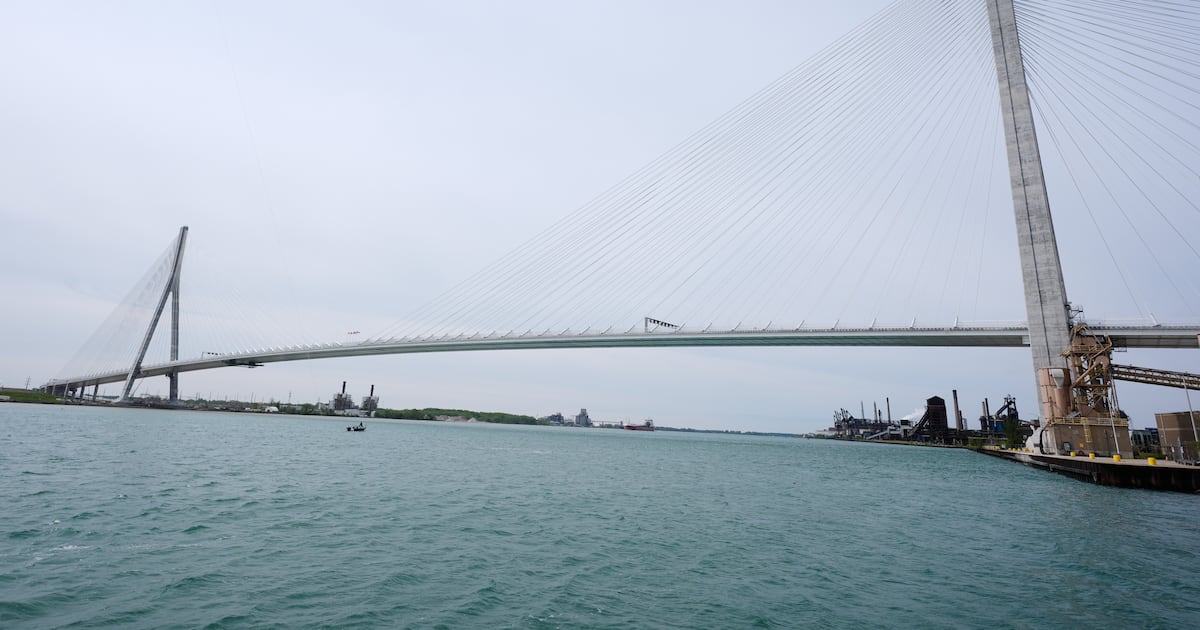
A New Era for North American Trade
After months of anticipation and high-stakes diplomatic maneuvering, the Gordie Howe International Bridge is officially scheduled to open to traffic on July 27. Housing, Communities and Infrastructure Canada confirmed the late-July launch on Friday, marking a pivotal moment for the busiest trade corridor in North America. The new cable-stayed bridge, which connects Windsor, Ontario, to Detroit, Michigan, is expected to provide critical relief to the aging Ambassador Bridge and streamline logistics for the thousands of businesses that rely on the crossing daily.
The Cost of Diplomacy: Revenue Sharing Shifts
While the opening date provides certainty for the region, it comes at a significant financial cost to Canada. Under the original 2012 Canada-Michigan Crossing Agreement, Canada agreed to front the entire $6.4 billion construction cost. In exchange, Canada was slated to collect 100 per cent of all toll profits until the investment was fully recouped—a process estimated to take approximately 50 years. However, the new terms announced Friday reveal a major concession: Canada will now receive only 50 per cent of toll profits for the first 15 years.
The remaining 50 per cent of revenue will be diverted into a newly established economic development fund. Furthermore, the Canadian government has agreed to a oversight mechanism where the United States must approve any toll changes that exceed 10 per cent or fall below regional averages. These adjustments follow intense public pressure from U.S. political figures, including Donald Trump, who recently characterized the original deal as unfair to American interests.
A Catalyst for Economic Growth
Despite the revenue concessions, officials on both sides of the border emphasize the long-term benefits of the project. The bridge features six lanes—three in each direction—and will rank among the five longest bridges on the continent. Beyond easing commuter congestion, the infrastructure is designed to bolster the automotive supply chain and support the rapid movement of goods between the two nations. As the ribbon-cutting ceremony nears, the Gordie Howe International Bridge stands as both a feat of modern engineering and a symbol of the complex, evolving economic partnership between Canada and the United States.
Ezra Levant Pledges Strict Compliance as Tamara Lich Seeks International Travel Rights
Red Deer Ranks Third Highest for Crime in Canadian Metros Amid National Decline
Gordie Howe Bridge: Deciphering the High-Stakes Toll Revenue Deal Between Canada and the U.S.
Section 338 Shockwave: U.S. Hits Canada With 50% Tariffs on 400 Products
Canadian Premiers Demand Return to 50/50 Federal Health-Care Funding Split
BC Lions Scramble for QB Depth: Tyrie Adams Signed Following Nathan Rourke Injury

Opinion: John Rustad Has to Go

B.C. Supreme Court Grants Cowichan Tribes Title to Historic Richmond Lands and Fishing Rights

Vancouver Canucks Gear Up for a Make-or-Break 2025–26 Season

Kamloops Blazers Announce Off-Season Changes Ahead of 2025–26 Season

BC Ferries Sparks Outcry Over Contract with Chinese Shipyard

A Taste of Autumn: Fall Okanagan Wine Festival 2025
-
Football6 days ago
2026 World Cup Final Lineups Revealed: Spain Stands Firm While Argentina Tinkers
-
energy5 days ago
Canada Offered to Double Oil Exports to U.S. in Failed Trade Negotiations, Hoekstra Reveals
-
Baseball6 days ago
Blue Jays Legend Duane Ward Passes Away at 62 After Championship Reunion
-
Ontario5 days ago
Former Tourism Minister Stan Cho Under Fire for $100,000 in Riding Association Expenses
-
LOCAL5 days ago
Cross-Border Smoke Crisis: Canada Issues Alerts as U.S. Wildfire Pollution Drifts North
-
british-columbia4 days ago
Investigation Underway Following Fatality at Historic Okanagan Lake Swim Event
-
nation4 days ago
Mayor Olivia Chow Targets Big Tech Pricing Tactics at Toronto Grocery Stores
-
nation4 days ago
RCMP Investigate String of Suspicious Fires in West Kelowna Neighborhood