BC STORIES
Cariboo Wildfires Show Signs of Stabilizing as Evacuation Orders Shift Across Region
Cariboo wildfires show signs of stabilizing as of Aug. 3, though Pear Lake remains out of control. Read the latest evacuation updates and response efforts.

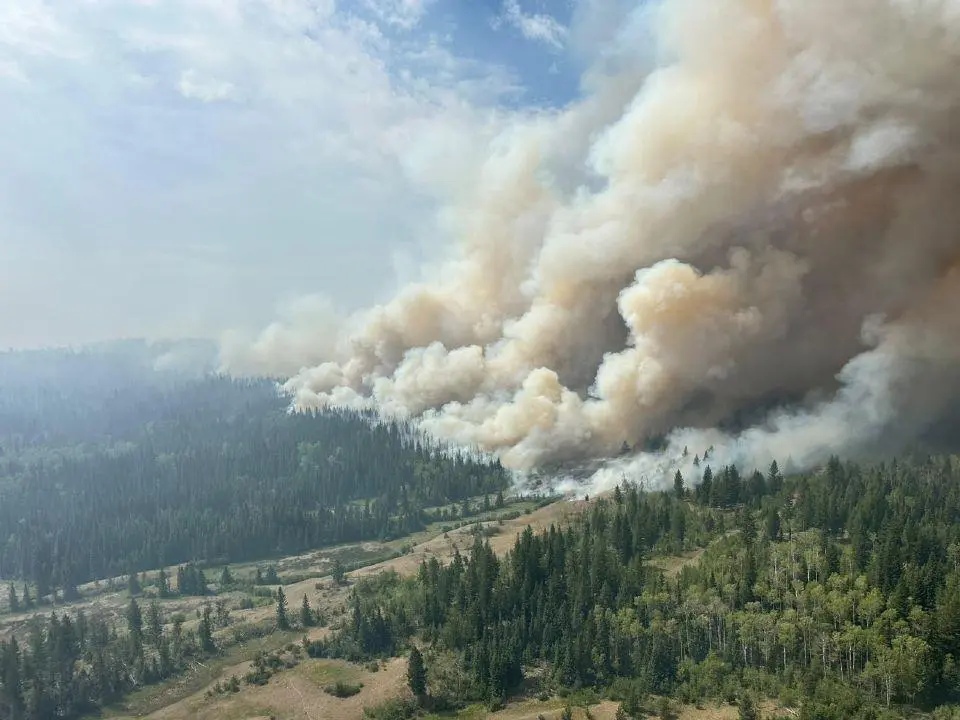
Conditions across the Cariboo wildfire landscape began stabilizing as of Monday, Aug. 3, despite weekend thunder and lightning storms. Firefighters with the BC Wildfire Service successfully extinguished or controlled multiple spot fires around Lac La Hache, Forest Grove, and Green Lake, though several massive blazes continue to burn out of control.
Progress and Rescinded Orders Near Felker Lake
In a positive update for nearby residents, the Cariboo Regional District rescinded its evacuation order and alert on Monday for the Felker Lake fire, which is now classified as being held at 4,217 hectares. In the Chilcotin Plateau, the 5,143-hectare Lessard Lake fire has begun self-extinguishing in alpine zones and previously burned areas, while the 1,588-hectare fire near Kluskoil Lake Park has seen minimal growth as crews near completion of a perimeter guard.
Pear Lake Fire Demands Massive Response
The largest active threat in the region remains the Pear Lake fire, which spans 115,250 hectares. Incoming incident commander Mark Healey reported that more than 500 wildland and structural firefighters are currently dedicated to the incident, joining 24 helicopters, 86 pieces of heavy equipment, and 214 structural protection units. Healey stressed that extreme fire behavior has been heightened by persistent drought, with the protection of life and property remaining the top priority.
Outgoing incident commander Bryce Moreira noted that recent shifts in wind improved visibility, allowing air tankers to drop retardant while ground crews establish heavy equipment lines along the northwest boundary. Around Clinton, Chasm, and 70 Mile House, crews are actively maintaining sprinkler systems, extinguishing hotspots along Highway 97, and carrying out controlled ignition operations to remove excess fuels.
Evacuation Statuses and Fire Growth Elsewhere
Evacuation orders and alerts remain active for the Village of Clinton, 70 Mile House, both shores of Green Lake, and residences along Highway 24. Officials reiterated the necessity of abiding by orders, referencing an incident last week where responders had to rescue a person who remained on their property. Meanwhile, terrain challenges persist at the 37,106-hectare French Bar Creek fire, where steep and rocky ground prompted the Thompson Nicola Regional District to expand evacuation orders to 10 additional addressed properties. Nearby, the 17,817-hectare Bonanza Creek fire is being fought by 58 firefighters and heavy machinery working on containment lines, while the 4,577-hectare Rim Lake fire remains out of control but is entirely surrounded by an established guard.



BC STORIES
Why a Familiar Political Name is Joining the Kamloops-North Thompson Race
John Kidder, husband of federal Green leader Elizabeth May, seeks the BC Green nomination in Kamloops-North Thompson for the upcoming election.

New Contender in Kamloops-North Thompson
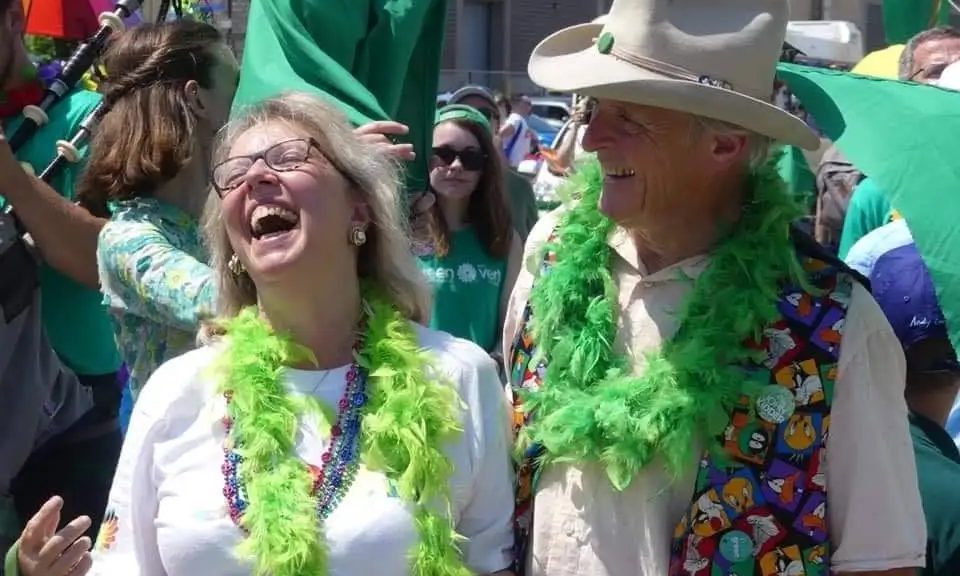
Voters in Kamloops-North Thompson will see a seasoned campaigner on the ballot as John Kidder seeks to represent the BC Green Party in the upcoming provincial election. The party recently circulated Kidder’s nomination form to members via email to collect the required signatures for Elections BC confirmation.
Kidder, who resides in Ashcroft, brings a long history of political involvement to the race. Though he has never held public office, he has previously campaigned in several provincial and federal elections under the Green banner, and also ran as a federal Liberal candidate in 2011. He is married to Elizabeth May, the leader of the federal Green Party.
The Provincial Race Takes Shape
Once his candidacy is formally confirmed by election authorities, Kidder will enter a competitive field. He is set to challenge BC Conservative incumbent Ward Stamer in the riding.
The ballot will also feature Kory Clark, a 24-year-old health-care worker running for the BC NDP, according to reports.
BC STORIES
Why OneBC’s Interim Leader Is Proposing an Election Pact With Conservatives
OneBC interim leader Dallas Brodie offers an election deal to B.C. Conservatives despite rival candidate Carson Binda running in Vancouver-Quilchena.
Interim Leader Proposes Cooperation Amid Overlapping Candidates
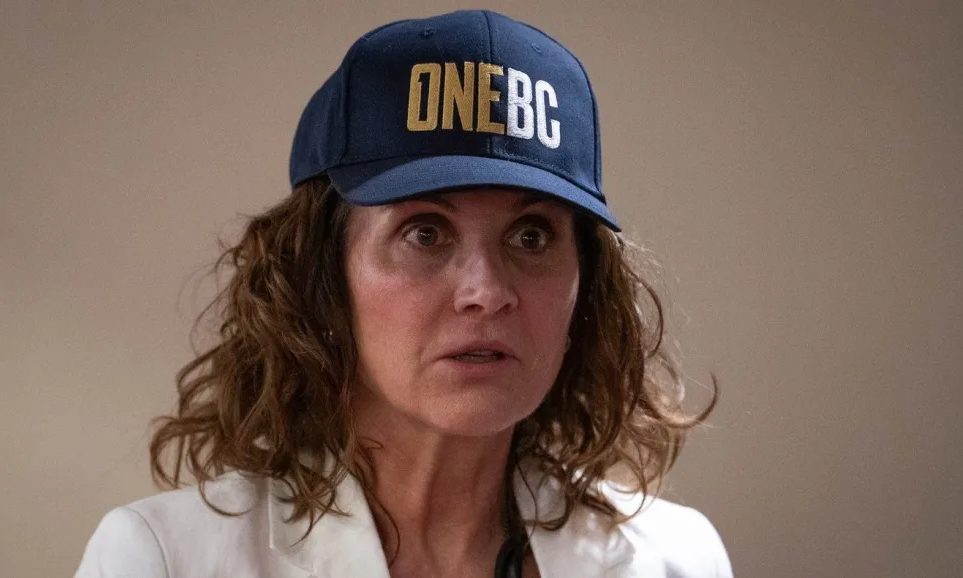
OneBC interim leader Dallas Brodie has expressed readiness to negotiate an election arrangement with the B.C. Conservatives, despite her former party putting forward a rival candidate in her Vancouver-Quilchena riding. Former Canadian Taxpayers Federation provincial director Carson Binda was announced on Sept. 29 as the Conservative candidate facing Brodie, who currently serves as the riding’s incumbent legislator.
Brodie questioned the Conservatives’ decision to compete against her, noting that OneBC had previously signaled goodwill by deciding not to field candidates in select ridings containing “true” Conservatives. Although earlier discussions occurred with B.C. Conservative interim leader Lorne Doerkson, OneBC has since revealed plans for candidates in two of those contested districts. Among them is Kelowna-Centre, a seat won by NDP margin of just 40 votes last election by Kristina Loewen. Brodie argued that her party represents the authentic conservative choice there and suggested Conservatives risk losing the seat to the NDP.
Tensions and History Between Conservative Factions
Offering to pull OneBC’s unannounced Kelowna-Centre candidate if the Conservatives enter discussions, Brodie criticized the opposing party’s reluctance to negotiate. She stated that her party has taken concrete steps toward making deals while accused the Conservatives of ignoring her party. Brodie remarked that the Conservatives “created me” in many ways, referencing her expulsion from the party caucus last year by then-leader John Rustad after she mocked residential school survivor testimony.
Addressing the prospect of electoral collaboration, Doerkson acknowledged that dialogue had occurred between the parties, though no formal agreement was reached. He affirmed that the party intends to bring conservative values to British Columbians following the election. OneBC originally formed as a breakaway Conservative faction in 2025, though it lacked official recognized party status in the legislature when the election campaign commenced.
BC STORIES
BC Greens Pledge Free Childcare by 2031 and Introduce Victoria-Swan Lake Candidate
BC Green Party leader Emily Lowan promises $10-a-day childcare expansion and universal free care by 2031, announcing Carolyn Howe for Victoria-Swan Lake.
Green Party Kick-Starts Campaign with Major Childcare Commitments
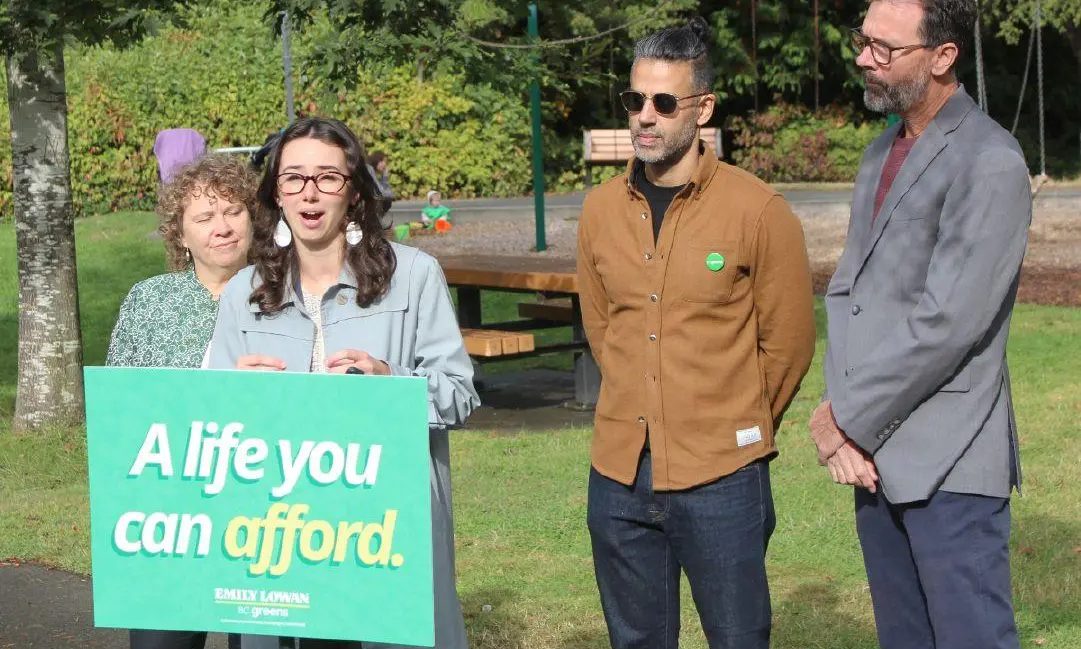
The BC Green Party has launched its provincial election campaign with a pledge to re-establish the expansion of $10 per day childcare, which had been paused since February. Party leader Emily Lowan announced a long-term strategy targeting universal free childcare across the province by 2031. To streamline access, the party plans to build durable centres and implement a centralized registration system to eliminate individual facility waitlists.
Investments in Early Childhood Educators
Under the Greens’ proposal, early childhood educators would receive paid practicums alongside a structured wage grid reaching $35 to $45 per hour by 2028. The initiative also aims to grant educators access to pension plans and extended health benefits. Lowan noted that roughly 40 cents of every dollar invested in childcare is returned in tax revenue as parents re-enter the workforce in various sectors across British Columbia.
Carolyn Howe Announced for Victoria-Swan Lake
During a Sept. 28 event at Browning Park in Saanich, the party formally introduced Carolyn Howe as its candidate for Victoria-Swan Lake. Howe, a teacher who has served as president of the Greater Victoria Teachers’ Association for nearly three years, spoke on local economic pressures and public services. She highlighted that B.C. currently faces the most expensive and complex childcare system in the country. Lowan herself will contest the Saanich North and the Islands riding in the upcoming provincial election on Oct. 24.
Your Current 3 Day Forecast — October 6, 2026

BC Lions Hold Off Toronto Argonauts Behind Sean Whyte’s Record Eight Field Goals

Search Continues After Ontario-Based Medical Flight Vanishes Near Massachusetts Coast
Your Current 3 Day Forecast — October 5, 2026
Your Current 3 Day Forecast — October 4, 2026

Summerland Transitions Remaining Properties to Prohibit-Entry Orders as Wildfire Evacuations End

Opinion: John Rustad Has to Go

B.C. Supreme Court Grants Cowichan Tribes Title to Historic Richmond Lands and Fishing Rights

Vancouver Canucks Gear Up for a Make-or-Break 2025–26 Season

Kamloops Blazers Announce Off-Season Changes Ahead of 2025–26 Season

BC Ferries Sparks Outcry Over Contract with Chinese Shipyard

A Taste of Autumn: Fall Okanagan Wine Festival 2025
-
 OPINIONS6 days ago
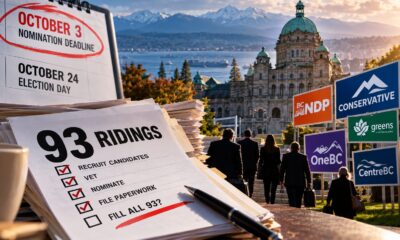
B.C.’s 93-Riding Scramble: Can the Parties Even Find Enough Candidates?
-
 BC STORIES4 days ago
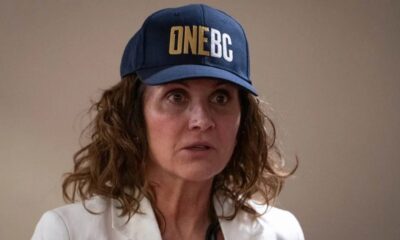
Why OneBC’s Interim Leader Is Proposing an Election Pact With Conservatives
-
 BC STORIES6 days ago
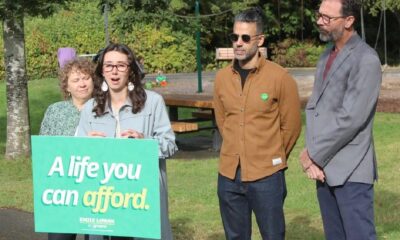
BC Greens Pledge Free Childcare by 2031 and Introduce Victoria-Swan Lake Candidate
-

 NATIONAL STORIES6 days ago
Will they use Chinese Steel over Canadian like Phase One?
-
SPORTS4 days ago
Maple Leafs vs Islanders Result: Easton Cowan Scores in 2-1 Win
-

 NATIONAL STORIES4 days ago
Why NDP Leader Avi Lewis Says the West Coast Pipeline Plan Risks Public Funds
-
SPORTS5 days ago
Why the Edmonton Oilers Will Be Without Ryan Nugent-Hopkins Against Vancouver
-
NATIONAL STORIES5 days ago
Why a Canadian Nationalist Group’s Hidden Recruitment Practices Are Drawing Scrutiny