BC STORIES
Evacuation Orders Issued for Over 20,000 Okanagan Residents as Wildfire Surges
Over 20,000 Okanagan residents evacuated as the 9,500-hectare Bald Range wildfire forces closures of Highway 97 and Summerland community operations.

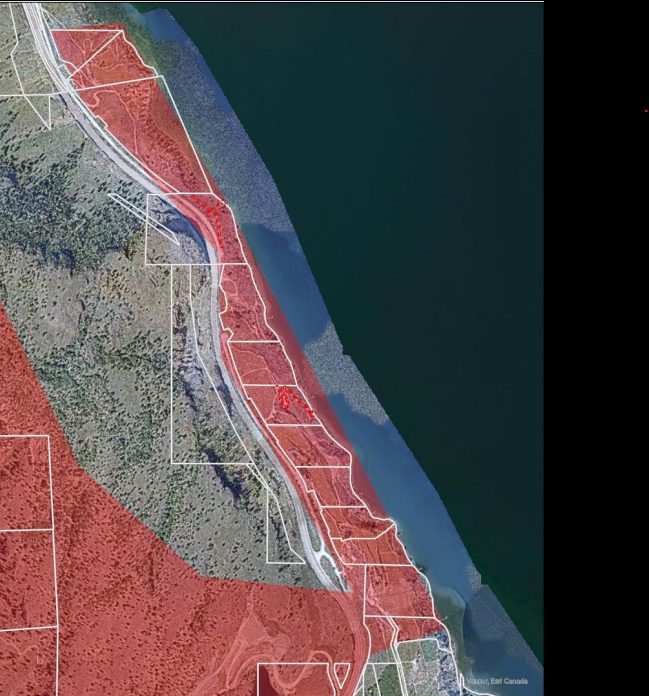
Emergency Evacuations Ordered Across Central Okanagan
More than 20,000 residents have been directed to leave their homes as the out-of-control Bald Range wildfire ballooned to 9,500 hectares Saturday morning. Central Okanagan Search and Rescue (COSAR) joined forces with the RCMP early Saturday to assist in evacuating the entire community of Summerland, successfully clearing several hundred homes during the overnight hours. Thousands of residents in nearby Peachland are also under evacuation orders or alerts.
Evacuee Support and Travel Warnings
Reception facilities have been set up to assist fleeing residents at the Penticton Trade and Convention Centre (273 Power Street), 550 Eckhardt Avenue W in Penticton, and the Westbank Lions Community Hall (2466 Main Street) in West Kelowna. Emergency crews faced additional hazards when navigation software attempted to route drivers around the Highway 97 closure. “A significant concern arose when a COSAR member stopped several people from driving into the fire. With Highway 97 closed, Google Maps was routing drivers onto the Summerland/Peachland Forest Service Road — directly into the fire area — in an attempt to reach Penticton,” COSAR stated, urging travelers to rely strictly on DriveBC for official road updates.
Highway Closures and Community Disruptions
The wildfire, which originated roughly 15 kilometres west of Summerland late in the afternoon of August 7, has severed key transportation corridors. Highway 97 is shut down in both directions from Peachland to Kickininee Provincial Park, though Highway 97C remains open. The emergency response has disrupted local events, forcing the cancellation of Penticton’s downtown Saturday markets and the Peachfest Parade.
Extreme Fire Behaviour and Firefighting Response
BC Wildfire Service (BCWS) crews, structural protection personnel, and a night vision helicopter continue to battle the blaze, which displayed Rank 5 aggressive behavior overnight as southwest winds pushed flames northeast. “Airtankers worked to drop retardant along the fire’s east flank in effort to protect structures and slow the fire’s spread to the east. Winds accelerated and fire behaviour became volatile and eventually compromised the safety and efficiency of airtanker objectives,” reported BCWS. The blaze is one of five official wildfires of note across British Columbia, and its cause remains under investigation. Official evacuation notices and updates can be reviewed at Summerland Public Notices.



BC STORIES
Why a Familiar Political Name is Joining the Kamloops-North Thompson Race
John Kidder, husband of federal Green leader Elizabeth May, seeks the BC Green nomination in Kamloops-North Thompson for the upcoming election.

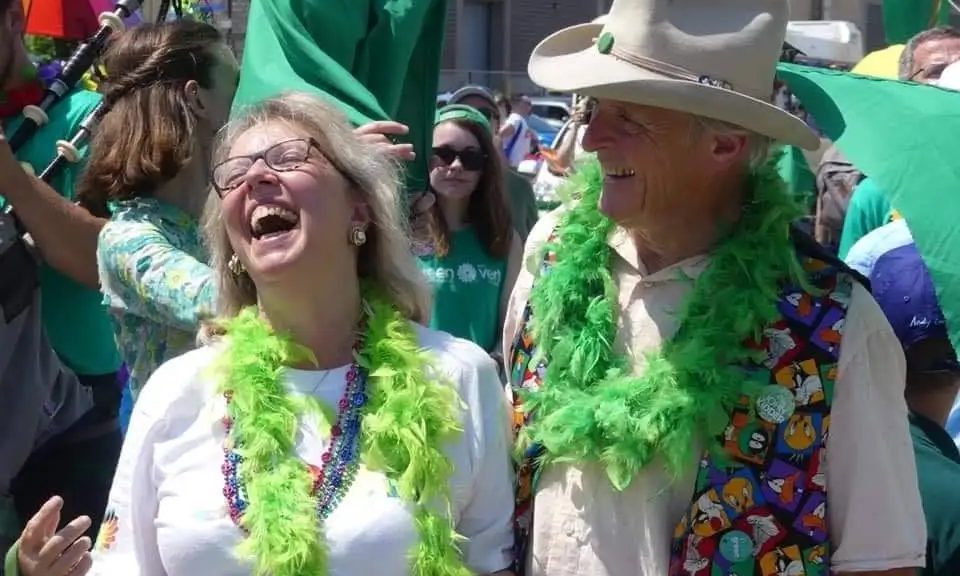
New Contender in Kamloops-North Thompson
Voters in Kamloops-North Thompson will see a seasoned campaigner on the ballot as John Kidder seeks to represent the BC Green Party in the upcoming provincial election. The party recently circulated Kidder’s nomination form to members via email to collect the required signatures for Elections BC confirmation.
Kidder, who resides in Ashcroft, brings a long history of political involvement to the race. Though he has never held public office, he has previously campaigned in several provincial and federal elections under the Green banner, and also ran as a federal Liberal candidate in 2011. He is married to Elizabeth May, the leader of the federal Green Party.
The Provincial Race Takes Shape
Once his candidacy is formally confirmed by election authorities, Kidder will enter a competitive field. He is set to challenge BC Conservative incumbent Ward Stamer in the riding.
The ballot will also feature Kory Clark, a 24-year-old health-care worker running for the BC NDP, according to reports.
BC STORIES
Why OneBC’s Interim Leader Is Proposing an Election Pact With Conservatives
OneBC interim leader Dallas Brodie offers an election deal to B.C. Conservatives despite rival candidate Carson Binda running in Vancouver-Quilchena.
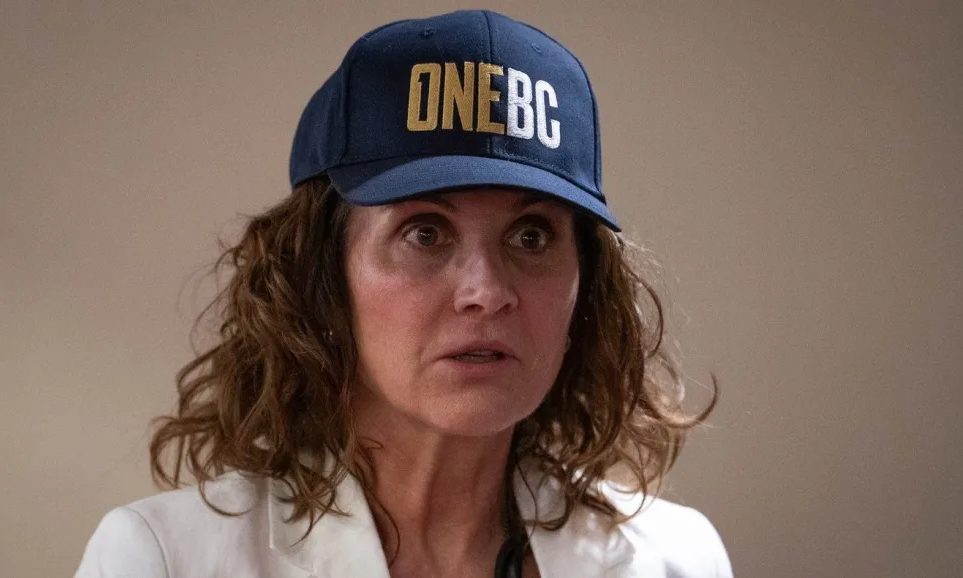
Interim Leader Proposes Cooperation Amid Overlapping Candidates
OneBC interim leader Dallas Brodie has expressed readiness to negotiate an election arrangement with the B.C. Conservatives, despite her former party putting forward a rival candidate in her Vancouver-Quilchena riding. Former Canadian Taxpayers Federation provincial director Carson Binda was announced on Sept. 29 as the Conservative candidate facing Brodie, who currently serves as the riding’s incumbent legislator.
Brodie questioned the Conservatives’ decision to compete against her, noting that OneBC had previously signaled goodwill by deciding not to field candidates in select ridings containing “true” Conservatives. Although earlier discussions occurred with B.C. Conservative interim leader Lorne Doerkson, OneBC has since revealed plans for candidates in two of those contested districts. Among them is Kelowna-Centre, a seat won by NDP margin of just 40 votes last election by Kristina Loewen. Brodie argued that her party represents the authentic conservative choice there and suggested Conservatives risk losing the seat to the NDP.
Tensions and History Between Conservative Factions
Offering to pull OneBC’s unannounced Kelowna-Centre candidate if the Conservatives enter discussions, Brodie criticized the opposing party’s reluctance to negotiate. She stated that her party has taken concrete steps toward making deals while accused the Conservatives of ignoring her party. Brodie remarked that the Conservatives “created me” in many ways, referencing her expulsion from the party caucus last year by then-leader John Rustad after she mocked residential school survivor testimony.
Addressing the prospect of electoral collaboration, Doerkson acknowledged that dialogue had occurred between the parties, though no formal agreement was reached. He affirmed that the party intends to bring conservative values to British Columbians following the election. OneBC originally formed as a breakaway Conservative faction in 2025, though it lacked official recognized party status in the legislature when the election campaign commenced.
BC STORIES
BC Greens Pledge Free Childcare by 2031 and Introduce Victoria-Swan Lake Candidate
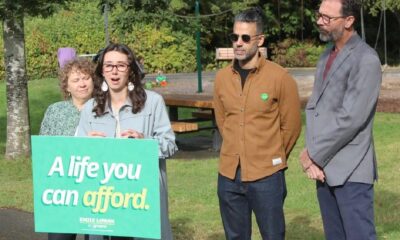
BC Green Party leader Emily Lowan promises $10-a-day childcare expansion and universal free care by 2031, announcing Carolyn Howe for Victoria-Swan Lake.
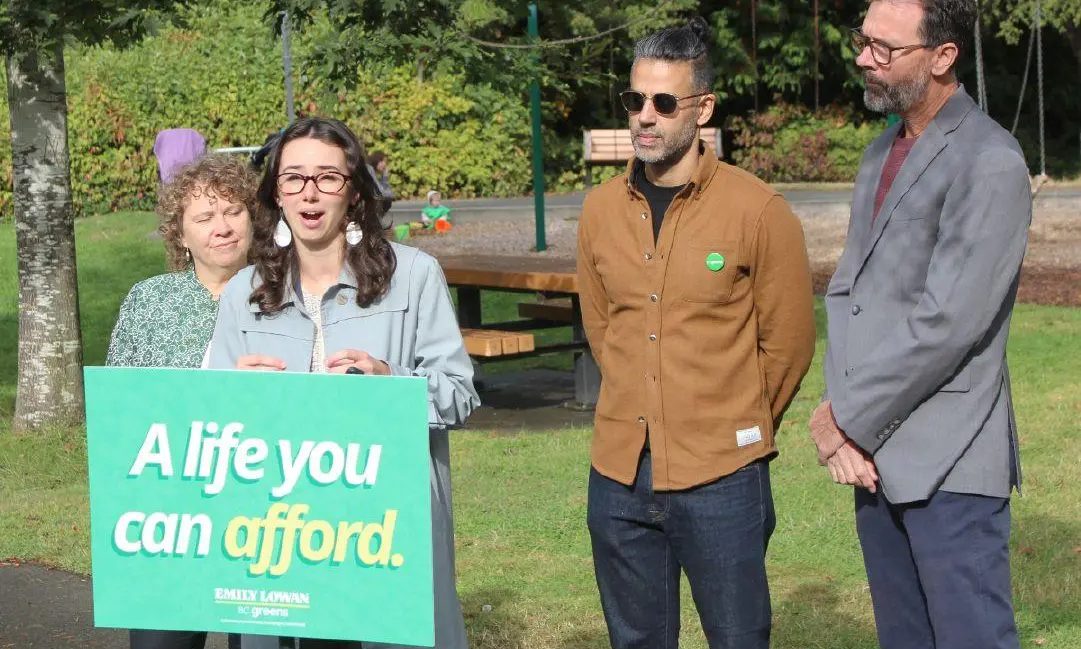
Green Party Kick-Starts Campaign with Major Childcare Commitments
The BC Green Party has launched its provincial election campaign with a pledge to re-establish the expansion of $10 per day childcare, which had been paused since February. Party leader Emily Lowan announced a long-term strategy targeting universal free childcare across the province by 2031. To streamline access, the party plans to build durable centres and implement a centralized registration system to eliminate individual facility waitlists.
Investments in Early Childhood Educators
Under the Greens’ proposal, early childhood educators would receive paid practicums alongside a structured wage grid reaching $35 to $45 per hour by 2028. The initiative also aims to grant educators access to pension plans and extended health benefits. Lowan noted that roughly 40 cents of every dollar invested in childcare is returned in tax revenue as parents re-enter the workforce in various sectors across British Columbia.
Carolyn Howe Announced for Victoria-Swan Lake
During a Sept. 28 event at Browning Park in Saanich, the party formally introduced Carolyn Howe as its candidate for Victoria-Swan Lake. Howe, a teacher who has served as president of the Greater Victoria Teachers’ Association for nearly three years, spoke on local economic pressures and public services. She highlighted that B.C. currently faces the most expensive and complex childcare system in the country. Lowan herself will contest the Saanich North and the Islands riding in the upcoming provincial election on Oct. 24.
Your Current 3 Day Forecast — October 6, 2026

BC Lions Hold Off Toronto Argonauts Behind Sean Whyte’s Record Eight Field Goals

Search Continues After Ontario-Based Medical Flight Vanishes Near Massachusetts Coast
Your Current 3 Day Forecast — October 5, 2026
Your Current 3 Day Forecast — October 4, 2026

Summerland Transitions Remaining Properties to Prohibit-Entry Orders as Wildfire Evacuations End

Opinion: John Rustad Has to Go

B.C. Supreme Court Grants Cowichan Tribes Title to Historic Richmond Lands and Fishing Rights

Vancouver Canucks Gear Up for a Make-or-Break 2025–26 Season

Kamloops Blazers Announce Off-Season Changes Ahead of 2025–26 Season

BC Ferries Sparks Outcry Over Contract with Chinese Shipyard

A Taste of Autumn: Fall Okanagan Wine Festival 2025
-

 OPINIONS6 days ago
B.C.’s 93-Riding Scramble: Can the Parties Even Find Enough Candidates?
-
 BC STORIES4 days ago
Why OneBC’s Interim Leader Is Proposing an Election Pact With Conservatives
-
 BC STORIES6 days ago
BC Greens Pledge Free Childcare by 2031 and Introduce Victoria-Swan Lake Candidate
-

 NATIONAL STORIES6 days ago
Will they use Chinese Steel over Canadian like Phase One?
-
SPORTS4 days ago
Maple Leafs vs Islanders Result: Easton Cowan Scores in 2-1 Win
-

 NATIONAL STORIES4 days ago
Why NDP Leader Avi Lewis Says the West Coast Pipeline Plan Risks Public Funds
-
SPORTS5 days ago
Why the Edmonton Oilers Will Be Without Ryan Nugent-Hopkins Against Vancouver
-
NATIONAL STORIES5 days ago
Why a Canadian Nationalist Group’s Hidden Recruitment Practices Are Drawing Scrutiny