COMMUNITY
Fewer Black Bears Killed as Pacific Rim Communities See Drop in Wildlife Conflicts
Black bear conflicts and lethal encounters have dropped significantly in Tofino and Ucluelet this year, supported by new local enforcement initiatives.

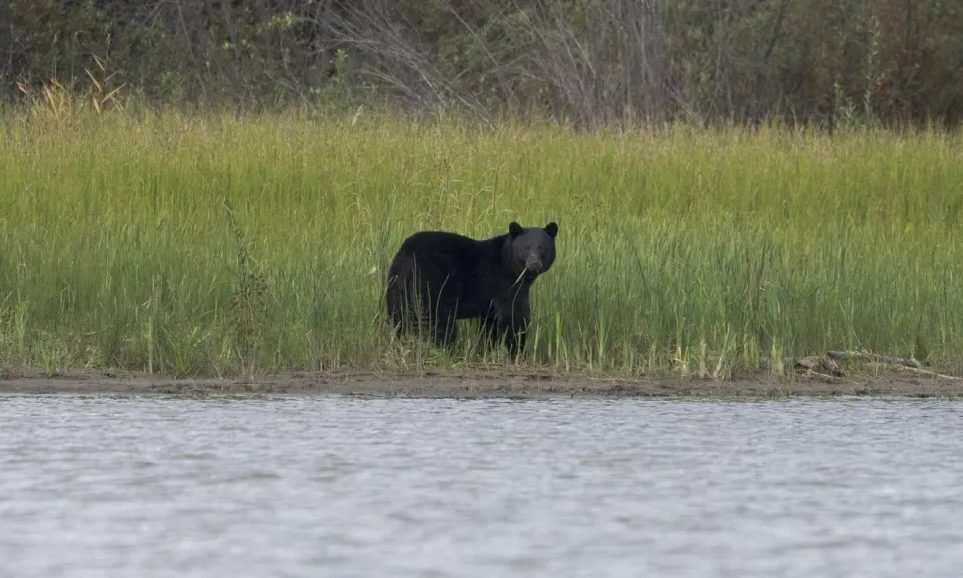
Significant Reduction in Local Bear Mortality
Lethal encounters with black bears in the Tofino and Ucluelet area have fallen sharply this year, with just a single bear dispatched. The outcome marks a contrast to 2025, when 12 bears were killed due to food conditioning. According to Chris Read of WildSafeBC Pacific Rim, many of the animals killed in 2025 had become heavily accustomed to accessible, unsecure human food sources during the preceding two years.
Read noted that black bears are currently sticking to natural food, even though unsecured attractants remain present across the region. While bears are being displaced from traditional habitats, Read emphasized their ability to adapt around human populations and stressed the importance of securing garbage to minimize human-wildlife friction.
Garbage Remains Top Provincial Attractant
Data from WildSafeBC highlights secure waste management as the primary factor in reducing interactions. Provincial statistics show that between 2014 and 2018, the BC Conservation Officer Service logged 21,020 reports citing garbage as an attractant. The second highest cause—residential fruit trees and gardens—accounted for 5,395 reports over the same timeframe.
Proactive Enforcement and Community Integration
In an effort to address the issue locally, Ucluelet established a pilot program this past summer by hiring Cameron McKieve as a wildlife safety response officer. Working alongside conservation officers, McKieve initiated 50 enforcement actions, conducted 36 educational interactions, issued eight municipal tickets, and served six provincial warnings or orders. He has since been retained as a full-time municipal bylaw officer.
Due to the current provincial election period, representatives from the BC Conservation Officer Service and McKieve are unable to provide interviews while the provincial government operates under caretaker restrictions limited to essential communications.
WildSafeBC’s local outreach incorporates traditional cultural knowledge from the Nuu-chah-nulth people regarding coexistence with wildlife. Read expressed optimism that residents will continue learning to respect bears at a distance to prevent animals from becoming habituated or aggressive.






BC STORIES
What It Now Costs to Live on Vancouver Island as Living Wages Rise for 2026
Updated 2026 living wage rates show increases across Vancouver Island, reaching $28.20 in Greater Victoria as housing and food expenses continue to climb.
Living Wages Increase Across Vancouver Island
Working families across Vancouver Island are facing higher expenses, with new 2026 calculations showing significant hourly wage increases required to meet basic living costs. In Greater Victoria, each working parent in a family of four now needs to earn $28.20 an hour, reflecting a 2.9 per cent increase. Salt Spring Island recorded the highest regional requirement at $28.50 per hour after a 0.2 per cent rise.
Substantial jumps were also recorded in other island communities. The Comox Valley experienced a 5.3 per cent surge, raising its living wage to $26.70 per hour. The living wage in the Cowichan Valley rose 4.1 per cent to $26.80, while Port Alberni saw a 5.1 per cent increase to $23.75. In Nanaimo, the hourly rate grew 2.7 per cent to reach $25.05.
Provincial Benchmarks and Growing Wage Gaps
The updated 2026 figures encompass 22 communities across British Columbia, establishing the hourly pay required for two working parents supporting two children to cover essential needs like food, housing, child care, and transportation. Rates across B.C. range from $22.15 in Grand Forks to $30.50 in Whistler. Metro Vancouver’s required rate rose 2.5 per cent to $28.55, creating a $10.30 difference above the provincial minimum wage of $18.25. In Metro Vancouver alone, 35 per cent of paid workers—totaling more than 500,000 people—earn less than the living wage threshold.
Housing, Food, and Child Care Drive Rising Costs
Housing remains the single largest expense for families, followed closely by food expenses, which increased by 4.1 per cent over the past year. Additional budget burdens stem from rising child care costs, with out-of-pocket expenses climbing by nearly $160 monthly for a four-person family in Metro Vancouver.
“Although the rental market has softened and market rents have stabilized, the Canada Mortgage and Housing Corporation reports that rent reductions and vacancies are concentrated among new, high-end buildings,” said Iglika Ivanova, report lead author and co-executive director of BC Policy Solutions. “The rental market remains tight for lower-income households, particularly families needing two or more bedrooms.”
Broader Economic Pressures
The report highlights that essential items such as fuel, food, and clothing continue to see price increases, aggravated by international trade friction and the conflict in Iran. While government programs have provided some relief, the report notes that the cancellation of B.C.’s Climate Action Tax Credit has increased the financial difficulty for modest-income households.
COMMUNITY
This weekend in West Coast: Fri 13 — Sun 15 November
1 thing to do in West Coast, Fri 13 — Sun 15 November.

The West Coast Current · What’s on
This weekend
Fri 13 — Sun 15 November
What’s on between now and Sunday night.
The week at a glance Fri 13 — Sun 15 November
Nothing yet
Nothing yet
What’s on 1 event
Pen Pals
- Time
- 7:30 pm
- Where
- Portal Players Dramatic Society, 4904 Argyle St, Port Alberni
is an epistolary play that tells the story of the extraordinary friendship between two ordinary women.
Also coming up 8 of 32
- Mon, Nov 16 Port Alberni: Child & Family Wellness Drop-in
- Mon, Nov 16 Men’s Circle
- Mon, Nov 16 Monday Night Movies
- Tue, Nov 17 Anacla: Child & Family Wellness Drop-in
- Tue, Nov 17 Vancouver Food Fish Distribution
- Wed, Nov 18 Vancouver Elder Food Fish Distribution
- Wed, Nov 18 Christmas Trees Decorating
- Thu, Nov 19 Making Connections
Dates and names only — we confirm the details with each organiser in the edition that runs them.
Running something? Get it in front of your neighbours.
The West Coast Current publishes this every week for readers looking for something to do. Listing is free, and what you send us is what runs — so check the details before you send them. Or post it to your municipal calendar and we will find it.
BC STORIES
Narrow Escape from Fatal Train Crash Highlights Veteran Leroy George’s Korean War Story
Korean War veteran Leroy George shared his survival of the 1950 Canoe River train crash and combat experiences during a ceremony in Courtenay.

Narrow Survival Before Reaching the Front Lines
A seat swap during a train journey in November 1950 saved the life of Canadian military veteran Leroy George, who spent 40 years in the armed forces before retiring. Traveling from Shilo, Manitoba, to Fort Lewis, Washington, for training, George stepped away from a card game to give his seat to Pvt. Basil Patrick McKeown. Moments later, the train collided with another locomotive in what became known as the Canoe River train crash in Valemount.
The disaster claimed 21 lives, including 17 soldiers and crew members from both trains. Among those killed were McKeown and George’s cousin, Austin Emery George. Following the accident, official miscommunication led George’s young wife, Ruthie—whom he had married on Aug. 7, 1950, just days before enlisting—to receive a telegram stating he had died. The mistake was rectified days later after a roll call in Wainwright, Alberta.
Honouring Indigenous Veterans in Courtenay
George detailed his wartime experiences on Friday, Nov. 6, during a ceremony honoring Indigenous veterans held at the K’ómoks First Nation Gym in Courtenay. Monuments honoring the Canoe River crash victims stand in Valemount, Starratt Wildlife Sanctuary, Jasper, and at CFB Shilo Memorial Park in Manitoba. Reflecting on the gathering, George noted he had attended many events, but rarely ones focusing specifically on the Korean War.
combat and Survival in Korea
Raised in Shelburne, Nova Scotia, George joined the local Reserve Army artillery unit after participating in cadets. He later hitchhiked 153 miles to Halifax with a friend to enlist. His transport ship encountered a typhoon en route to Korea, marking his introduction to severe danger.
On his first day of combat action, George survived an explosion when the truck he was riding in hit a landmine, destroying its wheels and killing several soldiers, including the driver. Later in his 11-month deployment, he served on a crew tasked with identifying the remains of two fallen comrades after an artillery shell exploded in a gun breach. George’s service in Korea concluded after an above-ground shell blast injured his right eye.
Your Current 3 Day Forecast — November 22, 2026
Your Current 3 Day Forecast — November 21, 2026

B.C. Lawmaker Urges New Premier to Retain AI Lawsuit After Latest ChatGPT Revelations

BC Conservatives Assign Key Legislative Roles Following Cabinet Selection

What B.C.’s New Conservative Government and Cabinet Mean for You
Your Current 3 Day Forecast — November 20, 2026

Opinion: John Rustad Has to Go

B.C. Supreme Court Grants Cowichan Tribes Title to Historic Richmond Lands and Fishing Rights

BC Ferries Sparks Outcry Over Contract with Chinese Shipyard

Vancouver Canucks Gear Up for a Make-or-Break 2025–26 Season

Kamloops Blazers Announce Off-Season Changes Ahead of 2025–26 Season

A Taste of Autumn: Fall Okanagan Wine Festival 2025
-
 BC STORIES4 days ago
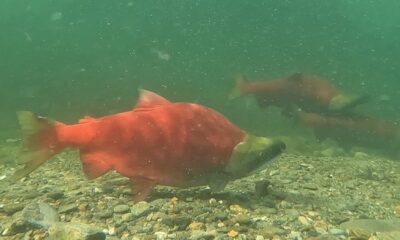
Shrinking Fraser River Sockeye Numbers Threaten B.C. Economy, First Nations Culture, and Local Tourism
-
 NATIONAL STORIES6 days ago
How a Fake Invoice Cost a Shuswap Business Over $24,000
-
 BC STORIES4 days ago
Why B.C.’s New Conservative Government Is Waiting Until Spring to Convene the Legislature
-
6 days ago
Your Current 3 Day Forecast — November 16, 2026
-
SPORTS5 days ago
Why the International Ice Hockey Federation Website Went Offline Following World Junior Decision
-
 BC STORIES4 days ago
What You Need to Know Before Donating Online After Alleged Wildfire Fundraiser Scam
-
5 days ago
Your Current 3 Day Forecast — November 17, 2026
-
SPORTS5 days ago
Inside Toronto’s Royal Rodeo, Young Riders Show Grit in Rough-Stock Events