HEALTH
Kitimat LNG Flaring Sparks Local Health Fears Amid Economic Boom
Massive gas flaring at Kitimat’s LNG Canada terminal sparks health concerns and regulatory scrutiny despite promises of long-term economic growth.


Rising Emissions and Community Concern
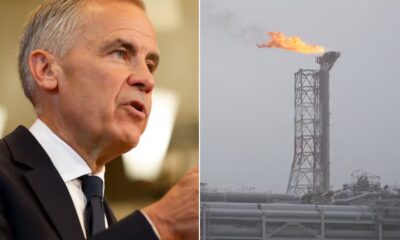
The skyline over Kitimat, British Columbia, has recently been dominated by massive towers of fire as the $40 billion LNG Canada export terminal moves through its critical commissioning phase. While the project is hailed as a cornerstone of national energy infrastructure, the persistent flaring has triggered a wave of health concerns among local residents who fear the long-term impacts of the emissions.
Ankur Patel, a local nurse, reports a noticeable uptick in respiratory complaints coinciding with the flaring events. According to Patel, community members are increasingly presenting with symptoms such as persistent coughing, lung irritation, and shortness of breath. He is calling for a more comprehensive health impact assessment and more robust monitoring of atmospheric contaminants to ensure the safety of the population.
Regulatory Overages and Data Gaps
The intensity of the flaring has drawn scrutiny from the scientific community. Research conducted by Laura Minet of the University of Victoria, based on freedom of information records, revealed that gas volumes flared between October and January significantly exceeded permitted limits. In some instances, warm and wet flares surpassed regulatory thresholds by 45 times the allowed volume.
While LNG Canada maintains that monitoring stations show pollutants like nitrogen dioxide and sulphur dioxide remain at safe levels, critics argue the current data is insufficient. Minet points out that monitoring is limited to specific contaminants and does not cover every residential area, leaving potential gaps in understanding how pollutants are dispersing through the local microclimate.
Economic Promise vs. Environmental Cost
Despite the friction, local officials remain optimistic about the project’s long-term utility. Kitimat Mayor Phil Germuth characterized the current flaring as a “short-term discomfort” necessary for “significant long-term gain.” The project, backed by global giants including Shell and Petronas, represents the largest private sector investment in Canadian history and is expected to provide decades of employment and economic stability.
LNG Canada has stated that the increased flaring is a temporary safety measure used to combust natural gas during the early operational stages. The company expects these activities to subside once the facility transitions into regular operations, promising to minimize further disruptions to the community while fueling Canada’s emergence as a major global LNG exporter.








BC STORIES
What 5 Neurologist Resignations Mean for Regional Health Care at Interior Health
Five Interior Health neurologists have resigned following expanded regional on-call demands, adding to previous physician departures in the B.C. region.

Five Specialists Step Down Following Regional On-Call Mandate
Five neurologists have resigned from their positions with Interior Health after being required to expand their on-call coverage across the entire health authority region via internet and telephone services. According to Doctors of B.C. president Adam Thompson, the mandate served as a tipping point after physicians expressed that the arrangement was not viable, citing concerns over workload levels.
Pattern of Physician Departures Across Regional Facilities
The decision marks another instance of staff departures within the health authority. Previous incidents include the resignation of all obstetricians and gynecologists at Kamloops’ Royal Inland Hospital last October due to workload, alongside four psychiatrists leaving Vernon Jubilee Hospital that same month. Furthermore, seven pediatricians resigned from Kelowna General Hospital between 2023 and 2025, which led to an internal report highlighting a decline in trust between physicians and administration.
Calls for Collaboration and Health Authority Response
Thompson stressed that health authority administrators must listen to and collaborate with frontline physicians to address ongoing service issues across provincial specialties. In response, Dr. Kirstie McLelland, executive medical director of clinical operations for Interior Health South, stated that election-period communication rules limited detailed comment, but affirmed that the authority remains committed to working with neurologists to meet staff rules and bylaws while delivering required care. She added that members of the public should not hesitate to seek neurology services if needed.
BC STORIES
B.C. Faces an Early and Hard-Hitting Flu Season as Symptoms Intensify
B.C. flu season arrives early as Health Canada reports elevated activity. Learn about the dominant H1N1 strain, severe symptoms, and vaccine availability.

Early Arrival and Severe Symptoms
Influenza activity in British Columbia has surged earlier than usual this year, bringing illness that health professionals describe as particularly intense. According to Health Canada data, flu test positivity across the province is running above average for this time of year, departing from the typical pattern where cases climb slowly toward a holiday peak.
Pharmacists note that the current wave is taking a heavier toll on patients compared to last year. Pharmasave pharmacist Fairuz Siraj stated, “This year it’s hitting hard. We’re seeing a lot of cases of people coming down, feeling ill, and taking more time to recover. A lot more severe type of illness than what we saw last year.”
Dominant Strain and Vaccine Alignment
Data from the Public Health Agency of Canada and the BC Centre for Disease Control show that B.C. registered a “moderate” flu activity level during the first week and a half of October, with wastewater indicators rising at multiple monitoring locations. Meanwhile, other Canadian provinces continue to report “low” or “very low” activity.
The dominant virus strain in circulation is H1N1, a form of Influenza A. On Oct. 7, B.C. Provincial Health Officer Dr. Bonnie Henry announced the launch of the provincial vaccination campaign 10 days ahead of the usual schedule. Because scientists anticipated that H1N1 would lead cases this season, the current vaccine was formulated specifically to target it. Dr. Brian Ward, a scientist at the McGill University Health Centre, noted that “so far, so good,” though he cautioned that flu viruses can mutate as the season progresses. Ward added it remains too early to know if mid-season mutations will occur and stated he is unaware of any predicted mutations that would reduce vaccine efficacy.
Vaccine Access Details
Free influenza immunizations are currently accessible to B.C. seniors and individuals in high-risk categories. Siraj advised that members of the general public seeking early protection may check walk-in clinics for availability or wait for their individual booking notification links, which are expected in late October or early November.
HEALTH
Coquihalla Highway Reopens Near Merritt Following Morning Crash That Injured Four
The Coquihalla Highway north of Merritt has reopened following a Saturday morning vehicle crash that resulted in four people being taken to the hospital.

Traffic Resumes Following Serious Morning Incident
Four people were hospitalized, including three in critical condition, after a motor vehicle incident occurred north of Merritt on Saturday morning, October 17.
DriveBC reported that the Coquihalla Highway was reopened in both directions from Exit 290 to Exit 315 at approximately 4:00 p.m., following the earlier closure.
Emergency Responders Deploy Air Ambulances
BC Emergency Health Services dispatched multiple resources after receiving a call at approximately 8:35 a.m. The response included two air ambulances, three primary care paramedic ambulances, one advanced care paramedic ambulance, and a paramedic supervisor.
According to BCEHS, crews provided emergency medical care at the scene. Two of the three critically injured patients were flown to the hospital via air ambulance, while a fourth patient was taken to the hospital in stable condition.

Why the Early Election Gamble Backfired on the NDP

Why Fake Signs Targeted a Small Green Party Campaign on B.C. Election Eve

Why the Conservatives’ Majority Win in Kelowna-Mission Signals Big Changes for Local Healthcare and Economy

Why B.C.’s Latest Election Results Are Sparking Renewed Calls for Voting Reform
Your Current 3 Day Forecast — October 27, 2026
Why First Nations Leaders Are Gathering in Ottawa to Push Back on Fast-Tracked Resource Projects

Opinion: John Rustad Has to Go

B.C. Supreme Court Grants Cowichan Tribes Title to Historic Richmond Lands and Fishing Rights

Vancouver Canucks Gear Up for a Make-or-Break 2025–26 Season

BC Ferries Sparks Outcry Over Contract with Chinese Shipyard

Kamloops Blazers Announce Off-Season Changes Ahead of 2025–26 Season

A Taste of Autumn: Fall Okanagan Wine Festival 2025
-

 SPORTS5 days ago
Why B.C. Lions Starters Are Resting as the Regular Season Concludes Against Winnipeg
-

 BC STORIES5 days ago
BC Conservatives Promise Forestry Overhaul to Revive Jobs as NDP Points to Millions in Existing Investment
-

 OPINIONS5 days ago
How Minor Parties and Strategic Balloting Could Shift the Upcoming B.C. Election
-

 BC STORIES6 days ago
Police Seek Witnesses After Fatal Wrong-Way Collision Near Merritt
-
5 days ago
Your Current 3 Day Forecast — October 22, 2026
-
6 days ago
Your Current 3 Day Forecast — October 21, 2026
-
NATIONAL STORIES6 days ago
Highland Valley Copper Workers Could Strike Saturday as Union Issues Notice
-

 HEALTH6 days ago
Coquihalla Highway Reopens Near Merritt Following Morning Crash That Injured Four