POLITICS
New Global Trade War: Trump Administration Targets Canada and EU with Fresh Tariffs Over Forced Labor Claims
Trump administration proposes 10-12.5% tariffs on 60 countries including Canada and the EU, citing forced labor concerns in a massive Section 301 trade probe.


A New Wave of Protectionism
The Trump administration has escalated its trade offensive by proposing a sweeping new set of tariffs on 60 economies, including major allies like Canada and the European Union. Issued late Tuesday by the U.S. Trade Representative’s (USTR) office, the proposal outlines a multi-tiered tariff structure of 10 per cent and 12.5 per cent. The administration claims these measures are a direct response to a Section 301 investigation which found that these nations failed to adequately curb the trade of goods produced via forced labor.
Targeting Key Allies and Global Competitors
Under the new framework, a 10 per cent additional duty will be applied to imports from Canada, Mexico, the United Kingdom, and the European Union, among others. The USTR categorized these nations as having only partial schemes in place to combat forced labor. Meanwhile, a steeper 12.5 per cent rate is set for 45 other countries, including China, India, Japan, and South Korea. U.S. Trade Representative Jamieson Greer defended the move, stating that the failure of trading partners to address forced labor creates an “unlevel playing field” for American workers.
Global Backlash and Legal Justifications
The timing of the announcement is critical, as it precedes the July 24 expiration of temporary tariffs previously struck down by the U.S. Supreme Court. Critics, particularly in Europe, have slammed the move as a political maneuver rather than a human rights initiative. Bernd Lange, chair of the European Parliament’s trade committee, called the findings “utterly absurd,” suggesting the administration is seeking legal justifications for pre-determined tariff targets. While the EU recently passed laws to ban forced labor products, the USTR argued these measures are insufficient and delayed in implementation.
Economic Exemptions and Next Steps
Despite the broad scope of the proposal, the USTR has carved out exemptions for critical commodities, including energy, rare earth metals, pharmaceuticals, and certain agricultural products like beef and coffee. These exemptions aim to mitigate the inflationary impact on U.S. consumers and essential industries. A public comment period is open until July 6, with a high-stakes hearing scheduled for July 7 to determine the finality of these trade penalties.

LOCAL
Why a Kelowna council candidate’s humorous signs are attracting international attention
Kelowna city council candidate Brady Rogers goes viral globally after American influencer shares his funny campaign sign, driving unexpected donations.


Viral exposure sparks worldwide donations
An online post by American influencer Mandi Jung highlighting a Kelowna municipal campaign sign has triggered global attention and financial contributions. Jung shared an image of one of Brady Rogers’s 35 lawn signs with her 100,000 followers on X, calling it “the most millennial thing I have seen in my entire life.” The post garnered 147,000 likes, while an associated video reel amassed roughly 1.5 million views, driving unexpected international interest toward the local race.
“This last week especially has been pretty wild,” Rogers said. “It’s been very unexpected. Locally I’ve been getting attention, but then somebody in the states I guess found me and made a reel about my campaign and it’s I think had one and a half million views or something.”
Humour as a voter engagement strategy
The 33-year-old candidate, who operates a business 3D-printing household items from recycled plastic, turned to social media to launch his campaign. “I decided I wanted some signs and had some funny ideas, so I put it out on Instagram to raise some money and set up a campaign,” Rogers said.
His physical campaign signs state, “Brady Rogers for city council. Don’t worry, I’ll fix everything. Terms and conditions apply.” Readers scanning a QR code on the signs are directed to a website where Rogers openly states that he lacks qualification, lacks political expertise, and dislikes politics, before concluding, “Fine, I’ll do it.” Rogers explained that his lighthearted approach aims to capture public focus and motivate residents to participate in voting.
Policy proposals and local platform
Beyond the viral marketing, Rogers is focusing on city governance and community challenges. “Our city has a lot of good initiatives and good work being done on it. But I’m looking at how we can better integrate some of those initiatives and perhaps provide more unified leadership on it,” he stated.
His platform addresses specific business and resident concerns, particularly regarding street-level drug use. “There’s more the city can be doing to address the immediate concerns that businesses and residents have around things like open drug use. I’ve been looking into the idea of perhaps testing a zero-tolerance policy in Kelowna around open drug use. It’s not going to stop people from doing drugs, but I think it would mean a lot to businesses if we could at least push the drug use off the streets,” Rogers said.
BC STORIES
Why B.C. Driver Insurance Rates Could Shift Under a Proposed ICBC Overhaul
B.C. party leaders clash over ICBC’s no-fault insurance system following a leaked letter outlining Conservative plans for a hybrid coverage model.

Political Clashes Erupt Over Leaked Correspondence
A debate over the future of auto coverage in British Columbia has intensified after a Sept. 29 correspondence signed by B.C. Conservative Leader Lorne Doerkson became public on Oct. 6. The document reveals party plans to move away from the current system managed by the Insurance Corporation of British Columbia (ICBC) if elected on Oct. 24.
Addressing reporters during an Oct. 7 campaign stop in Surrey, Doerkson outlined intentions to replace the existing model with a hybrid approach similar to those operating in Alberta, Ontario, and Atlantic Canada. He stated that the proposed platform would impose caps on legal fees while restoring the right of victims with catastrophic injuries to seek court recovery.
Disagreement Over Costs and Coverage
B.C. NDP Leader David Eby challenged the proposal during a media appearance in Surrey, displaying the document and arguing that reverting from the current care-based model would direct driver funds back to legal battles and drive up premiums. The Crown insurer transitioned to its “Enhanced Care” no-fault framework on May 1, 2021, a move it reported saved $1.5 billion by reducing litigation expenses.
In response, Doerkson acknowledged that insurance must remain affordable but maintained that individuals who suffer life-altering injuries are not receiving adequate support under the present regulations. His letter, addressed to legal and insurance sector groups, also noted that opening the market to private competition and capping minor-injury claims remain options under consideration.
BC STORIES
Voters face choice on family support as NDP campaign shifts focus away from U.S. tariff threats
B.C. NDP Leader David Eby shifts election campaign focus from Donald Trump’s trade threats to household affordability and health care ahead of the Oct. 24 vote.
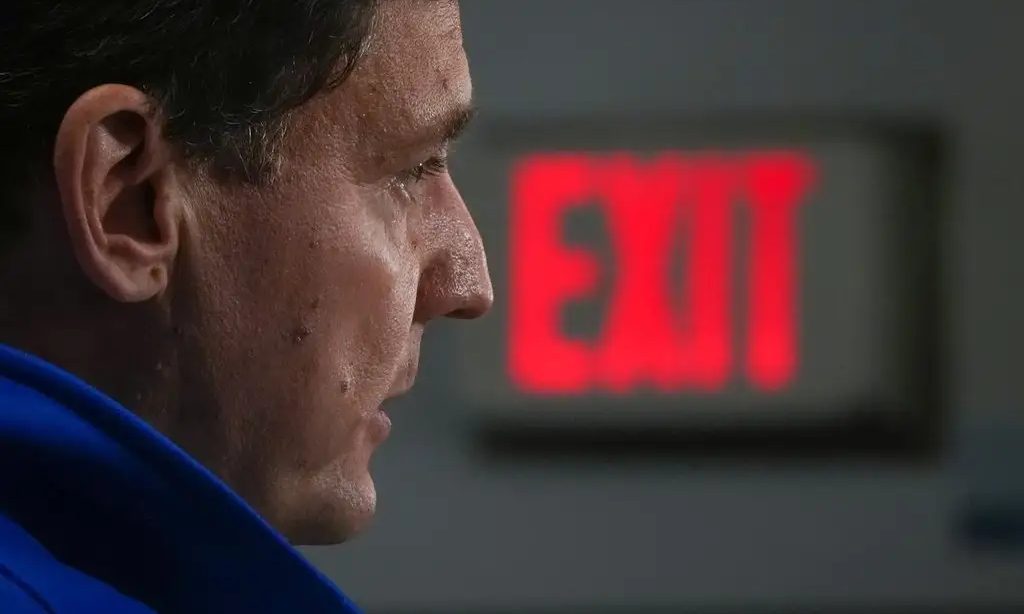
Affordability takes center stage in provincial campaign
With the provincial election set for Oct. 24, B.C. NDP Leader David Eby is emphasizing cost-of-living challenges over previous warnings about American trade policies. Speaking on Tuesday during a campaign event at the Victoria Curling Club, Eby noted that deciding which party can best assist families during difficult times remains the core issue for voters.
Acknowledging differing views on U.S. leadership
When Eby initiated the snap election on Sept. 22, he framed the campaign around building a “firebreak” to protect British Columbia from Donald Trump’s economic policies and political style. However, the NDP leader now acknowledges that his concerns regarding the U.S. president are not shared by everyone in the province.
“Whether you believe and accept that Trump is making it much worse, it doesn’t matter because you’re still understanding that the cost of living is significant, that we need a strong public health-care system if you and your family get sick,” Eby said.
Opposition calls for action over press releases
The stance comes alongside criticism from interim B.C. Conservative leader Lorne Doerkson, who described Trump at the start of the campaign as an “absolute bully.” Doerkson argued that confronting threats from the U.S. requires concrete action rather than issuing press releases.
Despite varying public anxieties, Eby maintains that U.S. actions continue to exert a real impact on British Columbians, even as his campaign shifts its primary focus back to household budgets and public services.

Why a Kelowna council candidate’s humorous signs are attracting international attention

Why B.C. Driver Insurance Rates Could Shift Under a Proposed ICBC Overhaul
Your Current 3 Day Forecast — October 8, 2026

Why West Coast NHL Fans and Players Will Face Unusual Game Times This Season

Voters face choice on family support as NDP campaign shifts focus away from U.S. tariff threats
Your Current 3 Day Forecast — October 7, 2026

Opinion: John Rustad Has to Go

B.C. Supreme Court Grants Cowichan Tribes Title to Historic Richmond Lands and Fishing Rights

Vancouver Canucks Gear Up for a Make-or-Break 2025–26 Season

Kamloops Blazers Announce Off-Season Changes Ahead of 2025–26 Season

BC Ferries Sparks Outcry Over Contract with Chinese Shipyard

A Taste of Autumn: Fall Okanagan Wine Festival 2025
-
 BC STORIES6 days ago
Why OneBC’s Interim Leader Is Proposing an Election Pact With Conservatives
-
 NATIONAL STORIES6 days ago
Why NDP Leader Avi Lewis Says the West Coast Pipeline Plan Risks Public Funds
-
SPORTS6 days ago
Maple Leafs vs Islanders Result: Easton Cowan Scores in 2-1 Win
-
 SPORTS5 days ago
Nick Arbuckle Takes the Field on His Birthday as Toronto Argos Host B.C. Lions
-
 NATIONAL STORIES6 days ago
Michael J. Fox Earns Canada’s Highest Civilian Distinction for Parkinson’s Work
-
 NATIONAL STORIES6 days ago
Why Conservative Leader Pierre Poilievre Questions Mark Carney’s New Pipeline Stance
-
 LOCAL5 days ago
Summerland Transitions Remaining Properties to Prohibit-Entry Orders as Wildfire Evacuations End
-

 BC STORIES5 days ago
Why a Familiar Political Name is Joining the Kamloops-North Thompson Race