NATIONAL STORIES
Pacific Link Pipeline Receives National Interest Designation

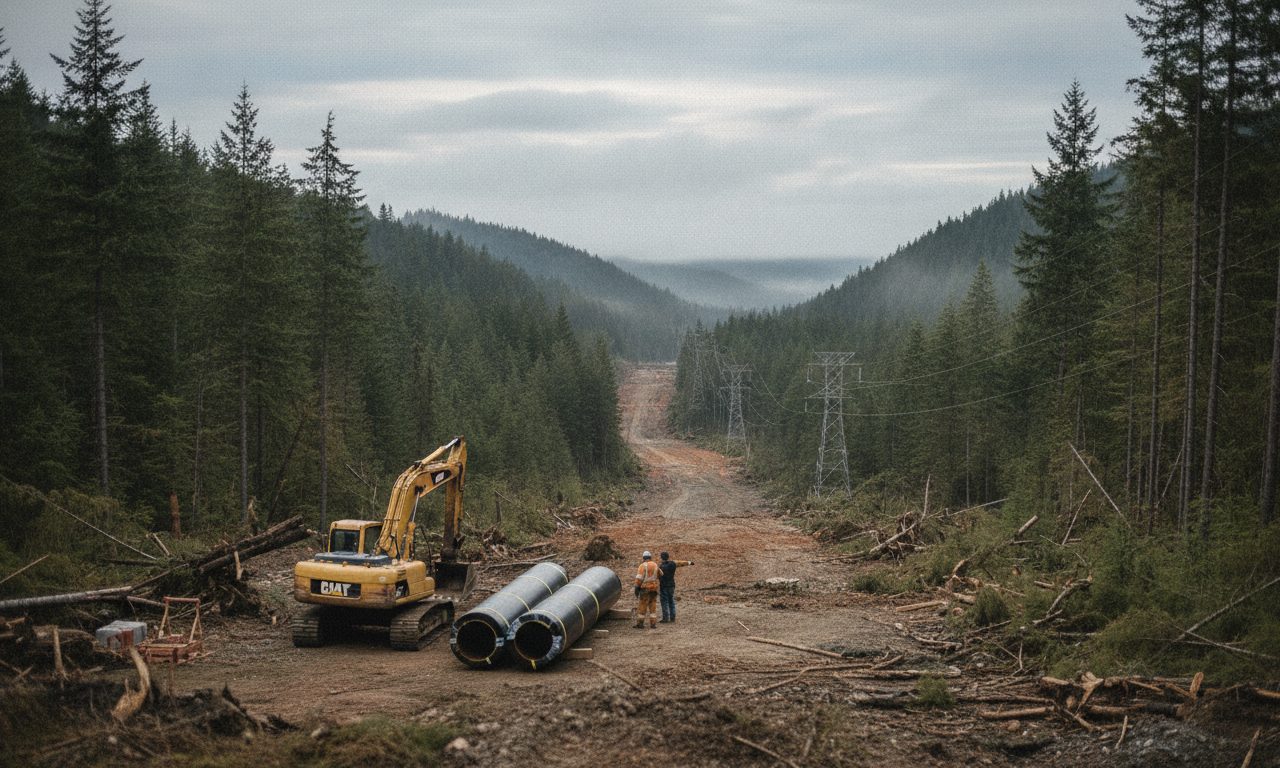
Ottawa moves proposed West Coast oil pipeline into accelerated federal review
By The Current News Desk | October 1, 2026
OTTAWA — A proposed pipeline carrying Alberta oil to Canada’s West Coast has taken a significant step forward after the federal government designated the project as being in the national interest.
Prime Minister Mark Carney, joined by Alberta Premier Danielle Smith in Fort McMurray on Thursday, announced that the proposed Pacific Link pipeline will receive national interest designation under the federal Building Canada Act.
The designation does not constitute final approval for construction, but it gives the project access to an accelerated and coordinated federal regulatory process intended to reduce delays and provide greater certainty around approvals.
The proposed pipeline would transport approximately one million barrels of crude oil per day from Alberta to a new marine terminal on British Columbia’s West Coast, opening additional capacity for Canadian oil producers to reach Asian and other international markets.
The proposed route would largely follow the existing Trans Mountain corridor, beginning near Bruderheim, Alberta, before crossing British Columbia and terminating at a proposed marine export terminal in southern B.C.
What does “national interest” mean?
The designation is important because it changes how Ottawa handles the project.
Under the Building Canada Act, projects deemed to be in the national interest can receive a more centralized and streamlined federal approval process. The legislation is intended to provide greater certainty around timelines and coordinate the federal permits and regulatory decisions required for major infrastructure projects.
It does not eliminate environmental reviews, Indigenous consultation or other regulatory requirements.
Ottawa says projects considered for national interest status are evaluated on factors including economic benefits, national security and resilience, likelihood of successful completion, Indigenous interests and Canada’s climate objectives.
For Pacific Link, the federal government is targeting September 1, 2027, for completion of the accelerated approval process.
Major economic implications for B.C.
The project could have significant implications for British Columbia.
Federal estimates suggest employment associated with construction could peak at approximately 140,000 direct and indirect jobs, including roughly 70,000 in British Columbia and 45,000 in Alberta.
The ownership structure outlined earlier this year includes Trans Mountain Corporation, the Alberta Petroleum Marketing Commission and Pembina Pipeline Corporation. The governments have also committed to providing Indigenous communities with opportunities for equity participation in the project.
Ottawa and Alberta argue that additional pipeline capacity is necessary to reduce Canada’s heavy dependence on the United States as an export market and give Canadian producers greater access to growing Asian markets.
More than 90 per cent of Canadian crude oil exports currently go to the United States, according to Reuters.
Significant hurdles remain
Despite Thursday’s announcement, Pacific Link is far from construction.
The project must still navigate environmental assessments, regulatory requirements, Indigenous consultation, financing arrangements and detailed engineering and routing decisions.
Pipeline development in British Columbia has historically generated significant debate involving environmental organizations, Indigenous communities, industry and different levels of government.
The federal government says consultation with Indigenous Peoples will continue throughout the process and that Canada’s constitutional obligations will remain in place.
For British Columbia, Thursday’s decision nevertheless represents a major change in the project’s status.
The question is no longer simply whether Ottawa considers another West Coast oil pipeline strategically important.
The federal government has now formally declared that it does.
What happens between now and September 2027 will determine whether that designation ultimately translates into another major piece of Canadian energy infrastructure — or another proposal that struggles to make the transition from political announcement to construction.

NATIONAL STORIES
Two Hospitalized as Rail Cars Derail into Skeena River West of Terrace
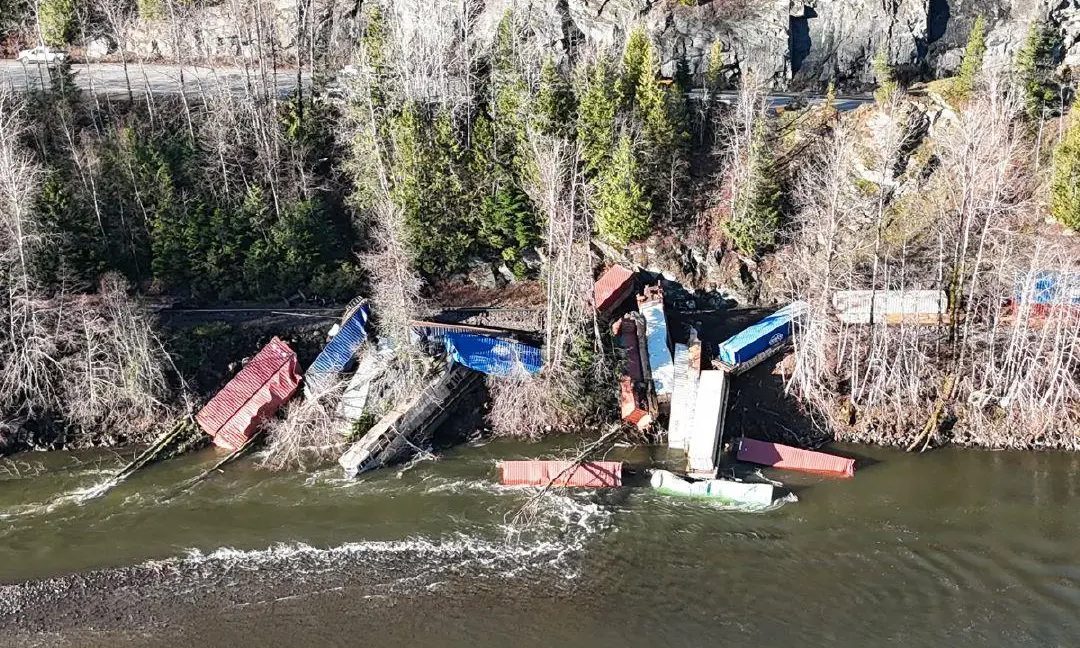
Two CN employees were hospitalized after a train derailment 15 km west of Terrace sent cars into the Skeena River. No hazardous materials were involved.
Rail Accident Near Terrace Sends Two to Hospital
Two CN rail workers were transported to the hospital with non-life-threatening injuries following a train derailment near Terrace on Nov. 17, 2026. The incident occurred around 1 p.m., approximately 15 kilometres west of the city, causing multiple rail cars to leave the track, with some landing in the Skeena River.
Emergency Responders and Traffic Impact
Emergency responders quickly arrived at the scene, where City of Terrace firefighters aided in extricating one person. Terrace RCMP confirmed that provincial transportation officials, emergency crews, and CN workers are managing the response. While the derailment did not directly impact Highway 16, an initial complete road closure has been replaced with alternating single-lane traffic as recovery efforts proceed.
Investigation and Recovery Underway
CN Rail is currently making arrangements to pull the derailed cars from the area. According to CN official Ashley Michnowski, the incident involved a locomotive and five rail cars. Michnowski stated that there were no fires, no dangerous goods involved, and no threat to public safety. The contents of the rail cars have not been disclosed, and the cause of the derailment remains under investigation.
NATIONAL STORIES
Mission B.C. Pop Star Carly Rae Jepsen to Host 2027 JUNO Awards
Mission pop star Carly Rae Jepsen will host the 2027 JUNO Awards live from Winnipeg’s Canada Life Centre on April 4, CARAS and CBC announced.

Mission Native Takes the National Stage
Pop sensation Carly Rae Jepsen is heading to Manitoba to anchor Canada’s biggest night in music. The Canadian Academy of Recording Arts and Sciences (CARAS) alongside CBC revealed on Nov. 9 that the three-time JUNO Award winner from Mission, B.C., will serve as the host for the 2027 JUNO Awards. The broadcast is scheduled for April 4 at the Canada Life Centre in Winnipeg, marking Jepsen’s debut as host of the annual ceremony.
Organizers announced that the event will also feature live performances from alternative rock group Our Lady Peace and Quebec band Angine De Poitrine, with additional performers to be named later. Allan Reid, president and CEO of CARAS and the JUNO Awards, stated that the program highlights both established Canadian acts and emerging talent.
“From celebrating the incredible legacy of Our Lady Peace to welcoming Carly Rae Jepsen as our host, we can’t wait to share these moments with fans in Winnipeg and across the country,” Reid said in a statement.
A History of JUNO Success
Jepsen previously dominated the 2013 JUNO Awards following the massive success of her 2012 release Kiss, which secured both Album of the Year and Pop Album of the Year. Her global hit “Call Me Maybe” earned Single of the Year at the same ceremony.
The hosting announcement comes shortly after the September release of her eighth studio record, Day and Night. The 24-track double album—which features the singles “Motivation,” “On Wire,” and “Don’t Leave Me on the Dance Floor”—was created during a period of personal transformation and explores contrasting musical styles, combining folk-infused pop with late-night dance tracks.
Following her hosting duties in Winnipeg, Jepsen will launch her “Day and Night Tour,” which includes a concert at The Orpheum in Vancouver on April 18.
NATIONAL STORIES
House Unanimously Approves Bill Giving Young Offenders Access to Addiction Treatment
The House of Commons unanimously passed the Friends of David bill to provide treatment over punishment for young offenders struggling with addiction.

Focusing on Youth Addiction Treatment Over Punishment
A new bill designed to redirect young offenders dealing with mental health issues or addiction toward medical support has received unanimous approval in the House of Commons. Introduced by Luc Berthold, Member of Parliament for Mégantic—L’Érable—Lotbinière, the Friends of David bill aims to give courts additional tools to help young people break free from substance abuse.
The legislation now moves to the Senate, where it will undergo review and a final vote. MP Berthold hopes the upper chamber will grant final approval to the measure, which was named in honor of his late son, David, who would have turned 30 on the day of the vote.
Expanding Judicial Tools for Deferred Sentencing
If passed into law, the bill will allow judges to defer sentencing so youth can successfully finish a treatment program. It also grants courts the authority to mandate treatment as a condition of court orders, including during conditional release.
Attending the vote in Ottawa alongside his wife, Caroline Levesque, and daughter, Justine Berthold, MP Berthold stressed the urgency of updating the justice system. “Today, we are getting closer to the day when the juvenile justice system will help young people receive treatment rather than punishment for disorders associated with problematic substance use,” Berthold said. “We can no longer save our son. But his story will not be in vain. I refuse to give up on young people who are caught in the cycle of addiction. We have a responsibility to help them break free, to give them a second chance, and to enable them to envision a better future.”
Breaking the Cycle of Re-Offending
David’s mother, Caroline Levesque, highlighted the need for structural support to prevent youth from returning to destructive environments after interacting with the legal system.
“Too often, young people return to the same environment, with the same substance abuse problems, after going through the criminal justice system. We need to help them before it’s too late. We need to give them the tools to get back on track, support them, and above all, give them a real chance to take control of their lives again by providing access to treatment,” Levesque said.
Your Current 3 Day Forecast — November 22, 2026
Your Current 3 Day Forecast — November 21, 2026

B.C. Lawmaker Urges New Premier to Retain AI Lawsuit After Latest ChatGPT Revelations

BC Conservatives Assign Key Legislative Roles Following Cabinet Selection

What B.C.’s New Conservative Government and Cabinet Mean for You
Your Current 3 Day Forecast — November 20, 2026

Opinion: John Rustad Has to Go

B.C. Supreme Court Grants Cowichan Tribes Title to Historic Richmond Lands and Fishing Rights

BC Ferries Sparks Outcry Over Contract with Chinese Shipyard

Vancouver Canucks Gear Up for a Make-or-Break 2025–26 Season

Kamloops Blazers Announce Off-Season Changes Ahead of 2025–26 Season

A Taste of Autumn: Fall Okanagan Wine Festival 2025
-

 BC STORIES4 days ago
Shrinking Fraser River Sockeye Numbers Threaten B.C. Economy, First Nations Culture, and Local Tourism
-
 NATIONAL STORIES6 days ago
How a Fake Invoice Cost a Shuswap Business Over $24,000
-

 BC STORIES4 days ago
Why B.C.’s New Conservative Government Is Waiting Until Spring to Convene the Legislature
-
6 days ago
Your Current 3 Day Forecast — November 16, 2026
-
SPORTS5 days ago
Why the International Ice Hockey Federation Website Went Offline Following World Junior Decision
-
 BC STORIES4 days ago
What You Need to Know Before Donating Online After Alleged Wildfire Fundraiser Scam
-
SPORTS5 days ago
Inside Toronto’s Royal Rodeo, Young Riders Show Grit in Rough-Stock Events
-
5 days ago
Your Current 3 Day Forecast — November 17, 2026