LOCAL
Rising Property Crime in Kelowna Sparks Calls for Urgent Bail Reform
Kelowna property crime rose 6.4% in early 2025, leading Mayor Tom Dyas to demand federal bail reform to address the impact of chronic repeat offenders.


Local Businesses Face Increasing Security Challenges
In the heart of downtown Kelowna, B.C., business owners are grappling with a harsh reality that contrasts sharply with the city’s scenic reputation. Kerri Brandel, owner of Calowna Costume, has operated her shop for over three decades but notes that recent years have brought unprecedented levels of criminal activity. From shattered windows to specialized security film and metal bars, local merchants are being forced to turn their storefronts into fortresses just to maintain operations.
The emotional and financial toll is significant. Brandel recently reported a break-in followed by a smashed window just months later, noting that the costs for repairs are siphoning away the thin profit margins typical of small businesses. Beyond the financial impact, there is a growing concern regarding the safety of staff and customers in an increasingly volatile environment.
Mid-Year Statistics Reveal Shifting Crime Patterns
According to the latest RCMP mid-year crime statistics presented to Kelowna City Council, property offences have risen by 6.4 per cent in the first half of 2025 compared to the previous year. The data highlights specific areas of concern: shoplifting has surged by 12.3 per cent, mischief is up by 9.7 per cent, and bike thefts have seen a dramatic 38.7 per cent increase.
While residential and business break-ins showed a slight decline, construction sites and industrial compounds have become primary targets, experiencing a staggering 55 per cent increase in incidents. Conversely, there were some positive indicators in the report, with arson cases dropping by 45 per cent and assaults with a weapon decreasing by approximately 34 per cent.
The ‘Revolving Door’ of Repeat Offenders
City officials are pointing the finger at a small group of chronic offenders for the disproportionate amount of crime. Kelowna Mayor Tom Dyas revealed that just 15 repeat offenders were responsible for over 1,000 police files in the last year alone. This high recidivism rate has led local leadership to describe the current justice system as a “revolving door” that fails to protect the community.
In response, the City of Kelowna has formally petitioned the federal government in Ottawa, seeking substantial changes to bail reform. With a federal review of the bail system on the horizon, Mayor Dyas and local business owners like Brandel are hopeful that new legislation will prioritize the security of property owners and address the frustrations of a community weary of constant victimization.









LOCAL
Community Safety Highlighted After Gunshots Hit Fort St. John Home
Fort St. John RCMP are investigating after gunshots struck a home on Saturday. Police confirm no injuries were reported in the residential incident.

RCMP Respond to Shooting in Residential Area
An investigation is underway in Fort St. John, B.C., after a local home was struck by gunfire on Saturday.
RCMP officers were dispatched to the neighborhood following multiple public reports of gunshots. Upon arrival, police confirmed that a residence had been hit several times.
Police Warn of Danger to Neighbourhood
No injuries were reported as a result of the gunfire. However, law enforcement officials emphasized the severe potential risks associated with the incident.
“Cpl. Brett Urano says it was fortunate no one was injured, but the potential for a tragic outcome can’t be understated,” police stated. Officials added that discharging firearms in a residential area puts innocent individuals and families at serious risk.
LOCAL
Suspect Arrested in North Kelowna Hit-and-Run After Multi-Unit RCMP Search
Kelowna and Lake Country RCMP arrested a hit-and-run suspect after a two-vehicle crash on Highway 97 near Ellison Lake on Oct. 24. No injuries reported.
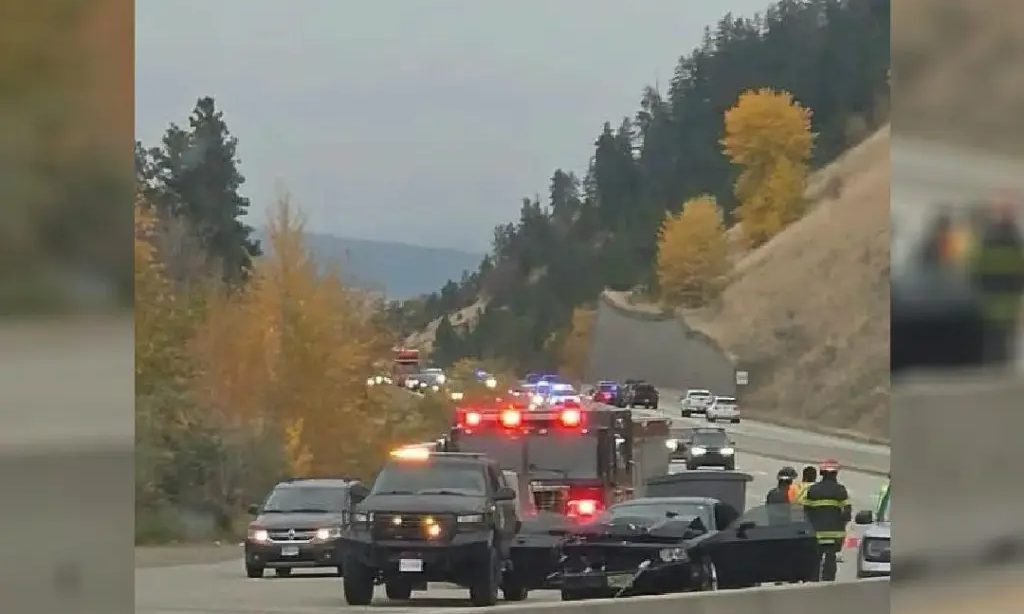
Hit-and-Run Incident Causes Traffic Delay on Highway 97
A driver attempting to flee on foot following a two-vehicle crash on Highway 97 near Ellison Lake was taken into custody by police on Saturday, Oct. 24. The collision in North Kelowna resulted in traffic slowing to a crawl while emergency responders managed the scene.
Extensive Police Response Leads to Arrest
Witnesses contacted authorities after observing the driver of a black sedan abandon the vehicle and run into a nearby green space. Multiple law enforcement teams were dispatched to track down the fleeing suspect, including the Kelowna RCMP Road Safety Unit, the Kelowna RCMP Gang Enforcement Team, frontline officers, Lake Country RCMP, Police Dog Services, and RCMP Air Services.
According to Kelowna RCMP media relations officer Cpl. Steven Lang, officers located and arrested the suspected driver close to the crash site shortly after the search began.
Police Investigation Ongoing
Authorities reported that no injuries occurred as a result of the collision. “Investigators believe alcohol and speed were factors in the collision,” Lang stated.
HEALTH
Coquihalla Highway Reopens Near Merritt Following Morning Crash That Injured Four
The Coquihalla Highway north of Merritt has reopened following a Saturday morning vehicle crash that resulted in four people being taken to the hospital.
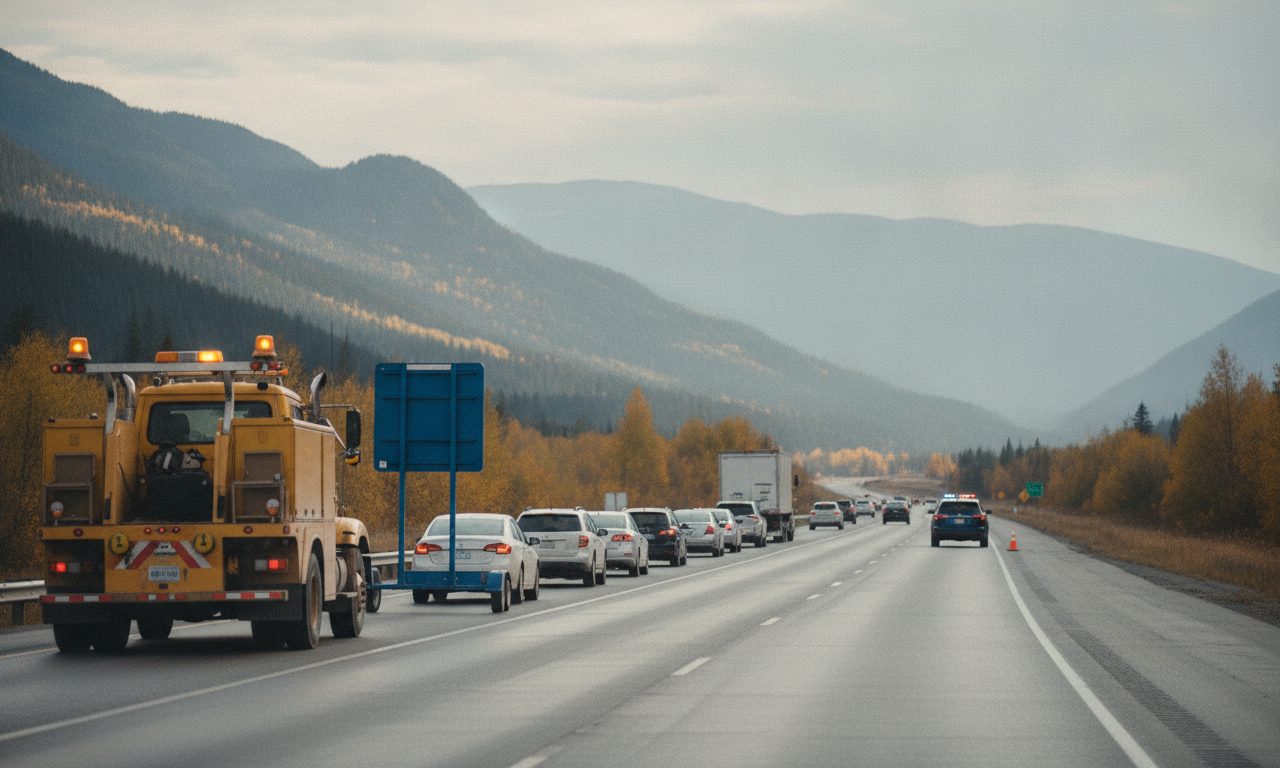
Traffic Resumes Following Serious Morning Incident
Four people were hospitalized, including three in critical condition, after a motor vehicle incident occurred north of Merritt on Saturday morning, October 17.
DriveBC reported that the Coquihalla Highway was reopened in both directions from Exit 290 to Exit 315 at approximately 4:00 p.m., following the earlier closure.
Emergency Responders Deploy Air Ambulances
BC Emergency Health Services dispatched multiple resources after receiving a call at approximately 8:35 a.m. The response included two air ambulances, three primary care paramedic ambulances, one advanced care paramedic ambulance, and a paramedic supervisor.
According to BCEHS, crews provided emergency medical care at the scene. Two of the three critically injured patients were flown to the hospital via air ambulance, while a fourth patient was taken to the hospital in stable condition.

Why the Early Election Gamble Backfired on the NDP

Why Fake Signs Targeted a Small Green Party Campaign on B.C. Election Eve

Why the Conservatives’ Majority Win in Kelowna-Mission Signals Big Changes for Local Healthcare and Economy

Why B.C.’s Latest Election Results Are Sparking Renewed Calls for Voting Reform
Your Current 3 Day Forecast — October 27, 2026
Why First Nations Leaders Are Gathering in Ottawa to Push Back on Fast-Tracked Resource Projects

Opinion: John Rustad Has to Go

B.C. Supreme Court Grants Cowichan Tribes Title to Historic Richmond Lands and Fishing Rights

Vancouver Canucks Gear Up for a Make-or-Break 2025–26 Season

BC Ferries Sparks Outcry Over Contract with Chinese Shipyard

Kamloops Blazers Announce Off-Season Changes Ahead of 2025–26 Season

A Taste of Autumn: Fall Okanagan Wine Festival 2025
-

 BC STORIES5 days ago
BC Conservatives Promise Forestry Overhaul to Revive Jobs as NDP Points to Millions in Existing Investment
-

 SPORTS5 days ago
Why B.C. Lions Starters Are Resting as the Regular Season Concludes Against Winnipeg
-

 OPINIONS5 days ago
How Minor Parties and Strategic Balloting Could Shift the Upcoming B.C. Election
-
 BC STORIES6 days ago
Police Seek Witnesses After Fatal Wrong-Way Collision Near Merritt
-
5 days ago
Your Current 3 Day Forecast — October 22, 2026
-
6 days ago
Your Current 3 Day Forecast — October 21, 2026
-
NATIONAL STORIES6 days ago
Highland Valley Copper Workers Could Strike Saturday as Union Issues Notice
-

 HEALTH6 days ago
Coquihalla Highway Reopens Near Merritt Following Morning Crash That Injured Four