LOCAL
Navigating the Festive Minefield: The 12 Scams of Christmas and How to Protect Your Holiday Cheer
Stay safe this festive season with our expert guide to the 12 most common Christmas scams. Learn how to identify phishing, charity fraud, and social media schemes to protect your wallet.


The Festive Season’s Dark Side: Navigating the 12 Scams of Christmas
As the winter frost begins to settle and the glow of holiday lights fills the streets, a more sinister transformation takes place in the digital shadows. For cybercriminals and professional fraudsters, the holiday season is not a time for rest, but a peak period of productivity. Recent data from the Federal Bureau of Investigation’s Internet Crime Complaint Center suggests that financial losses during the final quarter of the year often surge by over 20 percent compared to other periods. This spike is driven by a sophisticated array of tactics designed to exploit the urgency, generosity, and occasional distraction that characterize the holiday shopping rush. Understanding these threats is the first step in safeguarding your financial well-being during the most expensive time of the year.
1. The Shipping Notification Deception
With billions of packages crisscrossing the globe, scammers leverage delivery anxiety to steal credentials. Victims receive a text message, often referred to as smishing, claiming a package is held due to an incomplete address or an unpaid customs fee. The link provided leads to a perfectly cloned website of a major courier like FedEx or UPS. Once a user enters their credit card details to pay a nominal redelivery fee, the attackers capture the data for high-value unauthorized purchases. Experts advise always checking the URL and using official apps to track shipments rather than clicking unsolicited links.
2. Social Media Bait-and-Switch Ads
Social media platforms have become a breeding ground for fraudulent retailers. These scammers create short-lived ad campaigns featuring high-demand items, such as the latest gaming consoles or designer apparel, at prices that defy market logic. These ads often lead to ghost stores. After the payment is processed, the store disappears, and the social media account is deleted. In some cases, victims receive a completely unrelated, low-value item to provide a fake tracking number that complicates the credit card dispute process.
3. The Secret Sister Social Media Scam
What appears to be a heartwarming gift exchange on Facebook is actually a mathematical impossibility and a legal liability. The Secret Sister scheme promises that participants will receive up to 36 gifts in exchange for sending one ten dollar item. In reality, this is a classic pyramid scheme. It relies on a constant stream of new recruits, and eventually, the bottom of the pyramid loses their money. Furthermore, the practice requires participants to post their personal home addresses in public forums, opening the door to privacy risks.
4. Exploitative Fake Charities
The spirit of giving is a vulnerability that scammers are quick to exploit. Bogus charities often emerge during the holidays, using names that are subtly different from established organizations. They use high-pressure tactics, often via telephone or unsolicited emails, asking for immediate wire transfers or cryptocurrency donations. Journalistic investigations have shown that almost none of the funds collected by these fake entities ever reach a charitable cause. Always verify a charity via independent watchdogs before donating.
5. The Gift Card Payment Mandate
Gift cards are for gifting, not for paying bills. Scammers posing as IRS agents or utility company representatives will claim that you have an urgent debt. They insist that the only way to resolve the matter and avoid arrest is to purchase gift cards and read the numbers over the phone. This method is preferred by criminals because gift cards are nearly impossible to trace. Legitimate organizations will never demand payment via a retail gift card.
6. Emotional Manipulation: The Grandparent Scam
During the holidays, when family is top of mind, scammers target the elderly with emergency calls. Using voice-cloning AI or high-pressure scripts, they pretend to be a grandchild who has been involved in an accident or arrested while traveling. They beg the victim not to tell other family members and to wire money for bail immediately. This scam plays on deep emotional bonds, often resulting in devastating financial losses for seniors.
7. The Puppy and Pet Scams
The dream of a new pet under the tree is a frequent starting point for fraud. Scammers post listings for non-existent puppies on classified sites. They build rapport with the buyer, sending stolen photos, and then demand payments for specialized climate-controlled shipping or mandatory vaccinations. Once the money is sent via a non-refundable method, the seller vanishes, leaving the family without a pet and without their savings.
8. Malicious Holiday E-Cards
While digital cards are an eco-friendly way to spread cheer, they are often used to deliver malware. Clicking an Open My Card link from an unknown sender can trigger the download of a keylogger, which records every keystroke you make, including bank passwords. Modern malware can sit dormant on a device for months, collecting data before being activated by the hacker during a peak transaction period.
9. Fraudulent Seasonal Job Postings
As retailers scramble for help, scammers post fake remote-work or seasonal positions on legitimate job boards. These listings are designed to harvest personal information. During the onboarding process, victims are asked to provide their Social Security number and bank account details for payroll. In some variations, the employer sends a fake check to purchase home-office equipment, asking the victim to wire the extra funds back to a supplier before the check bounces.
10. Look-alike and Typosquatting Websites
Consumer beware: scammers register domains that are common misspellings of popular brands. These sites are designed to look identical to the real ones. If you do not notice the typo in the URL, you might provide your login credentials and credit card information directly to a criminal database. Always type the URL manually into your browser rather than clicking links in emails.
11. Unsecured Public Wi-Fi Risks
Shoppers often use mall Wi-Fi to compare prices online. However, hackers can set up Evil Twin hotspots with names like Free Mall Wi-Fi. When you connect, they can intercept all data sent from your phone. If you make a purchase while connected, they have your credit card number. It is essential to use a Virtual Private Network or use your cellular data for any financial transactions.
12. The Fake Prize and Unclaimed Credit Pop-ups
As you browse, a window might appear claiming you have won an Amazon gift card or that you have unclaimed loyalty points expiring soon. These pop-ups lead you to a survey site that asks for extensive personal information. At the end, you are asked to pay a small shipping fee for your prize. This is simply another way to capture credit card data and sell your profile to marketing aggregators.
How to Protect Yourself This Season
Vigilance is the most effective tool against holiday fraud. Financial experts recommend using credit cards rather than debit cards for all holiday shopping, as credit cards offer robust federal protections against fraudulent charges. Additionally, enabling multi-factor authentication on all financial accounts adds a critical layer of security. If you suspect you have been targeted, report the incident to the FTC and contact your bank immediately. By staying informed and skeptical, you can ensure that your holiday remains merry and secure.

HEALTH
Coquihalla Highway Reopens Near Merritt Following Morning Crash That Injured Four
The Coquihalla Highway north of Merritt has reopened following a Saturday morning vehicle crash that resulted in four people being taken to the hospital.


Traffic Resumes Following Serious Morning Incident
Four people were hospitalized, including three in critical condition, after a motor vehicle incident occurred north of Merritt on Saturday morning, October 17.
DriveBC reported that the Coquihalla Highway was reopened in both directions from Exit 290 to Exit 315 at approximately 4:00 p.m., following the earlier closure.
Emergency Responders Deploy Air Ambulances
BC Emergency Health Services dispatched multiple resources after receiving a call at approximately 8:35 a.m. The response included two air ambulances, three primary care paramedic ambulances, one advanced care paramedic ambulance, and a paramedic supervisor.
According to BCEHS, crews provided emergency medical care at the scene. Two of the three critically injured patients were flown to the hospital via air ambulance, while a fourth patient was taken to the hospital in stable condition.
BC STORIES
Why a B.C. Thai Spot Just Made North American Culinary History
Richmond’s Baan Lao Fine Thai Cuisine becomes the first Canadian establishment named North America’s Best Restaurant by the World Culinary Awards.
Historical Recognition for Canadian Dining
For the first time since the inception of the World Culinary Awards, a Canadian establishment has been selected as the top dining destination in North America. Baan Lao Fine Thai Cuisine, located in Richmond, B.C., earned the title of North America’s Best Restaurant, finishing ahead of 22 other Canadian nominees and 18 competitors from the United States.
Continued Success for Richmond Establishment
The win marks a milestone for the region, as all six prior winners of the continental award were located in the United States, including double winners Le Bernardin in New York and The French Laundry in California. In addition to taking the North American crown, Baan Lao was chosen as Canada’s top restaurant for the third consecutive year.
Award Background and Menu Details
Baan Lao opened its doors in 2021 and features “Royal Thai tasting menus with individually plated courses.” The World Culinary Awards were established in 2020. Winners are chosen through a weighted voting process involving both members of the public and registered professionals from the culinary industry.
LOCAL
What a Proposed ICBC Hybrid System Could Mean for B.C. Drivers
B.C. Conservative MLA Ward Stamer discusses proposed ICBC auto insurance reforms, private competition options, and local driver impacts in British Columbia.
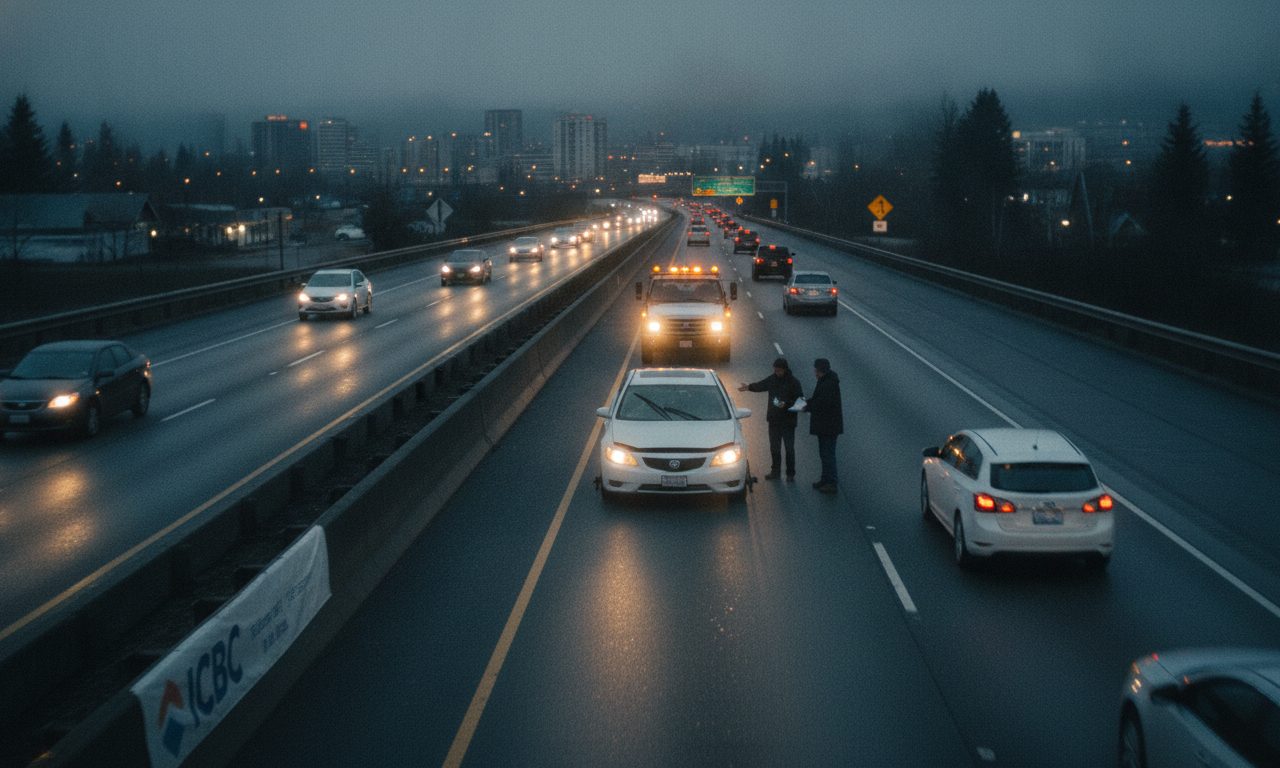
Kamloops Candidate Supports Public Option Alongside Market Competition
B.C. Conservative candidate Ward Stamer says he wants to keep the majority of auto insurance coverage under ICBC, even as his party outlines plans to introduce private market competition. Stamer, the incumbent MLA for Kamloops-North Thompson, noted that while he lacks full details on how private insurers would fit into the system, he hopes most coverage stays with the public provider while giving residents more choices.
The proposed hybrid model would open certain segments of the auto insurance market to private companies while maintaining ICBC as a public option. Additionally, the plan would allow individuals with serious injuries to sue for compensation through the legal system, which Conservatives say preserves most litigation-related savings while offering fuller recovery options for victims.
Debate Over Rates and System Implementation
Addressing potential risks, Stamer expressed that private insurers should not be allowed to “cherry-picking” low-risk drivers and leave remaining motorists with fewer alternatives. He acknowledged mixed outcomes in other public-private jurisdictions, noting costs increased in some places, but felt confident a better model can be designed for B.C. “I don’t know all the details, and once we’re government, we’ll be able to iron out those details, but many people are very upset with the no-fault insurance,” he said.
The proposal drew scrutiny during the campaign following a letter sent by B.C. Conservative Leader Lorne Doerkson to legal and insurance groups, mentioning that replacing no-fault coverage and opening competition were under consideration. The NDP criticized the letter as a “secret” plan that could potentially double insurance premiums. Stamer dismissed claims of a hidden agenda, stating, “When the NDP calls it a secret, it wasn’t a secret. It was put out into the public.” He added that NDP warnings about doubled insurance rates are exaggerated.
Your Current 3 Day Forecast — October 23, 2026

Vancouver Canucks Honour Beloved Broadcaster John ‘Cheech’ Garrett During Home Game

Why B.C. Lions Starters Are Resting as the Regular Season Concludes Against Winnipeg

How Minor Parties and Strategic Balloting Could Shift the Upcoming B.C. Election

Why Alberta’s Government Is Ruling Out Future Separation Votes

BC Conservatives Promise Forestry Overhaul to Revive Jobs as NDP Points to Millions in Existing Investment

Opinion: John Rustad Has to Go

B.C. Supreme Court Grants Cowichan Tribes Title to Historic Richmond Lands and Fishing Rights

Vancouver Canucks Gear Up for a Make-or-Break 2025–26 Season

BC Ferries Sparks Outcry Over Contract with Chinese Shipyard

Kamloops Blazers Announce Off-Season Changes Ahead of 2025–26 Season

A Taste of Autumn: Fall Okanagan Wine Festival 2025
-

 BC STORIES5 days ago
Grassroots Effort and Digital Content Help Deliver Strong Election Finish for Young Candidates
-
BC STORIES7 days ago
Why a Major Political Shift is Shaking Up the B.C. Provincial Election Final Weekend
-
 NATIONAL STORIES7 days ago
Why Albertans Are Heading to the Polls on the Question of Canadian Unity
-
NATIONAL STORIES7 days ago
High-Wage Workers Set to Receive Extra Express Entry Points Under New Policy Changes
-
 NATIONAL STORIES6 days ago
Decades of Western Alienation Lead Albertans to Referendum on Canada’s Future
-
 COMMUNITY6 days ago
Are You Ready for Winter Driving? Test Your Knowledge as Cold Weather Approaches
-
 BC STORIES6 days ago
Help Document Clayoquot Sound’s History by Sharing Your Mining Artifacts
-

 SPORTS6 days ago
Edmonton Fans to Experience First Home Playoff Game and West Final Since 2015