Canada Stories
Avi Lewis Secures NDP Leadership Victory as Western Provincial Wings Signal Defiance
Avi Lewis wins the federal NDP leadership but faces immediate backlash from Alberta and Saskatchewan leaders over his controversial energy and resource policies.


A Decisive Victory Amidst Internal Friction
In a powerful first-ballot victory, Avi Lewis has been elected the new federal leader of the New Democratic Party (NDP), securing 56 per cent of the vote. While the win establishes a clear mandate from the party’s grassroots membership, the victory has immediately exposed a deepening rift between the federal leadership and its powerful provincial counterparts in Western Canada. Lewis, a prominent climate activist and filmmaker, faces the daunting task of reconciling his bold environmental agenda with the economic realities of resource-dependent provinces.
Saskatchewan and Alberta Leaders Reject Federal Platform
The backlash from the Prairies was swift. Saskatchewan NDP Leader Carla Beck released a scathing letter just an hour after the results were announced, declining an invitation to meet with the new leader. Beck characterized Lewis’ positions on natural resource development as “ideological and unrealistic,” arguing that his policies could jeopardize $13.6 billion in economic activity. “It’s impossible to support – and respect – working people without respecting the jobs they have,” Beck wrote, signaling a firm refusal to collaborate until Lewis moderates his stance.
In Alberta, NDP Leader Naheed Nenshi was equally critical. Nenshi, whose party recently moved to make federal membership optional for its provincial members, noted that Lewis previously cheered for the defeat of the provincial Alberta NDP government. Nenshi pointedly released his own energy policy, which advocates for expanding pipeline capacity—a direct contradiction to Lewis’ pledge to end all federal approvals for new pipelines and implement an export tax on oil and gas shipped to the United States.
Mixed Reactions Across the West
Despite the resistance from Alberta and Saskatchewan, Lewis found a more receptive audience in Manitoba. Premier Wab Kinew expressed optimism, suggesting that while they may have “heated debates” on specific issues, their shared values regarding healthcare and education provide a foundation for cooperation. Meanwhile, British Columbia Premier David Eby offered a more measured congratulation, emphasizing that his government would only work with leaders who share their specific priorities of prosperity and progress for working people.
A Grassroots Strategy
For his part, Lewis appears focused on a long-term strategy. He has indicated that he is in no rush to seek a seat in the House of Commons, choosing instead to focus on strengthening the party’s grassroots infrastructure across the country. “This is a tremendous result. But even more important than the results of this leadership vote is the unity of our party,” Lewis stated on Sunday. Whether that unity can be achieved without compromising his core environmental platform remains the central question of his early leadership.







Canada Stories
Lytton Faces New Threat as Out-of-Control Wildfire Triggers Evacuation Alerts
Lytton, B.C. is under an evacuation alert as an out-of-control wildfire burns nearby. Residents are warned to prepare for departure amid high heat.

Emergency Alerts Issued for Lytton Residents
Residents of Lytton, British Columbia, are once again on high alert as an out-of-control wildfire burns just south of the village. On Monday, local authorities and the BC Wildfire Service issued evacuation alerts, warning citizens to be prepared to leave their homes on short notice. The blaze, which is currently estimated at approximately one square kilometre in size, is burning roughly three kilometres away from the village center.
Growth Expected Amid Scorchingly Dry Conditions
The BC Wildfire Service has expressed concern that the fire is likely to expand significantly in the coming hours. Unfavorable weather conditions, characterized by extreme heat and prolonged dryness, are providing ample fuel for the flames. Investigators currently suspect the fire was human-caused, though a formal investigation is still ongoing to determine the specific point of origin.
Lytton First Nation and Local Response
In addition to the village’s alert, the Lytton First Nation has issued its own evacuation alerts for several nearby reserves, ensuring that indigenous community members are ready to mobilize if the fire shifts direction. Emergency management crews are currently on-site, utilizing ground crews and aerial support to establish containment lines, though the rugged terrain and aggressive fire behavior present significant challenges to suppression efforts.
A Community Haunted by Past Tragedy
The current threat carries a heavy emotional weight for the region. In June 2021, Lytton was the site of one of the most catastrophic wildfires in Canadian history. Following a record-breaking heatwave, a fast-moving fire leveled nearly 90 percent of the village and resulted in the deaths of two residents. While the community has been slowly working toward recovery and rebuilding, this latest incident serves as a stark reminder of the region’s vulnerability to the increasing frequency of seasonal wildfires.
Canada Stories
Ottawa Unveils $10 Billion Infrastructure Windfall for Quebec Transit and Health Care
Prime Minister Mark Carney announces a $10 billion infrastructure deal for Quebec, funding transit, hospitals, and housing over the next decade.

A Decadal Investment in Quebec’s Future
In a significant move to modernize regional infrastructure, Prime Minister Mark Carney and Quebec Premier Christine Frchette announced a massive $10 billion federal funding package on Tuesday. Spanning the next decade, the investment targets critical sectors including public transit, health care, and housing, effectively resolving long-standing negotiations between the federal government and the province.
Transforming Transit and Electrification
The centerpiece of the agreement is a $5.7 billion allocation from the Canada Transit Fund. These funds are earmarked for high-priority projects such as the Quebec City tramway, the revitalization of Montreal’s mtro stations, and the expansion of bus networks. Additionally, $400 million has been designated for the Zero Emission Public Transit Fund, which will facilitate 11 electrification projects aimed at reducing the province’s carbon footprint.
Modernizing Aging Healthcare and Housing
Beyond transportation, $3.6 billion is allocated under the Build Communities Strong Fund. This capital is intended to address the aging state of Quebec’s public assets, many of which date back to the 1960s. Specifically, the deal outlines modernization efforts for 17 hospitals, including the Maisonneuve-Rosemont and Charles-Le Moyne facilities. The funds will also support the construction of new university campuses and community centers, bridging the gap in housing and higher education infrastructure.
Political Implications Ahead of October Election
The timing of the announcement has drawn scrutiny from the Parti Qubcois, with leader Paul St-Pierre Plamondon suggesting the deal is an attempt by Ottawa to influence the upcoming October general election. While Premier Frchette celebrated the deal as a victory for provincial jurisdiction and fair-share funding, Prime Minister Carney dismissed claims of political maneuvering, asserting that the agreement is a result of aligned priorities between levels of government to serve the public interest.
Alberta Stories
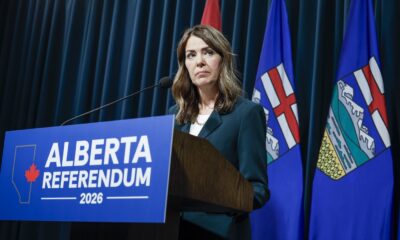
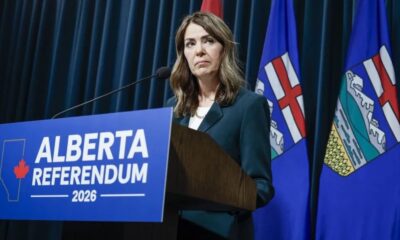
Internal Rift Erupts as Alberta Premier Clashes with Party President Over Separatism
Alberta Premier Danielle Smith clashes with UCP President Rob Smith over the province’s upcoming referendum on separation, asserting a pro-unity party line.

A Deepening Divide Within the UCP
Alberta Premier Danielle Smith has publicly corrected United Conservative Party (UCP) President Rob Smith, asserting that she holds the final word on the party’s stance regarding Canadian confederation. The friction emerged after Rob Smith suggested the party would remain neutral during an upcoming referendum on whether the province should exit Canada, claiming that a majority of rank-and-file members might favor separation.
Premier Smith, however, was quick to dismiss any notion of party neutrality. In a radio interview, she stated that the UCP is fundamentally committed to autonomy and sovereignty within a united Canada. “I speak for the party,” the Premier declared, noting that every MLA in her caucus was elected on a platform of remaining within the country while fighting for a better deal for Albertans.
The Practical Realities of Separation
While the Premier has faced criticism for even proposing the referendum, she used her platform this week to warn about the logistical nightmares of independence. Drawing parallels to the United Kingdom’s experience with Brexit, Smith highlighted the “irritations” that follow such a split, including the potential for border stations, passport requirements for travel to neighboring provinces, and the high cost of establishing independent military and border controls.
Despite these warnings, the Premier continues to argue that the October 19 vote is necessary to give voice to frustrated Albertans and to put the question of separatism to rest once and for all. This move has been met with fierce pushback from federal and provincial opponents who call the strategy a reckless attempt to appease a radical base.
Political Fallout and External Pressures
The controversy has sparked reactions far beyond Alberta’s borders. Federal NDP Leader Avi Lewis dismissed the referendum as “absurd,” suggesting it is a political maneuver aimed at internal party management rather than a serious policy goal. Within her own cabinet, the pressure is also mounting; Energy Minister Brian Jean recently broke his silence on the matter, signaling his support for the federation by stating that “together is better.”
As Alberta prepares for a historic vote, the internal contradictions between the party’s leadership and its organizational head highlight the delicate balancing act Danielle Smith must perform: maintaining the support of separatist-leaning members while convincing the broader public that her government remains committed to Canada.

Why the Early Election Gamble Backfired on the NDP

Why Fake Signs Targeted a Small Green Party Campaign on B.C. Election Eve

Why the Conservatives’ Majority Win in Kelowna-Mission Signals Big Changes for Local Healthcare and Economy

Why B.C.’s Latest Election Results Are Sparking Renewed Calls for Voting Reform
Your Current 3 Day Forecast — October 27, 2026
Why First Nations Leaders Are Gathering in Ottawa to Push Back on Fast-Tracked Resource Projects

Opinion: John Rustad Has to Go

B.C. Supreme Court Grants Cowichan Tribes Title to Historic Richmond Lands and Fishing Rights

Vancouver Canucks Gear Up for a Make-or-Break 2025–26 Season

BC Ferries Sparks Outcry Over Contract with Chinese Shipyard

Kamloops Blazers Announce Off-Season Changes Ahead of 2025–26 Season

A Taste of Autumn: Fall Okanagan Wine Festival 2025
-
 BC STORIES5 days ago
BC Conservatives Promise Forestry Overhaul to Revive Jobs as NDP Points to Millions in Existing Investment
-

 SPORTS5 days ago
Why B.C. Lions Starters Are Resting as the Regular Season Concludes Against Winnipeg
-

 OPINIONS5 days ago
How Minor Parties and Strategic Balloting Could Shift the Upcoming B.C. Election
-

 BC STORIES6 days ago
Police Seek Witnesses After Fatal Wrong-Way Collision Near Merritt
-
5 days ago
Your Current 3 Day Forecast — October 22, 2026
-
6 days ago
Your Current 3 Day Forecast — October 21, 2026
-
NATIONAL STORIES6 days ago
Highland Valley Copper Workers Could Strike Saturday as Union Issues Notice
-

 HEALTH6 days ago
Coquihalla Highway Reopens Near Merritt Following Morning Crash That Injured Four