OPINIONS
A New Pipeline May Bring Revenue, But at What Cost to B.C.?


By Chad Dashly
Opinion: A New Pipeline May Bring Revenue, But at What Cost to B.C.?
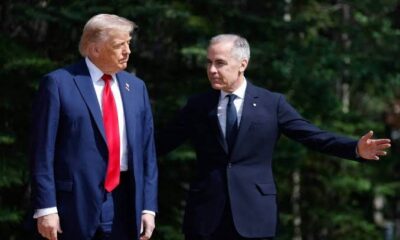
The federal government’s latest announcement approving a new oil pipeline expansion has landed in British Columbia with a familiar mix of optimism, concern, and political tension. While supporters frame the project as a “nation-building” investment that will boost revenue and strengthen energy security, British Columbians are once again left weighing the real implications for a province already at the crossroads of climate policy, Indigenous rights, and economic transition.
On the surface, the economic argument is straightforward: more pipeline capacity means more export potential, more federal revenue, and more jobs during construction. Alberta celebrates this as overdue relief for an overburdened energy sector. In B.C., certain regions especially interior communities that rely heavily on resource projects will see undeniable short-term economic benefits, including new contracts, local hiring, and infrastructure spending.
But the long-term picture is far less comfortable.
For coastal communities and environmental advocates, the announcement reads like déjà vu: another megaproject approved just as the province grapples with climate-driven wildfires, drought, and record-breaking floods. The contradiction is impossible to ignore. B.C. has committed to aggressive climate targets, yet finds itself hosting a major piece of infrastructure designed to expand fossil fuel production for decades to come. That tension undermines provincial climate leadership and feeds skepticism about whether Canada’s climate promises are anything more than political packaging.
Then there’s the matter of Indigenous rights. While some nations support the project and seek equity participation others remain firmly opposed. A pipeline built through contested territories risks deepening divisions, straining relations, and further complicating the national conversation around reconciliation. Governments may point to consultation, but B.C. knows better than most that consultation does not equal consent.
Finally, the Douglas Channel and Salish Sea remain among the most sensitive marine ecosystems in the world. A single spill would erase any economic gain many times over. British Columbians have long memories when it comes to environmental risk.
The new pipeline announcement may be heralded as economic progress, but for B.C., the stakes extend far beyond balance sheets. It forces a fundamental question: Are we doubling down on yesterday’s economy, or preparing for tomorrow’s?
Right now, Ottawa’s answer appears painfully clear and B.C. will be the one living with the consequences.






BC STORIES
Why the Early Election Gamble Backfired on the NDP
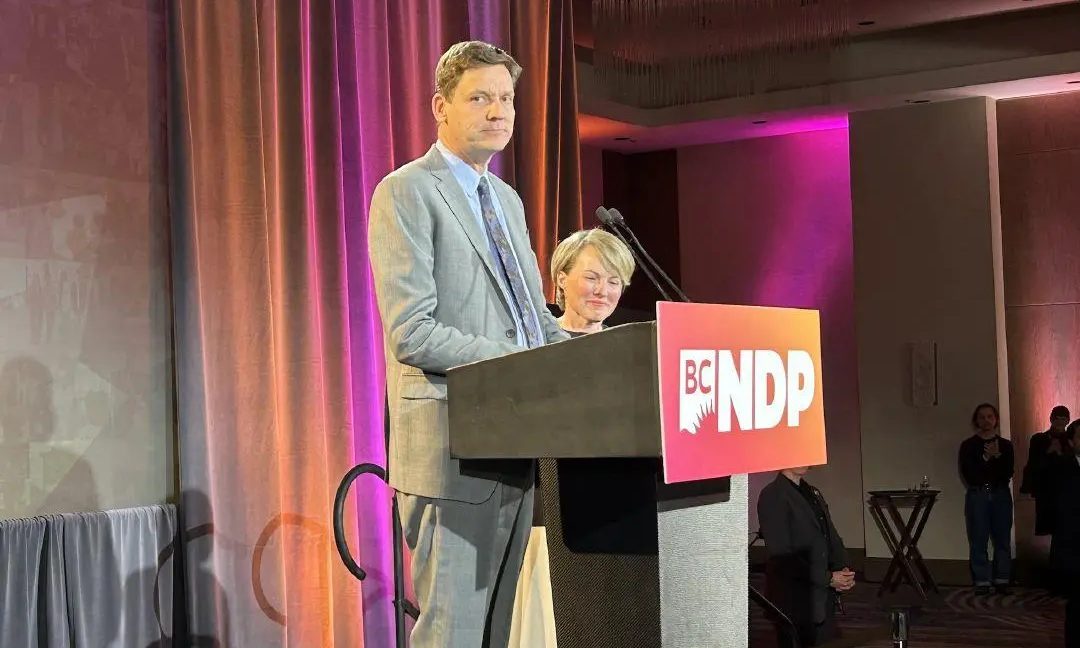
The B.C. Conservative Party is set to claim two-thirds of legislative seats after David Eby’s snap election call backfired, leaving the NDP seeking new leadership.

Voters Deliver Decisive Result in 2026 Snap Vote
Following the outcome of British Columbia’s 2026 snap election, the Conservative Party of B.C. is set to capture two-thirds of the seats in the legislature, leaving the NDP searching for a new party leader. Outgoing Premier David Eby initiated the vote two years ahead of schedule, citing the need for a fresh mandate to confront U.S. trade challenges while also seeking to capitalize on internal Conservative divisions.
However, the early vote call drew criticism from within his own party. NDP MLA Ravi Parmar, who won a tight contest in Langford-Highlands, stated that electors sent a clear signal that the early election was a mistake. According to Parmar, the party spent the campaign defending the timing of the vote rather than promoting its platform, which severely hurt their leadership.
Record-Low Voter Turnout and Campaign Missteps
Preliminary figures indicate voter participation dropped to just over 48 per cent. Total votes fell for both major parties compared to 2024, with Conservatives dropping by approximately 50,000 votes and the NDP seeing a decline of about 275,000. Mario Canseco of polling firm Research Co. pointed to poor messaging and rainy weather as factors, noting that Eby’s campaign remained focused on attacking former Conservative leader Kerry-Lynne Findlay, even though she had resigned two days prior to the election call.
Canseco noted that voters perceived interim Conservative leader Lorne Doerkson as a steady presence, making the NDP’s warnings of party instability ineffective. Late-campaign efforts by Eby to draw Green Party voters to the NDP also proved insufficient, as calculations showed the Conservatives would have won even if all Green supporters had shifted their ballots.
Analysis of a Political Miscalculation
Political science lecturer Stewart Prest from the University of British Columbia described the early call as a major political blunder and an own goal driven by partisan hubris. He noted that Eby ran a negative campaign that ultimately failed to resonate with the public.
Former Conservative leader John Rustad attributed his party’s victory to public dissatisfaction with the opportunistic timing of the election. Rustad, who became the party’s sole MLA in 2023 before leading them close to victory in 2024, said voters have used the past two years to become more comfortable with the Conservatives, who have not governed the province in a century.
Campaign consultant Mike McKinnon, who advised calling the snap election to secure a stronger mandate for trade negotiations, admitted the decision proved far more damaging than anticipated. Unlike the 2020 early election under John Horgan, where public frustration quickly faded, McKinnon acknowledged that Eby remained stuck defending the decision throughout the entire campaign.
OPINIONS
Why Premier-Elect Lorne Doerkson Must Clear a Party Rulebook Hurdle After B.C. Election
B.C. Premier-elect Lorne Doerkson faces a party constitutional clause after leading the B.C. Conservatives to a majority victory, ending a decade of NDP rule.
Internal Rule Poses Post-Election Hurdle for Premier-Elect
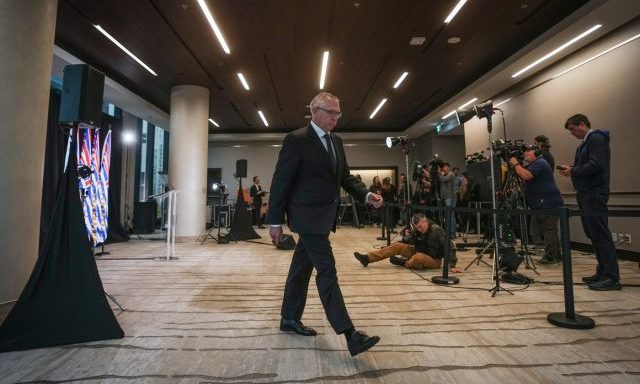
Following a decisive victory that delivered a two-thirds majority government to the B.C. Conservatives on Saturday, premier-elect Lorne Doerkson is moving quickly to resolve an internal administrative constraint regarding his leadership. Under the party’s current constitution, an interim leader is barred from seeking the permanent leadership in a subsequent ballot unless two-thirds of the party’s membership votes to change the clause.
Addressing reporters on Sunday, Doerkson dismissed concerns that the internal provision would prevent him from serving as premier. He characterized the matter as an administrative detail with further details coming imminently, asserting that he remains party leader and is thrilled to be premier-elect of a united party.
Party Leadership Transition and Local Mandate
Doerkson, who won the riding of Cariboo-Chilcotin after switching from B.C. United earlier this year, assumed the interim leadership shortly before outgoing NDP Premier David Eby called a snap election on Sept. 22. The election outcome brought an end to nearly ten years of NDP governance in British Columbia, completing a rapid rise for a party that captured under two per cent of the vote in 2020.
The brief leadership transition followed the sudden departure of Kerry-Lynne Findlay just days prior to the campaign. On Saturday, Findlay offered congratulations online for what she described as a historic victory, while newly elected West Vancouver-Capilano MLA Caroline Elliott—who previously lost a close leadership contest to Findlay—expressed full support for Doerkson, stating he had earned the trust of British Columbians.
Constitutional Amendment and Base Reaction
To secure Doerkson’s position, the party’s board confirmed it intends to pursue appropriate measures to amend the constitution, stating publicly that a premier selected by voters deserves the certainty of leading the party. Former B.C. premier Gordon Campbell also voiced support at the election-night event, describing Doerkson as an honest and straightforward figure.
However, political analysts point out potential friction within the party’s membership. Hamish Telford, an associate professor of political science at the University of the Fraser Valley, noted that a significant segment of the base had sought to distance the party from B.C. Liberal ties. Telford raised questions about how grassroots members will respond as the Conservatives shift toward a mainstream, business-oriented direction.
Doerkson to British Columbia: The Waiting Is Over
Lorne Doerkson’s promise to make British Columbia a place where investment and opportunity can grow is compelling. The test will be whether his government can turn the speech into visible results.
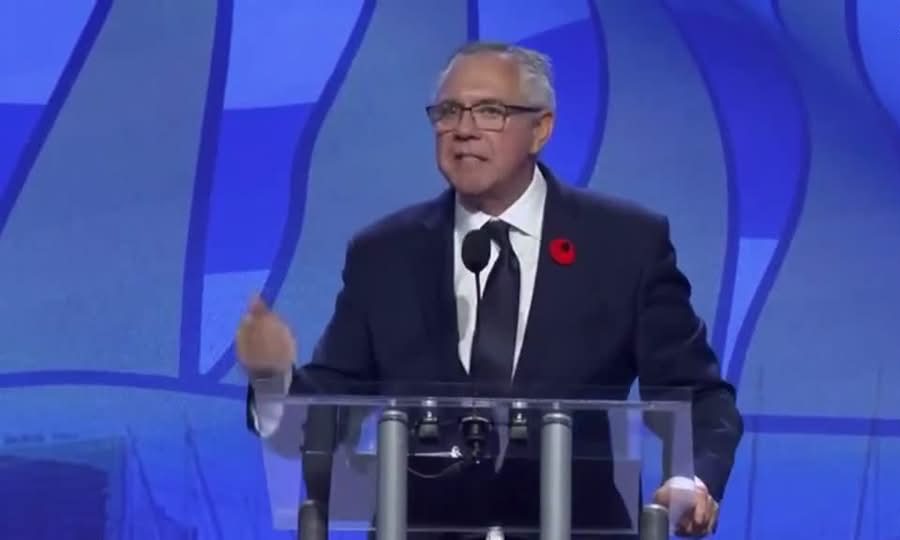
Lorne Doerkson says British Columbia must replace uncertainty with action. His first message as premier-elect sets an ambitious direction on investment, energy, health care and affordability. Now the work is to make those promises real.
British Columbia has heard plenty of promises about its potential. What it has not always seen is the follow-through that turns potential into projects, jobs and opportunity.
That is why Lorne Doerkson’s first speech as premier-elect landed on a simple, memorable point: “You can plan around a no, but you can’t plan around a maybe.”
It is a sharp description of what can happen when businesses, workers and communities cannot tell whether a project will move forward, what it will cost or how long approval will take. Uncertainty does not sit still. Investment can go elsewhere. Young people can build their lives somewhere else. Communities can wait years for decisions that shape their future.
Doerkson’s answer is to say yes to investment and to cut red tape “like it’s never been cut before.” He promised a business summit in Vancouver next year and set out clear ambitions for natural gas production: doubling it by 2032 and tripling it by 2035. He argued that growth could mean tens of thousands of jobs and at least $6 billion a year for hospitals and schools.
Those are big commitments. They give British Columbians something concrete to measure. They also create a responsibility for the incoming government: explain how the province will reach those targets, what infrastructure and approvals will be required, and how communities will see the benefits.
The same test applies to the rest of the speech. Doerkson spoke about more fibre moving by truck, permits issued in months rather than years, support for mineral exploration, ports and rail that can get products to market, and reliable power for new industrial projects. Each promise speaks to a practical problem. Together, they describe a province that wants to build again.
But a change in tone will matter only if people can see a change in the process. If permits still take years, if grid connections remain out of reach or if communities cannot get clear answers, the language of “yes” will become another political slogan.
Doerkson also tied growth to the daily concerns of families. He promised a $1,000 tax cut as a start and no new taxes. He spoke of a publicly funded health-care system, rural emergency rooms and maternity wards that are open, family doctors for people who need them, and safer hospitals for staff.
These are not side issues to an economic plan. A province cannot persuade families to stay if they cannot find a doctor, rely on local emergency care or see a path to owning a home. The promise that a hard day’s work should lead to a family home and a future in British Columbia will be judged against the cost of living and the services people depend on.
On public safety, Doerkson said criminals should remain behind bars while people who need treatment should receive it. On property rights and parks, he offered assurances to landowners and the public. These commitments will require careful decisions in government. Protecting property, expanding access and responding to public safety concerns can involve competing interests. Voters will expect clear rules and consistent results.
The most personal part of the speech was its appeal to people considering leaving. To business owners, Doerkson urged them to stay and grow here. To young people, he said this is their home and their best days should happen close to family and friends, in a place they can afford.
That appeal is understandable. It also raises the standard for the government. People do not stay because a premier asks them to. They stay when opportunity is real, housing is within reach, public services work and their effort has a future here.
A province cannot eliminate every delay, disagreement or difficult trade-off. But it can make decisions on time, state its rules plainly and give people confidence that the answer will not remain “maybe” forever.
Doerkson has set an ambitious direction: a British Columbia where investment comes first, projects move, public services are strong and young people can build their lives at home. The speech made the case. Now the government must show, one decision at a time, that the waiting really is over.
—Chad Dashly

Why the Early Election Gamble Backfired on the NDP

Why Fake Signs Targeted a Small Green Party Campaign on B.C. Election Eve

Why the Conservatives’ Majority Win in Kelowna-Mission Signals Big Changes for Local Healthcare and Economy

Why B.C.’s Latest Election Results Are Sparking Renewed Calls for Voting Reform
Your Current 3 Day Forecast — October 27, 2026
Why First Nations Leaders Are Gathering in Ottawa to Push Back on Fast-Tracked Resource Projects

Opinion: John Rustad Has to Go

B.C. Supreme Court Grants Cowichan Tribes Title to Historic Richmond Lands and Fishing Rights

Vancouver Canucks Gear Up for a Make-or-Break 2025–26 Season

BC Ferries Sparks Outcry Over Contract with Chinese Shipyard

Kamloops Blazers Announce Off-Season Changes Ahead of 2025–26 Season

A Taste of Autumn: Fall Okanagan Wine Festival 2025
-

 SPORTS5 days ago
Why B.C. Lions Starters Are Resting as the Regular Season Concludes Against Winnipeg
-
 BC STORIES5 days ago
BC Conservatives Promise Forestry Overhaul to Revive Jobs as NDP Points to Millions in Existing Investment
-
 OPINIONS5 days ago
How Minor Parties and Strategic Balloting Could Shift the Upcoming B.C. Election
-
 BC STORIES6 days ago
Police Seek Witnesses After Fatal Wrong-Way Collision Near Merritt
-
5 days ago
Your Current 3 Day Forecast — October 22, 2026
-
6 days ago
Your Current 3 Day Forecast — October 21, 2026
-
NATIONAL STORIES6 days ago
Highland Valley Copper Workers Could Strike Saturday as Union Issues Notice
-

 HEALTH6 days ago
Coquihalla Highway Reopens Near Merritt Following Morning Crash That Injured Four