LOCAL
British Columbia Aligns with Ottawa on U.S. Softwood Lumber Tariffs


VANCOUVER — British Columbia Premier David Eby announced that the province will not independently run anti-tariff advertisements targeting the American public. Instead, B.C. will align its communications with the federal government to present a unified front on U.S. softwood lumber tariffs.
Unified Strategy on Canada-U.S. Trade Relations
Speaking alongside Dominic LeBlanc, Canada’s minister responsible for U.S. trade, Eby explained that the decision reflects a broader effort to coordinate messaging with Ottawa. The aim is to maintain a consistent strategy as Canada continues discussions with Washington on long-standing softwood lumber disputes.
Eby noted that the idea for an anti-tariff ad campaign was raised during a Vancouver summit focused on stabilizing B.C.’s forest industry, which has faced challenges due to ongoing American duties and fees.
Shift Toward an Integrated Federal-Provincial Approach
According to Eby, LeBlanc and his federal trade team emphasized the importance of an “integrated approach” to communications with the United States. British Columbia will now ensure that any future outreach or advocacy efforts regarding the lumber trade are consistent with federal objectives.
Response to U.S. Political Pressure
The decision follows recent comments by U.S. President Donald Trump, who cited Ontario’s anti-tariff campaign as a reason for halting trade talks with Canada. Eby said that British Columbia’s priority is to avoid actions that could complicate federal negotiations.
Background: Ongoing Tariffs on Canadian Lumber
In September, the Trump administration imposed anti-dumping and countervailing duties on Canadian lumber producers, with rates ranging from 26% to more than 47%. The administration later threatened an additional 10% tariff, claiming that Canada’s forestry sector poses a risk to U.S. national security.
These measures have intensified pressure on Canada’s forestry-dependent regions, particularly British Columbia, where lumber exports play a vital economic role. Industry leaders have called for stronger diplomatic engagement to resolve the dispute and stabilize cross-border trade.
By Current News Room








LOCAL
Community Safety Highlighted After Gunshots Hit Fort St. John Home
Fort St. John RCMP are investigating after gunshots struck a home on Saturday. Police confirm no injuries were reported in the residential incident.

RCMP Respond to Shooting in Residential Area
An investigation is underway in Fort St. John, B.C., after a local home was struck by gunfire on Saturday.
RCMP officers were dispatched to the neighborhood following multiple public reports of gunshots. Upon arrival, police confirmed that a residence had been hit several times.
Police Warn of Danger to Neighbourhood
No injuries were reported as a result of the gunfire. However, law enforcement officials emphasized the severe potential risks associated with the incident.
“Cpl. Brett Urano says it was fortunate no one was injured, but the potential for a tragic outcome can’t be understated,” police stated. Officials added that discharging firearms in a residential area puts innocent individuals and families at serious risk.
LOCAL
Suspect Arrested in North Kelowna Hit-and-Run After Multi-Unit RCMP Search
Kelowna and Lake Country RCMP arrested a hit-and-run suspect after a two-vehicle crash on Highway 97 near Ellison Lake on Oct. 24. No injuries reported.
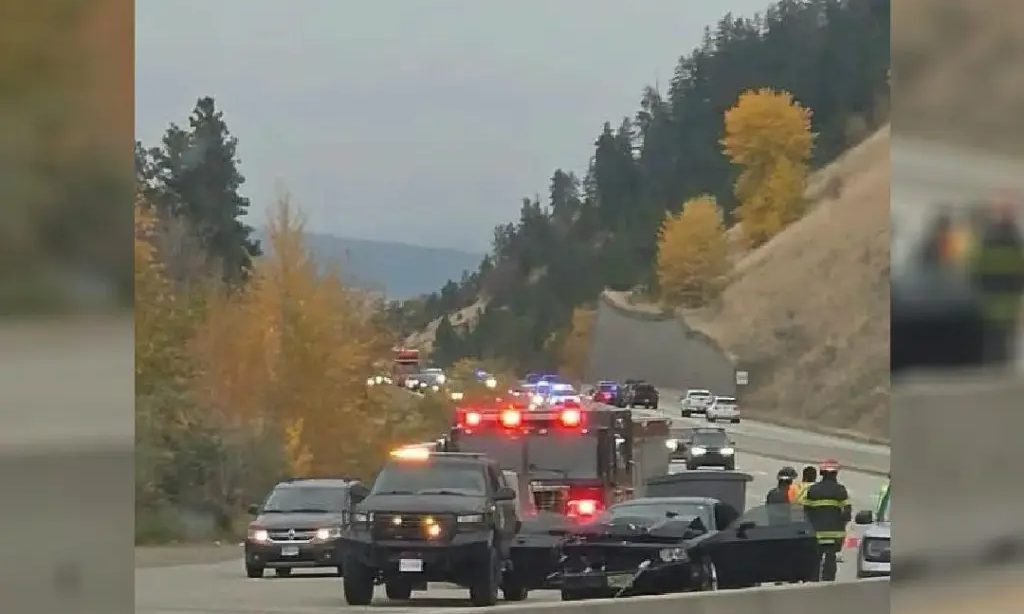
Hit-and-Run Incident Causes Traffic Delay on Highway 97
A driver attempting to flee on foot following a two-vehicle crash on Highway 97 near Ellison Lake was taken into custody by police on Saturday, Oct. 24. The collision in North Kelowna resulted in traffic slowing to a crawl while emergency responders managed the scene.
Extensive Police Response Leads to Arrest
Witnesses contacted authorities after observing the driver of a black sedan abandon the vehicle and run into a nearby green space. Multiple law enforcement teams were dispatched to track down the fleeing suspect, including the Kelowna RCMP Road Safety Unit, the Kelowna RCMP Gang Enforcement Team, frontline officers, Lake Country RCMP, Police Dog Services, and RCMP Air Services.
According to Kelowna RCMP media relations officer Cpl. Steven Lang, officers located and arrested the suspected driver close to the crash site shortly after the search began.
Police Investigation Ongoing
Authorities reported that no injuries occurred as a result of the collision. “Investigators believe alcohol and speed were factors in the collision,” Lang stated.
HEALTH
Coquihalla Highway Reopens Near Merritt Following Morning Crash That Injured Four
The Coquihalla Highway north of Merritt has reopened following a Saturday morning vehicle crash that resulted in four people being taken to the hospital.
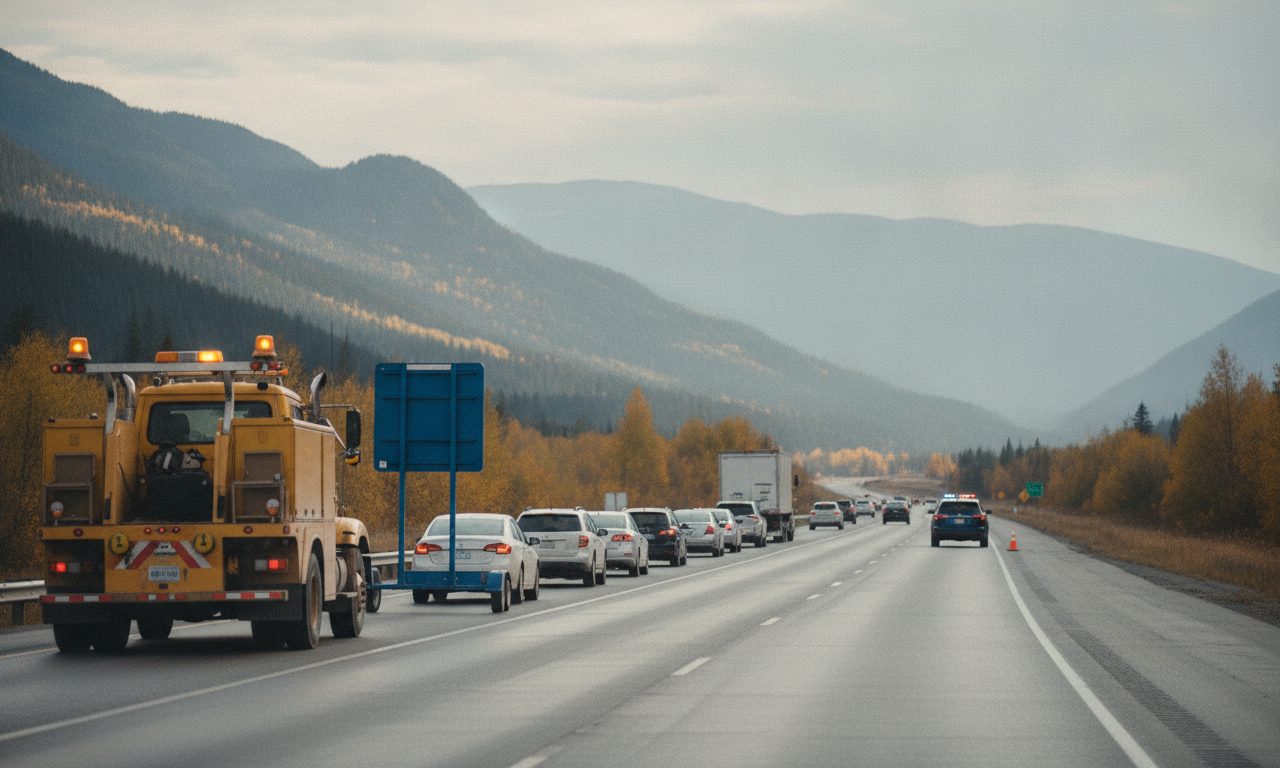
Traffic Resumes Following Serious Morning Incident
Four people were hospitalized, including three in critical condition, after a motor vehicle incident occurred north of Merritt on Saturday morning, October 17.
DriveBC reported that the Coquihalla Highway was reopened in both directions from Exit 290 to Exit 315 at approximately 4:00 p.m., following the earlier closure.
Emergency Responders Deploy Air Ambulances
BC Emergency Health Services dispatched multiple resources after receiving a call at approximately 8:35 a.m. The response included two air ambulances, three primary care paramedic ambulances, one advanced care paramedic ambulance, and a paramedic supervisor.
According to BCEHS, crews provided emergency medical care at the scene. Two of the three critically injured patients were flown to the hospital via air ambulance, while a fourth patient was taken to the hospital in stable condition.

Why the Early Election Gamble Backfired on the NDP

Why Fake Signs Targeted a Small Green Party Campaign on B.C. Election Eve

Why the Conservatives’ Majority Win in Kelowna-Mission Signals Big Changes for Local Healthcare and Economy

Why B.C.’s Latest Election Results Are Sparking Renewed Calls for Voting Reform
Your Current 3 Day Forecast — October 27, 2026
Why First Nations Leaders Are Gathering in Ottawa to Push Back on Fast-Tracked Resource Projects

Opinion: John Rustad Has to Go

B.C. Supreme Court Grants Cowichan Tribes Title to Historic Richmond Lands and Fishing Rights

Vancouver Canucks Gear Up for a Make-or-Break 2025–26 Season

BC Ferries Sparks Outcry Over Contract with Chinese Shipyard

Kamloops Blazers Announce Off-Season Changes Ahead of 2025–26 Season

A Taste of Autumn: Fall Okanagan Wine Festival 2025
-

 SPORTS5 days ago
Why B.C. Lions Starters Are Resting as the Regular Season Concludes Against Winnipeg
-
 BC STORIES5 days ago
BC Conservatives Promise Forestry Overhaul to Revive Jobs as NDP Points to Millions in Existing Investment
-

 OPINIONS5 days ago
How Minor Parties and Strategic Balloting Could Shift the Upcoming B.C. Election
-
 BC STORIES6 days ago
Police Seek Witnesses After Fatal Wrong-Way Collision Near Merritt
-
5 days ago
Your Current 3 Day Forecast — October 22, 2026
-
NATIONAL STORIES6 days ago
Highland Valley Copper Workers Could Strike Saturday as Union Issues Notice
-
6 days ago
Your Current 3 Day Forecast — October 21, 2026
-
 HEALTH6 days ago
Coquihalla Highway Reopens Near Merritt Following Morning Crash That Injured Four