Space
Canada’s First Deep Space Connection: Astronaut Jeremy Hansen to Speak Live From Artemis II
Canadian astronaut Jeremy Hansen to participate in a historic live Q&A from space during the Artemis II lunar mission on April 4, 2026.

A Historic Moment for Canadian Space Exploration
In a milestone event for the Canadian Space Agency (CSA), astronaut Colonel Jeremy Hansen is set to make history on the night of April 3 and 4, 2026. For the first time, a Canadian astronaut will engage in a live space-to-Earth connection from the deep space environment of the Artemis II mission. This unprecedented communication event, hosted at the John H. Chapman Space Centre in Longueuil, Quebec, represents a significant leap forward in Canada’s role in international lunar exploration.
Live Q&A from the Orion Spacecraft
During the 20-minute video link, CSA President Lisa Campbell will host a session where Hansen will share his firsthand impressions of the lunar flyby mission. Canadian media representatives present on-site will have the exclusive opportunity to pose questions directly to the Colonel as he travels beyond low Earth orbit. The Artemis II mission is the first crewed flight under NASA’s Artemis program to venture around the Moon, making Hansen the first Canadian to ever leave Earth’s immediate orbit.
Technical Details and Public Access
The event is scheduled to begin at 12:45 am ET, with the live video feed from the Orion spacecraft expected to stabilize at 1:10 am ET. While only accredited journalists on-site will be permitted to ask questions, the CSA has ensured that the public can witness this historic dialogue. The session will be livestreamed on the CSA’s official YouTube channel, and the entirety of the Artemis II mission will remain accessible to global audiences via the NASA+ broadcasting platform.
Security and Logistics for On-Site Media
Media representatives attending the event in Longueuil are required to present valid credentials at multiple security checkpoints. Given the precise nature of space-to-Earth communication windows, the CSA has emphasized the importance of early arrival to navigate security protocols and ensure that the scheduled connection is not missed. Experts from the CSA will also be available on-site for additional interviews to provide technical context regarding the mission’s progress and the science being conducted aboard the spacecraft.

Space
NASA’s Daring Rescue: Start-up Spacecraft Launched to Save Sinking Gamma-Ray Observatory
NASA and Katalyst Space Technologies launch the LINK mission to save the Neil Gehrels Swift Observatory from orbital decay in a historic commercial rescue.

A High-Stakes Salvage Mission in Orbit
In a historic move for commercial space exploration, NASA has launched a specialized mission to rescue the Neil Gehrels Swift Observatory, a cornerstone of high-energy astrophysics that has been slowly falling toward Earth. The rescue vehicle, a three-armed unmanned spacecraft named LINK, was developed by the Arizona-based startup Katalyst Space Technologies. Launched from the Marshall Islands via a refurbished Lockheed jet, the mission represents the first time a commercial craft has attempted to service a satellite not originally designed for orbital maintenance.
The Science of Gamma-Ray Bursts
Since its launch in 2004, the Swift Observatory has provided vital data on gamma-ray bursts (GRBs)—colossal explosions from dying stars that offer clues about the early history of the universe. However, increased solar activity has recently caused the Earth’s atmosphere to expand, creating drag that pulled the observatory into a dangerously low orbit. Without intervention, the billion-dollar asset risked a fiery reentry into the atmosphere. Dr. Simeon Barber, a prominent space scientist, noted that the scientific community relies heavily on Swift to study phenomena that currently cannot be monitored by any other existing instrument.
An Innovative and Affordable Solution
The LINK spacecraft was produced in just eight months with a budget of approximately $30 million, a fraction of the cost required to build and launch a replacement observatory. The mission’s plan involves LINK using its robotic arms to securely grasp the Swift observatory before performing a “slow, graceful lift.” By firing its thrusters gradually, the craft aims to push the observatory approximately 200 kilometers higher into a stable orbit. NASA officials have confirmed that electronic communications between LINK and the observatory have already been established.
The Future of Orbital Servicing
NASA’s decision to greenlight the mission highlights a shift toward sustainable space operations. Rather than allowing aging but functional satellites to burn up, the agency is leveraging private sector innovation to extend the lifespan of existing technology. If successful, the LINK mission will serve as a proof-of-concept for future orbital repairs, potentially saving billions in taxpayer dollars and reducing the accumulation of space debris.
LOCAL
Quantum Translation: Physicists Unveil New Mathematical Bridge to Solve Black Hole Paradox
Physicists use the ‘double copy’ framework to translate Hawking radiation into particle physics, offering a new path to solve the black hole information paradox.
The Hawking Information Crisis
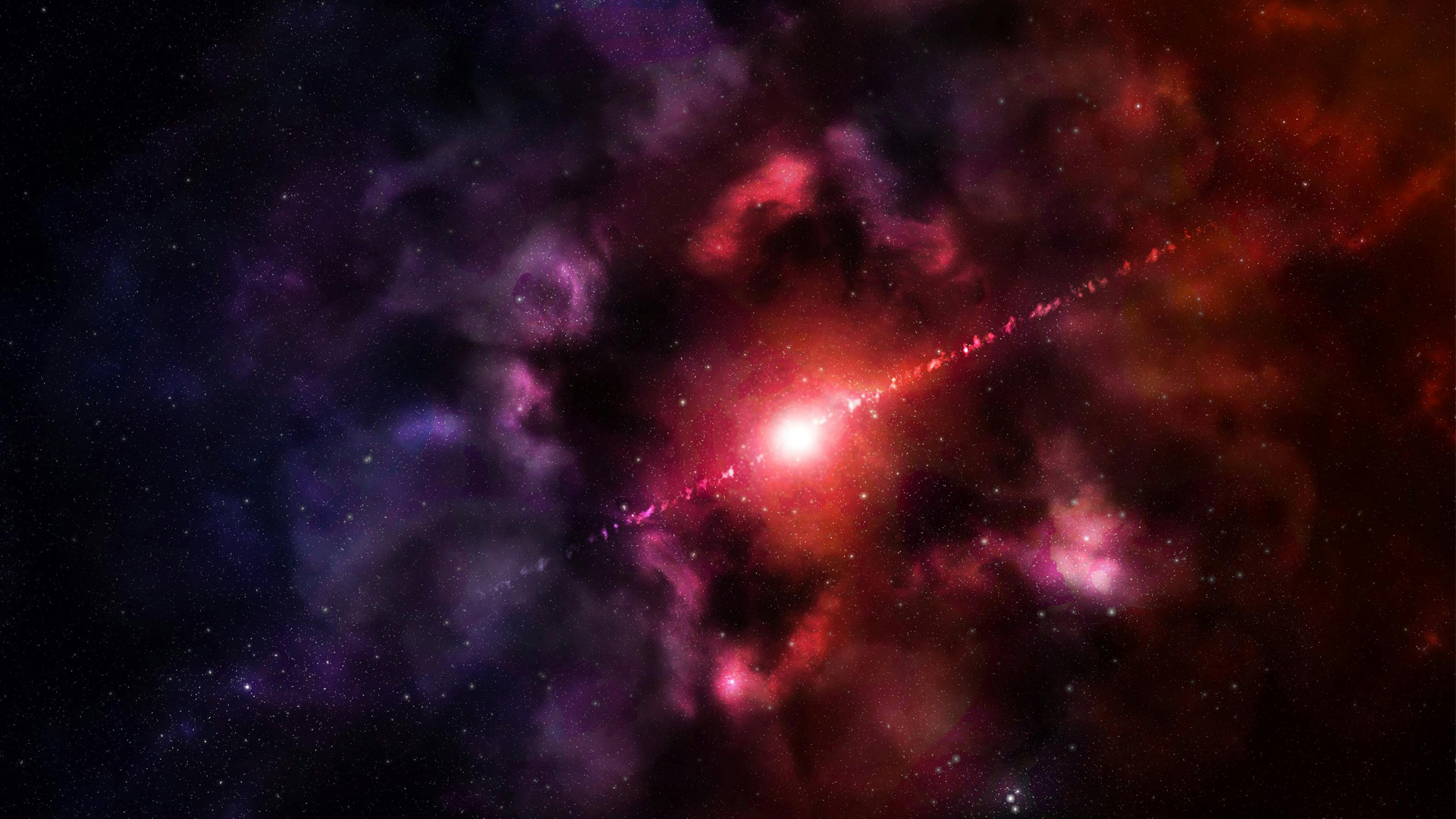
For decades, the black hole information paradox has remained one of the most stubborn obstacles in theoretical physics. The problem stems from a prediction by Stephen Hawking: black holes are not truly black but emit a faint stream of particles known as Hawking radiation. As this radiation causes the black hole to evaporate and eventually vanish, the quantum information contained within it appears to be destroyed—a direct violation of the laws of quantum mechanics. Scientists have long lacked the mathematical tools to reconcile Einstein’s general relativity with the quantum world in these extreme environments.
Bridging Gravity and Particle Physics
An international team of researchers has recently published a study on the arXiv preprint server that may offer a workaround. Utilizing a mathematical framework known as the ‘double copy,’ the team successfully translated the complex equations of Hawking radiation into the language of particle physics. The double copy theory suggests that certain gravitational phenomena can be rewritten using the more manageable equations found in the Standard Model of particle physics, acting as a translation layer between two historically incompatible fields.
A New Testing Ground for Quantum Gravity
By mapping Hawking radiation onto a scenario involving charged particles interacting with collapsing electromagnetic fields, the researchers found that the underlying mathematics matched perfectly. This discovery suggests that features of black hole physics may already be hidden within ordinary particle physics equations. While the research is currently theoretical and restricted to specific models, it provides a vital new testing ground for studying the quantum nature of gravity. Physicists hope this ‘clever recycling’ of results will eventually allow them to investigate the event horizon itself, potentially resolving the mystery of where information goes when a black hole disappears.
Science
Canada’s Lunar Giant Leap: Jeremy Hansen and Jenni Gibbons Set for Historic Artemis II Mission
Canadian astronauts Jeremy Hansen and Jenni Gibbons take center stage in NASA’s Artemis II mission, the first crewed lunar flight in over 50 years.

A New Era of Lunar Exploration
For the first time in over half a century, humanity is preparing to return to the Moon, and Canada is playing a central role in this historic endeavor. The Artemis II mission, scheduled for a launch window beginning April 1, represents the first crewed flight to the lunar vicinity since the Apollo era. This 10-day fly-around mission will test the critical systems of the Orion spacecraft, paving the way for future permanent lunar habitats.
The First International Moon Traveler
At the heart of the mission is Colonel Jeremy Hansen, a 50-year-old veteran pilot from London, Ontario. Serving as a mission specialist, Hansen is set to make history as the first non-American to travel beyond low Earth orbit. A former CF-18 fighter pilot with extensive experience in Arctic operations and NORAD defense, Hansen joined the Canadian Space Agency in 2009. His role on Artemis II involves managing complex science and operational tasks alongside NASA astronauts Reid Wiseman, Victor Glover, and Christina Koch as they perform a lunar flyby and capture high-resolution imagery of the surface.
The Vital Role of the Backup
Supporting the mission from the ground—and ready to step in at a moment’s notice—is Calgary-born Jenni Gibbons. A former assistant professor at the University of Cambridge, Gibbons serves as Hansen’s backup. Her contribution extends far beyond potential flight; during the mission, she will serve as a ‘capcom,’ the primary voice link between Earth and the crew. Gibbons is also instrumental in defining training protocols for the future Artemis III and IV missions, ensuring that Canada remains a vital partner in the long-term goal of establishing a human presence on the Moon.
Looking Toward the Future
The success of Artemis II is the essential bridge to Artemis III, which will test docking capabilities with commercial landing craft. While NASA anticipates a return to the lunar surface by early 2028, the current mission serves as the ultimate proving ground for the technology and international cooperation required for deep-space exploration. For Canada, this mission is not just a scientific milestone, but a validation of the nation’s decades-long commitment to aerospace excellence.

Why the Early Election Gamble Backfired on the NDP

Why Fake Signs Targeted a Small Green Party Campaign on B.C. Election Eve

Why the Conservatives’ Majority Win in Kelowna-Mission Signals Big Changes for Local Healthcare and Economy

Why B.C.’s Latest Election Results Are Sparking Renewed Calls for Voting Reform
Your Current 3 Day Forecast — October 27, 2026
Why First Nations Leaders Are Gathering in Ottawa to Push Back on Fast-Tracked Resource Projects

Opinion: John Rustad Has to Go

B.C. Supreme Court Grants Cowichan Tribes Title to Historic Richmond Lands and Fishing Rights

Vancouver Canucks Gear Up for a Make-or-Break 2025–26 Season

BC Ferries Sparks Outcry Over Contract with Chinese Shipyard

Kamloops Blazers Announce Off-Season Changes Ahead of 2025–26 Season

A Taste of Autumn: Fall Okanagan Wine Festival 2025
-
 BC STORIES5 days ago
BC Conservatives Promise Forestry Overhaul to Revive Jobs as NDP Points to Millions in Existing Investment
-

 SPORTS5 days ago
Why B.C. Lions Starters Are Resting as the Regular Season Concludes Against Winnipeg
-

 OPINIONS5 days ago
How Minor Parties and Strategic Balloting Could Shift the Upcoming B.C. Election
-

 BC STORIES6 days ago
Police Seek Witnesses After Fatal Wrong-Way Collision Near Merritt
-
5 days ago
Your Current 3 Day Forecast — October 22, 2026
-
6 days ago
Your Current 3 Day Forecast — October 21, 2026
-
NATIONAL STORIES6 days ago
Highland Valley Copper Workers Could Strike Saturday as Union Issues Notice
-

 HEALTH6 days ago
Coquihalla Highway Reopens Near Merritt Following Morning Crash That Injured Four