WORLD
Carney’s office says United Arab Emirates will invest $70 billion in Canada


UAE to Invest $70 Billion in Canada, Says Carney’s Office
The United Arab Emirates has announced plans to invest significantly in Canada, marking a major financial commitment. This investment is expected to bolster economic ties between the two nations.
- The UAE plans to invest $50 billion USD, equivalent to approximately $70 billion CAD.
- The announcement was made by the office of Prime Minister Mark Carney.
- This investment aims to strengthen bilateral relations and enhance economic collaboration.
In a significant move for Canadian economic relations, the United Arab Emirates has committed to investing $70 billion in Canada. This announcement was confirmed by the office of Prime Minister Mark Carney, highlighting the growing partnership between the two countries.
The investment, which translates to $50 billion USD, is expected to create new opportunities across various sectors in Canada. Officials are optimistic that this financial influx will not only stimulate the Canadian economy but also foster deeper ties with the UAE.
Prime Minister Carney’s office did not specify the sectors that would benefit from this investment, but it is anticipated that areas such as technology, energy, and infrastructure may see significant development. The commitment reflects a broader trend of increasing foreign investment in Canada.
As Canada continues to navigate its economic landscape, this substantial investment from the UAE is poised to play a crucial role in shaping future growth and collaboration between the two nations.







WORLD
Why Canada’s Bid for a Turkish Nuclear Deal Is Gaining Ground
Prime Minister Mark Carney says AtkinsRealis has good chances of winning a nuclear reactor tender in Turkey following a new strategic partnership.

Strategic Energy Co-operation
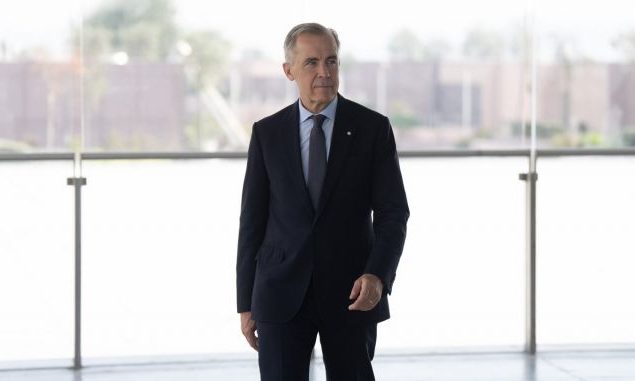
A Canadian proposal to provide Candu nuclear reactors for two planned energy facilities in Turkey now has “good chances” of succeeding, according to Prime Minister Mark Carney. Speaking to Turkish business executives in Istanbul, Carney noted that he would not have made the same assessment a year ago.
Expanding Business Ties
The announcement follows a newly established strategic partnership between Canada and Turkey designed to enhance collaboration across multiple sectors, with energy serving as a primary focus. The bid, put forward by AtkinsRealis, involves potential partnerships with Turkish construction firms alongside Canadian nuclear technology.
While final procurement choices remain business-to-business decisions, Carney explained that his objective in Istanbul is to demonstrate how the Canadian market has shifted to become more welcoming to foreign investors and companies.
WORLD
Why Residents and Tourists on Mexico’s Pacific Coast Face Severe Threats From Hurricane Simon
Hurricane Simon batters Mexico’s Pacific coast as a Category 4 storm, threatening Puerto Vallarta and Cabo Corrientes with winds, rain, and storm surge.
Category 4 Storm Moves Parallel to the Coastline
Hurricane Simon battered Mexico’s western shoreline as a powerful Category 4 system on Sunday, delivering maximum sustained winds of 150 mph (240 kph) and intense rainfall to areas located between the ocean and the Sierra Madre mountains. The U.S. National Hurricane Center reported that the eye of the system was traveling north-northwest at approximately 6 mph (9 kph) roughly 110 miles (175 kilometers) south-southeast of Cabo Corrientes. Because the eye remains offshore and is moving nearly parallel to the land, forecasters noted it is difficult to determine whether an official landfall will occur, allowing the storm to retain its intense strength.
Severe Weather Threats to Coastal Communities and Resorts
Phillipe Pappin, a senior specialist at the hurricane center, stated that the westernmost tip of mainland Mexico presents the highest likelihood for landfall, identifying Cabo Corrientes as the area most probable to take a direct hit on Sunday. Officials warned that severe hazards including catastrophic winds, life-threatening storm surge, destructive ocean waves, and torrential rain are expected along the west-central coastline. Rainfall totals could range from 10 to 20 inches (25 to 50 centimeters) across broad areas, with isolated spots in Jalisco, Colima, and Michoacan states potentially receiving up to 30 inches (76 centimeters), triggering critical flooding and mudslides in elevated terrain.
Local Preparations and Impact on Visitors
The impending weather prompted proactive measures across vulnerable regions and popular resort areas such as Puerto Vallarta. In Jalisco state, authorities suspended school classes on Friday and Monday across 22 coastal municipalities, initiated evacuations in high-risk zones, and requested that the tourism industry place visitors and staff in secure locations or shelters. Businesses, hotels, and convenience stores in Puerto Vallarta boarded up windows ahead of the severe conditions. Canadian tourist Ed Currie, who was staying in Puerto Vallarta with his wife for five more days, remarked that the storm had not yet disrupted his itinerary, noting they intended to stay inside their hotel while hoping for the best.
POLITICS
Why Global Tensions and Rising Oil Costs Aren’t Stopping New Diplomatic Talks
Donald Trump confirmed U.S. and Iranian officials met at the U.N. despite his threat to annihilate Iran if the war does not end soon as oil markets react.
U.S. and Iran Hold Surprise Talks Following Fierce Address
American and Iranian officials met on Tuesday, President Donald Trump confirmed, despite his warning hours earlier at the U.N. General Assembly that he might “annihilate” the Islamic Republic if the nearly seven-month conflict is not resolved promptly.
Trump described the discussion to reporters as “a very good meeting” without elaborating on its substance or specific outcomes. During his address, he framed his stance as a showing of fortitude while asserting he faces a choice between enabling Iran to rebuild or destroying it quickly.
Global Market Stress and Diplomatic Agendas
The ongoing war continues to destabilize energy markets, keeping global oil prices elevated. Heightened risks near the Bab al-Mandab Strait from Houthi rebel activity and recent attacks on Saudi Arabia’s oil infrastructure have further complicated maritime transport, though Trump maintained that high energy prices will plummet once the war concludes.
Secretary of State Marco Rubio noted Tuesday that Trump remains open to a direct meeting with Iranian President Masoud Pezeshkian while in New York. Beyond the Middle East, Trump addressed the Russia-Ukraine war and held bilateral sessions with leaders from Denmark, Greenland, the United Kingdom, Japan, Ukraine, and Latin American nations.

Why the Early Election Gamble Backfired on the NDP

Why Fake Signs Targeted a Small Green Party Campaign on B.C. Election Eve

Why the Conservatives’ Majority Win in Kelowna-Mission Signals Big Changes for Local Healthcare and Economy

Why B.C.’s Latest Election Results Are Sparking Renewed Calls for Voting Reform
Your Current 3 Day Forecast — October 27, 2026
Why First Nations Leaders Are Gathering in Ottawa to Push Back on Fast-Tracked Resource Projects

Opinion: John Rustad Has to Go

B.C. Supreme Court Grants Cowichan Tribes Title to Historic Richmond Lands and Fishing Rights

Vancouver Canucks Gear Up for a Make-or-Break 2025–26 Season

BC Ferries Sparks Outcry Over Contract with Chinese Shipyard

Kamloops Blazers Announce Off-Season Changes Ahead of 2025–26 Season

A Taste of Autumn: Fall Okanagan Wine Festival 2025
-

 SPORTS5 days ago
Why B.C. Lions Starters Are Resting as the Regular Season Concludes Against Winnipeg
-
 BC STORIES5 days ago
BC Conservatives Promise Forestry Overhaul to Revive Jobs as NDP Points to Millions in Existing Investment
-

 OPINIONS5 days ago
How Minor Parties and Strategic Balloting Could Shift the Upcoming B.C. Election
-

 BC STORIES6 days ago
Police Seek Witnesses After Fatal Wrong-Way Collision Near Merritt
-
5 days ago
Your Current 3 Day Forecast — October 22, 2026
-
6 days ago
Your Current 3 Day Forecast — October 21, 2026
-
NATIONAL STORIES6 days ago
Highland Valley Copper Workers Could Strike Saturday as Union Issues Notice
-
 HEALTH6 days ago
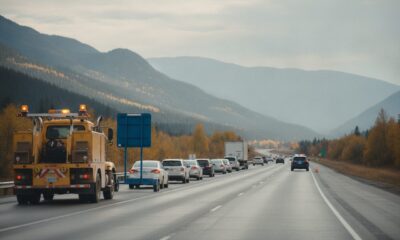
Coquihalla Highway Reopens Near Merritt Following Morning Crash That Injured Four