WORLD
China Secures Major Lunar Milestone with Successful Crew Capsule Abort and Rocket Recovery
China’s CMSA successfully tests the Mengzhou ‘Dream Vessel’ abort system and recovers a Long March 10 reusable booster, marking a major step toward 2030 Moon goals.


A Dual Milestone in the Heavens
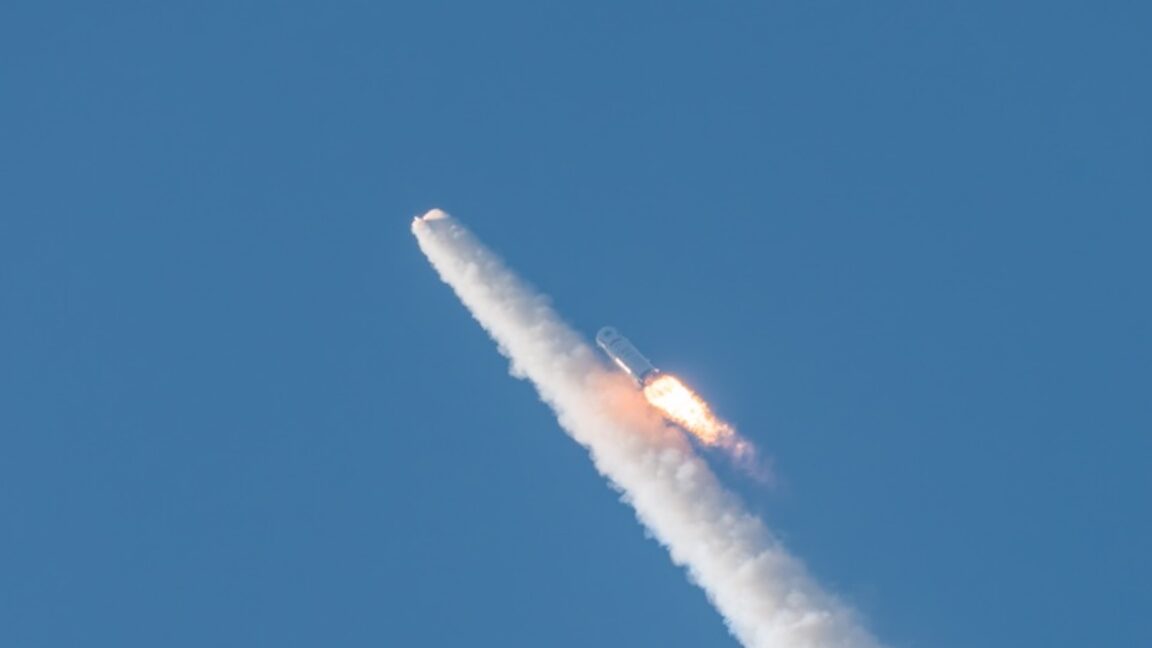
In a display of technical prowess that underscores Beijing’s rapid ascent in the global space race, the China Manned Space Agency (CMSA) conducted a landmark test flight late Tuesday, achieving two critical objectives in a single mission. The spectacular demonstration involved the successful in-flight abort of the new Mengzhou crew capsule and the propulsive landing of a subscale Long March 10 reusable booster. This double-success marks a pivotal moment for China’s lunar exploration program, which aims to put boots on the moon by 2030.
Testing the ‘Dream Vessel’ Under Pressure
The mission began at the Wenchang Space Launch Site on Hainan Island, where a test version of the Mengzhou spacecraft—which translates to ‘Dream Vessel’—was launched atop a modified Long March 10 booster. The primary goal was to verify the spacecraft’s launch abort system (LAS), a critical safety feature designed to whisk astronauts away from a failing rocket during the most volatile stages of ascent.
Approximately one minute into the flight, as the vehicle reached ‘Max-Q’—the point of maximum aerodynamic pressure—the capsule’s abort motors ignited. In a sequence mirroring tests previously conducted by NASA for the Orion capsule and SpaceX for the Crew Dragon, the Mengzhou was pulled clear of its booster. After reaching the stratosphere, the capsule deployed its parachutes and performed a controlled splashdown in the South China Sea. This test follows a successful ground-level abort test conducted last year, further human-rating the vessel for future lunar treks.
The Leap Toward Reusability
While the abort test was expected, the second phase of the mission provided an even more significant breakthrough for China’s domestic aerospace industry. Unlike the test boosters used by Western agencies, which are typically expended during abort trials, the Long March 10 first stage continued its mission. After the capsule separated, the booster soared higher into the atmosphere before performing a controlled reentry.
Powered by its kerosene-fueled YF-100 engines, the booster executed a precise propulsive landing on a recovery barge stationed offshore. This achievement represents China’s most advanced demonstration of reusable rocket technology to date, a field currently dominated by the American company SpaceX. The China Aerospace and Science Technology Corporation (CASC) noted that the recovery lays the foundation for full-profile flight tests, proving that China is mastering the high-precision navigation and engine reignition required for rapid rocket refurbishment.
Building a Lunar Infrastructure
The Mengzhou spacecraft is destined to become the workhorse of China’s manned spaceflight. Beyond its role in lunar missions, where it will ferry crews to a specialized lunar lander in orbit around the Moon, it is also designed to service the Tiangong space station in low-Earth orbit. Replacing the aging Shenzhou capsule, the Mengzhou can carry up to seven astronauts and is built for multiple reuses, significantly lowering the cost of access to space.
The rocket involved, the Long March 10, is equally vital. The full-scale version of this heavy-lift vehicle will feature 21 engines across three boosters, providing the 70 metric tons of thrust necessary to send the 26-metric-ton Mengzhou toward the lunar surface. An orbital test of the Long March 10A—the single-booster variant—is scheduled for later this year, including a docking mission with the Tiangong station.
A New Chapter in the Space Race
The success of Tuesday’s test is a clear signal to the international community that China’s timeline for a 2030 lunar landing is well on track. As NASA prepares its own Artemis missions to return humans to the lunar south pole, the competition for lunar resources and national prestige is intensifying. With no fewer than ten Chinese private and state-owned companies now developing reusable launch vehicles, the era of expendable rocketry is drawing to a close in the East, just as it has in the West. For China, the ‘Dream Vessel’ is no longer just a concept; it is a flight-proven reality heading for the lunar frontier.