business
Prime Minister Carney Unveils $1 Trillion Investment Summit to Combat Decadelong Capital Flight
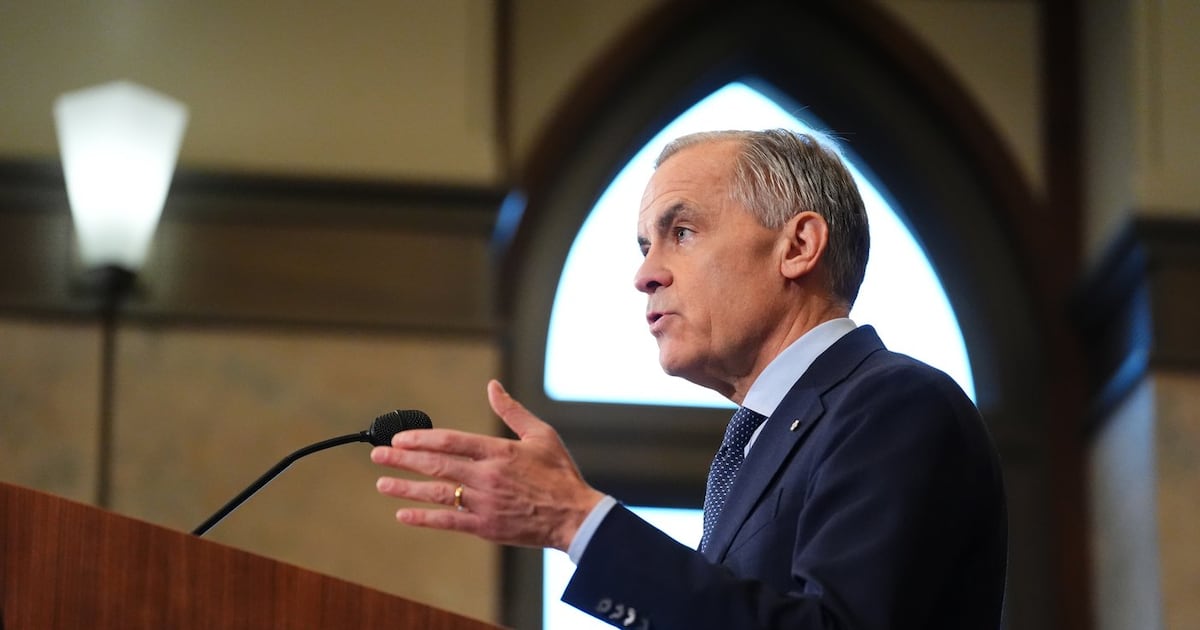
Prime Minister Mark Carney announces the Canada Investment Summit in Toronto, aiming to attract $1 trillion in investment to reverse a decade of capital flight.


A Strategic Pivot for the Canadian Economy
In a bold move to reverse a decade of stagnant international interest, Prime Minister Mark Carney has announced the inaugural “Canada Investment Summit.” Scheduled for September 14 and 15 in Toronto, the summit represents a high-stakes effort to attract $1 trillion in new investment over the next five years. The event will convene global CEOs, institutional investors, and business leaders to showcase Canada’s potential as a premier destination for nation-building projects.
Reversing the ‘Largest Capital Exodus’
The announcement comes at a critical juncture for the Canadian economy. According to a recent RBC report, more than $1 trillion in foreign investment exited the country between 2015 and 2024—a period described as the largest capital exodus in the nation’s history. While 2025 showed signs of recovery with over $100 billion in foreign direct investment, the Carney administration is seeking a more permanent shift in momentum. By leveraging Canada’s status as a stable energy producer with a highly educated workforce, the government aims to unlock job opportunities and modernize the country’s industrial backbone.
Strategic Partnerships and Key Sectors
The summit is being organized in partnership with the Canada Pension Plan Investment Board (CPPIB) and the Public Sector Pension Investment Board (PSP Investments). The focus will be on high-growth sectors, including liquefied natural gas (LNG) terminals, expanded nuclear and hydro capacity, and the critical mineral supply chain essential for the global green transition. RBC projections suggest that with the right policy advancements, Canada could attract up to $1.8 trillion over the next decade.
Economic Pressures and Small Business Concerns
Despite the optimistic outlook for large-scale investment, the domestic landscape remains challenging. Canada is currently grappling with energy price spikes driven by the Iran war and trade friction caused by U.S. tariffs. Furthermore, a new report from the Canadian Federation of Independent Business (CFIB) highlights a struggling small business sector, with closures outpacing openings for six consecutive quarters. The Prime Minister’s Office maintains that the influx of international capital will create a trickle-down effect, stabilizing the broader economy and providing the necessary infrastructure to support businesses of all sizes.