business
Prime Minister Carney Unveils $1 Trillion Investment Summit to Combat Decadelong Capital Flight
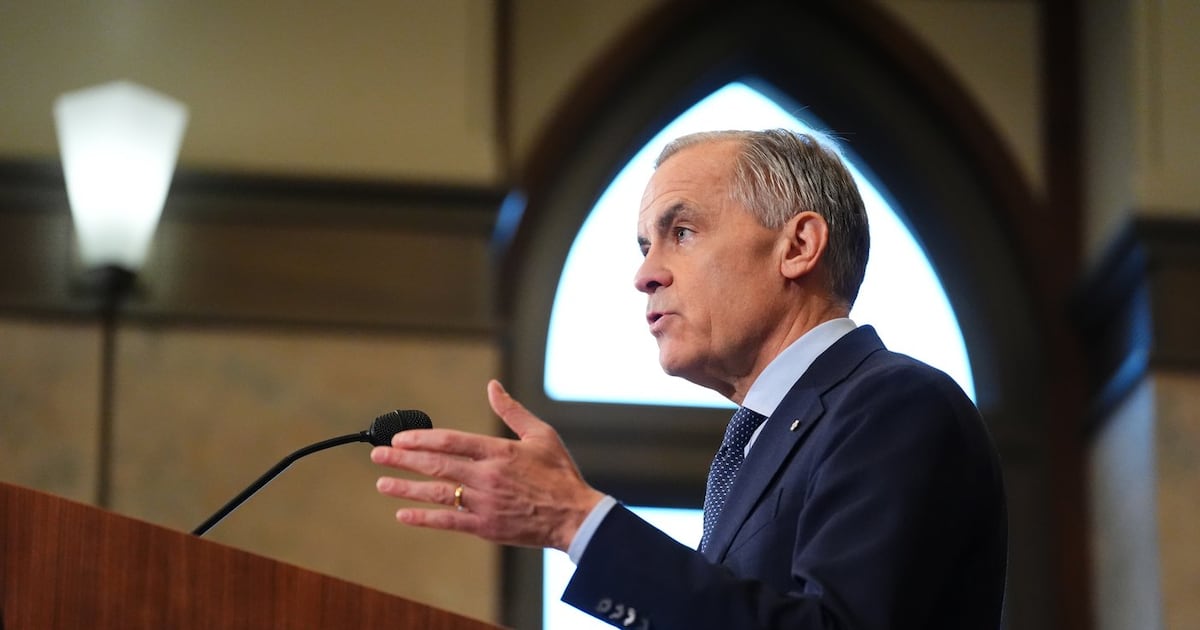
Prime Minister Mark Carney announces the Canada Investment Summit in Toronto, aiming to attract $1 trillion in investment to reverse a decade of capital flight.

A Strategic Pivot for the Canadian Economy
In a bold move to reverse a decade of stagnant international interest, Prime Minister Mark Carney has announced the inaugural “Canada Investment Summit.” Scheduled for September 14 and 15 in Toronto, the summit represents a high-stakes effort to attract $1 trillion in new investment over the next five years. The event will convene global CEOs, institutional investors, and business leaders to showcase Canada’s potential as a premier destination for nation-building projects.
Reversing the ‘Largest Capital Exodus’
The announcement comes at a critical juncture for the Canadian economy. According to a recent RBC report, more than $1 trillion in foreign investment exited the country between 2015 and 2024—a period described as the largest capital exodus in the nation’s history. While 2025 showed signs of recovery with over $100 billion in foreign direct investment, the Carney administration is seeking a more permanent shift in momentum. By leveraging Canada’s status as a stable energy producer with a highly educated workforce, the government aims to unlock job opportunities and modernize the country’s industrial backbone.
Strategic Partnerships and Key Sectors
The summit is being organized in partnership with the Canada Pension Plan Investment Board (CPPIB) and the Public Sector Pension Investment Board (PSP Investments). The focus will be on high-growth sectors, including liquefied natural gas (LNG) terminals, expanded nuclear and hydro capacity, and the critical mineral supply chain essential for the global green transition. RBC projections suggest that with the right policy advancements, Canada could attract up to $1.8 trillion over the next decade.
Economic Pressures and Small Business Concerns
Despite the optimistic outlook for large-scale investment, the domestic landscape remains challenging. Canada is currently grappling with energy price spikes driven by the Iran war and trade friction caused by U.S. tariffs. Furthermore, a new report from the Canadian Federation of Independent Business (CFIB) highlights a struggling small business sector, with closures outpacing openings for six consecutive quarters. The Prime Minister’s Office maintains that the influx of international capital will create a trickle-down effect, stabilizing the broader economy and providing the necessary infrastructure to support businesses of all sizes.

business
CFL Scores Historic $500 Million Media Rights Deal with Bell Media, DAZN, and YouTube
The CFL has signed a historic 6-year, $500M media deal with Bell Media, DAZN, and YouTube, expanding its reach through 2032 with new streaming and global rights.

A New Era for Canadian Football
The Canadian Football League (CFL) has secured its financial future and digital footprint through 2032, announcing a landmark six-year broadcast extension worth an estimated $500 million. Commissioner Stewart Johnston, a former TSN executive, spearheaded the multi-platform agreement that keeps Bell Media as the primary rights holder while introducing major streaming and social media components to modernize the league’s reach.
Bell Media Maintains Majority Coverage
Under the new terms, Bell Media remains the cornerstone of CFL broadcasting. TSN will continue to air 60 regular-season games annually, including the popular Thursday and Friday night slots, along with six playoff matchups and the Grey Cup. In a move to increase accessibility, the Grey Cup will also be simulcast on CTV and Crave. RDS will maintain its exclusive French-language rights, ensuring comprehensive coverage for Montreal Alouettes fans and the Quebec market.
The Digital Shift: DAZN and YouTube
The most significant evolution in this deal is the entry of DAZN as an exclusive partner for a weekly “Saturday Night Football” package starting in 2027. DAZN will also serve as the global broadcaster for all CFL games outside of Canada and the United States, providing the league with an unprecedented international platform. Commissioner Johnston emphasized that DAZN plans to establish a full domestic production team, bringing new voices and creative perspectives to the game’s analysis.
Complementing the streaming shift is a strategic partnership with YouTube. The platform will become a hub for live pre-season games, enhanced coverage of the CFL Combine, and original unscripted series. By leveraging YouTube’s creator ecosystem, the CFL aims to attract younger demographics through behind-the-scenes storytelling and influencer-driven content.
Economic Impact and Strategic Growth
At roughly $83 million per year, the new agreement represents a significant jump from the previous $50 million annual average. While the league continues to explore broadcast options in the United States to replace its expiring CBS Sports Network deal, this domestic and global triad provides the CFL with its highest media valuation in history. By diversifying distribution across traditional cable, premium streaming, and free social platforms, the league is betting on a hybrid model to sustain its legacy while fueling future growth.
business
Canada Challenges China’s Dominance as Mark Carney Breaks Ground on Massive Matawinie Graphite Mine
Prime Minister Mark Carney breaks ground on Quebec’s Matawinie Mine, the G7’s largest graphite project, aimed at challenging China’s EV battery dominance.

A Strategic Shift in Global Battery Supply Chains
In a move to secure Canada’s position in the global green economy, Prime Minister Mark Carney officially broke ground Tuesday at the Matawinie Mine site in Quebec. The project, operated by Nouveau Monde Graphite (NMG), is being hailed as the largest graphite mine in the G7 and a cornerstone of North America’s electric vehicle (EV) supply chain. Located near Saint-Michel-des-Saints, the facility is expected to produce over 106,000 tonnes of natural graphite annually—an eight-fold increase over Canada’s current total production.
Economic Impact and Federal Support
The Matawinie Mine is projected to inject nearly $2 billion into the Canadian economy while creating 1,000 jobs. To ensure the project’s success, the federal government has orchestrated a massive $459-million financing package through Export Development Canada and the Canada Infrastructure Bank. Furthermore, Ottawa has secured a seven-year offtake agreement for 30,000 tonnes of graphite concentrate annually, ensuring a steady market for the mine’s output. The project also prioritizes sustainability, with a $4.4-million investment for electric heavy machinery to replace traditional diesel equipment.
Reducing Reliance on International Monopolies
Currently, China dominates the global graphite market, controlling nearly 80 percent of production. Graphite is a critical component for EV battery anodes, and Canada’s current global market share sits at a mere 0.7 percent. Prime Minister Carney emphasized that this mine will build a more resilient international partnership, particularly with the United States, which already receives the majority of Canada’s graphite exports. The mine will eventually integrate with the Bécancour Battery Material Plant, creating Canada’s first fully integrated ‘mine-to-battery’ supply chain powered by Quebec’s hydroelectricity.
Political Tension Over Project Timelines
Despite the celebratory atmosphere, the project has drawn criticism from the Conservative party. MP Shannon Stubbs argued that the Liberal government is taking credit for a project that was already well-advanced, suggesting the mine’s progress is a testament to the industry’s resilience against federal ‘red tape.’ However, the Liberals point to the Major Projects Office (MPO) referral as a key catalyst that streamlined permitting and financing, allowing construction to begin just six months after the referral was made.
business
Unlocking Toronto’s Potential: Why Billy Bishop Airport Expansion is a Vital Economic Catalyst
Explore why expanding Billy Bishop Airport is essential for Toronto’s economic growth, global connectivity, and its transition into a world-class meta city.

The Case for a Modernized Waterfront Gateway
The proposal by Premier Doug Ford’s government to expand Billy Bishop Toronto City Airport has ignited a debate about the future of Toronto’s urban landscape. At the heart of the discussion is the potential to transform the downtown hub into a world-class, walkable, and sustainable airport. By extending the runway to accommodate modern jets, the city could bridge the gap between its current status and that of elite global “meta cities” like London and New York.
Economic Connectivity in the Post-Pandemic Era
As cities navigate the recovery from pandemic-era shifts, the role of downtown cores has evolved. Recent data suggests that visitors now account for approximately 60 percent of activity in major North American downtowns, far outstripping office workers. Billy Bishop Airport serves as a direct pipeline for these visitors, bringing tourists and business professionals directly into the heart of Toronto. Expanding the airport’s reach to include major tech and finance hubs like San Francisco, Miami, and Vancouver would strengthen Toronto’s economic competitiveness and foster the flow of ideas and capital.
Infrastructure and Urban Identity
Urbanists argue that the world’s most successful cities thrive on multi-airport systems that offer geographic flexibility and ease capacity pressure at primary hubs. Similar to London City Airport or New York’s LaGuardia, a modernized Billy Bishop would provide a seamless transit experience that integrates with the city’s residential and commercial fabric. This “messy urbanism”—a mix of industry, residential life, and transportation—is central to Toronto’s DNA.
A Sustainable Future for Aviation
One of the primary benefits of the proposed expansion is the transition to quieter, more fuel-efficient aircraft. Modern jets are designed to minimize noise pollution while maximizing connectivity, addressing long-standing concerns from local residents. While the provincial government’s unilateral approach has faced criticism for sidelining municipal stakeholders, the underlying vision remains clear: a sustainable, integrated airport is a critical asset for a city with global ambitions.
Vancouver Canucks Appoint Manny Malhotra as Head Coach Amid Massive Front Office Overhaul
Canada-U.S. Trade Tension Escalates as Trump Renews ’51st State’ Rhetoric
Ottawa Unveils $10 Billion Infrastructure Windfall for Quebec Transit and Health Care
Actor Nick Pasqual Sentenced to 32 Years to Life Following Brutal Stabbing of Former Partner
Invasive Mosquitoes Carrying Brain-Swelling Virus Detected in B.C. Sea-to-Sky Region
Canada Secures Decisive 2-0 Victory Over Uzbekistan as World Cup Fever Hits Edmonton

Opinion: John Rustad Has to Go

B.C. Supreme Court Grants Cowichan Tribes Title to Historic Richmond Lands and Fishing Rights

Vancouver Canucks Gear Up for a Make-or-Break 2025–26 Season

Kamloops Blazers Announce Off-Season Changes Ahead of 2025–26 Season

BC Ferries Sparks Outcry Over Contract with Chinese Shipyard

A Taste of Autumn: Fall Okanagan Wine Festival 2025
-
Health7 days ago
The Strategic Edge: Why Sleep Is the Executive’s Most Underutilized Asset
-
Hockey7 days ago
History in the Making: John Tortorella Chases Rare Mid-Season Coaching Milestone with Vegas
-
Alberta7 days ago
Internal Rift Erupts as Alberta Premier Clashes with Party President Over Separatism
-
energy7 days ago
A Geopolitical Shift: Canada and Germany Strike Landmark 20-Year LNG Export Deal
-
business6 days ago
CFL Scores Historic $500 Million Media Rights Deal with Bell Media, DAZN, and YouTube
-
LOCAL6 days ago
UBC Dementia Research Receives $500,000 Boost for Revolutionary Blood-Based Testing
-
Africa6 days ago
Deadly Bundibugyo Outbreak in Congo Outpacing Global Response as Deaths Surge
-
WORLD6 days ago
Tensions Surge as US Strikes Iranian Targets Amid High-Stakes Nuclear Negotiations