OPINIONS
Doerkson to British Columbia: The Waiting Is Over

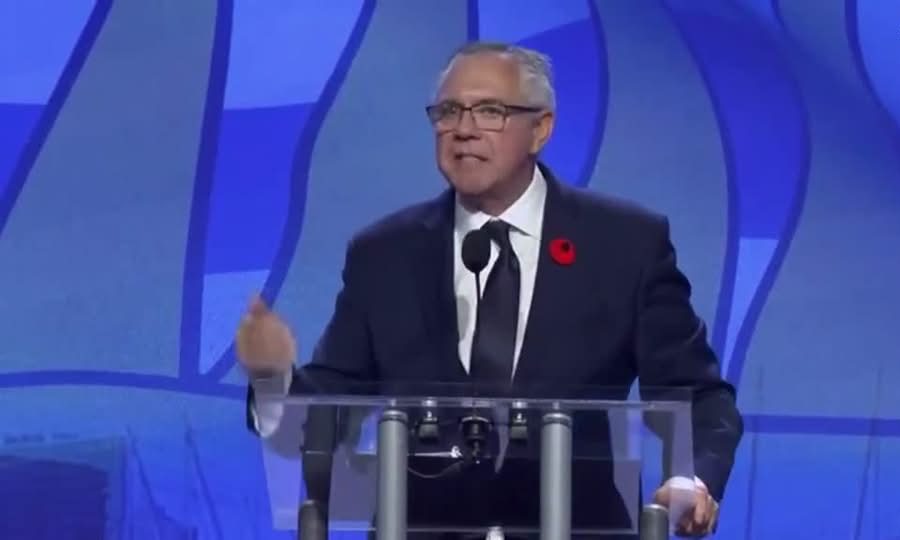
Doerkson to British Columbia: The Waiting Is Over
Lorne Doerkson’s promise to make British Columbia a place where investment and opportunity can grow is compelling. The test will be whether his government can turn the speech into visible results.
Lorne Doerkson says British Columbia must replace uncertainty with action. His first message as premier-elect sets an ambitious direction on investment, energy, health care and affordability. Now the work is to make those promises real.
British Columbia has heard plenty of promises about its potential. What it has not always seen is the follow-through that turns potential into projects, jobs and opportunity.
That is why Lorne Doerkson’s first speech as premier-elect landed on a simple, memorable point: “You can plan around a no, but you can’t plan around a maybe.”
It is a sharp description of what can happen when businesses, workers and communities cannot tell whether a project will move forward, what it will cost or how long approval will take. Uncertainty does not sit still. Investment can go elsewhere. Young people can build their lives somewhere else. Communities can wait years for decisions that shape their future.
Doerkson’s answer is to say yes to investment and to cut red tape “like it’s never been cut before.” He promised a business summit in Vancouver next year and set out clear ambitions for natural gas production: doubling it by 2032 and tripling it by 2035. He argued that growth could mean tens of thousands of jobs and at least $6 billion a year for hospitals and schools.
Those are big commitments. They give British Columbians something concrete to measure. They also create a responsibility for the incoming government: explain how the province will reach those targets, what infrastructure and approvals will be required, and how communities will see the benefits.
The same test applies to the rest of the speech. Doerkson spoke about more fibre moving by truck, permits issued in months rather than years, support for mineral exploration, ports and rail that can get products to market, and reliable power for new industrial projects. Each promise speaks to a practical problem. Together, they describe a province that wants to build again.
But a change in tone will matter only if people can see a change in the process. If permits still take years, if grid connections remain out of reach or if communities cannot get clear answers, the language of “yes” will become another political slogan.
Doerkson also tied growth to the daily concerns of families. He promised a $1,000 tax cut as a start and no new taxes. He spoke of a publicly funded health-care system, rural emergency rooms and maternity wards that are open, family doctors for people who need them, and safer hospitals for staff.
These are not side issues to an economic plan. A province cannot persuade families to stay if they cannot find a doctor, rely on local emergency care or see a path to owning a home. The promise that a hard day’s work should lead to a family home and a future in British Columbia will be judged against the cost of living and the services people depend on.
On public safety, Doerkson said criminals should remain behind bars while people who need treatment should receive it. On property rights and parks, he offered assurances to landowners and the public. These commitments will require careful decisions in government. Protecting property, expanding access and responding to public safety concerns can involve competing interests. Voters will expect clear rules and consistent results.
The most personal part of the speech was its appeal to people considering leaving. To business owners, Doerkson urged them to stay and grow here. To young people, he said this is their home and their best days should happen close to family and friends, in a place they can afford.
That appeal is understandable. It also raises the standard for the government. People do not stay because a premier asks them to. They stay when opportunity is real, housing is within reach, public services work and their effort has a future here.
A province cannot eliminate every delay, disagreement or difficult trade-off. But it can make decisions on time, state its rules plainly and give people confidence that the answer will not remain “maybe” forever.
Doerkson has set an ambitious direction: a British Columbia where investment comes first, projects move, public services are strong and young people can build their lives at home. The speech made the case. Now the government must show, one decision at a time, that the waiting really is over.
—Chad Dashly

BC STORIES
What the Latest Polling Numbers Mean for B.C. Voters Ahead of Election Day
B.C. Conservatives maintain a slight lead over the NDP three days before election day, with battlegrounds like Surrey set to decide the outcome.
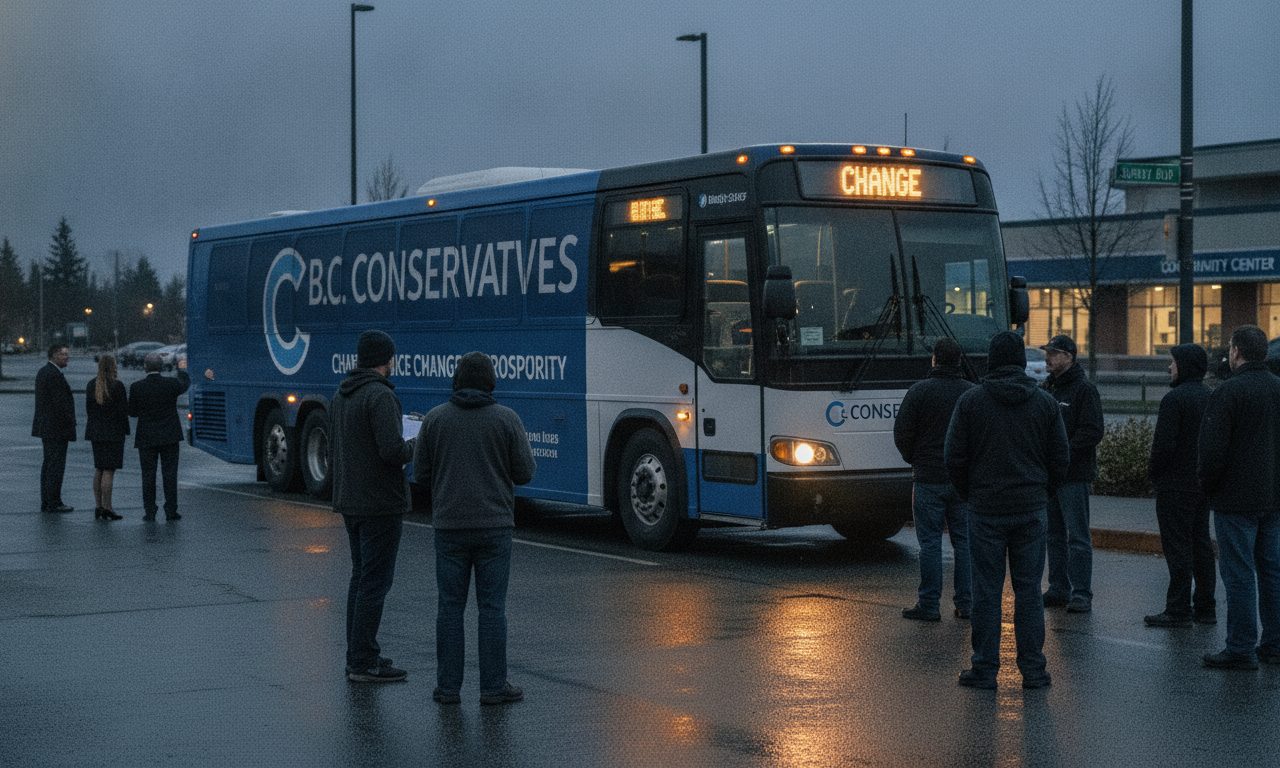
Conservatives Hold Edge in Recent Surveys
Surveys conducted by the Angus Reid Institute and Mainstreet Research show the B.C. Conservatives holding a lead of three to six percentage points over the B.C. NDP. With a three-point margin of error in the Angus Reid survey, Conservative support is estimated between 43 and 49 per cent, while the NDP stands between 40 and 46 per cent.
Crucial Regional Battlegrounds
According to 338Canada founder Philippe Fournier, key battlegrounds will dictate the final outcome. Areas such as Surrey and the outer margins of Metro Vancouver are essential territories for the NDP if they hope to secure another term. Party leaders have focused their efforts heavily on Surrey in recent days to rally support.
Snap Election Strategy and Leadership Shift
The NDP called a snap election a month ago with two years remaining on their mandate. Fournier suggested the decision may have been influenced by earlier polling against former Conservative leader Kerry-Lynne Findlay, who resigned Sept. 20 before being succeeded by interim leader Lorne Doerkson. Meanwhile, support for the B.C. Greens has ranged between eight and 15 per cent in recent surveys, slightly under expectations as disgruntled voters have yet to shift significantly to the party.
OPINIONS
How Minor Parties and Strategic Balloting Could Shift the Upcoming B.C. Election
With B.C. Conservatives at 45% and NDP at 42%, experts weigh in on how vote-splitting among five parties and strategic voting could decide the election.
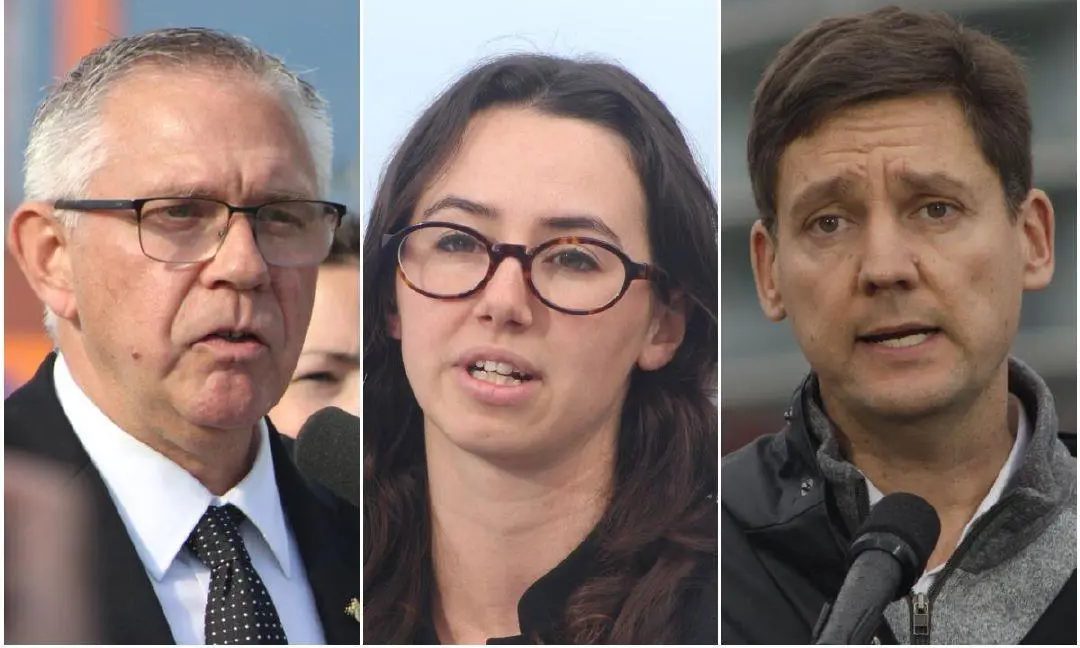
Narrow Polling Margin Points to Tight Provincial Contest
The Conservatives currently maintain a slight advantage over the governing NDP in B.C. polling averages compiled by 338Canada, holding 45 per cent support against the NDP’s 42 per cent. The B.C. Green Party registers at nine per cent, while support for two new right-leaning parties, CentreBC and OneBC, totals between two and seven per cent combined. A four per cent margin of error applies to the top two contenders in the aggregated data.
David Black, a political communications professor at Royal Roads University, explained that overall popular vote figures offer a limited picture of the final outcome. “We have 93 mini-elections that generate this complex outcome we call government,” he said. He added that the Conservatives maintain an edge, but noted the party’s recent internal instability under former leader Kerry-Lynne Findlay makes its long-term brand loyalty uncertain. “If this was a reliable, known, long-standing vehicle for the centre-right that was ideologically coherent and organizationally recognizable, then I would worry less about a vote-splitting,” Black observed.
Riding Dynamics and Strategic Voting Concerns
Small parties are not fielding slates in all 93 ridings across B.C., which impacts the precision of province-wide polling, noted Mario Canseco of Research Co. However, in ridings where candidates from CentreBC—headed by former Conservative Elenore Sturko—or OneBC—led by former Conservative Dallas Brodie—are present, vote-splitting could alter the results. Canseco noted that such dynamics could allow the NDP to secure seats with as little as 37 or 38 per cent of the vote, particularly across key toss-up ridings in Surrey.
Individual candidate races may also reshape local outcomes. In Vancouver-Quilchena, OneBC Leader Brodie is competing against Conservative Carson Binda of the Canadian Taxpayers Federation and NDP candidate Callista Ryan. Canseco calculated that if Brodie captures 10 to 12 per cent of the vote and Ryan replicates her 2024 performance of 38.91 per cent, the NDP could potentially win the traditional right-wing seat.
Party Leaders Respond as Election Nears
With five parties running incumbent candidates, NDP Leader David Eby warned that vote-splitting among left-leaning voters could inadvertently assist the Conservatives. He urged Green supporters to coordinate with his party to prevent a Conservative government. In response, B.C. Green Party Leader Emily Lowan rejected the call. “We look at the numbers; we know that the BC Greens grow the vote; we don’t split the vote,” she said.
Black emphasized that the NDP’s clearest route to victory relies on Green supporters, and to a lesser extent CentreBC voters, casting strategic ballots. Polling data from Research Co. shows that Green supporters express lower commitment to their choice compared to voters backing other parties. Eby acknowledged the likelihood of a tight finish, stating, “I think that what the polls do illustrate for me, and what I hope they illustrate for British Columbia, is that this election is going to be very close.”
OPINIONS
B.C. Election Poll Puts Conservatives Ahead Five Points as Cost of Living Tops Voters’ Concerns

The BC Conservatives lead the BC NDP 48% to 43% among decided and leaning voters in a new Angus Reid Institute poll. Cost of living is the top concern, named by 57% of respondents, followed by health care at 42%.
By Chad Dashly | The Current
A new Angus Reid Institute poll puts the BC Conservatives five points ahead of the BC NDP, but the closer look is more complicated than the topline suggests: both parties have gained support, voters are beginning to settle on their choices, and the issues they want leaders to address are firmly rooted at home.
The online survey, conducted October 1–3, found that 48% of decided and leaning voters would support the BC Conservatives, compared with 43% for the BC NDP. The poll was released after the nomination deadline finalized most parties’ candidate slates.
The Institute says both major parties gained support during the early campaign. It attributes Conservative gains in part to a smaller pool of CentreBC and OneBC candidates competing across the province, while the NDP appears to be drawing support from the Greens. Those are the pollster’s explanations for the shifts; the results do not establish why individual voters changed their minds.
The survey also found a more settled electorate. Nearly half of respondents, 46%, said they were “very certain” of their vote, up from 35% in the first week of the campaign. That confidence is not evenly distributed: among Conservative supporters, the share who were very certain rose from 47% on September 24 to 65%. Among NDP supporters, it reached 44%, a three-point increase from the campaign’s opening week.
The poll’s issue findings are just as notable. Cost of living and inflation were the leading concerns, selected by 57% of respondents. Health care followed at 42%. The economy and jobs, housing affordability, the provincial deficit and public safety each registered at 24% to 26%.
U.S. tariffs, Donald Trump and the alcohol ban were named as a top voting issue by 10%, down from 15% in the September 22–24 survey. The Institute’s question allowed respondents to choose up to three issues. The numbers suggest that, for many voters, the cost of daily life and access to care are more immediate concerns than the cross-border dispute that featured prominently in the NDP’s case for an election.
What the poll means
The five-point Conservative lead is a snapshot, not a prediction of the final result. The vote-intention figure is based on 846 decided and leaning voters, while the wider survey included 1,013 B.C. adults. Angus Reid says the overall results were weighted to represent the province’s adult population. Its stated margin of error—plus or minus three percentage points, 19 times out of 20—applies to a probability sample of that size; this was an online panel survey, so that comparison should be treated as a guide rather than a guarantee of precision.
The more useful campaign signal may be the contrast between the two parties’ apparent momentum and the issues voters are naming. The Conservatives lead, and their supporters report a marked increase in certainty. But the NDP has also gained ground, and nearly half of respondents still do not describe themselves as very certain. There is room for the race to move.
The issue rankings also set a practical test for both leaders. Voters are pointing to affordability and health care. Broad arguments about leadership, campaign tactics or national politics may draw attention, but parties still have to show how their plans would affect household costs and people’s ability to get care.
In the poll’s results, Conservative leader Lorne Doerkson holds a narrow edge over David Eby on who would make the best premier: 36% choose Doerkson and 33% Eby. Nearly as many, 31%, choose neither. That last figure is a reminder that a lead between party options does not automatically translate into broad enthusiasm for either leader.
As the campaign advances, the question is whether the parties can turn their current support into votes—and persuade uncertain voters that their promises answer the concerns showing up most clearly in the polling.
Source: Angus Reid Institute online survey conducted October 1–3, 2026, among 1,013 B.C. adults. Vote intention is based on 846 decided and leaning voters. Read the poll and methodology.
Why B.C. Voters Handed Conservatives a Majority and Turned Away From the NDP

Why First Nations Leaders and Leaders Are Gathering for Historic Talks in Ottawa
Graduation Cruise Rescued Off Vancouver Coast After Vessel Hits Sandbar

Doerkson to British Columbia: The Waiting Is Over
Your Current 3 Day Forecast — October 25, 2026
What Tommy Stevens’ CFL Scoring Record Means for the Roughriders’ Playoff Run

Opinion: John Rustad Has to Go

B.C. Supreme Court Grants Cowichan Tribes Title to Historic Richmond Lands and Fishing Rights

Vancouver Canucks Gear Up for a Make-or-Break 2025–26 Season

BC Ferries Sparks Outcry Over Contract with Chinese Shipyard

Kamloops Blazers Announce Off-Season Changes Ahead of 2025–26 Season

A Taste of Autumn: Fall Okanagan Wine Festival 2025
-

 BC STORIES7 days ago
Grassroots Effort and Digital Content Help Deliver Strong Election Finish for Young Candidates
-

 BC STORIES7 days ago
Voters Shift Strategy as Pete Fry Wins Vancouver Mayoral Race
-

 COMMUNITY6 days ago
The week ahead in West Coast: Mon 19 — Sun 25 October
-

 BC STORIES7 days ago
Why B.C. NDP Leader David Eby Is Urging Green Voters to Help Stop a Conservative Win
-
BC STORIES7 days ago
What the B.C. Conservatives’ New Platform Means for Your Taxes and Provincial Services
-
NATIONAL STORIES7 days ago
Tragedy at CFB Wainwright frames last-minute calls for unity as Albertans prepare for referendum vote
-
5 days ago
Your Current 3 Day Forecast — October 20, 2026
-
BC STORIES6 days ago
How B.C.’s Political Parties Plan to Handle the Rise of AI Data Centres