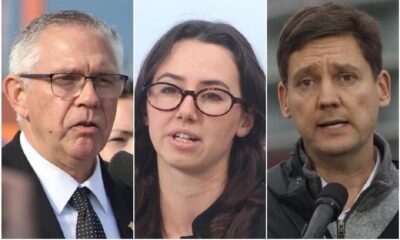
British Columbia’s Conservative Party has officially launched its leadership contest, with the party set to name a new leader on May 30, 2026. The race follows a turbulent internal period that ended with former leader John Rustad stepping aside, and it’s shaping up as a compressed, high-stakes sprint focused on fundraising, membership growth, and party unity.
Key Takeaways
- The B.C. Conservative leadership race concludes with a new leader announced on May 30, 2026.
- Candidates face major entry costs: $115,000 in fees plus a $20,000 compliance deposit tied to rules and fines.
- Six candidates have declared so far, ranging from sitting MLAs to former cabinet experience and outsider voices.
- Several prominent names have declined to run.
- Former Pattison Food Group president Darrell Jones says he is seriously considering a late entry.
The Deep Dive
The party’s contest framework sets a clear bar for would-be leaders: demonstrate organizational capacity early, particularly on fundraising and compliance. Under the published rules, leadership hopefuls must pay $115,000 in fees, plus a $20,000 deposit tied to compliance and potential fines. The structure is intended to ensure the next leader can finance a province-wide campaign operation, but it also raises the barrier to entry for candidates without a strong fundraising network.
So far, the declared field includes a half-dozen candidates:
Peter Milobar (MLA for Kamloops Centre and former Kamloops mayor) has joined the race emphasizing accountability and building the Conservatives into a credible “government-in-waiting.”
Iain Black (a former B.C. Liberal cabinet minister who also ran federally as a Conservative candidate in 2025) argues his blend of cabinet and private-sector experience makes him “election-ready.”
Yuri Fulmer (businessman, chancellor of Capilano University, and former Conservative candidate) is framing his bid around party unity after a year of internal division.
Sheldon Clare (MLA for Prince George–North Cariboo) has defended the party’s high entry fees as a sign the next leader must be able to fundraise at scale.
Caroline Elliott (political commentator and former B.C. United vice-president) is emphasizing culture-and-identity debates and what she describes as a pushback against “ideology” in public life.
Warren Hamm (a Rossland contractor and advocate) is positioning himself as an outsider option in the contest.
On the opt-out list, several names discussed early have publicly declined. Gavin Dew, the Conservative MLA for Kelowna-Mission, has said he will not run, citing family priorities and cautioning the party against internal distractions and “culture war” detours. Aaron Gunn, the federal MP for North Island–Powell River, has also ruled himself out, pointing to the risk of triggering a federal by-election that could affect the balance of power in Ottawa. Interim leader Trevor Halford has also indicated he does not intend to seek the role permanently.
Likely to enter / considering: Darrell Jones
One of the biggest “what’s next” questions is whether the field expands. Darrell Jones, the former president of the Pattison Food Group and widely recognized as the public face of “Darrell’s Deals” at Save-On-Foods, has said he is giving serious consideration to entering the leadership contest. Jones has pointed to affordability, housing, public safety, and access to reliable health care as the issues driving his decision, adding that he plans to keep listening before making a final call.
Darrell Jones is a B.C.-based grocery and retail executive best known for his decades-long career at Save-On-Foods and the broader Jim Pattison retail portfolio. He began in the food business in Cranbrook, B.C., as a retail grocery clerk at an Overwaitea store and worked his way through progressively senior roles across 23 stores and communities. He became president of Save-On-Foods in 2012 and, in 2021, was named president of the newly formed Pattison Food Group, overseeing food, drug, wholesale, and specialty retail operations spanning hundreds of stores and tens of thousands of employees. He has also served in community and charitable leadership roles, including as chair of the BC Children’s Hospital Foundation, and became widely known outside the business world through his on-camera role promoting “Darrell’s Deals.”
Why It Matters
This leadership contest will help determine whether the B.C. Conservatives can unify after a bruising internal period and present themselves as a credible province-wide alternative. The tight timeline and steep entry costs put fundraising and organizational discipline at the center of the race factors that can shape who competes, how broadly they can campaign, and what kind of coalition they can build.
It will also influence the party’s public brand heading into the spring vote. A leader who can broaden support, especially on kitchen-table issues like affordability, housing, public safety, and health care, could expand the party’s reach. But a contest dominated by internal disputes risks narrowing its appeal. A potential late entry by a high-profile executive like Darrell Jones could further shift the race toward managerial competence and cost-of-living priorities as the May 30, 2026 decision approaches.