Indigenous Affairs
First Nation Launches Legal Battle to Halt Alberta Separation Petition
Sturgeon Lake Cree Nation seeks a court injunction to stop an Alberta separation petition, arguing treaty rights require First Nations’ consent for secession.


A Constitutional Challenge in Edmonton
The legal fight over Alberta’s future within Confederation has intensified as the Sturgeon Lake Cree Nation heads to the Court of King’s Bench in Edmonton. The First Nation is seeking an immediate injunction to suspend a massive petition campaign aimed at triggering a referendum on Alberta’s secession from Canada. At the heart of the legal challenge is the assertion that any move toward separation cannot proceed without the explicit consent of Indigenous peoples, whose treaty rights are intrinsically tied to the Crown.
Treaty Rights and Sovereignty
The Sturgeon Lake Cree Nation alleges that Alberta, the federal government of Canada, and the province’s chief electoral officer have failed to uphold their constitutional and treaty obligations. The First Nation argues that the separation process ignores the legal reality that treaties were signed between sovereign Indigenous nations and the Crown, not the province of Alberta alone. By allowing a petition for independence to move forward without consultation, the First Nation contends that the government is infringing upon their fundamental rights and the historical agreements that govern the land.
The Drive for Separation
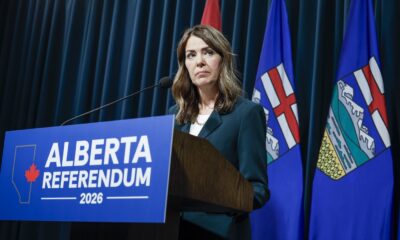
The petition at the center of the controversy is spearheaded by a group known as Stay Free Alberta. The organization claims it has already surpassed the 178,000-signature threshold required under provincial legislation to trigger a referendum, with several weeks still remaining in their campaign. Premier Danielle Smith’s administration has previously indicated that if the required number of signatures is verified by Elections Alberta, the question of provincial independence will be put to a public vote. However, this legal intervention could stall the movement, as the court weighs whether the provincial democratic process can override established treaty obligations.
High Stakes for the Province
This case represents a critical intersection of provincial autonomy, Indigenous sovereignty, and federal law. If the judge grants the injunction, it could set a major precedent regarding the limits of provincial referendums and the necessity of Indigenous consent in constitutional matters. For now, the eyes of the province remain on the Edmonton courtroom, as the legal validity of the separation movement faces its most significant challenge to date.






Indigenous Affairs
New Era for Indigenous Rights? Liberals Unveil Revamped Clean Water Legislation
The Liberal government introduces Bill C-37 to secure clean drinking water for First Nations, aiming to codify water access as a fundamental human right.

A Renewed Push for First Nations Water Security
The Liberal government has officially introduced Bill C-37, a landmark piece of legislation aimed at securing safe drinking water for First Nations communities across Canada. Indigenous Services Minister Mandy Gull-Masty introduced the bill in the House of Commons on Tuesday, framing it as a critical step in addressing the systemic failures that have led to decades of long-term drinking water advisories on reserve lands.
The legislation explicitly commits the federal government to the “progressive realization” of the human right to safe drinking water, a standard aligned with the International Covenant on Economic, Social and Cultural Rights. According to Minister Gull-Masty, the bill has been designed to “stand the test of time,” ensuring that future governments remain legally bound to uphold these standards regardless of political shifts.
The Legacy of Bill C-61
This new legislative push follows the path of its predecessor, Bill C-61, which was introduced by the Trudeau administration in 2023. That bill was a direct response to a 2021 class-action lawsuit settlement, but it ultimately died on the order paper when Parliament was prorogued. While the previous bill saw intense opposition from provinces like Alberta and Ontario—who argued it could impede resource development—it was praised by many Indigenous advocates for its co-drafted nature.
Under the leadership of Prime Minister Mark Carney, the current Liberal government is seeking to finish the work started during the Trudeau era. However, the path forward remains complex. While the bill aims to codify rights, some First Nations leaders have expressed concerns regarding a lack of recent consultation, suggesting that the rush to table the bill before the summer break may have come at the expense of deeper engagement.
What Happens Next?
The timing of the introduction is strategic yet fraught with delays. With the House of Commons expected to rise for summer break by the end of the week, Bill C-37 is unlikely to see substantive debate or a vote until the fall session. This leaves a several-month window for First Nations groups, provincial governments, and industry stakeholders to scrutinize the text and prepare for what is expected to be a rigorous committee phase. For the thousands of residents currently living under water advisories, the legislative process remains a slow but vital avenue for permanent change.
Environment
Outrage Ignites as Prime Minister Faces Demands for Apology Over Grassy Narrows ‘Outlast’ Comment
First Nations chiefs demand an apology from Prime Minister Mark Carney after he was caught laughing and saying he could ‘outlast’ a mercury poisoning protester.

Controversy at Housing Announcement
Prime Minister Mark Carney is facing intense criticism from Indigenous leaders after being caught on camera claiming he could "outlast" a First Nations woman protesting the devastating impacts of mercury poisoning. The incident occurred during a joint press conference with Ontario Premier Doug Ford and Toronto Mayor Olivia Chow, where the leaders were announcing new housing funding. Chrissy Isaacs, a resident of Grassy Narrows First Nation who suffers from mercury poisoning, interrupted the event to demand compensation for her community.
As chants from Isaacs and her supporters echoed in the background, Carney turned to his colleagues and remarked, "I can outlast her," while laughing. The comment has sparked immediate backlash from First Nations leadership, who view the dismissal as a sign of systemic indifference to a decades-long health crisis.
Community Leaders Demand Accountability
Grassy Narrows Chief Sherry Ackabee expressed deep disappointment, stating that the Prime Minister made a joke out of her people’s suffering. "Shame on you, prime minister," Ackabee told reporters, noting that the laughter from surrounding officials added to the insult. Chief Roland Fisher of Wabaseemoong Independent Nations joined the call for an apology, urging the federal government to meet directly with the affected communities rather than dismiss their concerns.
The Prime Minister’s Office (PMO) later issued a statement claiming Carney could not hear the specific nature of the demonstration and that staff had engaged with the protesters. However, Chief Ackabee rejected this explanation, characterizing it as a face-saving measure after the offensive nature of the remark became public.
A Legacy of Environmental Disaster
The protest stems from one of Canada’s most notorious environmental disasters. Between the 1960s and 1970s, the Dryden Paper Mill discharged approximately 9,000 kilograms of mercury into the English-Wabigoon River system. Recent studies from Western University indicate that 90 per cent of the Grassy Narrows population suffers from some degree of mercury poisoning, a condition that causes severe neurotoxicity and can be passed from mothers to their children.
Community member Julia da Silva described the situation as a "life and death" struggle, noting that the community sees constant medical emergencies and is currently grappling with a youth suicide crisis. This latest incident echoes a 2019 controversy involving former Prime Minister Justin Trudeau, who previously apologized for making dismissive remarks to a Grassy Narrows advocate during a fundraiser.
General
Unpacking the Musqueam Rights Agreement: Facts, Land Ownership, and Indigenous Sovereignty
Explore the facts behind the Musqueam rights recognition agreement, its impact on private property, and the reaction from neighboring First Nations in B.C.

The Framework for a New Relationship
A series of landmark agreements signed between the federal government and the Musqueam Indian Band has ignited a complex debate across British Columbia regarding land title and Indigenous rights. At the heart of the discussion is the šxʷq̓ʷal̕təl̕tən – A Rights Recognition Agreement, a document that formally acknowledges Musqueam’s unextinguished rights and title to its traditional territory. Far from a simple land transfer, the agreement establishes a framework for a nation-to-nation relationship, seeking to move away from costly litigation and toward collaborative governance.
The Question of Private Property
In the wake of the announcement, social media misinformation suggested that the federal government was effectively “giving away” vast swaths of Vancouver. However, both Musqueam leadership and federal officials have been firm: these agreements do not affect private property rights. Musqueam Chief yəχʷyaχʷələq Wayne Sparrow emphasized that the nation seeks partnership with its neighbours rather than the seizure of fee simple lands. Legal experts note that while the agreement acknowledges title, it does not currently include clauses that transfer private property, which remains largely under provincial jurisdiction.
The Shadow of the Cowichan Ruling
Anxiety surrounding the agreement is largely driven by a recent B.C. Supreme Court ruling involving the Cowichan (Quw’utsun) Nation. That decision found that certain Crown and private titles in Richmond had “unjustifiably” infringed on Aboriginal title, creating a legal precedent that has left many property owners uneasy. Musqueam has distanced its current agreement from that ruling, noting that their framework is designed specifically to foster reconciliation through negotiation rather than court-ordered land shifts.
Territorial Overlaps and Neighboring Nations
The defined Musqueam territory spans approximately 533,000 hectares, covering much of Metro Vancouver. This geography overlaps with the traditional territories of the Squamish, Tsleil-Waututh, and Tsawwassen nations. Some of these neighboring First Nations have expressed concern over a lack of prior consultation, fearing the agreement might prejudice their own territorial claims. The federal government maintains that its duty to consult remains intact and that the Musqueam agreement is a non-exclusive starting point for long-term reconciliation efforts.

Why the Early Election Gamble Backfired on the NDP

Why Fake Signs Targeted a Small Green Party Campaign on B.C. Election Eve

Why the Conservatives’ Majority Win in Kelowna-Mission Signals Big Changes for Local Healthcare and Economy

Why B.C.’s Latest Election Results Are Sparking Renewed Calls for Voting Reform
Your Current 3 Day Forecast — October 27, 2026
Why First Nations Leaders Are Gathering in Ottawa to Push Back on Fast-Tracked Resource Projects

Opinion: John Rustad Has to Go

B.C. Supreme Court Grants Cowichan Tribes Title to Historic Richmond Lands and Fishing Rights

Vancouver Canucks Gear Up for a Make-or-Break 2025–26 Season

BC Ferries Sparks Outcry Over Contract with Chinese Shipyard

Kamloops Blazers Announce Off-Season Changes Ahead of 2025–26 Season

A Taste of Autumn: Fall Okanagan Wine Festival 2025
-
 BC STORIES5 days ago
BC Conservatives Promise Forestry Overhaul to Revive Jobs as NDP Points to Millions in Existing Investment
-

 SPORTS5 days ago
Why B.C. Lions Starters Are Resting as the Regular Season Concludes Against Winnipeg
-

 OPINIONS5 days ago
How Minor Parties and Strategic Balloting Could Shift the Upcoming B.C. Election
-

 BC STORIES6 days ago
Police Seek Witnesses After Fatal Wrong-Way Collision Near Merritt
-
5 days ago
Your Current 3 Day Forecast — October 22, 2026
-
6 days ago
Your Current 3 Day Forecast — October 21, 2026
-
NATIONAL STORIES6 days ago
Highland Valley Copper Workers Could Strike Saturday as Union Issues Notice
-
 HEALTH6 days ago
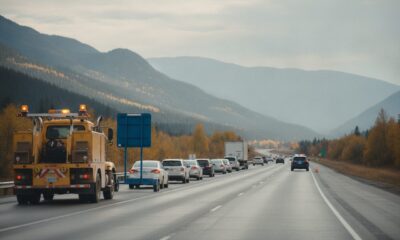
Coquihalla Highway Reopens Near Merritt Following Morning Crash That Injured Four