COMMUNITY
The week ahead in West Coast: Mon 10 — Sun 16 August
10 things to do in West Coast, Mon 10 — Sun 16 August.


The West Coast Current · What’s on
The week ahead
Mon 10 — Sun 16 August
Seven days of what’s on, and what to keep an eye on.
The week at a glance Mon 10 — Sun 16 August
3 pm Youth Center (Ages 9-17) Somass Hall (Lower Level), 6200 Gallic Rd
7:30 pm Monday Night Movies Clayoquot Sound Community Theatre
3 pm Nanaimo Halibut and Chinook/Coho Distributions Nanaimo Curling Club, 106 Wall St., Nanaimo
3 pm Youth Center (Ages 9-17) Somass Hall (Lower Level), 6200 Gallic Rd
12 pm Courtenay Halibut and Chinook/Coho Distribution Wachiay Friendship Centre, 1625 McPhee Ave, Courtenay
5 pm Harvesters Meeting Anacla Government Office, 170 Nookemus Rd., Anacla
Nothing yet
What’s on 10 events
Youth Center (Ages 9-17)
- Time
- 3 pm
- Where
- Somass Hall (Lower Level), 6200 Gallic Rd
Nanaimo Halibut and Chinook/Coho Distributions
- Time
- 3 pm
- Where
- Nanaimo Curling Club, 106 Wall St., Nanaimo
ʔuucaaqaʔaqƛaḥ saamin (I’ll cook fresh fish). Nanaimo Huu-ay-aht First Nations Citizens! Halibut & Chinook/Coho Distribution is happening next week!
Youth Center (Ages 9-17)
- Time
- 3 pm
- Where
- Somass Hall (Lower Level), 6200 Gallic Rd
Courtenay Halibut and Chinook/Coho Distribution
- Time
- 12 pm
- Where
- Wachiay Friendship Centre, 1625 McPhee Ave, Courtenay
ʔuucaaqaʔaqƛaḥ saamin (I’ll cook fresh fish). Courtenay Huu-ay-aht First Nations Citizens! Halibut & Chinook/Coho Distribution is happening next week!
Harvesters Meeting
- Time
- 5 pm
- Where
- Anacla Government Office, 170 Nookemus Rd., Anacla
histaqšiƛukʷitin hihiqstup nism̓aakqin (Everything we have came from the land). Harvesters Meeting!
2026 Huu-ay-aht Days
- Time
- All day
- Where
- House of Huu-ay-aht
More information to come!
Also coming up 8 of 58
- Mon, Aug 17 Youth Center (Ages 9-17)
- Tue, Aug 18 Culture Camp
- Tue, Aug 18 Language Class
- Wed, Aug 19 Meet and Greet
- Wed, Aug 19 Youth Center (Ages 9-17)
- Mon, Aug 24 Youth Center (Ages 9-17)
- Tue, Aug 25 Language Class
- Wed, Aug 26 Youth Center (Ages 9-17)
Dates and names only — we confirm the details with each organiser in the edition that runs them.
Running something? Get it in front of your neighbours.
The West Coast Current publishes this every week for readers looking for something to do. Listing is free, and what you send us is what runs — so check the details before you send them. Or post it to your municipal calendar and we will find it.



COMMUNITY
The week ahead in West Coast: Mon 28 September — Sun 4 October
2 things to do in West Coast, Mon 28 September — Sun 4 October.


The West Coast Current · What’s on
The week ahead
Mon 28 September — Sun 4 October
Seven days of what’s on, and what to keep an eye on.
The week at a glance Mon 28 September — Sun 4 October
Nothing yet
Nothing yet
Nothing yet
11 am Event: National Day for Truth and Reconciliation House of Huu-ay-aht 5 pm Harvesters Meeting Anacla Government Office, 170 Nookemus Rd., Anacla
Nothing yet
Nothing yet
Nothing yet
What’s on 2 events
Event: National Day for Truth and Reconciliation
- Time
- 11 am
- Where
- House of Huu-ay-aht
ʔuuy̓ałukḥʔi (Take Care. Be Safe). On Thursday, October 1, Huu-ay-aht First Nations will be hosting National Day for Truth and Reconciliation in Anacla.
Harvesters Meeting
- Time
- 5 pm
- Where
- Anacla Government Office, 170 Nookemus Rd., Anacla
histaqšiƛukʷitin hihiqstup nism̓aakqin (Everything we have came from the land). Harvesters Meeting!
Also coming up 8 of 11
- Mon, Oct 5 Anacla Womens Groups
- Tue, Oct 6 Salmon Canning Workshop
- Sat, Oct 10 Vancouver Island Regional Library – Halloween Swap
- Tue, Oct 13 Tseshaht’s Men’s Group – Drum Making
- Mon, Oct 19 Anacla Womens Groups
- Wed, Oct 28 SAVE THE DATE 2026 Health Ability Fair
- Fri, Nov 13 Pen Pals
- Fri, Nov 20 Information Session for 2026 People’s Assembly
Dates and names only — we confirm the details with each organiser in the edition that runs them.
Running something? Get it in front of your neighbours.
The West Coast Current publishes this every week for readers looking for something to do. Listing is free, and what you send us is what runs — so check the details before you send them. Or post it to your municipal calendar and we will find it.
COMMUNITY
Fewer Black Bears Killed as Pacific Rim Communities See Drop in Wildlife Conflicts
Black bear conflicts and lethal encounters have dropped significantly in Tofino and Ucluelet this year, supported by new local enforcement initiatives.
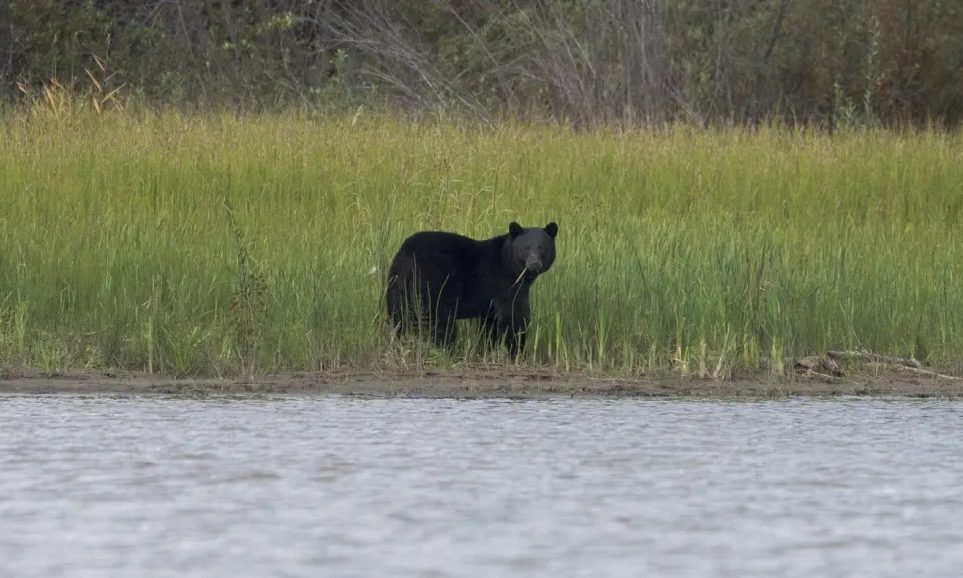
Significant Reduction in Local Bear Mortality
Lethal encounters with black bears in the Tofino and Ucluelet area have fallen sharply this year, with just a single bear dispatched. The outcome marks a contrast to 2025, when 12 bears were killed due to food conditioning. According to Chris Read of WildSafeBC Pacific Rim, many of the animals killed in 2025 had become heavily accustomed to accessible, unsecure human food sources during the preceding two years.
Read noted that black bears are currently sticking to natural food, even though unsecured attractants remain present across the region. While bears are being displaced from traditional habitats, Read emphasized their ability to adapt around human populations and stressed the importance of securing garbage to minimize human-wildlife friction.
Garbage Remains Top Provincial Attractant
Data from WildSafeBC highlights secure waste management as the primary factor in reducing interactions. Provincial statistics show that between 2014 and 2018, the BC Conservation Officer Service logged 21,020 reports citing garbage as an attractant. The second highest cause—residential fruit trees and gardens—accounted for 5,395 reports over the same timeframe.
Proactive Enforcement and Community Integration
In an effort to address the issue locally, Ucluelet established a pilot program this past summer by hiring Cameron McKieve as a wildlife safety response officer. Working alongside conservation officers, McKieve initiated 50 enforcement actions, conducted 36 educational interactions, issued eight municipal tickets, and served six provincial warnings or orders. He has since been retained as a full-time municipal bylaw officer.
Due to the current provincial election period, representatives from the BC Conservation Officer Service and McKieve are unable to provide interviews while the provincial government operates under caretaker restrictions limited to essential communications.
WildSafeBC’s local outreach incorporates traditional cultural knowledge from the Nuu-chah-nulth people regarding coexistence with wildlife. Read expressed optimism that residents will continue learning to respect bears at a distance to prevent animals from becoming habituated or aggressive.
COMMUNITY
This weekend in West Coast: Fri 25 — Sun 27 September
1 thing to do in West Coast, Fri 25 — Sun 27 September.
The West Coast Current · What’s on
This weekend
Fri 25 — Sun 27 September
What’s on between now and Sunday night.
The week at a glance Fri 25 — Sun 27 September
What’s on 1 event
Also coming up 8 of 29
- Mon, Sep 28 Anacla Mens Group
- Mon, Sep 28 Child & Family Wellness Drop-In
- Mon, Sep 28 Vancouver: Huu-ay-aht Citizens Engagement Session
- Mon, Sep 28 Anacla Culture Night
- Mon, Sep 28 Monday Night Movies
- Tue, Sep 29 Meet & Greet: Vicki Mac Donald NTC Clinical Counsellor
- Tue, Sep 29 Port Alberni Friendship Center 2026 AGM
- Tue, Sep 29 Nanaimo: Huu-ay-aht Citizens Engagement Session
Dates and names only — we confirm the details with each organiser in the edition that runs them.
Running something? Get it in front of your neighbours.
The West Coast Current publishes this every week for readers looking for something to do. Listing is free, and what you send us is what runs — so check the details before you send them. Or post it to your municipal calendar and we will find it.
Your Current 3 Day Forecast — October 6, 2026

BC Lions Hold Off Toronto Argonauts Behind Sean Whyte’s Record Eight Field Goals

Search Continues After Ontario-Based Medical Flight Vanishes Near Massachusetts Coast
Your Current 3 Day Forecast — October 5, 2026
Your Current 3 Day Forecast — October 4, 2026

Summerland Transitions Remaining Properties to Prohibit-Entry Orders as Wildfire Evacuations End

Opinion: John Rustad Has to Go

B.C. Supreme Court Grants Cowichan Tribes Title to Historic Richmond Lands and Fishing Rights

Vancouver Canucks Gear Up for a Make-or-Break 2025–26 Season

Kamloops Blazers Announce Off-Season Changes Ahead of 2025–26 Season

BC Ferries Sparks Outcry Over Contract with Chinese Shipyard

A Taste of Autumn: Fall Okanagan Wine Festival 2025
-

 OPINIONS6 days ago
B.C.’s 93-Riding Scramble: Can the Parties Even Find Enough Candidates?
-
 BC STORIES4 days ago
Why OneBC’s Interim Leader Is Proposing an Election Pact With Conservatives
-
 BC STORIES6 days ago
BC Greens Pledge Free Childcare by 2031 and Introduce Victoria-Swan Lake Candidate
-

 NATIONAL STORIES6 days ago
Will they use Chinese Steel over Canadian like Phase One?
-
SPORTS4 days ago
Maple Leafs vs Islanders Result: Easton Cowan Scores in 2-1 Win
-

 NATIONAL STORIES4 days ago
Why NDP Leader Avi Lewis Says the West Coast Pipeline Plan Risks Public Funds
-
SPORTS5 days ago
Why the Edmonton Oilers Will Be Without Ryan Nugent-Hopkins Against Vancouver
-
NATIONAL STORIES5 days ago
Why a Canadian Nationalist Group’s Hidden Recruitment Practices Are Drawing Scrutiny