LOCAL
UBCM Summit in Kimberley to Tackle Key Issues for Local Governments


The Union of BC Municipalities (UBCM), which represents the interests of cities, towns, and regional districts across British Columbia, will host its annual convention in Kimberley from September 10–12. The gathering is a cornerstone of provincial politics, giving mayors, councillors, and regional leaders the chance to coordinate strategies, pass resolutions, and engage directly with provincial ministers on the issues that most affect communities.
This year’s agenda is expected to focus heavily on resilience and cybersecurity, with municipal leaders exploring how to strengthen local infrastructure against emerging threats ranging from climate-related disasters to digital vulnerabilities. In addition, the summit will review new provincial funding programs announced earlier in September, offering municipalities opportunities to secure resources for critical priorities like housing, transit, and community facilities.




LOCAL
Why Coastlines Are Safe After Magnitude 4.7 Offshore Vancouver Island Earthquake
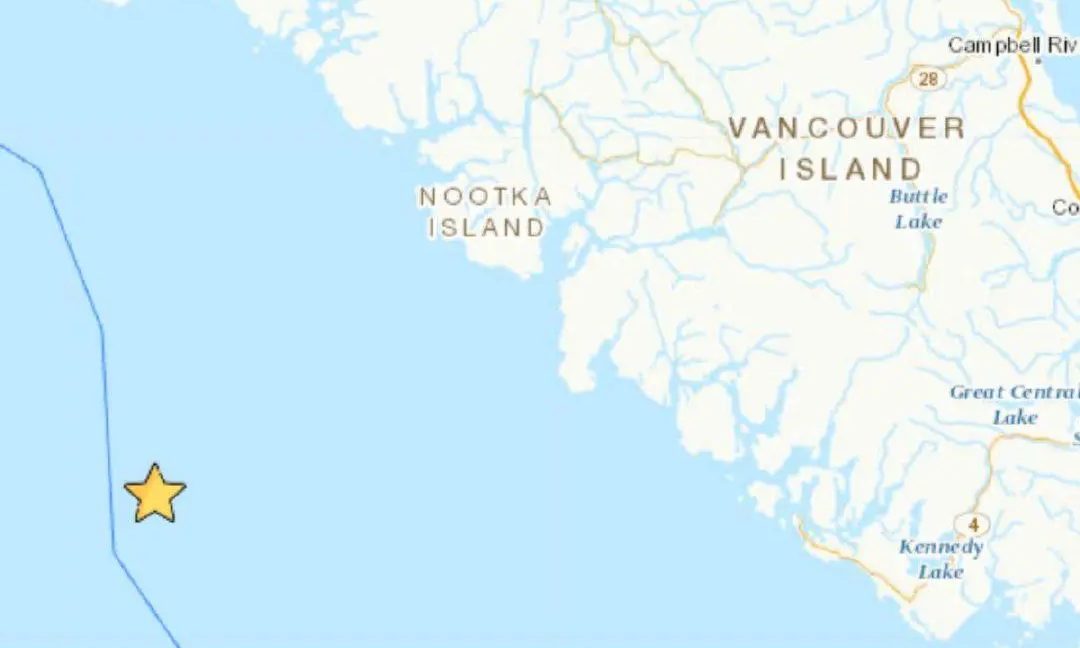
A 4.7 magnitude earthquake struck 130 km west of Tofino off Vancouver Island on Nov. 10. Natural Resources Canada confirms no tsunami threat.

No Tsunami Threat Following Offshore Tremor
Officials confirm there is no risk of a tsunami following a minor seismic event off the coast of Vancouver Island on Tuesday, Nov. 10.
The magnitude 4.7 earthquake occurred on Tuesday evening. According to data from Natural Resources Canada and the US Geological Survey, the quake was centered approximately 130 kilometers west of Tofino at a depth of about 10 kilometers beneath the ocean floor.
Seismic Activity Recorded West of Tofino
The offshore quake passed with minimal disturbance. Both monitoring agencies evaluated the seismic data and confirmed that no tsunami warnings or advisories were necessary for coastal communities.
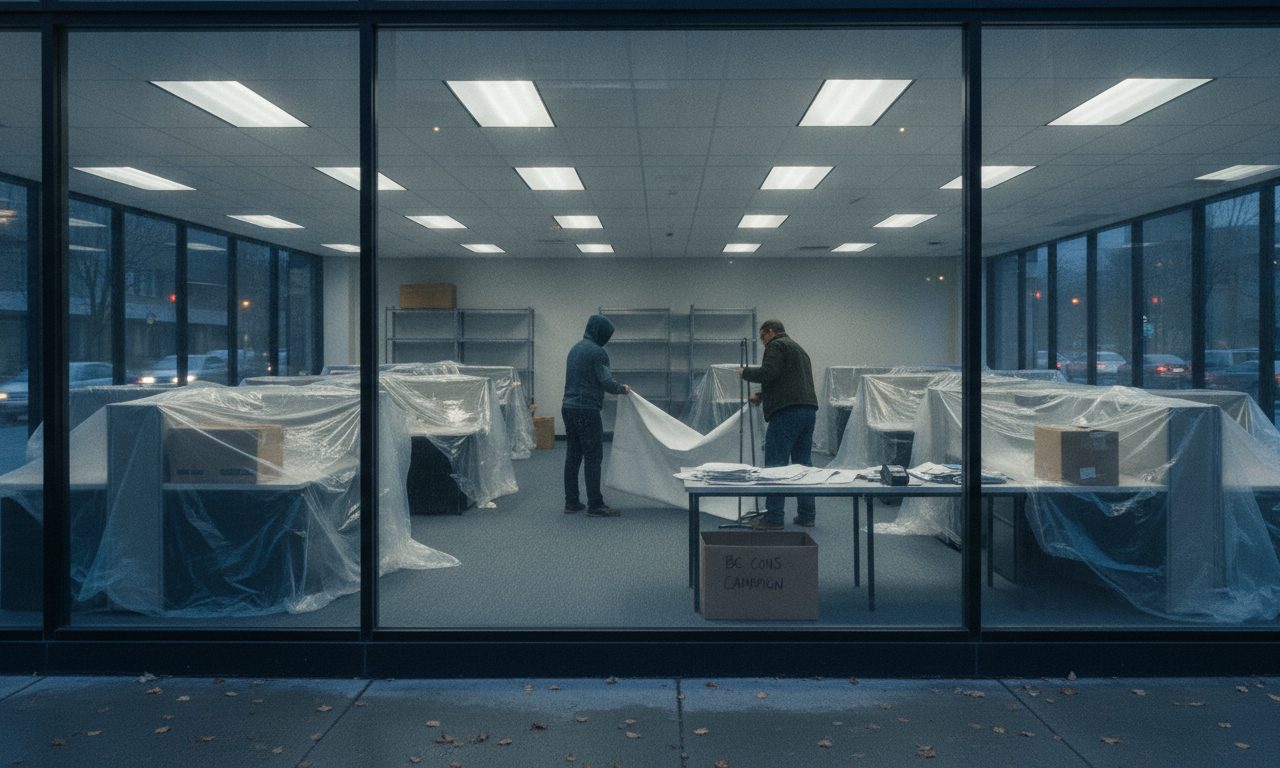
The Money Spoke Before the Voters Did: How B.C.’s Conservatives Turned Chaos Into Victory
By Chad Dashly | The Current | November 5, 2026
There is an old saying in politics: follow the money.
In British Columbia, the money was telling a story long before voters went to the polls on October 24. And if anyone in the NDP headquarters was paying attention, they should have been worried.
New fundraising figures released by Elections BC reveal something remarkable. During the third quarter of 2026, the Conservative Party of British Columbia raised approximately $2.73 million. The governing New Democrats managed just $986,093.
Nearly three dollars for the Conservatives for every dollar raised by the NDP.
But the real story isn’t simply how much money came in. It’s when it arrived — and what that says about the extraordinary political transformation British Columbia has just experienced.
From Political Chaos to Political Capital
Only weeks before the election, the BC Conservatives appeared to be doing everything possible to destroy themselves.
Leadership disputes. Caucus defections. Public disagreements. A party seemingly more interested in fighting itself than fighting the government.
Then came September 20.
Kerry-Lynne Findlay resigned as Conservative leader, and Cariboo-Chilcotin MLA Lorne Doerkson stepped into the leadership.
What happened next should become a case study for political strategists across Canada.
Between September 20 and September 30, Conservative contributions totalled approximately $2.45 million — nearly 90 per cent of the party’s entire third-quarter fundraising.
Think about that.
A party struggling to hold itself together suddenly attracted millions of dollars in political contributions in just eleven days.
That doesn’t happen by accident.
It suggests donors who had been sitting on the sidelines were suddenly prepared to invest in a political organization they believed could win.
The change in leadership mattered. So did the prospect of an election. And the Conservatives had something they hadn’t possessed in months: a credible opportunity to unite their competing factions around a common objective.
Winning.
David Eby’s Political Miscalculation
Premier David Eby called a snap election on September 22, two years ahead of the scheduled provincial vote.
The calculation appeared straightforward.
The Conservatives were divided. Their leadership had collapsed. Their caucus had fractured. Surely this was the moment to strike.
Except something had changed.
The Conservative Party that Eby expected to face was rapidly becoming a different political organization.
Doerkson’s arrival created an opportunity for reconciliation among Conservatives who had spent months arguing about personalities, policies and direction.
And the fundraising figures suggest that opportunity resonated.
Meanwhile, the NDP struggled to generate comparable financial enthusiasm.
That is not necessarily proof that donors predicted the election result. Political contributions are influenced by many factors, including campaign timing, organizational strength and individual donor networks.
But the disparity was an unmistakable warning.
Eby may have correctly identified Conservative instability. What he appears to have underestimated was how quickly that instability could turn into unity when the prospect of forming government became real.
The Interior Has Become the Centre of Political Power
There is another dimension to this election that deserves attention.
British Columbia’s political centre of gravity has shifted.
For decades, provincial politics has been dominated by Vancouver, Victoria and the Lower Mainland.
Now a politician from the Cariboo-Chilcotin is preparing to lead the province.
That matters.
For communities throughout the Thompson, Okanagan, Cariboo and northern British Columbia, the election represents an opportunity to bring regional economic concerns directly into the premier’s office.
Forestry. Mining. Natural gas. Agriculture. Transportation infrastructure. Permitting delays.
These are not abstract policy debates for people who live and work outside the Lower Mainland.
They determine whether businesses invest, whether young families can remain in their communities and whether the next generation has meaningful economic opportunities.
Doerkson has promised to make economic development a priority.
The question now is whether his government can turn those promises into measurable results.
Money Can Win Elections. It Cannot Govern.
Conservatives should be careful about celebrating too early.
Preliminary election results give the party 63 of the legislature’s 93 seats, although the final count is still pending.
That is a commanding position.
But a large majority does not automatically produce a successful government.
The same party that recently struggled with internal divisions must now demonstrate cabinet discipline, sound fiscal management and the ability to make difficult decisions.
British Columbians will expect progress on affordability, health care, housing and economic opportunity.
They will also expect accountability.
The Conservatives have promised no new taxes, faster approvals for major projects and stronger support for resource development.
Delivering those commitments while maintaining essential public services will require more than campaign slogans.
It will require serious governing.
The Lesson for Every Political Party
The fundraising numbers reveal something larger than a financial advantage.
They suggest a dramatic change in political confidence.
Donors were willing to back the Conservatives despite the party’s recent turmoil. Voters subsequently handed them a decisive preliminary victory.
For the NDP, the implications are equally significant.
A party that controlled the government machinery and chose the election date was unable to match its opponent’s fundraising momentum.
That demands more than a routine campaign review.
It demands an examination of leadership, organization, voter relationships and the party’s understanding of the province’s changing political priorities.
For the Conservatives, the challenge is different.
They have won the opportunity to govern. Now they must prove they deserve to keep it.
The money may have spoken before the voters did. But from this point forward, British Columbians will judge their new government not by what it raised, but by what it delivers.
Chad Dashly writes political commentary for The Current, examining British Columbia politics, public policy and the decisions shaping communities across the province.
LOCAL
Who Gets to Decide Where B.C. Builds? Conservatives Move to Return Housing Power to Municipalities

Who Gets to Decide Where B.C. Builds? Conservatives Move to Return Housing Power to Municipalities
By Chad Dashly | The Current | November 5, 2026
For years, British Columbia’s housing debate has been dominated by one central question: Who should decide how our communities grow?
Under David Eby’s NDP government, municipalities were directed to increase density, approve more housing and accommodate development through sweeping provincial legislation.
Now, with Lorne Doerkson preparing to take office, that approach is facing a fundamental reversal.
The incoming Conservative government has signalled its intention to roll back two significant pieces of NDP housing legislation: Bill 43, which established provincial housing targets through the Housing Supply Act, and Bill 44, which introduced mandatory small-scale, multi-unit housing requirements.
The political message is unmistakable.
Housing decisions should be made closer to home.
But the bigger question is whether returning authority to municipalities will help solve British Columbia’s housing crisis — or simply replace one set of problems with another.
Victoria’s One-Size-Fits-All Experiment
The NDP’s housing reforms were introduced in 2023 to address a legitimate problem.
British Columbia needed more homes, and many municipalities were struggling to approve new housing quickly enough.
Bill 44 required qualifying residential properties to accommodate three or four homes, and in certain locations near frequent transit, as many as six.
The Housing Supply Act gave the province authority to establish housing targets for selected municipalities and intervene when progress fell short.
The objective was to increase housing supply by removing local zoning barriers.
On paper, the argument made sense.
More housing opportunities should eventually mean more supply, more competition and better affordability.
But British Columbia is not one giant municipality.
What works in downtown Vancouver does not necessarily work in Williams Lake, Kamloops, Kelowna or Prince George.
Communities have different infrastructure capacities, transportation systems, geography and economic realities.
A neighbourhood cannot accommodate unlimited development simply because the provincial government changes the zoning rules.
Someone still has to provide the roads, water, sewer capacity, schools and emergency services.
And those costs don’t disappear because Victoria passes legislation.
Municipalities Push Back
Local governments have raised concerns about the challenges created by provincial housing mandates.
Sarrah Storey, president of the Union of British Columbia Municipalities, has welcomed the incoming government’s commitment to renew its relationship with local governments and emphasized the importance of meaningful consultation.
Surrey Mayor Doug McCallum has also supported returning more planning authority to elected municipal councils.
Their position reflects a fundamental principle of local government.
Municipal councils are elected to make decisions about their communities.
They understand their infrastructure limitations, neighbourhood concerns and long-term development plans.
When provincial governments override those decisions, local accountability becomes blurred.
Residents complain to city hall about decisions that may have been effectively dictated by Victoria.
And municipalities are left trying to explain policies they had limited authority to change.
That is not particularly good governance.
But Local Control Comes With Responsibility
There is another side to this debate, and Conservatives would be wise not to ignore it.
Some municipalities have historically resisted new housing development, particularly in established single-family neighbourhoods.
Restrictive zoning can limit supply and protect existing homeowners at the expense of younger families, renters and first-time buyers.
University of British Columbia housing experts have warned that repealing provincial requirements could slow housing construction and worsen affordability.
They have a point.
Returning decision-making authority to municipalities cannot become an excuse for preventing reasonable development.
Local control must also mean local accountability.
If a municipality refuses to accommodate population growth, delays approvals unnecessarily or consistently rejects viable housing proposals, residents deserve an explanation.
And provincial taxpayers should not be expected to subsidize communities that refuse to plan responsibly for growth.
The challenge for Doerkson’s government is to find the right balance.
Municipalities should determine how their communities grow, but they must also demonstrate that they are prepared to accommodate growth.
The Real Problem Is Bigger Than Zoning
British Columbia’s housing crisis will not be solved simply by repealing legislation.
Nor was it ever going to be solved simply by forcing municipalities to permit more units on residential lots.
Housing affordability is influenced by construction costs, interest rates, development charges, labour availability, infrastructure investment and the cost of land.
A developer can have permission to build six homes on a property and still decide not to proceed because the economics do not work.
That distinction matters.
A zoning approval is not a completed home.
A housing target is not a construction permit.
And a construction permit is not a guarantee that a family will find an affordable place to live.
If the new Conservative government wants to make meaningful progress, it will need to address the economics of housing development alongside municipal planning reform.
That means reducing unnecessary approval delays, improving infrastructure coordination and creating conditions where private builders can deliver housing at prices people can afford.
It also means recognizing that market-driven construction alone will not meet every housing need, particularly for lower-income households.
What This Means for the Interior
For communities across the Okanagan, Thompson, Cariboo and northern British Columbia, the proposed changes could be significant.
Kelowna faces different housing pressures than Vancouver.
Kamloops has different infrastructure challenges than Surrey.
Prince George has different land-use and economic considerations than Victoria.
Giving municipal governments greater flexibility could allow housing policies that better reflect those realities.
But flexibility must be accompanied by results.
A city that wants greater authority over housing development must also accept responsibility for delivering sufficient housing opportunities.
Otherwise, the province risks trading centralized bureaucracy for local obstruction.
Neither outcome will help the young family trying to purchase its first home or the senior struggling to afford rent.
A Chance to Get Housing Policy Right
Doerkson’s proposed housing reset represents one of the clearest policy differences between the incoming Conservative government and the outgoing NDP administration.
The NDP believed stronger provincial intervention was necessary to overcome local barriers.
The Conservatives believe municipalities and residents should have greater control over how their communities develop.
Both positions have legitimate arguments behind them.
But British Columbians are less interested in which level of government wins the jurisdictional argument than whether housing becomes more affordable.
The Conservatives have an opportunity to establish a new partnership with municipalities, one that respects local decision-making while demanding measurable progress.
That will require more than repealing Bills 43 and 44.
It will require a credible replacement strategy, clear expectations and a serious commitment to reducing the cost of building homes.
As of November 5, the proposed changes remain political commitments. Existing provincial housing requirements have not yet been repealed, and the details of the replacement framework remain to be seen.
Returning housing decisions to local communities may be a sensible place to start. But local control is not a housing strategy by itself.
The real test will not be how much authority Victoria gives back.
It will be how many British Columbians can finally afford a place to call home.
Chad Dashly writes political commentary for The Current, examining British Columbia politics, economic development and the public policies shaping communities across the province.
Your Current 3 Day Forecast — November 22, 2026
Your Current 3 Day Forecast — November 21, 2026

B.C. Lawmaker Urges New Premier to Retain AI Lawsuit After Latest ChatGPT Revelations

BC Conservatives Assign Key Legislative Roles Following Cabinet Selection

What B.C.’s New Conservative Government and Cabinet Mean for You
Your Current 3 Day Forecast — November 20, 2026

Opinion: John Rustad Has to Go

B.C. Supreme Court Grants Cowichan Tribes Title to Historic Richmond Lands and Fishing Rights

BC Ferries Sparks Outcry Over Contract with Chinese Shipyard

Vancouver Canucks Gear Up for a Make-or-Break 2025–26 Season

Kamloops Blazers Announce Off-Season Changes Ahead of 2025–26 Season

A Taste of Autumn: Fall Okanagan Wine Festival 2025
-

 BC STORIES4 days ago
Shrinking Fraser River Sockeye Numbers Threaten B.C. Economy, First Nations Culture, and Local Tourism
-
 NATIONAL STORIES6 days ago
How a Fake Invoice Cost a Shuswap Business Over $24,000
-
 BC STORIES4 days ago
Why B.C.’s New Conservative Government Is Waiting Until Spring to Convene the Legislature
-
6 days ago
Your Current 3 Day Forecast — November 16, 2026
-
SPORTS5 days ago
Why the International Ice Hockey Federation Website Went Offline Following World Junior Decision
-

 BC STORIES4 days ago
What You Need to Know Before Donating Online After Alleged Wildfire Fundraiser Scam
-
SPORTS5 days ago
Inside Toronto’s Royal Rodeo, Young Riders Show Grit in Rough-Stock Events
-
5 days ago
Your Current 3 Day Forecast — November 17, 2026