POLITICS
What Trump’s Remarks Linking Canada to Iran Signal About International Negotiations
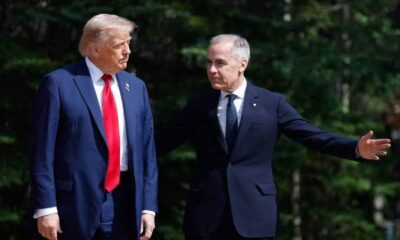
Donald Trump linked Canadian trade negotiations to talks with Iran during a Sept. 12, 2026 trip to Ireland, stating both nations want to make deals.


Trump Draws Connection Between Trade and Middle East Conflict
During a visit to Ireland on Saturday, Sept. 12, 2026, U.S. President Donald Trump told reporters that Canada and Iran share a common goal: both countries are eager to reach deals with the United States. Speaking at the Deerfield Residence in Dublin prior to traveling to his golf resort in Doonbeg, Trump commented on the status of international negotiations while addressing questions about the Canada-United States-Mexico Agreement.
“Canada wants to make a deal very badly, just like Iran wants to make a deal very badly,” Trump stated, adding, “I just don’t think they’re ready. But Canada wants to make a deal …. I hope Canada appreciates being in the same sentence with Iran.” He later reiterated the sentiment, saying, “It’s very interesting — Canada and Iran. Canada wants to make a deal and Iran wants to make a deal. At the right time, both of these things could happen.”
Status of Bilateral Talks and Middle East Hostilities
Formal trade discussions between Ottawa and Washington have been paused since Aug. 21, 2026. However, Canada-U.S. Trade Minister Dominic LeBlanc noted on Friday that communication channels between officials from both nations remain open, despite no official negotiation sessions currently appearing on the calendar.
The U.S. has engaged in ongoing military conflict with Tehran since launching joint airstrikes with Israel against Iran in February 2026. While Washington has enacted additional economic measures to pressure Iran following a breakdown in peace talks, Iranian forces continue to target maritime vessels navigating the Strait of Hormuz to maintain strategic leverage. Although Trump has repeatedly asserted that Tehran desires an end to the conflict, Iranian hardliners have indicated an intent to sustain their stance.
Diplomatic Engagements and Local Demonstrations in Ireland
Beyond his comments on international trade and diplomacy, Trump met with Irish Prime Minister Micheál Martin during his tour. When asked about the potential political integration of Northern Ireland—currently part of the United Kingdom—with the Republic of Ireland, Trump expressed support for the concept of Irish reunification.
As the president departed Dublin for the Trump International Golf Links course along the Atlantic coast, where he was seen interacting with American golfer Brooks Koepka at the Irish Open, thousands of demonstrators gathered in central Dublin for a protest march.


BC STORIES
Why a Familiar Political Name is Joining the Kamloops-North Thompson Race
John Kidder, husband of federal Green leader Elizabeth May, seeks the BC Green nomination in Kamloops-North Thompson for the upcoming election.

New Contender in Kamloops-North Thompson
Voters in Kamloops-North Thompson will see a seasoned campaigner on the ballot as John Kidder seeks to represent the BC Green Party in the upcoming provincial election. The party recently circulated Kidder’s nomination form to members via email to collect the required signatures for Elections BC confirmation.
Kidder, who resides in Ashcroft, brings a long history of political involvement to the race. Though he has never held public office, he has previously campaigned in several provincial and federal elections under the Green banner, and also ran as a federal Liberal candidate in 2011. He is married to Elizabeth May, the leader of the federal Green Party.
The Provincial Race Takes Shape
Once his candidacy is formally confirmed by election authorities, Kidder will enter a competitive field. He is set to challenge BC Conservative incumbent Ward Stamer in the riding.
The ballot will also feature Kory Clark, a 24-year-old health-care worker running for the BC NDP, according to reports.
BC STORIES
Why OneBC’s Interim Leader Is Proposing an Election Pact With Conservatives
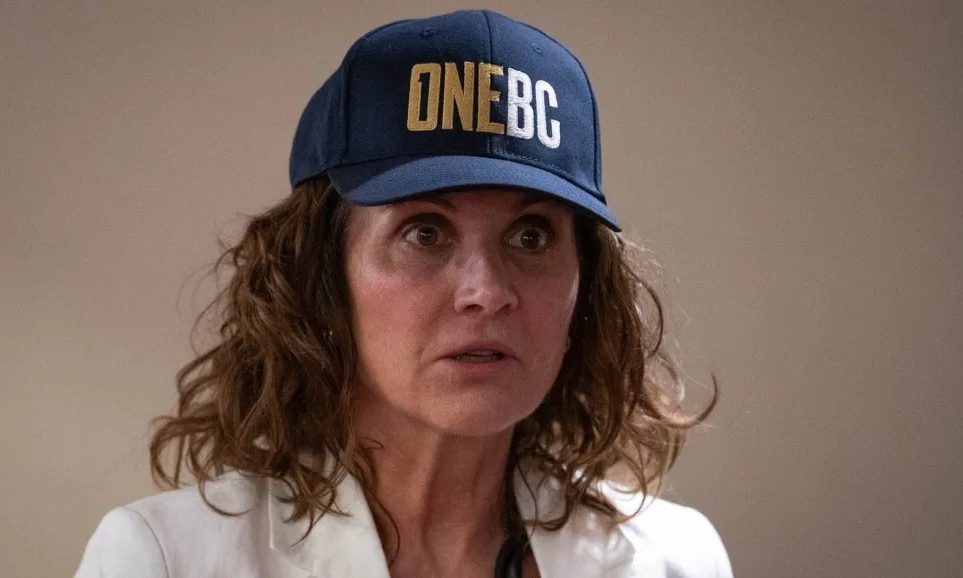
OneBC interim leader Dallas Brodie offers an election deal to B.C. Conservatives despite rival candidate Carson Binda running in Vancouver-Quilchena.
Interim Leader Proposes Cooperation Amid Overlapping Candidates
OneBC interim leader Dallas Brodie has expressed readiness to negotiate an election arrangement with the B.C. Conservatives, despite her former party putting forward a rival candidate in her Vancouver-Quilchena riding. Former Canadian Taxpayers Federation provincial director Carson Binda was announced on Sept. 29 as the Conservative candidate facing Brodie, who currently serves as the riding’s incumbent legislator.
Brodie questioned the Conservatives’ decision to compete against her, noting that OneBC had previously signaled goodwill by deciding not to field candidates in select ridings containing “true” Conservatives. Although earlier discussions occurred with B.C. Conservative interim leader Lorne Doerkson, OneBC has since revealed plans for candidates in two of those contested districts. Among them is Kelowna-Centre, a seat won by NDP margin of just 40 votes last election by Kristina Loewen. Brodie argued that her party represents the authentic conservative choice there and suggested Conservatives risk losing the seat to the NDP.
Tensions and History Between Conservative Factions
Offering to pull OneBC’s unannounced Kelowna-Centre candidate if the Conservatives enter discussions, Brodie criticized the opposing party’s reluctance to negotiate. She stated that her party has taken concrete steps toward making deals while accused the Conservatives of ignoring her party. Brodie remarked that the Conservatives “created me” in many ways, referencing her expulsion from the party caucus last year by then-leader John Rustad after she mocked residential school survivor testimony.
Addressing the prospect of electoral collaboration, Doerkson acknowledged that dialogue had occurred between the parties, though no formal agreement was reached. He affirmed that the party intends to bring conservative values to British Columbians following the election. OneBC originally formed as a breakaway Conservative faction in 2025, though it lacked official recognized party status in the legislature when the election campaign commenced.
NATIONAL STORIES
Why NDP Leader Avi Lewis Says the West Coast Pipeline Plan Risks Public Funds
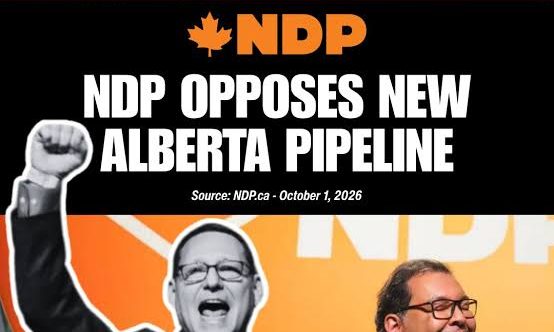
NDP Leader Avi Lewis opposes Prime Minister Carney’s decision to name a West Coast oil pipeline a project of national interest under the Building Canada Act.
NDP Leader Responds to Federal Pipeline Announcement
NDP Leader Avi Lewis has challenged Prime Minister Carney following the federal decision to label a West Coast oil pipeline as a project of national interest under the Building Canada Act.
This move marks the inaugural assignment of the designation since the Major Projects Office was launched a year ago.
Criticism Over Public Risk and Industry Profits
Lewis argued that backing the development with public funds undercuts essential safeguards while forcing taxpayers to take on financial exposure.
“The Liberal government is rushing through an oil pipeline to the West Coast as a project of ‘national interest’, the first project to receive this designation since the Major Projects Office opened its doors a year ago,” Lewis stated.
He expressed concern that pushing the initiative forward amid climate breakdown—while setting aside environmental protections, meaningful Indigenous consultation, and workers’ right to strike—fails to meet the national interest.
“It is an offence to Canadian science, public health, collective safety, and common sense. And it is a gift to an oil industry already on track to make $100 billion in wartime profits this year alone,” Lewis said, warning that “This project leaves Canadians bearing all the risks of a bad investment without any of the rewards.”
Legal and Environmental Concerns Highlighted
Lewis emphasized that the oil sector has shown reluctance to finance the venture directly, while Indigenous nations have voiced opposition and environmental risks remain high, including threats to endangered Southern Resident orcas.
“This is a pipeline to the courts, and it’s not worth the risk,” Lewis said.
He added that projects serving the nation should lower everyday costs, produce good jobs, and safeguard communities, pointing to renewable energy, modern public transit, and non-market housing builds as better alternatives.

BC Lions Hold Off Toronto Argonauts Behind Sean Whyte’s Record Eight Field Goals

Search Continues After Ontario-Based Medical Flight Vanishes Near Massachusetts Coast
Your Current 3 Day Forecast — October 5, 2026
Your Current 3 Day Forecast — October 4, 2026

Summerland Transitions Remaining Properties to Prohibit-Entry Orders as Wildfire Evacuations End
Remembering Lyle Odelein: Former Montreal Defenceman and Stanley Cup Winner Dies at Age 58

Opinion: John Rustad Has to Go

B.C. Supreme Court Grants Cowichan Tribes Title to Historic Richmond Lands and Fishing Rights

Vancouver Canucks Gear Up for a Make-or-Break 2025–26 Season

Kamloops Blazers Announce Off-Season Changes Ahead of 2025–26 Season

BC Ferries Sparks Outcry Over Contract with Chinese Shipyard

A Taste of Autumn: Fall Okanagan Wine Festival 2025
-
 OPINIONS5 days ago
B.C.’s 93-Riding Scramble: Can the Parties Even Find Enough Candidates?
-

 BC STORIES4 days ago
Why OneBC’s Interim Leader Is Proposing an Election Pact With Conservatives
-
 NATIONAL STORIES6 days ago
Will they use Chinese Steel over Canadian like Phase One?
-
 BC STORIES5 days ago
BC Greens Pledge Free Childcare by 2031 and Introduce Victoria-Swan Lake Candidate
-
SPORTS4 days ago
Maple Leafs vs Islanders Result: Easton Cowan Scores in 2-1 Win
-
 NATIONAL STORIES4 days ago
Why NDP Leader Avi Lewis Says the West Coast Pipeline Plan Risks Public Funds
-
SPORTS5 days ago
Why the Edmonton Oilers Will Be Without Ryan Nugent-Hopkins Against Vancouver
-
NATIONAL STORIES5 days ago
Why a Canadian Nationalist Group’s Hidden Recruitment Practices Are Drawing Scrutiny