LOCAL
Why Canada’s New Counter-Tariffs May Hinder Local Businesses While Leaving Shoppers Unscathed
Canada enacts $28B in retaliatory tariffs on U.S. goods. Small businesses brace for higher costs while experts predict minimal impact for everyday consumers.


New Duties Hit Hundreds of American Imports
As of 12:01 a.m. Tuesday, the federal government imposed dollar-for-dollar counter-tariffs targeting roughly 700 U.S. commodities and consumer items valued at $28 billion. Applied at rates from 15 per cent to 50 per cent, these levies touch a broad range of goods including steel, aluminum, plywood, cement, wine, toilet paper, hockey sticks, and coin-operated arcade games. The action serves as a direct response to 50-per-cent tariffs introduced by U.S. President Donald Trump’s administration on Aug. 22 against an equivalent value of Canadian products. Trump has characterized the trade imbalance between the two nations as “unacceptable.”
Small Merchants Face Disproportionate Financial Strain
Representing over 100,000 small and medium-sized enterprises, Dan Kelly, president of the Canadian Federation of Independent Business (CFIB), expressed deep concern over the escalation. “They feel like they’re … cannon fodder in the trade war with the United States. That’s not a good feeling,” Kelly stated, adding that “The burden of counter-tariffs hits disproportionately hard on some, not on others.” Unlike earlier disputes that centered on large industries and automobiles, this measure burdens smaller firms already in difficult financial circumstances.
Local Retailers Absorb Costs Amid Uncertainty
The impact is already visible at the store level. JS Furniture, a Manitoba retailer operating in Winnipeg, Portage la Prairie, Steinbach, and Winkler, relies on U.S. imports for an estimated 60 per cent of its sales volume. General manager Brian Kyca noted that laminate bedroom suites face severe hits, with dressers, chests, and drawers subject to 50 per cent duties, while items such as headboards, mirrors, and nightstands face 25 per cent levies. Navigating vague information from agencies like the Canada Border Services Agency has proven frustrating, but the company chooses to absorb these unexpected expenses for now rather than pass them to customers who ordered weeks ago.
The economic strain has forced JS Furniture to pause store expansion plans, while its 35 workers face uncertainty. Commission-based sales staff feel the squeeze as cautious shoppers hold back. “If people aren’t coming in and buying furniture, they’re not earning any money,” Kyca observed, noting that households with disposable funds are hoarding cash while paycheque-to-paycheque shoppers carefully limit spending.
Minimal Immediate Impact Expected for Everyday Consumers
Despite the challenges confronting merchants, economic experts suggest average households will see little daily disruption. McMaster University economics professor Colin Mang explained that the counter-measures generally target imports that feature readily available Canadian substitutes, offering domestic producers a chance to capture market share. During previous tariff conflicts, retailers absorbed roughly 75 per cent of added costs, passing only a quarter to shoppers. Mang noted that if merchants anticipate a short-term trade dispute, they will likely absorb the costs again at the expense of their own profit margins. Bank of Canada Governor Tiff Macklem similarly noted on Sept. 2 that while these steep counter-measures will increase operational costs for specific firms, they apply to a relatively narrow selection of goods.



LOCAL
Summerland Transitions Remaining Properties to Prohibit-Entry Orders as Wildfire Evacuations End
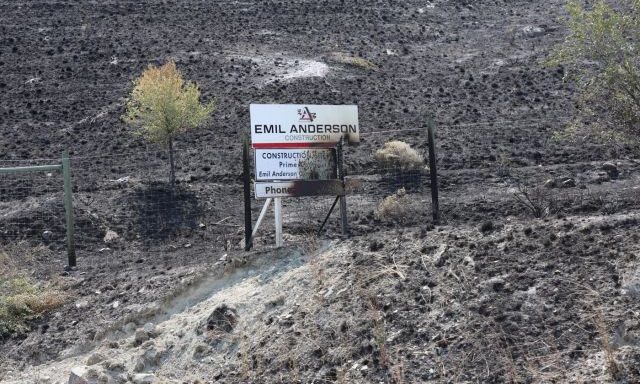
Summerland rescinds all wildfire evacuation orders nearly two months after the Bald Range blaze, moving affected properties to prohibit-entry status.
District Moves to Prohibit-Entry Orders
Nearly two months after the Bald Range wildfire swept through the region, the District of Summerland has officially rescinded every remaining evacuation order. Properties that were previously under evacuation orders have now been moved to a prohibit-entry status, according to local officials.
Recovery Work and Restricted Access
The restricted zone includes roughly 30 properties, with entry limited strictly to authorized personnel. District officials stated in a release that post-wildfire hazard assessments are currently underway, and keeping access restricted is necessary to guarantee that recovery efforts proceed in a safe and efficient manner.
Impact of the August Blaze
The fast-moving wildfire began on the evening of Aug. 7, resulting in the evacuation of thousands of people from Summerland and neighboring areas. Approximately 150 structures were either damaged or destroyed by the blaze. During the evacuations, an 80-year-old woman in nearby Meadow Valley died, with police confirming her death was a result of the wildfire.
LOCAL
What LNG Canada’s Phase 2 Expansion Means for BC Energy and Jobs
LNG Canada approves its $33-billion Phase 2 expansion in Kitimat, B.C., doubling export capacity to 28 million tonnes and adding up to 4,000 jobs.
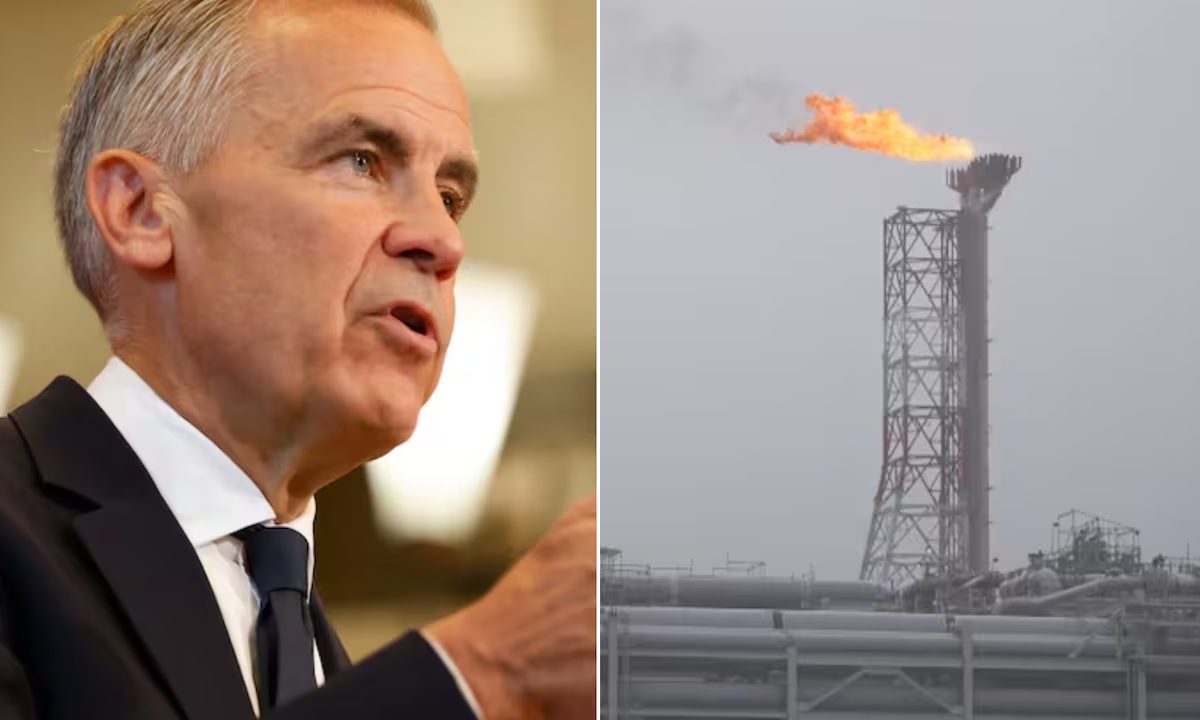
Kitimat Expansion to Double Natural Gas Exports
A multibillion-dollar expansion at the LNG Canada facility in Kitimat, B.C., is moving forward. CEO Chris Cooper confirmed Tuesday that Phase 2 will proceed, a step expected to double export capacity from 14 million to 28 million tonnes per year. LNG Canada—a joint venture between Shell, Petronas, PetroChina, Mitsubishi Corporation, and Korea Gas Corp.—shipped its initial cargo to Asian markets last year.
Economic Impact and Political Reactions
Prime Minister Mark Carney stated in Vancouver that the private sector investment of roughly $33 billion will transform the project into the second-largest facility of its type globally. He noted the expansion will generate up to 4,000 jobs in Kitimat during peak construction and bring billions to the national economy by linking low-cost Canadian energy overseas.
Skeena-Bulkley Valley Conservative MP Ellis Ross credited Indigenous leaders for establishing the industry, dismissing praise for politicians as “a nothingburger.” He noted past opposition from provincial politicians before the project was realized.
Pipeline Upgrades and Environmental Debates
To support the added capacity, LNG Canada is collaborating with Coastal GasLink to construct five new compressor stations along the existing 670-kilometre pipeline in northern B.C. The line crosses territory where Wet’suwet’en hereditary chiefs and supporters previously mounted opposition that resulted in arrests and protests.
The expansion has drawn criticism from environmentalists, who warn that rapid growth in hydraulic fracturing increases emissions during a climate crisis. Hydraulic fracturing in B.C. and Alberta has also been associated with rising earthquake activity in the Peace River region. Critics cite a federal report predicting a 5 C warmer future for Canada, leading to severe droughts and glacier loss. Meanwhile, the B.C. Greens have called for a moratorium on LNG projects, contrasting with the B.C. NDP and B.C. Conservatives, who both support expanding production ahead of the provincial election.
HEALTH
Ottawa Faces Calls to Reconsider Temporary Resident Limits as Demonstrations Surge
Migrants and advocates rallied across Canada to protest federal plans limiting temporary resident numbers as Parliament prepares to resume.
Demonstrations Erupt Nationwide Over Federal Policy Changes
Demonstrators gathered in Vancouver and across Canada on Sunday to challenge federal measures aimed at curbing the nation’s temporary resident population. The rallies, organized by the Migrant Rights Network across 11 locations including British Columbia, Ontario, Quebec, and Prince Edward Island, occurred just ahead of Parliament’s resumption.
Federal policy changes introduced in 2024 have established tighter regulations for temporary foreign workers and set caps on study permits. The government aims to shrink non-permanent residents from a peak of 7.6 per cent of the population in October 2024 to below five per cent by late 2027, citing pressure on healthcare, housing, and public services. Parliamentary Budget Officer data shows net inflows of non-permanent residents reached nearly 800,000 in 2023.
Local Rallies Highlight Community Impacts
In Vancouver, advocates and residents assembled at Memorial South Park, symbolically bashing a piñata representing Bill C-12, recent federal legislation tightening asylum and immigration rules. Local rally participants expressed deep concern that shifting federal policies leave workers facing deportation, expiring permits, and difficult working conditions despite having followed official processes.
Organizers are urging Ottawa to provide permanent status to migrants currently in the country, auto-renew study and work permits, halt deportations, and eliminate employer-tied permits. Campaign materials from the Migrant Rights Network argued that blaming migrants fails to address rising rents, healthcare pressures, or wage issues, warning that policy shifts risk dividing workers.

BC Lions Hold Off Toronto Argonauts Behind Sean Whyte’s Record Eight Field Goals

Search Continues After Ontario-Based Medical Flight Vanishes Near Massachusetts Coast
Your Current 3 Day Forecast — October 5, 2026
Your Current 3 Day Forecast — October 4, 2026

Summerland Transitions Remaining Properties to Prohibit-Entry Orders as Wildfire Evacuations End
Remembering Lyle Odelein: Former Montreal Defenceman and Stanley Cup Winner Dies at Age 58

Opinion: John Rustad Has to Go

B.C. Supreme Court Grants Cowichan Tribes Title to Historic Richmond Lands and Fishing Rights

Vancouver Canucks Gear Up for a Make-or-Break 2025–26 Season

Kamloops Blazers Announce Off-Season Changes Ahead of 2025–26 Season

BC Ferries Sparks Outcry Over Contract with Chinese Shipyard

A Taste of Autumn: Fall Okanagan Wine Festival 2025
-

 OPINIONS5 days ago
B.C.’s 93-Riding Scramble: Can the Parties Even Find Enough Candidates?
-

 BC STORIES4 days ago
Why OneBC’s Interim Leader Is Proposing an Election Pact With Conservatives
-

 BC STORIES5 days ago
BC Greens Pledge Free Childcare by 2031 and Introduce Victoria-Swan Lake Candidate
-
 NATIONAL STORIES5 days ago
Will they use Chinese Steel over Canadian like Phase One?
-

 NATIONAL STORIES4 days ago
Why NDP Leader Avi Lewis Says the West Coast Pipeline Plan Risks Public Funds
-
SPORTS4 days ago
Maple Leafs vs Islanders Result: Easton Cowan Scores in 2-1 Win
-
SPORTS5 days ago
Why the Edmonton Oilers Will Be Without Ryan Nugent-Hopkins Against Vancouver
-
NATIONAL STORIES5 days ago
Why a Canadian Nationalist Group’s Hidden Recruitment Practices Are Drawing Scrutiny