Economics
Mark Carney Hails U.S.-Iran Framework as ‘Game Changer’ for Global Stability
Prime Minister Mark Carney calls the U.S.-Iran framework a ‘game changer’ at the G7 summit, detailing its impact on nuclear security and global oil supplies.


A Potential Turning Point at the G7 Summit
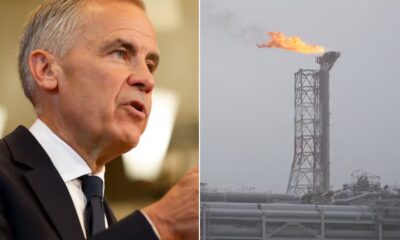
In a high-stakes reveal during the G7 summit in France, Prime Minister Mark Carney described a preliminary framework agreement between the United States and Iran as a significant “game changer” for Middle Eastern stability. Speaking with CNN’s Kaitlan Collins, Carney confirmed he has reviewed the unpublished document, stating the deal has “exceeded expectations” in its scope to end a 100-day conflict that has paralyzed global energy markets.
The Core of the Agreement
While the full terms remain confidential, the framework reportedly establishes a 60-day window for intensive negotiations regarding Iran’s nuclear program. Carney emphasized that the deal “sets the groundwork to ensure Iran doesn’t have a nuclear weapon,” suggesting that a critical metaphorical “Rubicon” has been crossed. Key components of the agreement include the reopening of the Strait of Hormuz—a vital corridor for approximately 20 million barrels of oil daily—and the lifting of a blockade that has sent global fuel prices skyrocketing.
Canada’s Expanding Role
Beyond endorsing the peace process, Carney signaled that Canada is prepared to play a logistical and financial role in the deal’s implementation. This includes potential assistance with demining efforts in the Strait of Hormuz and navigating the complex process of unfreezing Iranian assets. Carney noted that Canada could help mitigate global reliance on economic choke points by leveraging its own resources in oil, gas, and critical minerals. “One of the big lessons here is don’t be held hostage to one choke point in the global economy,” Carney remarked.
Regional Concerns and the War in Ukraine
Despite the optimism, the deal faces scrutiny for excluding key regional players like Israel and Hezbollah from the preliminary talks. Carney remained vague on how the agreement impacts Israel’s military presence in Lebanon, though he noted it provides a foundation for a future solution. Shifting focus to Europe, Carney also characterized G7 discussions on Ukraine as “constructive,” announcing new sanctions against 162 Russian entities and asserting that the tide of the war has turned against President Vladimir Putin.



Economics
Trump Reverses Hormuz Shipping Fee as US Reinstates Iran Port Blockade
President Trump replaces the 20% Hormuz cargo fee with Gulf investment deals as the U.S. prepares a naval blockade of Iran amidst rising oil prices and military strikes.
A Shift in Middle Eastern Maritime Strategy
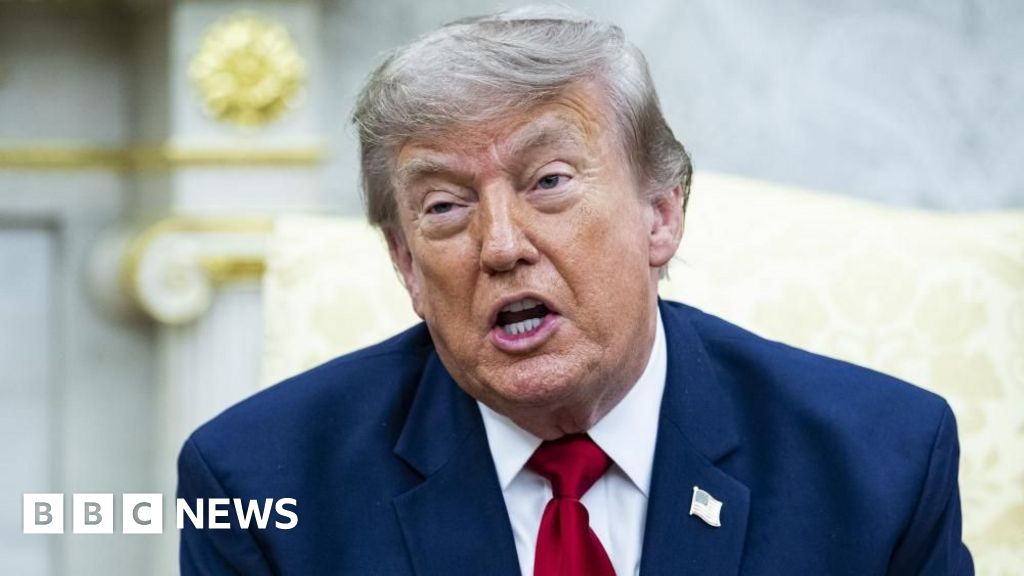
In a rapid reversal of maritime policy, President Donald Trump has scrapped his controversial proposal for a 20% reimbursement fee on all cargo passing through the Strait of Hormuz. The initial threat, intended to offset the costs of U.S. naval protection in the region, has been replaced by a strategy focused on bilateral trade and investment deals with Gulf nations. This pivot comes just hours before the United States is set to resume a full-scale naval blockade of Iranian ports, a move aimed at crippling Tehran’s economic leverage over the global energy supply.
Economic Deals Replace Protection Tolls
Writing on Truth Social, President Trump clarified that the proposed 20% fee would be supplanted by \”massive\” investments from various Gulf States into the U.S. economy. While specific details of these deals remain undisclosed, the President emphasized that the new arrangement would be mutually beneficial. During a meeting with Iraqi Prime Minister Ali al-Zaidi, Trump reiterated his stance that while he disliked the concept of a direct fee, the United States could no longer bear the sole financial burden of securing a waterway that serves the entire world.
Escalating Military Tensions and Oil Market Volatility
The policy shift arrives amidst a period of intense military activity. U.S. Central Command (Centcom) confirmed that a naval blockade of Iranian ports would go into effect as of Tuesday evening. This follows several nights of U.S. strikes intended to degrade Iran’s capability to harass commercial shipping. In response, Iranian state media reported explosions in several cities, including the nuclear hub of Bushehr, while Tehran claimed to have targeted U.S. military facilities in Bahrain and Jordan.
Global Energy Security at Stake
The Strait of Hormuz remains the world’s most vital energy chokepoint, historically accounting for 25% of global oil and 20% of liquefied natural gas transit. Recent shipping data indicates that traffic has plummeted to a two-month low as tankers stall amidst the crossfire. With Brent Crude prices rising sharply, the international community remains on edge. Prime Minister Benjamin Netanyahu has further heightened the stakes, warning that any further Iranian aggression would meet a significantly more powerful Israeli retaliation.
Economics
Cracks in the Kremlin’s Armor: Rising Dissent and Economic Strains Challenge Putin’s Status Quo
Russian influencers and loyalists voice rare public dissent as economic stagnation and internet restrictions drive Putin’s approval ratings to multi-year lows.
The Rise of Influencer Criticism
In a surprising shift within Russia’s tightly controlled media landscape, popular influencers are increasingly using their platforms to voice public grievances directly to President Vladimir Putin. A 19-minute video by blogger Victoria Bonya, which garnered over 31 million views on Instagram, highlighted local government failures, agricultural crises, and the suffocating impact of internet restrictions. While Bonya maintained her support for the President, her message was clear: Putin is being kept in the dark by fearful officials while ordinary citizens are being ‘robbed’ of their livelihoods.
Economic Reality and Declining Approval
The Kremlin is facing a double-edged sword of economic stagnation and public fatigue. Following a period of artificial growth driven by military spending, Russia’s GDP shrank by 1.8% in early 2024. High interest rates and depleted reserves have forced the central bank into a defensive posture, directly impacting small businesses and household income. This economic downturn is reflected in recent polling data; state-controlled VTsIOM reported Putin’s approval ratings at 65.6%, a significant drop from the 77.8% recorded in late 2025. Analysts suggest that while these numbers are still high, they represent the lowest baseline since the invasion of Ukraine began.
Digital Iron Curtain and the ‘Max’ Migration
Public frustration has also been fueled by aggressive internet censorship and frequent cellular shutdowns, which the Kremlin justifies as anti-terror measures against Ukrainian drone strikes. The government is currently pushing a state-backed messaging app called ‘Max,’ which critics view as a surveillance tool designed to replace popular platforms like WhatsApp and Telegram. Despite multiple attempts to organize protests and file class-action lawsuits against these digital restrictions, the Kremlin appears resolute, with Putin insisting the measures are necessary for national security.
The Stalled Peace Process
Adding to the domestic pressure is the realization that the war in Ukraine, now in its fifth year, has no clear end in sight. Hopes for a swift resolution following the 2025 U.S. election have largely evaporated as peace negotiations stalled. According to experts from King’s College London, this dashed expectation has become ‘priced into’ public opinion, leading to a weary and increasingly vocal populace. While the Kremlin remains in firm control, the effort required to maintain the status quo is growing exponentially, testing the limits of Putin’s long-term stability.
Economics
Trump Sends Envoys to Pakistan as Diplomatic Efforts Intensify to End Iran Conflict
Trump sends Kushner and Witkoff to Pakistan for indirect peace talks with Iran as oil prices surge and global maritime trade faces severe disruptions.

U.S. Envoys Witkoff and Kushner Arrive for Indirect Talks
In a high-stakes diplomatic maneuver, President Donald Trump has dispatched special envoys Steve Witkoff and Jared Kushner to Pakistan for critical discussions aimed at ending the ongoing war with Iran. The White House confirmed the move on Friday, noting that the envoys will meet with Iranian Foreign Minister Abbas Araghchi, who arrived in Islamabad late Friday evening. While the Iranian foreign ministry has officially ruled out direct negotiations with U.S. representatives, Pakistani officials are expected to act as intermediaries, conveying messages between the two delegations in a bid to secure a ceasefire.
Global Economic Pressures and the Strait of Hormuz
The urgency of these talks is underscored by the severe disruption of global energy markets. Since the conflict erupted on February 28, the Strait of Hormuz—a vital artery for 20% of the world’s oil and gas—has been effectively throttled. Brent crude oil prices have surged, hovering between $103 and $107 per barrel. To mitigate the economic fallout, President Trump on Friday issued a 90-day extension of the Jones Act waiver, a move designed to allow non-American vessels to transport fuel to U.S. ports more efficiently. This extension follows data indicating that the initial waiver helped stabilize domestic supply chains amidst the maritime blockade.
The Rising Human Cost of the Conflict
As diplomats convene in Islamabad, the humanitarian toll of the month-long war continues to climb. Official reports indicate that at least 3,375 people have been killed in Iran, with thousands more casualties reported in Lebanon, Israel, and various Gulf Arab states. The conflict has also claimed the lives of 13 U.S. service members and six UN peacekeepers. Despite the diplomatic outreach, military tensions remain at a boiling point; U.S. Secretary of War Pete Hegseth announced that a second aircraft carrier will soon join the three already stationed in the region, bringing the total American force to 200 aircraft and 15,000 personnel.
Pakistan’s Role as a Regional Mediator
Islamabad has emerged as the primary facilitator for peace, pushing both Washington and Tehran back to the negotiating table after failed talks in Geneva earlier this year. White House Press Secretary Karoline Leavitt expressed cautious optimism, stating that the U.S. has seen “some progress” from the Iranian side in recent days. While Vice-President JD Vance and Secretary of State Marco Rubio remain on standby to join the talks if necessary, the current focus remains on the indirect channel established by Pakistan to prevent a wider regional conflagration.

What the City of Vernon’s Decision to Cut Ties Means for Historic O’Keefe Ranch

Police Request Public Help After Fatal Highway 93 Crash Kills Local Resident

Why an Attempted Cannabis Smuggling Trip to London Led to Jail Time for an Ontario Man

Why Okanagan Pet Owners Turned to Free BC SPCA Clinics After Wildfire Season
Your Current 3 Day Forecast — October 6, 2026

BC Lions Hold Off Toronto Argonauts Behind Sean Whyte’s Record Eight Field Goals

Opinion: John Rustad Has to Go

B.C. Supreme Court Grants Cowichan Tribes Title to Historic Richmond Lands and Fishing Rights

Vancouver Canucks Gear Up for a Make-or-Break 2025–26 Season

Kamloops Blazers Announce Off-Season Changes Ahead of 2025–26 Season

BC Ferries Sparks Outcry Over Contract with Chinese Shipyard

A Taste of Autumn: Fall Okanagan Wine Festival 2025
-
 OPINIONS6 days ago
B.C.’s 93-Riding Scramble: Can the Parties Even Find Enough Candidates?
-

 BC STORIES4 days ago
Why OneBC’s Interim Leader Is Proposing an Election Pact With Conservatives
-

 BC STORIES6 days ago
BC Greens Pledge Free Childcare by 2031 and Introduce Victoria-Swan Lake Candidate
-
 NATIONAL STORIES6 days ago
Will they use Chinese Steel over Canadian like Phase One?
-
SPORTS4 days ago
Maple Leafs vs Islanders Result: Easton Cowan Scores in 2-1 Win
-
SPORTS5 days ago
Why the Edmonton Oilers Will Be Without Ryan Nugent-Hopkins Against Vancouver
-
NATIONAL STORIES5 days ago
Why a Canadian Nationalist Group’s Hidden Recruitment Practices Are Drawing Scrutiny
-
 NATIONAL STORIES4 days ago
Why NDP Leader Avi Lewis Says the West Coast Pipeline Plan Risks Public Funds