SPORTS
Caleb Williams Finds DJ Moore in Overtime as Bears Erase Late Deficit to Stun Packers 22-16
The Chicago Bears staged a miraculous late-game comeback to defeat the Green Bay Packers 22-16 in overtime, featuring a walk-off touchdown by DJ Moore.


A Night to Remember at Soldier Field
In a rivalry defined by decades of heartbreak for the Windy City, the Chicago Bears finally flipped the script on Saturday night. Trailing by 10 points late in the fourth quarter against the Green Bay Packers, the Bears orchestrated an improbable rally that will be etched in the franchise’s lore. The climax came in the sudden-death overtime period, where rookie sensation Caleb Williams connected with veteran receiver DJ Moore on a 46-yard touchdown strike, sealing a 22-16 victory that sent the Chicago faithful into a frenzy.
The Packers Take Early Control
For the better part of three quarters, it appeared that the Green Bay Packers would once again assert their dominance over their NFC North rivals. Led by quarterback Jordan Love, the Packers’ offense moved the ball with clinical efficiency, building a 16-6 lead as the clock ticked down in the final frame. The Green Bay defense, meanwhile, seemed to have Williams’ number, keeping the number-one overall pick contained and forcing the Bears into several stalled drives.
Packers kicker Anders Carlson had converted three field goals, and a rushing touchdown early in the second quarter had given Green Bay a cushion that felt insurmountable given Chicago’s offensive struggles throughout the evening. The atmosphere inside Soldier Field grew increasingly tense as the ‘Go Pack Go’ chants started to echo through the lakeside stadium.
The Tide Turns in the Fourth
The turning point arrived with just under seven minutes remaining in regulation. With the Bears facing a daunting 10-point deficit, the defense provided the spark the team desperately needed. A crucial sack-fumble recovery by Montez Sweat gave the Bears a short field, and Williams wasted no time. A quick series of completions moved the ball into the red zone, setting up a short touchdown run that cut the lead to three.
On the ensuing possession, the Chicago defense held firm, forcing a quick three-and-out. With the ball back in his hands and the season’s momentum on the line, Williams showed the poise that made him the top pick in the draft. He orchestrated a 12-play, 65-yard drive, culminating in a game-tying field goal by Cairo Santos as time expired in regulation, sending the contest into overtime.
The Overtime Heroics
Winning the toss in overtime proved to be the final nail in the coffin for Green Bay. Starting at their own 25-yard line, the Bears methodically moved the ball to midfield. Facing a third-and-long at the Packers’ 46-yard line, Williams checked at the line of scrimmage after spotting a mismatch in the secondary. DJ Moore, running a vertical route against single coverage, found a seam in the Green Bay defense.
Williams launched a high, arching pass that seemed to hang in the night air forever. Moore adjusted perfectly, hauling in the catch at the 10-yard line and stumbling into the end zone before the defenders could recover. The touchdown signal from the officials ignited a celebration that felt like a release of years of frustration for the Chicago organization.
Analysis and Aftermath
The victory marks a significant milestone in the Caleb Williams era. While his stat line was modest for most of the night, his ability to remain calm under pressure during the game’s final ten minutes suggests a maturity beyond his years. DJ Moore finished the night with seven receptions for 124 yards and the game-winning score, proving once again to be the primary weapon in this revamped Bears offense.
For the Packers, the loss is a bitter pill to swallow. After controlling the tempo for the majority of the game, defensive lapses in the closing minutes and the inability to put the game away when leading by double digits will surely be the focus of the post-game analysis. Jordan Love finished with over 250 yards passing but was unable to find the end zone in the critical final stretches of the game.
As the Bears celebrate a victory that feels like more than just a single win on the calendar, the NFC North race has been blown wide open. Chicago moves into a tie for second place in the division, while Green Bay must regroup before their next divisional matchup. For one night at least, the ‘Monsters of the Midway’ have regained their bite, and the rivalry has a new, thrilling chapter.



SPORTS
Depth Issues Exposed as Edmonton Falls Big to Toronto in Saturday Matchup
Edmonton drops a 7-2 decision to the Toronto Maple Leafs as head coach Mike Babcock addresses depth concerns following the team’s second loss of the season.

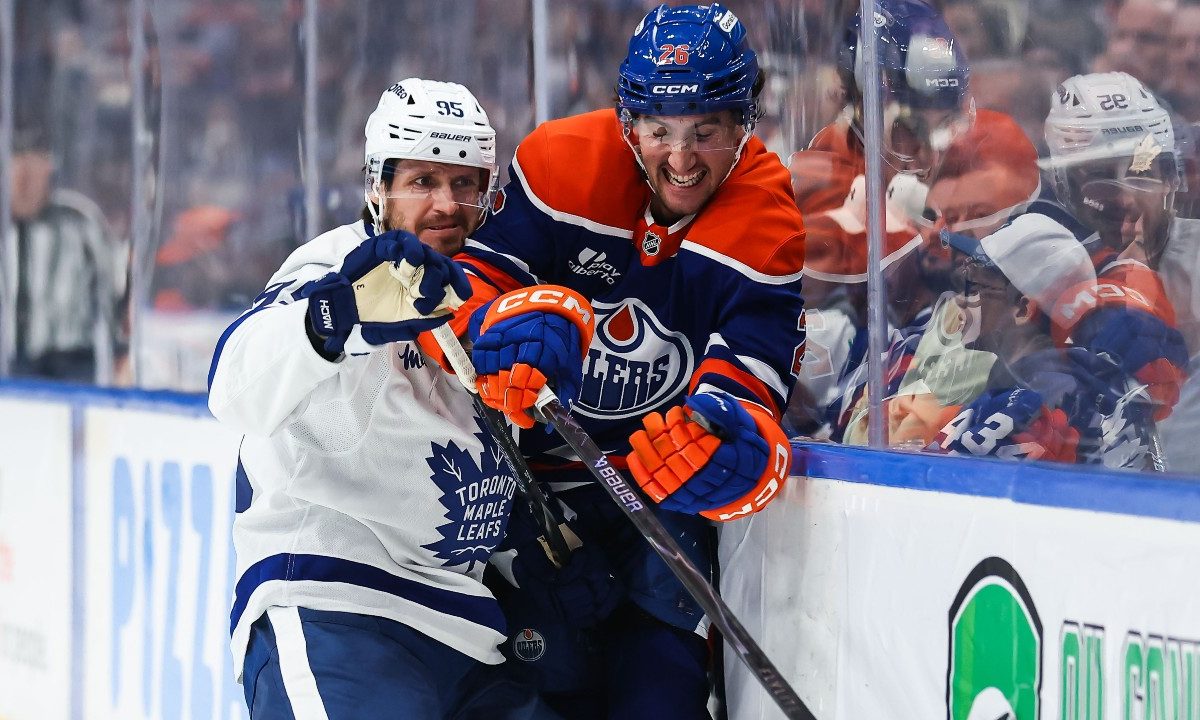
Maple Leafs Hand Oilers Second Loss of Season
A national Saturday night broadcast ended in a 7-2 blowout as the Edmonton Oilers were outplayed by the Toronto Maple Leafs. The defeat marked just the second loss of the season for Edmonton, dropping their record to 8-2-1 after they had won the first two games of their homestand against Minnesota and Carolina.
Edmonton head coach Mike Babcock took personal responsibility for the performance, noting that Toronto head coach Jim Hiller had his team playing harder. Babcock pointed to Toronto’s bottom six forward group as the superior unit, stating the Maple Leafs were quicker and more competitive throughout the contest.
Top Line Carries Scoring Burden
The Oilers relied entirely on their primary offensive stars for production. Leon Draisaitl scored twice, bringing his season total to 12 goals, while Connor McDavid and Evan Bouchard each provided two assists. The team’s offense has depended heavily on its top line and a power play operating at 35.1 per cent, while defenceman Bouchard currently ranks fourth in the league in overall scoring.
In contrast, Toronto received offensive contributions from Troy Stecher, Zack MacEwen, and Vinni Lettieri. Edmonton winger Kasperi Kapanen went scoreless against his former team, while forward Zach Hyman, who has one power-play goal in five appearances, noted the club needs to play heavier and simplify its game.
Goaltending and Lineup Adjustments
In goal, Tristan Jarry struggled alongside the defense in front of him, while former Oilers netminder Anthony Stolarz earned the win for Toronto while facing minimal dangerous chances. With goalie Devon Levi sidelined by an expected groin injury, Jarry is projected to take the net for Edmonton’s remaining homestand games on Monday against Detroit and Wednesday against Calgary.
Lineup changes prior to puck drop saw Babcock scratch Trent Frederic and Ike Howard in favor of Filip Hallander and Max Jones. During the contest, defenceman Connor Murphy fought Lettieri with Edmonton trailing 3-0, though fourth-line centre Colton Dach emphasized that the squad must return to a simpler, harder identity moving forward.
SPORTS
Former Captain Quinn Hughes Prepares for Emotional Vancouver Return
Quinn Hughes prepares for his return to Rogers Arena as the Minnesota Wild face the Vancouver Canucks, reflecting on his six-and-a-half years with the team.
Quinn Hughes Ready for First Game Back in Vancouver
Former Vancouver Canucks captain Quinn Hughes is preparing for his initial return to Rogers Arena this Sunday as a member of the Minnesota Wild. Drafted seventh overall by Vancouver in 2018, the 27-year-old defenceman played six-and-a-half seasons with the franchise before being traded in December in exchange for Marco Rossi, Liam Ohgren, Zeev Buium, and a 2026 first-round draft choice. Hughes, who won the Norris Trophy in 2024 after recording 432 points in 459 regular-season games with Vancouver, noted he is unsure what kind of reaction he will receive from the crowd but remains appreciative of his time in the market.
Reflecting on Canadian Passion and Team Impact
Addressing the potential for mixed feelings or booing from local fans, Hughes expressed deep gratitude for his development and experiences in British Columbia. “Whether I’m booed or whatnot, it won’t change how I feel about that place and how grateful I am for the experiences I had there,” Hughes said. He compared playing in a Canadian market to playing for the New York Yankees, acknowledging both the intense pressure and unique appreciation from the fan base. Hughes noted that while he gave his all during his tenure, how he is remembered remains out of his hands.
Current Seasons and Franchise Struggles
Since the blockbuster trade—which occurred after former general manager Patrik Allvin indicated Hughes was unlikely to sign a long-term extension beyond his six-year deal—the two sides have experienced contrasting trajectories. Hughes posted 53 points in 48 regular-season games for Minnesota last year and has accumulated 14 points through 12 games in the 2026-27 season, mentioning recently that a new contract extension with the Wild could happen soon. Meanwhile, Vancouver has struggled on the ice, finishing last season at the bottom of the league standings and entering Sunday’s matchup on a nine-game losing streak with a 2-9-1 record.
SPORTS
What Tommy Stevens’ CFL Scoring Record Means for the Roughriders’ Playoff Run
Tommy Stevens set a CFL record with 17 rushing touchdowns as the Saskatchewan Roughriders beat the Edmonton Elks 16-9 to secure a West semifinal spot.
Stevens Sets Single-Season Record in Victory
Quarterback Tommy Stevens wrote his name into the Canadian Football League record books on Saturday, scoring two one-yard rushing touchdowns to lead the Saskatchewan Roughriders past the Edmonton Elks 16-9. The performance brought Stevens to 17 rushing touchdowns on the year, breaking the previous single-season league mark of 16 set by Caleb Evans with the Ottawa Redblacks in 2022.
Playoff Picture Takes Shape Across the CFL
The win boosted Saskatchewan (10-8) into third place in the West Division, setting up a West semifinal road matchup against the B.C. Lions on Oct. 31. Edmonton (13-5) finished first in the division and will host the winner of the Saskatchewan-B.C. contest in the West final on Nov. 7. Meanwhile, the fourth-place Winnipeg Blue Bombers will cross over to the East Division to visit the Toronto Argonauts in an East semifinal clash on Oct. 31.
Roughriders Rally From Early Deficit
Edmonton initially opened the scoring with a one-yard touchdown run by quarterback Cole Snyder early in the opening quarter. Saskatchewan answered with 16 straight points. Brett Lauther brought the Roughriders within three points via a 32-yard field goal in the second quarter, before Stevens notched his first short-yardage touchdown to put Saskatchewan ahead 9-6 at halftime.
Stevens added his second touchdown run in the fourth quarter, followed later by a 58-yard single from punter Oscar Chapman with 3:31 left. Edmonton halted the unanswered streak when Vincent Blanchard hit a 24-yard field goal with 27 seconds on the clock, but Saskatchewan safely secured the subsequent onside kick attempt.
Penalties and Strong Winds Mark First Half
Challenging weather conditions heavily influenced the opening half, as winds reached 46 km/h with gusts up to 5 km/h. Both teams turned primarily to their ground attacks, with Edmonton’s Shunderrick Powell picking up 47 yards on six carries, while Deon Jackson collected 45 yards on eight carries in his debut appearance for the Roughriders.
Discipline was also an issue early on, with each squad taking seven penalties in the first half—costing Edmonton 73 yards and Saskatchewan 70 yards. Saskatchewan’s primary first-half scoring drive covered 67 yards over five plays, but 62 of those yards resulted from Edmonton flags, including a 42-yard pass interference penalty assessed to defensive back Royce Metchie.
The strong gusts also interfered with the kicking game. Lauther and Edmonton’s Vincent Lauther each missed convert tries, while Saskatchewan was unsuccessful on a two-point convert try following Stevens’ second touchdown.

Why the Early Election Gamble Backfired on the NDP

Why Fake Signs Targeted a Small Green Party Campaign on B.C. Election Eve

Why the Conservatives’ Majority Win in Kelowna-Mission Signals Big Changes for Local Healthcare and Economy

Why B.C.’s Latest Election Results Are Sparking Renewed Calls for Voting Reform
Your Current 3 Day Forecast — October 27, 2026
Why First Nations Leaders Are Gathering in Ottawa to Push Back on Fast-Tracked Resource Projects

Opinion: John Rustad Has to Go

B.C. Supreme Court Grants Cowichan Tribes Title to Historic Richmond Lands and Fishing Rights

Vancouver Canucks Gear Up for a Make-or-Break 2025–26 Season

BC Ferries Sparks Outcry Over Contract with Chinese Shipyard

Kamloops Blazers Announce Off-Season Changes Ahead of 2025–26 Season

A Taste of Autumn: Fall Okanagan Wine Festival 2025
-

 BC STORIES5 days ago
BC Conservatives Promise Forestry Overhaul to Revive Jobs as NDP Points to Millions in Existing Investment
-

 SPORTS5 days ago
Why B.C. Lions Starters Are Resting as the Regular Season Concludes Against Winnipeg
-

 OPINIONS5 days ago
How Minor Parties and Strategic Balloting Could Shift the Upcoming B.C. Election
-

 BC STORIES6 days ago
Police Seek Witnesses After Fatal Wrong-Way Collision Near Merritt
-
5 days ago
Your Current 3 Day Forecast — October 22, 2026
-
6 days ago
Your Current 3 Day Forecast — October 21, 2026
-
NATIONAL STORIES6 days ago
Highland Valley Copper Workers Could Strike Saturday as Union Issues Notice
-

 HEALTH6 days ago
Coquihalla Highway Reopens Near Merritt Following Morning Crash That Injured Four