Government
Carney Government Weighs Prorogation Strategy to Reclaim Parliamentary Control
The Liberal government may prorogue Parliament if they sweep the April 13 by-elections, aiming to regain committee control and push through stalled bills.


A Pivot Point for the Liberal Minority
Prime Minister Mark Carney’s Liberal government is reportedly considering a tactical prorogation of Parliament should the party succeed in sweeping three crucial by-elections scheduled for April 13. Sources within the Liberal Party suggest that securing these seats would provide the government with a slim 173-seat majority in the 343-seat House of Commons, potentially ending a period of legislative gridlock that has plagued the current minority mandate.
The Logistics of Parliamentary Control
Under the current minority configuration, the Liberals frequently face opposition from a combined front of Conservatives and the Bloc Québécois within House committees. This lack of control has allowed the opposition to delay key legislation, including the government’s budget implementation bill. Membership on these committees is typically determined by the seat distribution established during the general election. To reset this balance and ensure Liberal majorities on committees, the government is exploring prorogation as a formal mechanism to terminate the current session and dissolve all existing committee assignments.
Expert Perspectives and Procedural Hurdles
Former Liberal House leader Don Boudria notes that prorogation is the most efficient path to restructuring the committee system. Without it, the government would need to pass a motion to change standing orders, a move that would almost certainly face a fierce Conservative filibuster. Even with a narrow majority, a tie vote on such a motion would, by tradition, be broken by the Speaker in favor of the status quo, leaving the government’s hands tied despite their electoral gains.
Senate Reshuffling on the Horizon
Beyond the House of Commons, internal discussions are also focusing on the Senate. There are reports that the Prime Minister’s principal secretary, Tom Pitfield, may be appointed to the Red Chamber with the intent of serving as Government Leader in the Senate. Such a move would signal a shift back to traditional partisanship, potentially granting the Senate leader a seat at the cabinet table to streamline the passage of government bills. This would mark a significant departure from the independent appointment process established by former Prime Minister Justin Trudeau.






Canada Stories
Carney Asserts Control After Byelection Sweep Delivers Liberal Majority
Prime Minister Mark Carney secures a majority government after byelection wins in Toronto and Quebec, ending legislative gridlock and vowing swift action.

A Decisive Shift in Parliamentary Power
Prime Minister Mark Carney has signaled a transformative era for his administration following a sweep of three crucial byelections that has secured a majority government for the Liberal Party. The victories, spanning two ridings in Toronto and a surprising win in the former Bloc Québécois stronghold of Terrebonne, have effectively ended the legislative gridlock that characterized Carney’s first year in office.
Addressing the media following the results, Carney declared that the era of political “showboating” is over. With a majority now firmly in hand, the government plans to move aggressively on long-stalled legislation, specifically targeting housing affordability and construction. “It’s time to get serious,” Carney stated, emphasizing that the electoral surge represents a clear mandate from Canadians to prioritize governance over partisan delays.
Reconstituting the House of Commons
The immediate impact of the Liberal majority will be felt within parliamentary committees. Previously, opposition parties used their combined numbers to filibuster government bills—most notably the anti-hate bill—and launch probes into cabinet conduct. The new majority allows the Liberals to reconstitute these committees, ensuring they hold the chair and the voting power required to move legislation through the House at a significantly faster pace.
However, this consolidation of power has raised concerns regarding oversight. The majority status allows the Liberals to potentially block opposition inquiries, such as the Conservative-led probe into Finance Minister François-Philippe Champagne’s recusal from the Alto high-speed rail project. Critics argue that while efficiency will increase, the government’s accountability to the House may diminish.
Opposition in Retreat
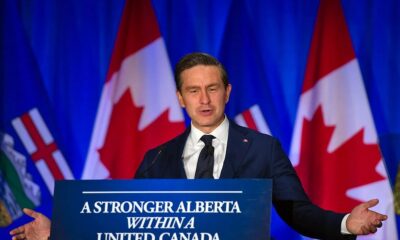
For Conservative Leader Pierre Poilievre, the byelection results represent a significant setback. Despite a strong leadership review in January, Poilievre saw his party’s vote share collapse in all three contested ridings. In Terrebonne, the Conservative candidate’s support plummeted from 18 percent to a mere 3 percent, highlighting the party’s struggle to maintain momentum against the Carney brand.
Despite the losses, Poilievre remains defiant, criticizing the Prime Minister’s recent temporary gas tax holiday as insufficient. He accused Carney of seeking to exercise power “without any accountability,” vowing that the Conservatives will continue to challenge the government on housing costs and energy policy. Nevertheless, with fewer than half of government bills becoming law during the previous minority session, the new majority gives Carney a clear runway to reshape the Canadian legislative landscape.
Canadian Stories
Liberal Majority in Sight as Carney’s Party Woos Eight More Opposition MPs
Liberal sources reveal ongoing talks with eight more opposition MPs to cross the floor, as Mark Carney nears a majority government ahead of key by-elections.

A Strategy for Total Control
The Liberal Party of Canada is reportedly in active discussions with as many as eight additional opposition Members of Parliament to cross the floor, according to senior party organizers. This strategic recruitment drive, if successful, would solidify Prime Minister Mark Carney’s grip on the House of Commons and potentially reshape the Canadian political landscape for years to come.
Liberal sources, including veterans involved in the outreach, indicate that the list of targets includes both Conservative and New Democratic Party (NDP) MPs. These efforts were underway well before the high-profile defection of Ontario MP Marilyn Gladu, whose recent move to the Liberals has dominated the party’s ongoing convention in Montreal.
The Math of a Majority
The timing of these potential defections is critical. With Ms. Gladu’s arrival, the Liberals currently hold 171 of 343 seats—just one shy of a standing majority. With three by-elections scheduled for Monday, including two stronghold ridings in Toronto, the Liberals are on the verge of securing a majority through the ballot box. However, insiders describe the recruitment of opposition MPs as “political insurance,” ensuring a stable government even if the closely contested Quebec riding of Terrebonne remains out of reach.
Prime Minister Mark Carney has characterized the process as organic, suggesting that opposition members are the ones initiating contact. “In each of these circumstances, individuals have come to people they know well in the Liberal caucus and expressed an interest in joining,” Carney told reporters. Nevertheless, the involvement of cabinet ministers in brokering past deals suggests a highly coordinated effort to weaken the opposition.
Pressure Mounts on Conservative Leadership
The prospect of further floor-crossing has placed Conservative Leader Pierre Poilievre under intense scrutiny. As the Liberals boast of an expanding tent that now includes social conservatives like Gladu, Poilievre is facing questions regarding caucus unity. While some Conservative MPs have taken to social media to pledge their loyalty, the departure of veteran members highlights a growing friction within the official opposition.
As the Liberal convention continues, the political world remains focused on whether Carney will announce further additions to his caucus, a move that would effectively neutralize the threat of a non-confidence motion and grant the government a clear path to implementing its legislative agenda without the need for NDP support.
Canadian Stories
Liberals Within One Seat of Majority as Conservative MP Marilyn Gladu Crosses Floor
Conservative MP Marilyn Gladu joins the Liberals, bringing Prime Minister Mark Carney within one seat of a majority government ahead of key byelections.

A Significant Shift in the House of Commons
In a move that has sent shockwaves through Parliament Hill, Sarnia—Lambton—Bkejwanong MP Marilyn Gladu has officially defected from the Conservative Party to join the Liberal benches. The announcement, made Wednesday, marks a pivotal moment for Prime Minister Mark Carney’s government as it inches closer to securing a legislative majority. Gladu, a veteran politician first elected in 2015, cited a need for a more “constructive and collaborative approach” to governance as the primary motivator for her departure from the official opposition.
The Drive for Economic Stability
In a letter addressed to her constituents and released by the Liberal Party, Gladu emphasized that the challenges of the past year have shifted the political landscape. “I’ve heard clearly from constituents that you want serious leadership and a real plan to build a stronger and more independent Canadian economy,” she wrote. This rhetoric aligns closely with the Carney government’s current focus on industrial policy and economic sovereignty, suggesting that the Liberals’ centrist economic platform is successfully peeling away moderate Conservatives who feel alienated by the current direction of their own party.
The Path to 172: A Majority in Sight
Gladu’s defection is part of a larger, unprecedented trend of floor-crossing in Canadian politics. She is the fifth MP to switch sides in just five months, following former Conservatives Chris d’Entremont, Michael Ma, and Matt Jeneroux, as well as former NDP MP Lori Idlout. With Gladu now in the fold, the Liberal caucus stands at 171 seats—just one shy of the 172 required for a slim majority. This puts immense pressure on three upcoming byelections scheduled for Monday in University–Rosedale, Scarborough Southwest, and Terrebonne. If the Liberals hold their ground in these ridings, Prime Minister Carney will transition from a precarious minority position to full control of the legislative agenda.
Political Implications for the Opposition
For the Conservative Party, Gladu’s exit is a significant blow, representing the loss of a respected voice in the caucus and a clear signal of internal friction. As the government prepares for a potential majority, the opposition faces the difficult task of unifying a fractured base and stemming the tide of further defections. The results of Monday’s byelections will ultimately determine if Gladu’s move was the final piece of the puzzle for a Liberal majority or a catalyst for a renewed political battle in the House of Commons.

Why the Early Election Gamble Backfired on the NDP

Why Fake Signs Targeted a Small Green Party Campaign on B.C. Election Eve

Why the Conservatives’ Majority Win in Kelowna-Mission Signals Big Changes for Local Healthcare and Economy

Why B.C.’s Latest Election Results Are Sparking Renewed Calls for Voting Reform
Your Current 3 Day Forecast — October 27, 2026
Why First Nations Leaders Are Gathering in Ottawa to Push Back on Fast-Tracked Resource Projects

Opinion: John Rustad Has to Go

B.C. Supreme Court Grants Cowichan Tribes Title to Historic Richmond Lands and Fishing Rights

Vancouver Canucks Gear Up for a Make-or-Break 2025–26 Season

BC Ferries Sparks Outcry Over Contract with Chinese Shipyard

Kamloops Blazers Announce Off-Season Changes Ahead of 2025–26 Season

A Taste of Autumn: Fall Okanagan Wine Festival 2025
-

 SPORTS5 days ago
Why B.C. Lions Starters Are Resting as the Regular Season Concludes Against Winnipeg
-
 BC STORIES5 days ago
BC Conservatives Promise Forestry Overhaul to Revive Jobs as NDP Points to Millions in Existing Investment
-

 OPINIONS5 days ago
How Minor Parties and Strategic Balloting Could Shift the Upcoming B.C. Election
-

 BC STORIES6 days ago
Police Seek Witnesses After Fatal Wrong-Way Collision Near Merritt
-
5 days ago
Your Current 3 Day Forecast — October 22, 2026
-
6 days ago
Your Current 3 Day Forecast — October 21, 2026
-
NATIONAL STORIES6 days ago
Highland Valley Copper Workers Could Strike Saturday as Union Issues Notice
-

 HEALTH6 days ago
Coquihalla Highway Reopens Near Merritt Following Morning Crash That Injured Four