POLITICS
Conservative MPs Criticize Liberals for Halting Gordie Howe Bridge Study
Conservative MPs criticize Liberals for blocking a committee study into a revenue-sharing agreement for the Gordie Howe International Bridge with the U.S.


Conservatives Criticize Liberal Vote to Adjourn Committee
Conservative Party MPs Harb Gill, Melissa Lantsman, Dan Albas, and Chris Lewis have issued a statement criticizing Liberal Members of Parliament for voting to adjourn a meeting of the Standing Committee on Government Operations and Estimates.
According to the Conservative MPs, the vote effectively blocked a planned study regarding the Gordie Howe International Bridge.
Concerns Raised Over Revenue Sharing and Transparency
The Liberal government has agreed to share half of the net revenues from the Gordie Howe International Bridge with the United States. The MPs contrasted this arrangement with a previous agreement negotiated under former Prime Minister Stephen Harper, which they stated allowed Canada to retain all bridge revenues until construction costs were recouped.
The Conservative MPs expressed concerns regarding the transparency of the new arrangement, as well as potential implications regarding the competing Ambassador Bridge, which is owned by Matthew Moroun.


By Chad Dashly | The Current
Politics has always been a battle of ideas.
Increasingly, however, it is becoming a battle between personalities, platforms and competing political tribes.
One of the more revealing conservative disputes in Canada has recently unfolded not in a legislature, campaign war room or party convention hall, but online. British Columbia activist and commentator Anthony Russo continues to criticize veteran conservative strategist Kory Teneycke, turning what might appear to be a personal disagreement into a public debate about the future of the conservative movement.
On the surface, it looks like another social-media feud.
In reality, it reflects something much larger: a growing struggle between the conservative establishment and a new generation of online activists who believe the old political playbook is no longer working.
To understand the conflict, it helps to understand what each man represents.
Teneycke is not merely another political commentator. He is one of Canada’s most experienced conservative strategists. His career has included work with former prime minister Stephen Harper, a leading role in the creation of Sun News Network and involvement in Doug Ford’s successful Ontario campaigns.
He represents experience.
He represents pragmatism.
Most importantly, he represents the belief that politics is ultimately about winning elections and forming governments.
Russo comes from a different political world.
Like many emerging conservative voices, he built his profile outside traditional party organizations and political institutions. His influence has grown largely through online commentary and direct engagement with grassroots conservatives—many of whom have become deeply skeptical of party insiders, consultants and professional political operatives.
He represents authenticity to his supporters.
He represents frustration with the political establishment.
Most importantly, he represents the belief that conservative politics should put principles ahead of strategy.
Russo’s methods, however, do not enjoy universal support within the conservative movement. Some conservatives view his confrontational approach as unnecessarily divisive or outside the political mainstream. Others see that same willingness to challenge powerful insiders as precisely what makes independent voices valuable.
Neither man has held elected office, yet both seek to influence those who do.
That fact illustrates how Canadian politics has changed.
Political influence was once concentrated among elected officials, party executives, newspaper columnists and a relatively small group of strategists. Today, a commentator equipped with a smartphone and a social-media account can reach thousands of voters without receiving the approval of any traditional gatekeeper.
The old institutions no longer control the political conversation.
That makes voices such as Russo’s difficult to ignore—but influence and effectiveness are not necessarily the same thing.
The risk for grassroots influencers is that constant confrontation can eventually become counterproductive. When every disagreement is treated as a betrayal and every rival becomes an enemy, personality begins to overshadow principle. Audiences grow exhausted, alliances become impossible and the original message gets lost in the conflict.
Political movements driven entirely by outrage may attract attention, but attention alone does not build a governing coalition.
The risk for establishment strategists is different.
When experienced political professionals dismiss grassroots concerns, they reinforce the belief that ordinary members are valued only for their votes, donations and volunteer hours. Every condescending response can deepen the suspicion that insiders are more interested in protecting their status than advancing conservative principles.
That resentment is not unique to Canada. Similar tensions have reshaped conservative politics in the United States, the United Kingdom and across Europe.
Grassroots activists frequently underestimate how difficult it is to build a coalition capable of winning an election. The political graveyard is filled with passionate movements that lacked organization, discipline and a practical path to power.
Establishment strategists, meanwhile, often underestimate how quickly supporters can withdraw their trust. A campaign may have sophisticated advertising, professional staff and a carefully tested message, but none of those things can replace a political base that genuinely believes in the cause.
Neither side possesses everything a successful movement requires.
Activists create energy.
Strategists turn energy into organization.
Influencers can identify frustrations that established parties have ignored. Political professionals can translate those frustrations into policies, campaigns and electoral victories.
The problem begins when either group concludes that it can succeed without the other.
Conservatives who want to form governments need experienced operators such as Teneycke. Winning elections requires discipline, compromise, coalition-building and an understanding of how voters outside the party base think.
They also need independent voices willing to challenge complacency. Without grassroots pressure, political parties can become disconnected from the people they claim to represent.
Without professional competence, conservatives risk losing elections.
Without grassroots conviction, they risk losing the movement itself.
The central question, therefore, is not whether Russo is right about Teneycke or Teneycke is right about Russo.
It is whether Canada’s conservatives can bridge the widening divide between their online grassroots and their political establishment before that division becomes permanent.
That will require humility from both sides.
Activists must recognize that compromise is not always surrender. Strategists must recognize that criticism is not always disloyalty. Both must understand that public feuds may generate engagement online while making cooperation—and electoral success—more difficult in the real world.
The future of Canadian conservatism will not be secured by consultants alone, nor will it be built entirely through social-media rebellion.
It will depend on whether experience and energy can coexist.
If they cannot, the people celebrating most enthusiastically will not be conservatives.
They will be their political opponents.
Editorial note: This article is presented as political commentary. It addresses the broader debate between grassroots activism and establishment strategy within Canadian conservatism and is not intended as a personal attack on either individual.
NATIONAL STORIES
Clock Ticks Toward Midnight Tariffs as Canada-U.S. Trade Talks Reach Critical Stage
Canada-U.S. trade talks continue in Washington as a deadline looms for $28 billion in proposed American tariffs affecting wine, honey, and other key goods.

Uncertainty Ahead of Wednesday Tariff Deadline
High-stakes trade negotiations in Washington ended on Monday without a deal, leaving Canadian industries facing a midnight deadline on Wednesday before a new round of American levies takes effect. Canada-U.S. Trade Minister Dominic LeBlanc stated that “our job is not yet done” as he departed a nearly two-hour meeting at the U.S. Commerce Department alongside chief trade negotiator Janice Charette, U.S. Trade Representative Jamieson Greer, and Commerce Secretary Howard Lutnick.
$28 Billion at Stake Across Multiple Sectors
The potential tariffs stem from a July 20 executive order signed by U.S. President Donald Trump, which threatens 50 per cent levies on roughly $28 billion worth of Canadian products, including wine, honey, cement, and hockey sticks. The Canadian Beekeepers Federation warned on Monday that the measures could cause domestic prices to crash and push farms toward bankruptcy, noting that up to 60 per cent of Canadian honey exports are bound for the American market.
The upcoming U.S. tariffs were introduced in response to existing Canadian trade friction points, including provincial bans on American alcohol, the supply-managed dairy sector, and quotas on certain U.S. vehicles. In response, Dairy Farmers of Canada cautioned against making dairy concessions, while Ontario Premier Doug Ford indicated a willingness to trade alcohol concessions for relief on hard-hit sectors like steel, aluminum, and lumber.
Federal Strategy and Cross-Party Support
Prime Minister Mark Carney expressed plans to speak directly with President Trump before Wednesday, stating that the federal government possesses a plan to cover all eventualities if the levies proceed. Carney noted he would highlight a recent $50-billion clean energy partnership between Quebec and Newfoundland and Labrador during the call. Domestically, Conservative critic Shuvaloy Majumdar backed the national effort, describing the proposed tariffs as unjustified and illegal while calling for a strong result at the negotiating table.
BC STORIES
What to Know About Prime Minister Mark Carney’s Schedule Adjustment Next Week
Prime Minister Mark Carney will work reduced hours starting August 10, 2026, due to plans in Italy while remaining focused on U.S. trade negotiations.

Scheduled Modification for the Prime Minister
Prime Minister Mark Carney will be operating on a modified schedule with reduced working hours for one week, beginning Monday, August 10, 2026. According to statements from the Prime Minister’s office, the upcoming change in routine is linked to “previously committed to plans in Italy.”
Government Priorities and Ethical Review
Despite the temporary reduction in hours, officials confirmed that Carney will maintain a firm focus on key government matters, with specific emphasis on ongoing trade negotiations involving the United States. Throughout the seven-day period, the Prime Minister plans to keep in “close contact” with his administrative staff and key officials. His office also confirmed that any public appearances or events during this timeframe will be announced through official media advisories.
The ethics commissioner has already reviewed the adjusted itinerary and confirmed there are no identified concerns or inconsistencies regarding the arrangement. Prior to this announcement, Carney was on the West Coast on July 30, 2026, where he completed a tour of the Global Container Terminals’ Deltaport facility located at Roberts Bank in Delta, B.C.

A 1970 Orca Escape Led to 13 Wild Calves — Now an Author Is Searching for the Person Who Freed Them

Why Okanagan Residents Are Being Urged to Rethink Water Use and Waste as Droughts Worsen

Why Are we Being Urged to Rethink Water Use and Waste as Droughts Worsen

Canada’s Conservative Influencers Are Fighting for the Future of the Movement
Clock Ticks Toward Midnight Tariffs as Canada-U.S. Trade Talks Reach Critical Stage
Unused Launchers Expose Ukraine’s Severe Patriot Missile Shortage

Opinion: John Rustad Has to Go

B.C. Supreme Court Grants Cowichan Tribes Title to Historic Richmond Lands and Fishing Rights

Vancouver Canucks Gear Up for a Make-or-Break 2025–26 Season

Kamloops Blazers Announce Off-Season Changes Ahead of 2025–26 Season

BC Ferries Sparks Outcry Over Contract with Chinese Shipyard

A Taste of Autumn: Fall Okanagan Wine Festival 2025
-
 LOCAL2 days ago
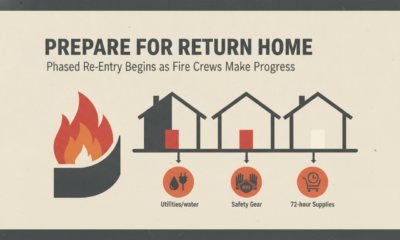
Residents told to prepare for return home as fire crews make progress on Quilpituk Creek blaze
-
WORLD2 days ago
Unused Launchers Expose Ukraine’s Severe Patriot Missile Shortage
-
 OPINIONS2 days ago
Canada’s Conservative Influencers Are Fighting for the Future of the Movement
-

 BC STORIES2 days ago
How Enjoying an Ice Cream Treat Today Helps BC Children’s Hospital
-
 BC STORIES2 days ago
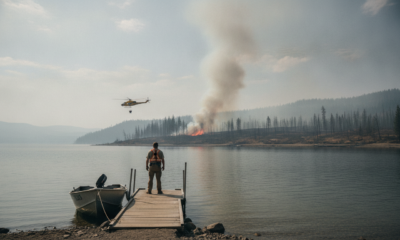
What Residents and Boaters Need to Know as Crews Target Bradley Creek Wildfire Hot Spots
-
NATIONAL STORIES2 days ago
Clock Ticks Toward Midnight Tariffs as Canada-U.S. Trade Talks Reach Critical Stage
-

 BC STORIES2 days ago
BC Lions Extend Winning Streak to Three After Thrilling Fourth-Quarter Comeback Against Stampeders
-
 COMMUNITY2 days ago
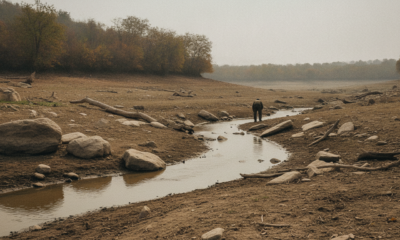
Why Are we Being Urged to Rethink Water Use and Waste as Droughts Worsen