energy
Global Energy Crisis Looms as Trump Orders Naval Blockade of Strait of Hormuz Following Islamabad Talk Collapse
U.S. President Trump orders a naval blockade of the Strait of Hormuz after nuclear talks with Iran collapse in Islamabad, sparking global energy concerns.


Diplomatic Failure in Islamabad Leads to Immediate Escalation
The geopolitical landscape shifted dramatically overnight as U.S. President Donald Trump ordered the U.S. Navy to begin a blockade of the Strait of Hormuz. The directive followed 21 hours of intensive high-level negotiations in Islamabad, Pakistan, which failed to produce a breakthrough regarding Iran’s nuclear program and regional maritime control.
The President announced the move via Truth Social, stating that the U.S. military will interdict any vessel in international waters found to have paid transit tolls to Tehran. “No one who pays an illegal toll will have safe passage,” the President declared, signaling a direct challenge to Iran’s influence over one of the world’s most vital energy corridors.
The Sticking Points: Nuclear Ambitions and Red Lines
U.S. Vice President JD Vance confirmed that the negotiations hit a wall over Iran’s refusal to provide a definitive, verifiable commitment to abandon its nuclear weapons ambitions. Vance described the American proposal as the “final and best offer,” placing the burden of further action squarely on Tehran. “We’ve made very clear what our red lines are and they have chosen not to accept our terms,” Vance stated during a press briefing.
Iranian officials offered a different perspective, suggesting that while some mutual understandings were reached, the introduction of new variables—including the status of the Strait of Hormuz—complicated the final stages of the talks. Mohammad Bagher Qalibaf, leading the Iranian delegation, blamed a lack of confidence-building measures from Washington for the impasse, stating it was now up to the United States to prove its trustworthiness.
Economic Implications and Global Reaction
The Strait of Hormuz is a critical chokepoint through which approximately one-fifth of the world’s oil consumption passes. Analysts warn that a blockade or significant military interdiction effort could send global energy prices soaring and disrupt international supply chains already under pressure. Pakistan, acting as the host and mediator, has urged both nations to maintain a ceasefire and return to the table, though the current atmosphere remains volatile.
As the U.S. Navy begins its operations in the region, the international community is watching closely for Iran’s response. Washington has signaled it remains prepared to escalate further if Tehran does not move toward an affirmative nuclear commitment, leaving the world on the brink of a major maritime confrontation.



energy
Canada Offered to Double Oil Exports to U.S. in Failed Trade Negotiations, Hoekstra Reveals
U.S. Ambassador Pete Hoekstra reveals PM Mark Carney offered to double Canadian oil exports to the U.S. in a failed bid to end Donald Trump’s trade tariffs.

The High-Stakes Oil Gambit at the White House
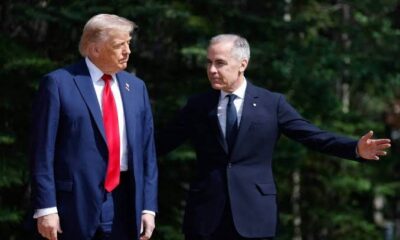
In a dramatic revelation regarding the strained trade relations between North American neighbors, U.S. Ambassador to Canada Pete Hoekstra disclosed that Prime Minister Mark Carney offered to double Canadian oil exports to the United States last year. The proposal was presented as a strategic bargaining chip during an October 7, 2025, meeting at the White House, aimed at persuading President Donald Trump to roll back aggressive tariffs on Canadian steel, aluminum, and automotive products.
Internal Tensions and Negotiating Tactics
Speaking at a conference in Edmonton, Hoekstra detailed how the offer to supply an additional three to four million barrels of oil per day nearly caused a rift within the Trump administration. According to the Ambassador, Interior Secretary Doug Burgum and Energy Secretary Chris Wright were so enthusiastic about the proposal that President Trump had to physically restrain them. Hoekstra noted that the President cautioned his cabinet against “crawling across the table” to seal the deal, suggesting that such eagerness would undermine the United States’ negotiating leverage.
The Collapse of the Trade Deal
Despite the massive scale of the energy offer, which would have significantly deepened the integration of the North American energy market, the negotiations ultimately collapsed. President Trump reportedly walked away from the bargaining table later that month, citing an anti-tariff advertisement campaign launched by the Ontario government as a primary reason for the breakdown. While Canada remains the largest supplier of crude oil to the U.S., accounting for nearly two-thirds of imports, the trade deficit remains a point of contention for the Trump administration.
A Future for Cross-Border Pipelines
Despite the failure of the broader trade deal, Hoekstra expressed optimism regarding infrastructure projects like the proposed cross-border connection between South Bow and Bridger Pipeline LLC. This project, which received a presidential permit in April, could eventually facilitate the transport of 550,000 barrels of oil per day. While formal trade talks resumed this spring, progress remains stagnant, leaving the future of Canada’s industrial exports and energy expansion in a state of political uncertainty.
BC STORIES
National Roundup: Alberta Proposes New B.C. Pipeline Amid Tribal Tensions and Stampede Kickoff
Alberta proposes a new B.C. pipeline as the Calgary Stampede kicks off. Plus, high airfares fail to deter travelers and U.S. tech dominates Canada’s cloud.

Alberta Pushes New Pipeline Project to Pacific Coast
Alberta Premier Danielle Smith has formally submitted a proposal for a new bitumen pipeline to the British Columbia coast, signaling a potential shift in Canada’s energy landscape. The announcement, made alongside Prime Minister Mark Carney in Calgary, outlines a route that closely parallels the existing Trans Mountain path. While Smith emphasized that the project would generate billions in revenue and provide ‘transformational wealth’ for partnering Indigenous communities, the proposal arrives during a period of high friction. Relations between the Alberta government and several First Nations have been strained for over a year due to disputes regarding the duty to consult on constitutional matters and legal battles over provincial sovereignty.
The Calgary Stampede Begins with Olympic Flair
The city of Calgary has officially transitioned into festival mode with the launch of the world-famous Calgary Stampede. Leading this year’s parade are Olympic medalists Mikael Kingsbury and Courtney Sarault, who served as parade marshals for the downtown procession. Despite the early morning start, thousands of residents and tourists lined the streets to celebrate the region’s western heritage. The 10-day event remains a cornerstone of Alberta’s cultural and tourism economy, drawing international attention even as the province navigates complex political and industrial debates.
Economic Resilience: Travel Demand and Tech Dominance
Despite domestic airfares sitting 11 per cent higher than last year, Canadian travelers are showing remarkable resilience. Major carriers like Air Canada report that demand for summer flights remains in the ‘green,’ even as fuel costs fluctuate and international conflicts shift travel patterns. Meanwhile, a new report from the Canadian Anti-Monopoly Project reveals that U.S. tech giants Amazon, Microsoft, and Google currently control 85 per cent of Canada’s cloud infrastructure. This data arrives just as the federal government prepares to launch a national AI strategy focused on ‘sovereign compute infrastructure’ to ensure Canadian data and innovation remain under domestic governance.
Sports: Switzerland Advances at BC Place
On the pitch, Switzerland secured a 2-0 victory over Algeria at BC Place, keeping their World Cup aspirations alive while eliminating the North African side. The win ensures the Swiss team will remain in Vancouver for their third consecutive match next Tuesday. The tournament has drawn significant local support, highlighting the city’s role as a key host in the international soccer landscape.
energy
Stampede Diplomacy: Energy Policy and Separatist Tensions Collide in Calgary
Calgary Stampede becomes a political battleground as energy policy and separatist movements clash, highlighting the growing divide between Alberta and Ottawa.

Political Tensions Rise Amidst the Calgary Stampede
The Calgary Stampede, traditionally celebrated as a showcase of Western heritage and a massive networking hub for the energy sector, has taken on a distinctly political edge this year. As federalists and provincial separatists converge on the city, the event has become a microcosm of the deepening divide between Alberta and the federal government. With pipelines and regional autonomy taking center stage, the festive atmosphere is increasingly punctuated by heated debates over the province’s future within the federation.
The Energy Infrastructure Imperative
For Alberta’s political and business leaders, the Stampede serves as a critical platform to advocate for the energy industry. The conversation is dominated by the need for expanded pipeline capacity and a more favorable regulatory environment. Advocates argue that without significant movement on energy infrastructure, the economic prosperity of both the province and the country remains at risk. This year, the presence of federal representatives has drawn sharp focus to the perceived hurdles imposed by Ottawa, fueling frustration among those who feel the West is being ignored.
Separatism and the Quest for Sovereignty
Adding a new layer of complexity to the usual political posturing is the visible presence of separatist movements. Fringe groups and more organized sovereignty advocates are using the high-profile nature of the Stampede to reach a broader audience. These groups argue that the current federal structure is fundamentally broken and that Alberta should explore independence to protect its economic interests. While federalist leaders are working to bridge the gap through dialogue and policy promises, the vocal separatist sentiment highlights a growing sense of alienation that is becoming harder to ignore in the heart of the Canadian West.

Why the Early Election Gamble Backfired on the NDP

Why Fake Signs Targeted a Small Green Party Campaign on B.C. Election Eve

Why the Conservatives’ Majority Win in Kelowna-Mission Signals Big Changes for Local Healthcare and Economy

Why B.C.’s Latest Election Results Are Sparking Renewed Calls for Voting Reform
Your Current 3 Day Forecast — October 27, 2026
Why First Nations Leaders Are Gathering in Ottawa to Push Back on Fast-Tracked Resource Projects

Opinion: John Rustad Has to Go

B.C. Supreme Court Grants Cowichan Tribes Title to Historic Richmond Lands and Fishing Rights

Vancouver Canucks Gear Up for a Make-or-Break 2025–26 Season

BC Ferries Sparks Outcry Over Contract with Chinese Shipyard

Kamloops Blazers Announce Off-Season Changes Ahead of 2025–26 Season

A Taste of Autumn: Fall Okanagan Wine Festival 2025
-
 BC STORIES5 days ago
BC Conservatives Promise Forestry Overhaul to Revive Jobs as NDP Points to Millions in Existing Investment
-

 SPORTS5 days ago
Why B.C. Lions Starters Are Resting as the Regular Season Concludes Against Winnipeg
-

 OPINIONS5 days ago
How Minor Parties and Strategic Balloting Could Shift the Upcoming B.C. Election
-

 BC STORIES6 days ago
Police Seek Witnesses After Fatal Wrong-Way Collision Near Merritt
-
5 days ago
Your Current 3 Day Forecast — October 22, 2026
-
6 days ago
Your Current 3 Day Forecast — October 21, 2026
-
NATIONAL STORIES6 days ago
Highland Valley Copper Workers Could Strike Saturday as Union Issues Notice
-

 HEALTH6 days ago
Coquihalla Highway Reopens Near Merritt Following Morning Crash That Injured Four