POLITICS
Meloni Fires Back at Trump After ‘Begging’ Claim Sparks Diplomatic Row
Italian PM Giorgia Meloni slams Donald Trump after he claimed she ‘begged’ for a photo, causing a diplomatic rift and the cancellation of a key US visit.

A Public Rift Erupts at the G7
Diplomatic relations between Washington and Rome have hit a new low following a highly public exchange between Italian Prime Minister Giorgia Meloni and U.S. President Donald Trump. The controversy ignited after Trump claimed in a televised interview that Meloni had "begged" him for a photograph during the recent G7 summit in vian-les-Bains, France. The assertion has triggered a sharp rebuke from the Italian leader and led to the immediate cancellation of a high-level diplomatic visit to the United States by Italy’s Foreign Minister, Antonio Tajani.
Meloni Responds: ‘Italy Never Begs’
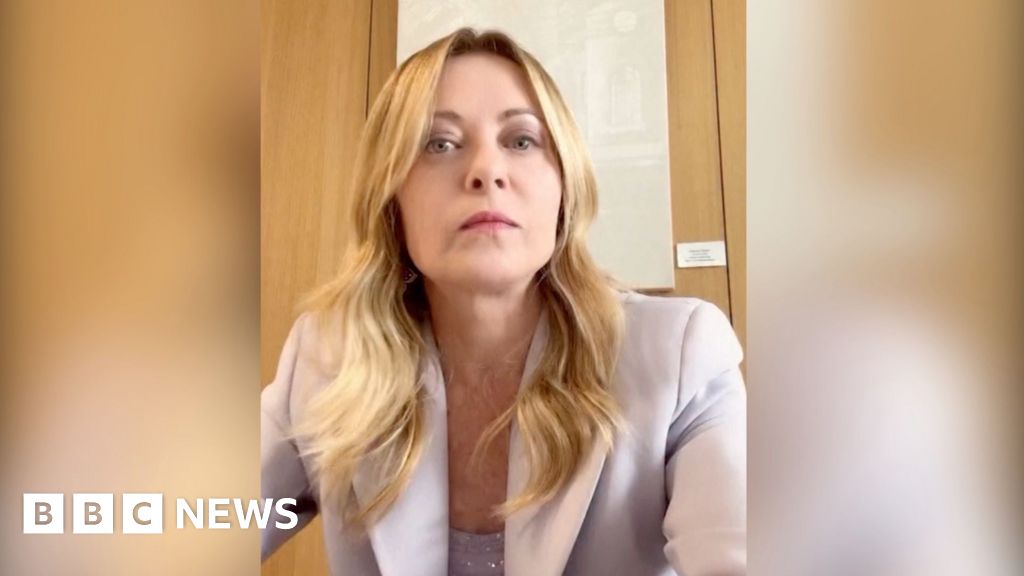
Reacting with visible disbelief via a video address to her seven million Instagram followers, Prime Minister Meloni expressed her shock at the President’s characterization of their interaction. "I can only say it is regrettable he does not show the same determination towards the enemies of the West," Meloni stated, pointedly referencing Trump’s more accommodating stance toward adversarial leaders. She concluded her response with a firm defense of national pride: "There is one thing he needs to remember: neither I nor Italy ever beg."
From Allies to Adversaries
The fallout marks a significant deterioration in a relationship that was once seen as a strategic bridge between the European Union and the Trump administration. Meloni, who attended Trump’s 2025 inauguration, has increasingly clashed with the White House over the U.S. military intervention in Iran. The tension surfaced earlier this year when Trump told the Italian press he was "wrong" about Meloni’s courage, signaling a shift from their initial political alignment.
United Front in Rome
In a rare display of domestic unity, political figures across the Italian spectrum have rallied behind the Prime Minister. President Sergio Mattarella reportedly phoned Meloni to offer personal support, while opposition leaders from the Democratic Party and the Five Star Movement condemned Trump’s "arrogant tone" and "humiliating" rhetoric. Supporters of Meloni’s Brothers of Italy party suggest that Trump’s outbursts are a reaction to Italy’s willingness to say "no" to Washington on key foreign policy issues, rather than a reflection of the actual events at the G7.


BC STORIES
Why a Familiar Political Name is Joining the Kamloops-North Thompson Race
John Kidder, husband of federal Green leader Elizabeth May, seeks the BC Green nomination in Kamloops-North Thompson for the upcoming election.

New Contender in Kamloops-North Thompson
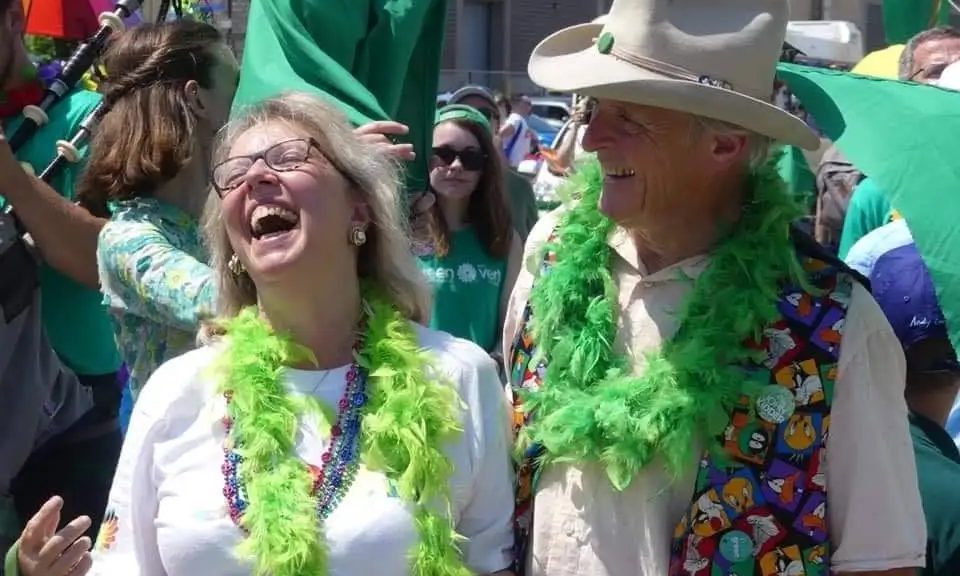
Voters in Kamloops-North Thompson will see a seasoned campaigner on the ballot as John Kidder seeks to represent the BC Green Party in the upcoming provincial election. The party recently circulated Kidder’s nomination form to members via email to collect the required signatures for Elections BC confirmation.
Kidder, who resides in Ashcroft, brings a long history of political involvement to the race. Though he has never held public office, he has previously campaigned in several provincial and federal elections under the Green banner, and also ran as a federal Liberal candidate in 2011. He is married to Elizabeth May, the leader of the federal Green Party.
The Provincial Race Takes Shape
Once his candidacy is formally confirmed by election authorities, Kidder will enter a competitive field. He is set to challenge BC Conservative incumbent Ward Stamer in the riding.
The ballot will also feature Kory Clark, a 24-year-old health-care worker running for the BC NDP, according to reports.
BC STORIES
Why OneBC’s Interim Leader Is Proposing an Election Pact With Conservatives
OneBC interim leader Dallas Brodie offers an election deal to B.C. Conservatives despite rival candidate Carson Binda running in Vancouver-Quilchena.
Interim Leader Proposes Cooperation Amid Overlapping Candidates
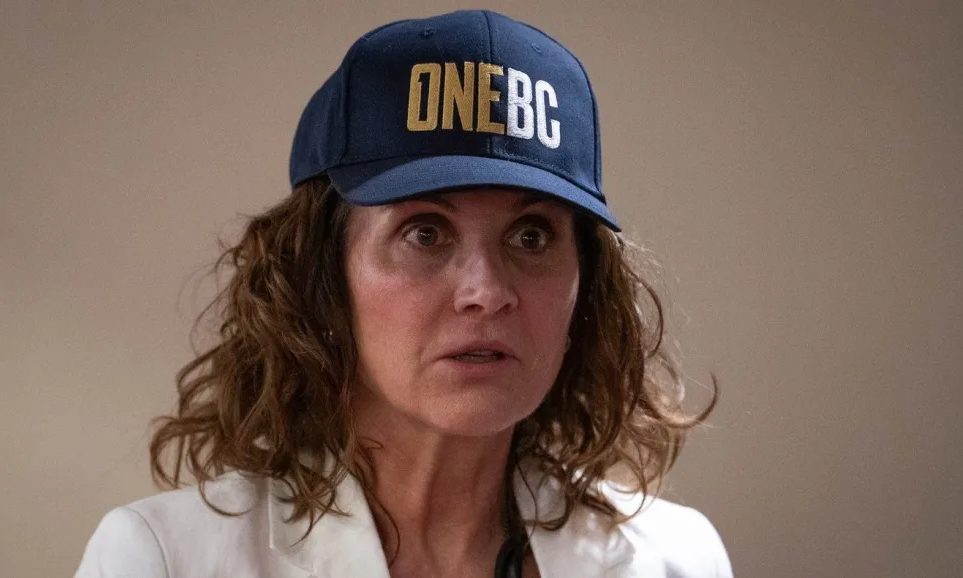
OneBC interim leader Dallas Brodie has expressed readiness to negotiate an election arrangement with the B.C. Conservatives, despite her former party putting forward a rival candidate in her Vancouver-Quilchena riding. Former Canadian Taxpayers Federation provincial director Carson Binda was announced on Sept. 29 as the Conservative candidate facing Brodie, who currently serves as the riding’s incumbent legislator.
Brodie questioned the Conservatives’ decision to compete against her, noting that OneBC had previously signaled goodwill by deciding not to field candidates in select ridings containing “true” Conservatives. Although earlier discussions occurred with B.C. Conservative interim leader Lorne Doerkson, OneBC has since revealed plans for candidates in two of those contested districts. Among them is Kelowna-Centre, a seat won by NDP margin of just 40 votes last election by Kristina Loewen. Brodie argued that her party represents the authentic conservative choice there and suggested Conservatives risk losing the seat to the NDP.
Tensions and History Between Conservative Factions
Offering to pull OneBC’s unannounced Kelowna-Centre candidate if the Conservatives enter discussions, Brodie criticized the opposing party’s reluctance to negotiate. She stated that her party has taken concrete steps toward making deals while accused the Conservatives of ignoring her party. Brodie remarked that the Conservatives “created me” in many ways, referencing her expulsion from the party caucus last year by then-leader John Rustad after she mocked residential school survivor testimony.
Addressing the prospect of electoral collaboration, Doerkson acknowledged that dialogue had occurred between the parties, though no formal agreement was reached. He affirmed that the party intends to bring conservative values to British Columbians following the election. OneBC originally formed as a breakaway Conservative faction in 2025, though it lacked official recognized party status in the legislature when the election campaign commenced.
NATIONAL STORIES
Why NDP Leader Avi Lewis Says the West Coast Pipeline Plan Risks Public Funds
NDP Leader Avi Lewis opposes Prime Minister Carney’s decision to name a West Coast oil pipeline a project of national interest under the Building Canada Act.
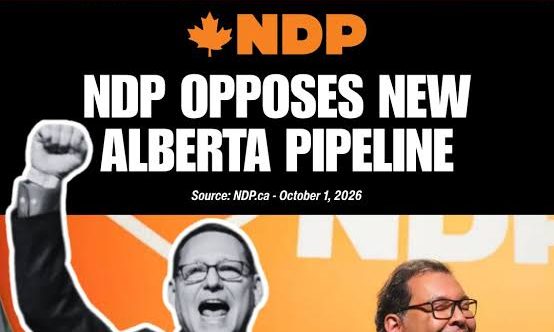
NDP Leader Responds to Federal Pipeline Announcement
NDP Leader Avi Lewis has challenged Prime Minister Carney following the federal decision to label a West Coast oil pipeline as a project of national interest under the Building Canada Act.
This move marks the inaugural assignment of the designation since the Major Projects Office was launched a year ago.
Criticism Over Public Risk and Industry Profits
Lewis argued that backing the development with public funds undercuts essential safeguards while forcing taxpayers to take on financial exposure.
“The Liberal government is rushing through an oil pipeline to the West Coast as a project of ‘national interest’, the first project to receive this designation since the Major Projects Office opened its doors a year ago,” Lewis stated.
He expressed concern that pushing the initiative forward amid climate breakdown—while setting aside environmental protections, meaningful Indigenous consultation, and workers’ right to strike—fails to meet the national interest.
“It is an offence to Canadian science, public health, collective safety, and common sense. And it is a gift to an oil industry already on track to make $100 billion in wartime profits this year alone,” Lewis said, warning that “This project leaves Canadians bearing all the risks of a bad investment without any of the rewards.”
Legal and Environmental Concerns Highlighted
Lewis emphasized that the oil sector has shown reluctance to finance the venture directly, while Indigenous nations have voiced opposition and environmental risks remain high, including threats to endangered Southern Resident orcas.
“This is a pipeline to the courts, and it’s not worth the risk,” Lewis said.
He added that projects serving the nation should lower everyday costs, produce good jobs, and safeguard communities, pointing to renewable energy, modern public transit, and non-market housing builds as better alternatives.
Your Current 3 Day Forecast — October 6, 2026

BC Lions Hold Off Toronto Argonauts Behind Sean Whyte’s Record Eight Field Goals

Search Continues After Ontario-Based Medical Flight Vanishes Near Massachusetts Coast
Your Current 3 Day Forecast — October 5, 2026
Your Current 3 Day Forecast — October 4, 2026

Summerland Transitions Remaining Properties to Prohibit-Entry Orders as Wildfire Evacuations End

Opinion: John Rustad Has to Go

B.C. Supreme Court Grants Cowichan Tribes Title to Historic Richmond Lands and Fishing Rights

Vancouver Canucks Gear Up for a Make-or-Break 2025–26 Season

Kamloops Blazers Announce Off-Season Changes Ahead of 2025–26 Season

BC Ferries Sparks Outcry Over Contract with Chinese Shipyard

A Taste of Autumn: Fall Okanagan Wine Festival 2025
-
 OPINIONS6 days ago
B.C.’s 93-Riding Scramble: Can the Parties Even Find Enough Candidates?
-
 BC STORIES4 days ago
Why OneBC’s Interim Leader Is Proposing an Election Pact With Conservatives
-
 BC STORIES6 days ago
BC Greens Pledge Free Childcare by 2031 and Introduce Victoria-Swan Lake Candidate
-
 NATIONAL STORIES6 days ago
Will they use Chinese Steel over Canadian like Phase One?
-
SPORTS4 days ago
Maple Leafs vs Islanders Result: Easton Cowan Scores in 2-1 Win
-
 NATIONAL STORIES4 days ago
Why NDP Leader Avi Lewis Says the West Coast Pipeline Plan Risks Public Funds
-
SPORTS5 days ago
Why the Edmonton Oilers Will Be Without Ryan Nugent-Hopkins Against Vancouver
-
NATIONAL STORIES5 days ago
Why a Canadian Nationalist Group’s Hidden Recruitment Practices Are Drawing Scrutiny