NATO Secretary General Mark Rutte Affirms Unwavering US Commitment Amidst Strategic Autonomy Debate
NATO Secretary General Mark Rutte reaffirms the United States’ commitment to the alliance, countering calls for European military autonomy and emphasizing unity.


The Transatlantic Bond Remains Indissoluble
In a significant diplomatic maneuver aimed at stabilizing the internal tremors within the North Atlantic Treaty Organization (NATO), Secretary General Mark Rutte has issued a staunch defense of the United States’ continued involvement in European security. Speaking on Saturday, Rutte addressed the growing apprehension across European capitals regarding the future of the transatlantic alliance, particularly in light of shifting political winds in Washington. His message was unequivocal: the United States remains firmly devoted to the alliance, not merely out of historical sentiment, but as a matter of strategic necessity and mutual benefit. Rutte, who recently transitioned from his long-standing role as the Prime Minister of the Netherlands to the helm of the world’s most powerful military alliance, emphasized that the bond between North America and Europe is the bedrock of global stability. This sentiment pointedly counters recent calls from some European quarters to seek military autonomy separate from American leadership, a concept that Rutte views as both impractical and potentially dangerous for the cohesion of the West.
Countering the Narrative of European Strategic Autonomy
The concept of ‘strategic autonomy’ has gained considerable traction in recent years, spearheaded primarily by French President Emmanuel Macron and supported by various institutional voices in Brussels. These advocates argue that Europe must develop the independent military capacity to protect its interests and project power, fearing that a potential shift in American foreign policy, characterized by isolationism or a pivot toward the Indo-Pacific, could leave the continent vulnerable. However, Secretary General Rutte offered a firm rebuttal to this line of thinking during his Saturday address. While he acknowledged the absolute necessity for European nations to increase their defense spending and modernize their armed forces, he cautioned against any move that would create a functional or psychological disconnect from the United States. According to Rutte, the security of Europe is inextricably linked to the American nuclear umbrella and the vast intelligence, satellite, and logistical capabilities that only the U.S. military can provide at scale. He argued that pursuing autonomy in a way that excludes or diminishes the U.S. role would be a strategic error, potentially fracturing the unity that has deterred major conflict on the continent for over seven decades. For Rutte, the goal should not be autonomy from the U.S., but a more robust European pillar within the NATO framework.
The Burden-Sharing Debate and Domestic Politics
A central theme of Rutte’s address was the perennial issue of burden-sharing, a topic that has often caused friction between Washington and its European allies. For years, American leaders across the political spectrum have called for European allies to meet the agreed-upon target of spending 2% of their GDP on defense. Rutte addressed this directly, noting that while significant progress has been made, with a record number of allies now meeting or exceeding the target, there is still substantial work to be done. He framed the U.S. demand for greater European investment not as a sign of withdrawal or lack of commitment, but as a legitimate call for a more balanced and sustainable partnership. By taking on a greater share of the financial and operational burden, Rutte suggested that European nations actually solidify the American commitment by proving that the alliance is a shared enterprise rather than a one-sided security guarantee. Rutte’s rhetoric appears carefully calibrated to resonate with the American public and policymakers, emphasizing that a stronger, more invested Europe makes for a stronger NATO, which in turn serves American national interests by maintaining a stable international order that benefits global trade and democratic values.
Geopolitical Realities: Ukraine and the Global Stage
The ongoing war in Ukraine served as the somber backdrop to Rutte’s remarks, providing a real-world validation of his thesis. The conflict has acted as a catalyst for NATO’s revitalization, forcing member states to confront the reality of high-intensity industrial warfare in the 21st century. Rutte highlighted that the U.S. leadership in coordinating aid, providing advanced weaponry, and sharing critical intelligence with Kyiv has been the linchpin of the Ukrainian defense. Without the American logistical engine and its sophisticated hardware, the defense of Ukraine would have faced nearly insurmountable odds. This reality, he suggested, proves that European security cannot be managed in a vacuum or through fragmented local initiatives. Furthermore, Rutte touched upon the broader geopolitical landscape, including the rising challenges posed by an increasingly assertive China and the complexities of the Indo-Pacific. He argued that NATO remains the primary forum where the U.S. and its allies can coordinate responses to global threats, whether they originate from traditional state actors or unconventional challenges like cyberwarfare, disinformation, and the weaponization of energy. The Secretary General’s vision is one of an integrated, globalized NATO where the U.S. remains the ‘first among equals,’ providing the necessary gravity to keep the diverse interests of the 32 member states aligned toward a common purpose.
A Call for Unity in Uncertain Times
As the international community looks toward the upcoming NATO summits and the challenges of the next decade, Rutte’s Saturday address serves as a foundational text for his tenure. He is positioning himself as a pragmatist and a bridge-builder, someone capable of navigating the complex domestic politics of member states while maintaining a laser focus on the alliance’s core mission of collective defense under Article 5. By reaffirming the U.S. dedication to NATO, Rutte is attempting to lower the temperature of the ‘strategic autonomy’ debate and refocus energy on practical integration, military readiness, and the expansion of the defense industrial base across the alliance. His conclusion was a call for steadfastness; he urged allies to look past the transient headlines of political campaigns and recognize the enduring, non-partisan value of the transatlantic pact. In an era defined by rapid technological change and escalating geopolitical tensions, Rutte’s NATO is one that seeks strength through cohesion, firmly anchored by the military might and political will of the United States, complemented by a revitalized and increasingly capable Europe. The path forward, according to the Secretary General, is not one of separation or isolation, but of a more profound and equitable partnership that can withstand the tests of the coming decades.

SPORTS
Hurricanes End 20-Year Wait: Carolina Routs Montreal to Secure Stanley Cup Final Berth
The Carolina Hurricanes are headed to the Stanley Cup Final for the first time in two decades after a dominant 6-1 victory over the Montreal Canadiens.

A Dominant Performance in Raleigh
For the first time since 2002, the Carolina Hurricanes are returning to the Stanley Cup Final. In a performance that combined relentless offensive pressure with stifling defensive structure, the Hurricanes dismantled the Montreal Canadiens 6-1 in a decisive Eastern Conference Final clincher. The victory marks the end of two decades of postseason heartbreak for the franchise and its dedicated fanbase, signaling a new era of dominance in the Atlantic region.
Ending the Two-Decade Drought
From the opening faceoff, Carolina looked like a team determined to write their own history. The Hurricanes jumped to an early lead, capitalizing on power-play opportunities and exploiting gaps in Montreal’s defensive zone. By the end of the second period, the lead had swelled beyond recovery, leaving the Canadiens with no answers for Carolina’s depth and speed. The 6-1 final score reflected a total team effort that saw contributions from both seasoned veterans and rising stars who have matured throughout this playoff run.
The path to this moment has been long and arduous for the Hurricanes. Since their last appearance in the championship series twenty years ago, the organization has navigated rebuilding phases, coaching changes, and several near-misses in the playoffs. Reaching the final represents more than just a series win; it validates the strategic direction the front office has taken over the last several seasons. The “Caniacs” in Raleigh celebrated late into the night as the team finally hoisted the Prince of Wales Trophy.
Preparing for the Vegas Challenge
Looking ahead, the Hurricanes face a formidable opponent in the Vegas Golden Knights. The Western Conference champions have proven themselves as a resilient and high-scoring unit, setting the stage for what experts predict will be a physically demanding and high-octane series. With both teams possessing deep rosters and elite goaltending, the battle for the Stanley Cup promises to be a historic clash of styles that hockey fans have waited years to witness. Carolina enters the series with momentum, but the Golden Knights offer a veteran presence that will test the Hurricanes’ resolve on the sport’s biggest stage.
Health
Beyond the Caffeine Buzz: How Coffee Harmonizes Your Gut and Brain Health
New research from University College Cork reveals how coffee improves gut bacteria, reduces inflammation, and boosts brain health via the gut-brain axis.
The Powerful Connection Between Your Cup and Your Core
For millions, the morning coffee ritual is a non-negotiable start to the day. However, new research is revealing that the benefits of this global staple extend far beyond a simple energy boost. Recent studies conducted at University College Cork, Ireland, suggest that moderate coffee consumption—specifically three to five cups per day—acts as a catalyst for the ‘microbiota-gut-brain axis,’ a complex communication network linking our digestive system to our mental state.
Cultivating a Healthier Microbiome
The study found that regular coffee drinkers harbor higher levels of beneficial bacteria within their gastrointestinal tracts. These ‘good’ microbes play a critical role in aiding digestion and potentially eliminating harmful stomach infections. Interestingly, these positive shifts in gut health were observed regardless of whether the coffee was caffeinated or decaffeinated. This suggests that the bioactive compounds in the coffee bean itself, such as polyphenols, are the primary drivers of gut health rather than the caffeine content.
Mental Health and the Cognitive Edge
The impact of coffee on the brain is equally multifaceted. Researchers noted distinct benefits depending on the type of brew: caffeinated coffee was linked to reduced anxiety, improved attention, and better stress coping, while decaffeinated coffee showed a stronger correlation with enhanced sleep quality and memory. Both varieties, however, were found to lower levels of depression and systemic inflammation. The presence of the anti-inflammatory cytokine IL-10 in coffee drinkers suggests that the beverage may help neutralize free radicals, potentially lowering the long-term risk of cellular damage and certain cancers.
A Complex Beverage for a Complex System
While coffee can cause a temporary spike in blood pressure, the study reinforces that it does not increase the risk of long-term hypertension in healthy individuals. The most intriguing takeaway is that coffee improves mood independently of cortisol levels, meaning its stress-reducing effects work through unique biological pathways. By supporting the gut microbiome and reducing inflammation, coffee serves as a holistic tool for metabolic and psychological wellness, proving that your daily habit is doing much more than just keeping you awake.
WORLD
Tensions Surge as US Strikes Iranian Targets Amid High-Stakes Nuclear Negotiations
US military strikes Iranian drones in the Strait of Hormuz as President Trump balances military pressure with nuclear negotiations ahead of the midterms.
Escalation in the Strait of Hormuz
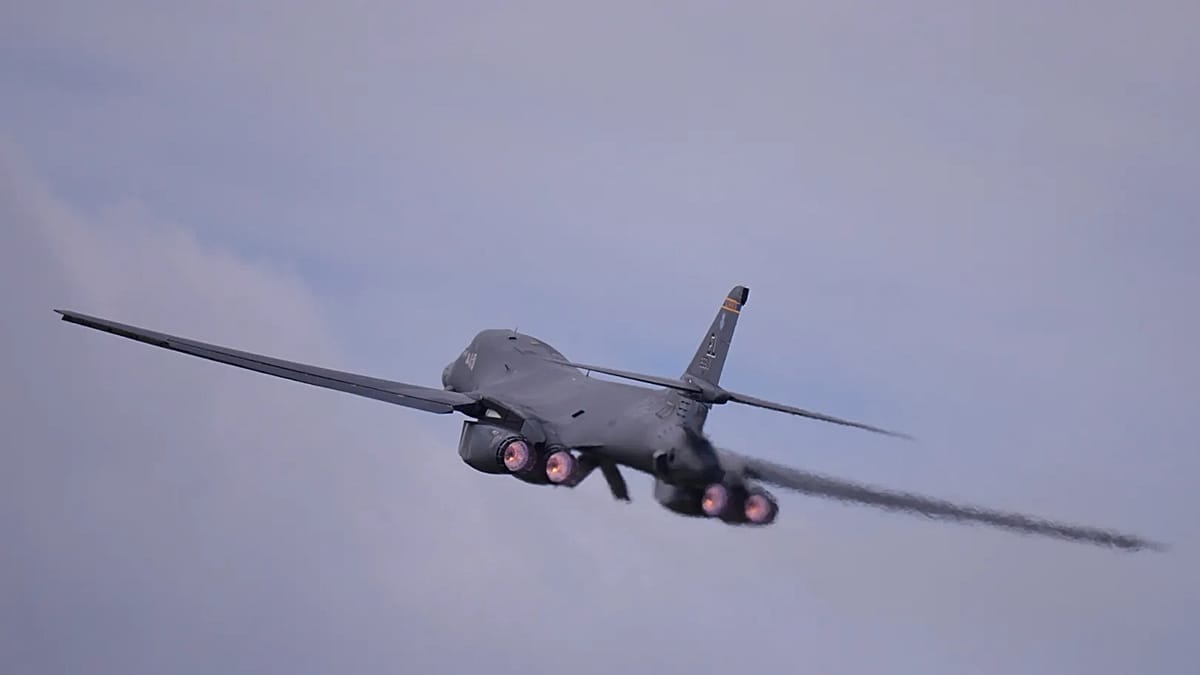
The United States military conducted a series of strategic “defensive strikes” against Iranian targets late Wednesday, marking the second such operation within a three-day window. According to US Central Command (Centcom), the mission successfully neutralized four Iranian one-way attack drones identified as immediate threats near the Strait of Hormuz. Additionally, US forces targeted and destroyed a ground control station in Bandar Abbas that was reportedly preparing to launch a fifth drone.
Trump Signals Pressure as Diplomacy Falters
The military action comes at a precarious moment for the White House. President Donald Trump, speaking during a Cabinet meeting on Wednesday, asserted that Tehran is currently “negotiating on fumes.” While expressing a cautious optimism that a settlement could be reached to end the three-month-old conflict, Trump warned that the United States is prepared to “finish the job” should diplomatic efforts collapse. The President’s rhetoric highlights a dual-track strategy of military deterrence and diplomatic engagement as the administration seeks to reopen the vital shipping lanes of the Strait of Hormuz.
The Nuclear Stumbling Block
At the heart of the ongoing negotiations is Iran’s significant stockpile of highly enriched uranium. International Atomic Energy Agency (IAEA) reports indicate that Tehran possesses over 440 kilograms of uranium enriched to 60% purity—dangerously close to the 90% threshold required for weapons-grade material. While the proposed deal suggests Iran relinquish this stockpile in exchange for sanctions relief, a major point of contention remains where the material would be sent. President Trump explicitly stated he would not be comfortable with Russia or China taking possession of the uranium, despite their status as the most viable third-party candidates.
Political Stakes and Global Impact
As the November midterm elections approach, the Trump administration faces mounting pressure to deliver a foreign policy victory that could stabilize global fuel prices and domestic economic concerns. Analysts suggest the President is eager to declare a reduction in Iran’s nuclear capabilities to justify ending a politically divisive war. However, critics within his own party fear that a rushed settlement might leave Iranian leadership battered but ultimately emboldened. With Tehran demanding a cessation of Israeli operations against Hezbollah as part of the package, the path to a durable peace remains fraught with geopolitical complexities.
Hurricanes End 20-Year Wait: Carolina Routs Montreal to Secure Stanley Cup Final Berth
Beyond the Caffeine Buzz: How Coffee Harmonizes Your Gut and Brain Health
Tensions Surge as US Strikes Iranian Targets Amid High-Stakes Nuclear Negotiations
Deadly Bundibugyo Outbreak in Congo Outpacing Global Response as Deaths Surge
CFL Scores Historic $500 Million Media Rights Deal with Bell Media, DAZN, and YouTube
UBC Dementia Research Receives $500,000 Boost for Revolutionary Blood-Based Testing

Opinion: John Rustad Has to Go

B.C. Supreme Court Grants Cowichan Tribes Title to Historic Richmond Lands and Fishing Rights

Vancouver Canucks Gear Up for a Make-or-Break 2025–26 Season

Kamloops Blazers Announce Off-Season Changes Ahead of 2025–26 Season

BC Ferries Sparks Outcry Over Contract with Chinese Shipyard

A Taste of Autumn: Fall Okanagan Wine Festival 2025
-
Alberta News7 days ago
Elections Alberta Alleges Key Organizer Refuses Cooperation in Massive Voter Data Misuse Probe
-
Finance5 days ago
Oil Prices Pivot as U.S. Strikes in Iran Dampen Hopes for Diplomatic Breakthrough
-
Canadian News5 days ago
New National Study Reveals Hormonal Shifts Are Reshaping Identity for Majority of Canadian Women
-
National News6 days ago
Confusion and Skepticism Mount Over Alberta’s Separation Referendum
-
Global Economy7 days ago
Strategic Patience: Trump Advises Negotiators Against Rushed Iran Agreement
-
Religion6 days ago
The Vatican’s Digital Crusade: Pope Leo XIV Issues Landmark AI Encyclical Warning Against ‘Opaque Algorithms’
-
Entertainment7 days ago
Gold Rush in Vegas: Golden Knights Unveil Massive Activations for Western Conference Final Games 3 and 4
-
Hockey7 days ago
Hurricanes Even Eastern Conference Final in Overtime Grinder Against Canadiens