WORLD
The Sovereign’s Shadow: Navigating the Winds of Change in the British Monarchy 2025
An in-depth analysis of the British monarchy’s challenges and shifts throughout 2025, exploring the transition of power, financial transparency, and public perception.


A Year of Unprecedented Trial
As the calendar turned to 2025, the House of Windsor found itself at a crossroads that few constitutional scholars could have predicted during the late Queen Elizabeth II’s long and stable reign. The transition from the Elizabethan era to the Caroline age has been marked by a series of systemic shocks that have tested the very foundations of the British monarchy. While the institution remains constitutionally secure, the social and political fabric surrounding it has begun to fray under the pressures of modern transparency and shifting global loyalties. King Charles III, entering his third year on the throne, has faced a dual challenge: maintaining the dignity of an ancient office while acknowledging the urgent need for structural evolution. The year has been defined by a public that is increasingly vocal about its expectations, demanding a monarchy that is not only ceremonial but also accountable and relevant to the economic realities of a post-pandemic, high-inflation world.
The Weight of the Crown
Health concerns have dominated the royal narrative throughout the first half of 2025. Following the medical disclosures of previous years, the palace has adopted a policy of controlled transparency, a delicate balancing act intended to quell public anxiety without compromising the sovereign’s privacy. This strategy has seen Prince William, the Prince of Wales, taking on an increasingly significant share of public duties. The shifting workload has not only accelerated the transition period but has also placed the future of the monarchy firmly in the hands of the younger generation. Observers note that the King’s focus on environmental stewardship and social cohesion remains steadfast, yet the logistical realities of his reign have forced a prioritization of duty over public visibility. The internal dynamics of the family have also been tested, as the ‘slimmed-down’ monarchy model means that fewer individuals are carrying a greater burden of the thousands of annual engagements traditionally expected of the royals.
The Prince of Wales and Modernization
Prince William’s emergence as the primary face of the monarchy in 2025 has brought with it a distinct shift in tone. His approach is characterized by a more informal, direct engagement with the public, focusing on tangible social issues such as homelessness and mental health. This ‘Williamite’ approach seeks to move the monarchy away from mere pageantry and toward a model of active social impact. However, this modernization has not been without its critics. Traditionalists argue that by stripping away the mystique of the crown, the institution risks becoming just another high-profile NGO, losing the symbolic power that differentiates it from political leadership. The balance between being relatable and remaining exceptional is the central struggle of William’s current tenure. Furthermore, the role of Catherine, Princess of Wales, has been pivotal; her focus on early childhood development has provided a soft-power anchor for the family’s public image, even as the institution navigates more turbulent political waters.
The Financial Lens and Public Scrutiny
Perhaps the most significant hurdle in 2025 has been the escalating demand for financial transparency. Amidst a fluctuating UK economy, the cost of the monarchy has come under intense scrutiny from both parliamentary committees and the public. The debate over the Sovereign Grant and the private revenues of the Duchies of Lancaster and Cornwall has reached a fever pitch. In response, the Palace has signaled a willingness to review certain financial structures, including a more comprehensive disclosure of the royal family’s private wealth. This move toward ‘financial perestroika’ is seen as a necessary survival mechanism in an era where public funding is under constant review. The narrative of a ‘slimmed-down’ monarchy is no longer just a logistical preference but an economic imperative. Questions regarding the maintenance of vast estates and the inheritance tax exemptions enjoyed by the crown have become central themes in the national conversation about fairness and institutional privilege.
The Commonwealth and Global Standing
Internationally, the year 2025 has seen a continued re-evaluation of the monarchy’s role within the Commonwealth. Several nations have intensified discussions regarding their transition to republics, viewing the coronation and subsequent years as a natural point of departure from the colonial past. King Charles III has addressed these movements with a stance of diplomatic neutrality, stating that the future of each nation lies within the hands of its people. Nevertheless, the loss of these constitutional ties represents a narrowing of the British monarchy’s global reach. To counter this, the royal family has intensified its ‘soft power’ diplomacy, focusing on international cooperation on climate change and humanitarian aid, attempting to redefine their relevance on the world stage beyond the borders of the Commonwealth realms. These state visits are now less about imperial legacy and more about strategic partnership and cultural exchange.
The Public Perception Gap
Polling data in 2025 reveals a generational divide that poses the greatest long-term threat to the institution. While older demographics remain steadfastly loyal to the crown, younger citizens express a mix of indifference and skepticism. The challenge for the Windsors is to demonstrate that a hereditary monarchy can coexist with the democratic values of the 21st century. The digital strategy of the palace has become more aggressive, utilizing social media platforms to narrate their work in real-time, yet the core question of relevance remains. Can an institution based on birthright truly represent a diverse and meritocratic society? This is the question that haunts the hallowed halls of Buckingham Palace as the year progresses. The ‘Spare’ narrative and the ongoing distance from the Duke and Duchess of Sussex also continue to provide a complicating counter-narrative that the palace has struggled to fully neutralize.
Conclusion: A Resilient Institution
Despite these myriad challenges, the British monarchy in 2025 continues to exhibit a remarkable capacity for adaptation. It has survived centuries of political upheaval, and its current state is less a decline and more a profound transformation. As King Charles III continues to navigate his reign and Prince William prepares for his inevitable succession, the House of Windsor is proving that it can bend without breaking. The turmoil of 2025 has not signaled the end of the monarchy, but rather the beginning of its most significant evolution since the early 20th century. Whether this evolution will be enough to secure its place for the next hundred years remains to be seen, but for now, the crown remains a central, if contested, pillar of British identity. The survival of the monarchy will ultimately depend on its ability to prove that it can serve as a unifying symbol in a world that feels increasingly divided.

Religion
The Vatican’s Digital Crusade: Pope Leo XIV Issues Landmark AI Encyclical Warning Against ‘Opaque Algorithms’
Pope Leo XIV releases ‘Magnifica Humanitas,’ a landmark AI encyclical warning against opaque algorithms and calling for global regulation to prevent dehumanization.

A Moral Compass for the Digital Age
In a historic move that underscores the Vatican’s growing concern over the rapid advancement of technology, Pope Leo XIV has released a groundbreaking encyclical titled “Magnifica Humanitas” (Magnificent Humanity). Addressing a packed audience at the Vatican, the pontiff issued a stark warning against the rise of “opaque algorithms” and the concentration of artificial intelligence power within a handful of private corporations. He cautioned that without ethical oversight, these technologies could usher in “new forms of dehumanization,” prioritizing profit over the inherent dignity of the person.
Beyond the Idolatry of Profit
The encyclical arrives at a volatile moment in global history, specifically referencing the recent deployment of AI systems during the conflict between the United States, Israel, and Iran. Pope Leo XIV argued that the technological revolution must not be driven by the “idolatry of profit” or military dominance. In a departure from tradition, the Pope personally presented the document alongside Christopher Olah, founder of the AI firm Anthropic. This collaboration highlights a burgeoning dialogue between the Holy See and Silicon Valley, as religious leaders seek to influence the ethical framework of emerging technologies.
The Tower of Babel vs. Human Grandeur
Invoking the biblical narrative of the Tower of Babel, the Pope described humanity as standing at a pivotal crossroads. He warned that the pursuit of AI without moral grounding mirrors the hubris of those who sought to reach the heavens, potentially leading to social fragmentation. However, “Magnifica Humanitas” maintains that technology is not inherently evil. Instead, it reflects the characteristics and intentions of its creators. The Holy See emphasizes that because technology is never neutral, active political involvement is required to slow the pace of development and ensure it serves the common good.
A Call for Global Regulation
The document concludes with a robust demand for legal frameworks and independent oversight. Pope Leo XIV urged governments not to abdicate their responsibilities to private interests, particularly in light of recent tensions between tech leaders like Anthropic’s Dario Amodei and defense departments over the use of AI in warfare. By positioning the encyclical as a benchmark for both policymakers and ordinary citizens, the Vatican aims to secure a future where AI facilitates a society where God and humanity dwell together, rather than a tool for exploitation.
Global Health
WHO Issues Urgent Warning as Ebola Outbreak Outpaces Global Containment Efforts
WHO chief Tedros Adhanom Ghebreyesus warns the Ebola outbreak in DRC and Uganda is outperforming response efforts with 220 suspected deaths reported.

A Growing Crisis in Central Africa
The World Health Organization (WHO) has issued a sobering assessment of the ongoing Ebola outbreak in the Democratic Republic of Congo (DRC) and Uganda, warning that the virus is spreading faster than international response teams can contain it. Speaking at a high-level meeting of the African Union on Monday, WHO Director-General Tedros Adhanom Ghebreyesus revealed that the death toll has reached approximately 220 suspected cases. He noted that a critical delay in initial detection has left health workers “playing catch-up” in a race against a highly lethal pathogen.
The Challenge of the Bundibugyo Strain
Compounding the severity of the situation is the specific nature of the virus involved. This outbreak features the rare Bundibugyo strain, which presents a unique set of hurdles for medical professionals. Unlike the more common Zaire strain, there are currently no approved vaccines or specific therapeutics for Bundibugyo, leaving responders to rely primarily on supportive care and strict isolation protocols. The lack of a preventative vaccine significantly increases the risk to frontline workers and local communities alike.
Regional Security and Cross-Border Threats
The geographic epicenter of the crisis—specifically the Ituri and North Kivu provinces of the DRC—is plagued by persistent insecurity and conflict. These conditions hamper the mobility of medical teams and the distribution of essential supplies. Furthermore, the risk of regional transmission is escalating; Uganda recently reported two new cases, bringing its confirmed total to seven. Dr. Tedros emphasized that all countries bordering the DRC must take immediate action to bolster their surveillance and preparedness measures, as the WHO has officially designated the situation a public health emergency of international concern.
High-Level Intervention
In a bid to intensify the international response, Dr. Tedros and Chikwe Ihekweazu, the WHO’s head of health emergencies, are scheduled to arrive in the DRC on Tuesday. Their mission aims to coordinate localized efforts and address the systemic gaps that have allowed the outbreak to gain momentum. As the crisis deepens, the global health community remains on high alert, acknowledging that the situation is likely to deteriorate further before any significant stabilization occurs.
Global Economy
Strategic Patience: Trump Advises Negotiators Against Rushed Iran Agreement
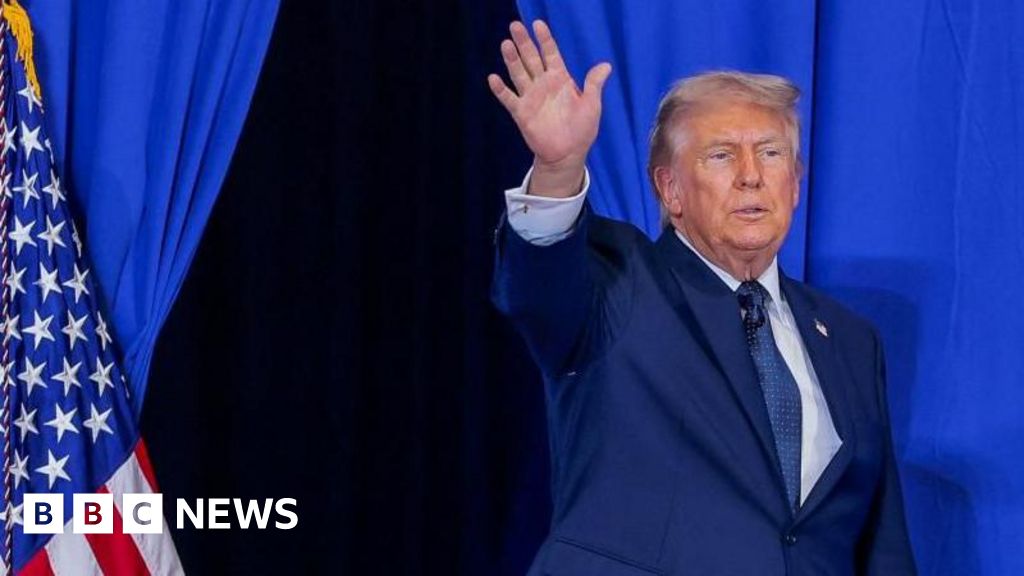
President Trump urges U.S. negotiators to avoid a rushed Iran deal as talks focus on a 60-day ceasefire and reopening the vital Strait of Hormuz shipping lane.
A Shift Toward Deliberate Diplomacy
President Donald Trump has reportedly instructed U.S. negotiators to exercise strategic patience and avoid rushing into a formal agreement with Iran. This directive comes at a critical juncture in diplomatic discussions aimed at de-escalating tensions in the Middle East. While the prospect of a breakthrough remains on the horizon, the administration appears focused on securing a deal that addresses long-term structural concerns rather than settling for a short-term reprieve or a politically convenient headline.
The 60-Day Ceasefire Framework
The core of the current negotiations centers on a proposed 60-day ceasefire extension. According to reports from several U.S. media outlets, the primary objective of this window is to facilitate the reopening of the Strait of Hormuz. As one of the world’s most vital maritime passages for petroleum, the Strait’s closure or harassment of vessels within it has historically sent shockwaves through global energy markets. A reopening would signal a significant cooling of hostilities and provide much-needed stability for international shipping lanes and the global supply chain.
Leverage and Long-Term Security
By advising negotiators not to rush, President Trump is maintaining a stance consistent with his previous foreign policy maneuvers. The administration’s maximum pressure campaign has long sought to bring Tehran to the table from a position of economic vulnerability. Analysts suggest that the White House is wary of a deal that offers immediate sanctions relief to Iran without comprehensive guarantees regarding its ballistic missile program and regional influence. This cautious approach is intended to ensure that any temporary ceasefire serves as a bridge to a more robust, permanent agreement rather than a stalling tactic used by the Iranian leadership.
Global Economic and Political Impact
The stakes of these negotiations extend far beyond the borders of the two nations. Global markets are closely monitoring the situation, as the reopening of the Strait of Hormuz could lead to a stabilization of oil prices and reduced insurance premiums for maritime logistics. Furthermore, regional allies and European partners are watching the U.S. response to gauge the future of Middle Eastern security architecture. As the proposed 60-day window looms, the world remains on edge, waiting to see if this deliberate pace will yield a lasting peace or if the geopolitical divide remains too wide to bridge in the current climate.

Canada—and British Columbia especially—feels like it’s standing at a crossroads
The Vatican’s Digital Crusade: Pope Leo XIV Issues Landmark AI Encyclical Warning Against ‘Opaque Algorithms’
Confusion and Skepticism Mount Over Alberta’s Separation Referendum
WHO Issues Urgent Warning as Ebola Outbreak Outpaces Global Containment Efforts
Elections Alberta Alleges Key Organizer Refuses Cooperation in Massive Voter Data Misuse Probe
Hurricanes Even Eastern Conference Final in Overtime Grinder Against Canadiens

Opinion: John Rustad Has to Go

B.C. Supreme Court Grants Cowichan Tribes Title to Historic Richmond Lands and Fishing Rights

Vancouver Canucks Gear Up for a Make-or-Break 2025–26 Season

Kamloops Blazers Announce Off-Season Changes Ahead of 2025–26 Season

BC Ferries Sparks Outcry Over Contract with Chinese Shipyard

A Taste of Autumn: Fall Okanagan Wine Festival 2025
-
business5 days ago
Canada Challenges China’s Dominance as Mark Carney Breaks Ground on Massive Matawinie Graphite Mine
-
Artificial Intelligence5 days ago
Google Unveils ‘Agentic’ Era: Major AI Search Redesign and New Gemini Omni Model
-
Hockey5 days ago
Rust vs. Rest: Eddie Olczyk Analyzes the Eastern Conference Final Clashes
-
business5 days ago
Unlocking Toronto’s Potential: Why Billy Bishop Airport Expansion is a Vital Economic Catalyst
-
Crime5 days ago
Major Breakthrough in B.C. Extortion Crackdown: 22-Year-Old Faces 13 Charges Following Crime Spree
-
Artificial Intelligence5 days ago
Google Enters the ‘Agentic Era’ with Gemini Spark and Next-Gen AI Hardware
-
Canada5 days ago
Tory Shake-up: Poilievre Navigates Leadership Crisis as Chief of Staff Exits
-
General4 days ago
Alberta Cabinet Shaken: Key Ministers Resign as Referendum Tensions Boil Over