International Relations
Trump Issues Lethal Force Authorization Against Iranian Vessels in Strait of Hormuz
President Trump authorizes the U.S. Navy to use lethal force against Iranian small boats in the Strait of Hormuz following increased maritime tensions.


Heightened Tensions in the Persian Gulf
In a significant escalation of maritime tensions, President Donald Trump has issued a direct order to the United States military to engage and destroy Iranian small boats that harass American vessels in the Strait of Hormuz. The directive, announced via social media, comes on the heels of reports that Iranian forces seized another tanker allegedly involved in the smuggling of Iranian oil, further destabilizing one of the world’s most critical energy transit corridors.
New Rules of Engagement
The President’s instruction to “shoot and kill”—a term interpreted in naval contexts as a mandate to neutralize or destroy hostile threats—represents a hardening of the United States’ posture toward the Islamic Revolutionary Guard Corps (IRGC). For years, Iranian fast-attack craft have utilized swarming tactics to shadow and intimidate international warships and commercial tankers. While the U.S. Navy has traditionally exercised restraint to avoid accidental conflict, this new executive mandate signals a shift toward immediate kinetic response if American assets are obstructed or harassed.
The Strategic Importance of Hormuz
The Strait of Hormuz remains a primary geopolitical flashpoint, as approximately one-fifth of the world’s oil passes through the narrow waterway. Any military confrontation in these waters carries the potential to disrupt global energy markets and trigger a broader regional conflict. Analysts suggest that the timing of this order is intended to deter further Iranian interference with commercial shipping following the recent seizure of vessels associated with sanctioned oil smuggling operations.
Military and Diplomatic Repercussions
Pentagon officials are expected to clarify how this directive will be integrated into existing maritime Rules of Engagement. While the President’s rhetoric is clear, the practical application on the water requires a delicate balance between defense and escalation. As the U.S. military prepares to enforce this mandate, the international community remains on high alert for potential retaliatory actions from Tehran, which has historically viewed the presence of Western naval forces in the Gulf as a direct provocation.

business
Mark Carney Defends Gordie Howe Bridge Revenue Split Amid ‘Capitulation’ Accusations
Prime Minister Mark Carney defends the new Gordie Howe Bridge revenue deal with the U.S. amid criticism of capitulation to the Trump administration.
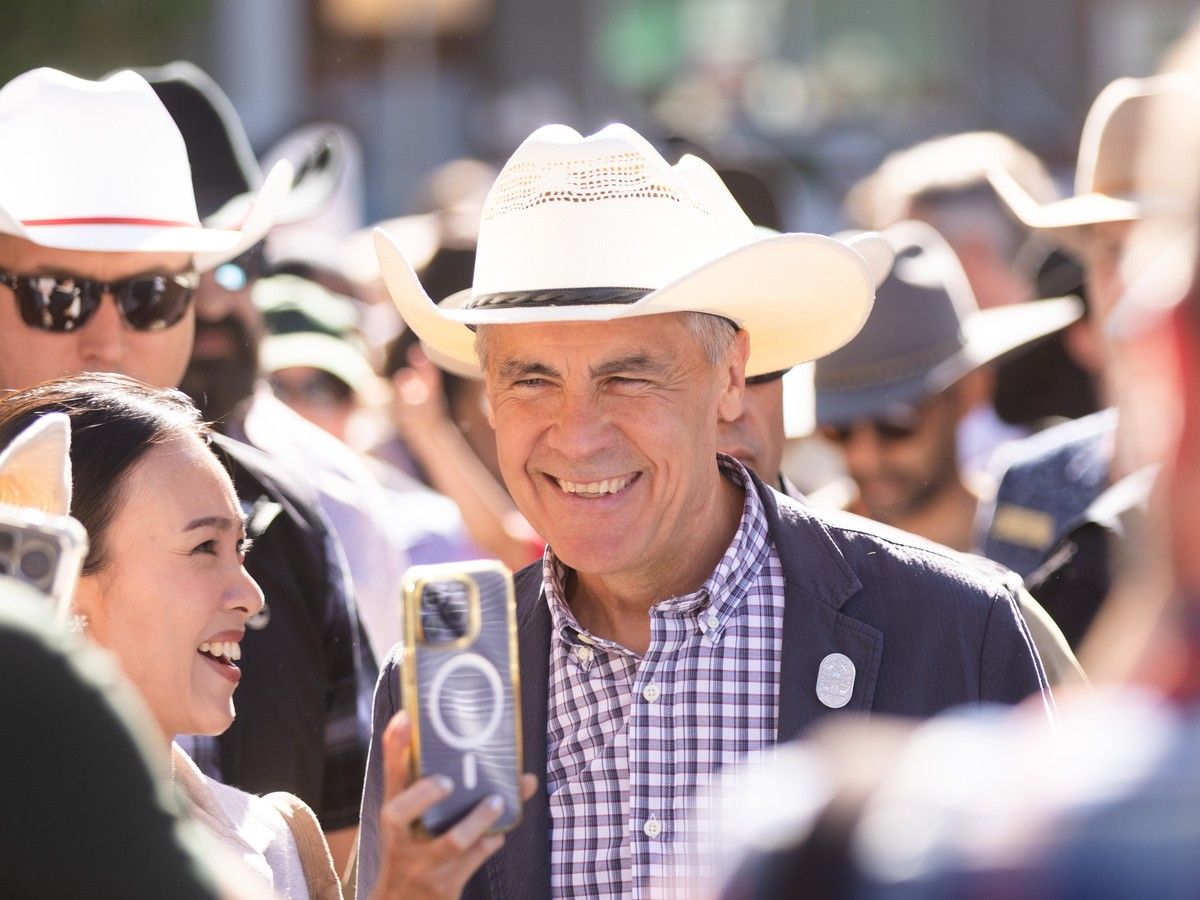
A Contentious Opening for Canada’s Newest Border Link
Prime Minister Mark Carney is pushing back against growing criticism over a revised revenue-sharing agreement for the Gordie Howe International Bridge. Speaking from the Calgary Stampede on Sunday, Carney defended the deal as a necessary step for economic expansion, despite accusations from political opponents that the government caved to pressure from the Trump administration.
The $6.4-billion bridge, which connects Windsor, Ontario, with Detroit, Michigan, is officially scheduled to open on July 27. The project was entirely funded by Canada, and under the original 2012 agreement, Canada was slated to collect all toll revenues until its construction costs were fully recouped. However, the new terms include a profit-sharing mechanism with the United States that has sparked a domestic political firestorm.
The ‘Net’ Revenue Defense
Addressing the revised financial structure, Carney emphasized that Canada will still prioritize debt recovery. “The word ‘net’ does a lot of work in this,” Carney told CTV. “We get the revenues. Then the servicing of the costs of the bridge and paying the debt of the bridge, and then what’s left over, there’s a split of that for 15 years.”
Carney argued that the funds allocated to an economic development fund on the U.S. side would ultimately benefit Canada by driving more traffic to the crossing. He dismissed the idea that Canada was losing out, asserting that after costs are covered, there would likely be very little “net” profit left to split, making it a “good deal for Canada” in the long term.
Political Backlash and Trump’s Influence
The deal has been met with sharp condemnation from Conservative MPs. Andrew Lawton labeled the agreement a “capitulation,” while Calgary Heritage MP Shuv Majumdar called it a “terrible deal,” demanding the full release of the agreement’s text before the bridge opens. Critics point to the timing of the renegotiation, which followed public threats from Donald Trump to block the bridge’s opening unless the U.S. was “fully compensated.”
While Trump took to Truth Social to claim credit for securing a “MUCH BETTER DEAL” for America, the Carney government maintains that the priority was ensuring the vital trade artery opened without further delay. The bridge serves as a critical link for the North American supply chain, and officials argue that the economic cost of a blocked border would far outweigh the concessions made in the revenue split.
International Relations
Trump Holds High-Stakes Calls With Putin and Zelenskyy as NATO Summit Looms
President Trump holds extensive talks with Putin and Zelenskyy to broker a Ukraine peace deal ahead of the NATO summit, despite conflicting battlefield reports.

A Diplomatic Push on Independence Day
In a significant escalation of diplomatic activity, U.S. President Donald Trump engaged in extensive telephone discussions with both Russian President Vladimir Putin and Ukrainian President Volodymyr Zelenskyy on Saturday. The 90-minute call with Putin, which took place on the U.S. Independence Day holiday, centered on a potential resolution to the ongoing conflict in Ukraine. Kremlin aide Yuri Ushakov described the exchange as “business-like and quite constructive,” noting that Trump offered his assistance in brokering a deal ahead of next week’s pivotal NATO summit in Turkey.
Conflicting Narratives on the Battlefield
While diplomatic channels remain open, the situation on the ground remains a point of intense contention. During the call, Putin reportedly characterized the Russian military as “confidently advancing” and claimed the capture of the strategically vital city of Kostiantynivka in the Donetsk region. However, President Zelenskyy and the Ukrainian General Staff have flatly dismissed these assertions, maintaining that Kyiv’s forces continue to hold the city. This discrepancy highlights the immense difficulty in establishing a common factual ground for negotiations, as Russia continues to demand full control over the Donbas region—a condition Ukraine has repeatedly rejected.
The Role of U.S. Envoys and Global Context
Despite the current U.S. diplomatic focus on the conflict with Iran, Trump reportedly signaled that his special envoys, Steve Witkoff and Jared Kushner, are prepared to continue their mediation efforts, including potential return visits to Moscow. Zelenskyy expressed optimism following his own conversation with Trump, describing the prospect of ending the war as “real” and emphasizing that American resolve would be the deciding factor in the coming months. Both leaders are expected to continue these high-level discussions in person at the upcoming NATO gathering.
Accusations and Escalation Risks
The path to peace is further complicated by harsh rhetoric from the Kremlin. Ushakov recently accused Kyiv and its European backers of seeking to escalate the conflict, pointing specifically to Ukraine’s long-range strikes on Russian oil infrastructure which have caused regional fuel shortages. As Russia maintains its “political-diplomatic” stance based on its own territorial claims, the international community remains watchful of whether Trump’s intervention can bridge the deep-seated divide between the two warring nations.
Defense
Carney Heads to Ankara for High-Stakes NATO Summit Focused on ‘Managing’ Trump
Prime Minister Mark Carney travels to Turkey for a scaled-back NATO summit aimed at managing relations with Donald Trump and deepening Middle East trade ties.

A Strategic Sojourn to the Middle East
Prime Minister Mark Carney is set to arrive in Ankara this Monday, marking the first visit by a Canadian leader to Turkey since 2015. The visit serves as the opening leg of a week-long diplomatic mission to the Middle East, which will later see the Prime Minister travel to Saudi Arabia to bolster trade and investment ties. However, the immediate focus remains on the July 7-8 NATO summit—a gathering that experts describe as a carefully curated effort to maintain alliance stability amid unpredictable geopolitical shifts.
The ‘Short and Sweet’ Strategy
This year’s summit has been notably scaled back, reduced from the traditional multi-day affair to a single dinner and a concentrated working session. Former Canadian ambassador to NATO, Kerry Buck, suggests the abbreviated format is a deliberate attempt to avoid the “drama” often associated with U.S. President Donald Trump. “This year’s meeting is primarily about managing the U.S. and keeping President Trump committed to the alliance,” Buck noted. Paradoxically, hosting the event in Turkey may provide a stabilizing effect, as the U.S. President has historically shown more affinity for strongman-style leaders like Recep Tayyip Erdogan than for traditional Western allies.
Defense Spending and Industrial Cooperation
A central theme of the summit will be the “credible” defense spending plans demanded by NATO Secretary-General Mark Rutte. Allies are under pressure to reach a five per cent of national GDP target by 2035. Canadian officials indicated that Carney will use the summit to highlight Canada’s progress in defense financing. Beyond the alliance-wide talks, the bilateral relationship between Ottawa and Ankara is under the spotlight. Despite a history of friction over the Armenian genocide recognition and past arms embargoes, there are signs of a thaw. Turkey has expressed significant interest in Canadian nuclear technology to reduce its reliance on Russian energy, while Canada views Turkey as an emerging market for agriculture, mining, and infrastructure.
Navigating a Flawed Democracy
The warming ties come despite Turkey’s domestic challenges, including high inflation and crackdowns on journalists and LGBTQ+ activists. Former military attaché Chris Kilford notes that while Canada continues to grant asylum to Turkish dissidents—a point of contention for Ankara—Turkey remains a vital regional actor. Its unique ability to maintain relative stability amid conflicts in Ukraine, Syria, and Iran makes it an indispensable, if complicated, partner for the Carney government’s four-pillar strategy of energy, trade, security, and people-to-people ties.

A 1970 Orca Escape Led to 13 Wild Calves — Now an Author Is Searching for the Person Who Freed Them

Why Okanagan Residents Are Being Urged to Rethink Water Use and Waste as Droughts Worsen

Why Are we Being Urged to Rethink Water Use and Waste as Droughts Worsen

Canada’s Conservative Influencers Are Fighting for the Future of the Movement
Clock Ticks Toward Midnight Tariffs as Canada-U.S. Trade Talks Reach Critical Stage
Unused Launchers Expose Ukraine’s Severe Patriot Missile Shortage

Opinion: John Rustad Has to Go

B.C. Supreme Court Grants Cowichan Tribes Title to Historic Richmond Lands and Fishing Rights

Vancouver Canucks Gear Up for a Make-or-Break 2025–26 Season

Kamloops Blazers Announce Off-Season Changes Ahead of 2025–26 Season

BC Ferries Sparks Outcry Over Contract with Chinese Shipyard

A Taste of Autumn: Fall Okanagan Wine Festival 2025
-
 LOCAL2 days ago
Residents told to prepare for return home as fire crews make progress on Quilpituk Creek blaze
-
WORLD2 days ago
Unused Launchers Expose Ukraine’s Severe Patriot Missile Shortage
-
 OPINIONS2 days ago
Canada’s Conservative Influencers Are Fighting for the Future of the Movement
-

 BC STORIES2 days ago
How Enjoying an Ice Cream Treat Today Helps BC Children’s Hospital
-
 BC STORIES2 days ago
What Residents and Boaters Need to Know as Crews Target Bradley Creek Wildfire Hot Spots
-
NATIONAL STORIES2 days ago
Clock Ticks Toward Midnight Tariffs as Canada-U.S. Trade Talks Reach Critical Stage
-

 BC STORIES2 days ago
BC Lions Extend Winning Streak to Three After Thrilling Fourth-Quarter Comeback Against Stampeders
-
 COMMUNITY2 days ago
Why Are we Being Urged to Rethink Water Use and Waste as Droughts Worsen