Year-End Deluge: North Coast B.C. and Haida Gwaii Braced for Continued Flooding
British Columbia’s North Coast and Haida Gwaii face a prolonged flood watch as 2025 ends with record rainfall, straining infrastructure and local emergency services.


The Relentless Storms of Late 2025
The final days of 2025 have proven to be some of the most challenging for the communities dotting British Columbia’s rugged North Coast and the expansive wilderness of Haida Gwaii. While much of the province typically looks toward the new year with reflections on the past, residents here are focused on the immediate threat posed by a series of potent atmospheric rivers that have stalled over the region. What began as a standard seasonal shift into the rainy months has escalated into a prolonged hydrological event, forcing provincial authorities to maintain a high-level flood watch that has now stretched into its second week. The sheer persistence of the weather systems has transformed the landscape, turning small creeks into rushing torrents and saturating the soil to the point of instability.
Hydrological Warnings and Geographic Impact
The British Columbia River Forecast Centre has remained steadfast in its assessment, keeping flood watches active for the North Coast, including areas around Prince Rupert, Kitimat, and the Nass Valley, as well as the entirety of Haida Gwaii. Meteorologists note that the sheer volume of water falling on already saturated ground has created a precarious situation. In some higher elevations, the combination of heavy rain and unseasonably warm temperatures has triggered a rain-on-snow effect, where melting snowpacks contribute additional runoff into river systems that are already at or near capacity. For the communities of Skidegate and Masset on Haida Gwaii, the pounding surf combined with high tides has added the risk of coastal erosion and localized flooding in low-lying residential areas to the growing list of concerns. Experts suggest that the cumulative rainfall totals for the month of December are on track to break decadal records, further complicating the recovery efforts for local municipalities.
Infrastructure and Community Resilience
Local infrastructure is being tested to its limits as the region grapples with the environmental onslaught. Maintenance crews have been working around the clock to clear debris from culverts and ensure that drainage systems remain functional despite the overwhelming inflow. Highway 16, the primary artery connecting the coast to the interior, has seen several localized washouts, leading to temporary closures and pilot-car operations that have slowed the movement of goods and services. For many in the region, the isolation is a familiar part of life, but the frequency and intensity of these weather events are beginning to strain even the most resilient emergency response frameworks. Local officials have issued advisories urging residents to avoid riverbanks and stay updated via local radio and digital emergency alerts, as conditions can change in a matter of minutes. Emergency centers have been put on standby, and sandbagging stations have seen steady traffic as homeowners attempt to divert water away from their foundations.
Looking Back at a Year of Environmental Extremes
As 2025 winds down, this current deluge serves as a capstone to a year defined by meteorological volatility across the Pacific Northwest. From the record-breaking heatwaves of the summer to the early onset of autumn storms, the North Coast has been at the front lines of shifting climate patterns. Environmental scientists suggest that the warming of the Pacific Ocean has significantly increased the moisture-carrying capacity of these atmospheric rivers, leading to the types of extreme precipitation events currently being witnessed. The persistence of the flood watch into the final hours of the year highlights the growing necessity for long-term investments in flood mitigation and climate-adaptive infrastructure for remote coastal communities. Public discourse is increasingly shifting toward how these towns can remain viable as the frequency of such 1-in-100-year events seems to increase with every passing season.
The Outlook for the New Year
Looking ahead into the first week of 2026, there appears to be little reprieve on the horizon for the waterlogged residents of the North Coast. Short-term forecasts indicate at least two more significant weather systems are tracking toward the coast before the jet stream is expected to shift significantly. While the intensity of the rainfall may fluctuate, the cumulative impact of the previous weeks ensures that the flood risk will remain elevated well into January. Hydrologists are monitoring the peaks of the Skeena and Nass Rivers with particular concern, as any further surges could lead to significant overtopping. For now, the people of the North Coast and Haida Gwaii remain on high alert, demonstrating the same strength and community spirit that has seen them through countless storms before, even as they navigate one of the wettest and most turbulent year-ends in recent memory.

BC STORIES
Road Closure in Prince George Following Fatal Emergency Plane Landing
One person is dead and Foothills Boulevard in Prince George is closed after a plane made an emergency landing and collided with vehicles Thursday afternoon.

Fatal Emergency Landing Causes Collision
One person has died after a twin-engine plane executed an emergency landing on Foothills Boulevard in Prince George on Thursday afternoon. The incident occurred shortly before 2:30 p.m. roughly 1.5 kilometres north of North Nechako Road, near Highland Drive.
During the landing amidst busy afternoon traffic, the aircraft struck two vehicles. Other motorists attempted to dodge the incoming plane, with one vehicle ending up forced into a ditch. Debris from the crash, including the front fan of a turbofan engine, was scattered across the road, and part of a wing penetrated the windshield of a truck.
Investigation and Road Closures
Foothills Boulevard has been shut down in both directions between Highland Drive and North Nechako Road. Prince George RCMP Cpl. Jennifer Cooper stated that the thoroughfare will remain closed overnight and into Friday, prompting authorities to request that motorists utilize alternate routes.
The RCMP emphasized that members of the public must stay away from the site. Cpl. Cooper noted that curious onlookers have been creating a drain on valuable police resources, forcing officers to guard access points rather than assisting with the active investigation or responding to regular calls for service.
The Transportation Safety Board has taken over the investigation into the cause of the incident. RCMP noted that potential injuries to occupants of the struck vehicles or individuals on the aircraft remain unknown at this time.
Aircraft Details and Local Impact
The aircraft involved appears to be a 1980s Beechcraft King Air 200 registered under Sekani Air Ltd. A video shared on social media, recorded inside the aircraft prior to the crash, indicated that about eight individuals were onboard.
Nearby residents reported hearing the plane overhead immediately before the crash. Emergency responders, including Prince George Fire Rescue, arrived on scene shortly after 2:30 p.m. to manage the response.
BC STORIES
Shift toward populist direction fuels tension and departures in B.C. Conservative Party
B.C. Conservative president Aisha Estey resigns amid caucus friction, executive turnover, and debate over bringing Independent MLAs back into the fold.

Political shifts and executive resignations
The B.C. Conservative Party is undergoing significant structural changes under leader Kerry-Lynne Findlay. According to political analyst Stewart Prest, a political science lecturer at the University of British Columbia, Findlay is steering the party away from the big-tent approach seen under former leader John Rustad toward a sharper, more populist brand of politics.
As this strategy unfolds, the party’s leadership structure is experiencing a major overhaul. Tofino-Ucluelet Westerly News reported that B.C. Conservative party president Aisha Estey resigned on Wednesday after five years at the helm. Following her exit to pursue new opportunities, former federal candidate Mauro Francis assumed the role of party president. Vice-president Sharon White also stepped down, with board member Pavneet Singh stepping into the position. These exits follow the late-July departure of executive director Angelo Isidorou, who was replaced by Elaine Allen, a former federal candidate with close ties to Findlay.
Friction over Independent MLAs
Internal debates regarding whether to readmit former members to the party caucus remain a major point of contention. Speculation grew following an August 7 dinner meeting between Findlay and Vancouver-Quilchena MLA Dallas Brodie at Vancouver’s Arbutus Club. Brodie stated she has not been formally invited back to caucus, though she emphasized both agreed on avoiding a right-wing vote split in the province. Brodie clarified she will not resign her seat to create a by-election opportunity for Findlay, who currently lacks a seat in the legislature.
The possibility of reuniting with former members has raised concerns within the existing caucus. Multiple sources from summer meetings indicated that Findlay initially reassured MLAs in early July that Independent members would not be brought back, but she took a less definitive stance during a meeting on August 15. Other Independent MLAs under discussion include Tara Armstrong and Jordan Kealy. However, Kealy’s recent sexual assault charge appears to block his return, while Armstrong’s status remains unresolved. House Leader Sheldon Clare confirmed there is no formal plan to readmit Independents at this time, noting that final decisions rest with Findlay.
caucus departures and online disputes
The internal strain became public last week when Kamloops Centre MLA Peter Milobar quit the party caucus to sit as an Independent. Meanwhile, opposing camps within the party have engaged in online conflict using anonymous social media accounts like The Findlay Files and BC War Room, sharing insider claims about party leadership and staff.
With house business scheduled to resume in early October, analysts expect these unresolved internal debates and the party’s sharper political focus to set the stage for intense debates in the legislature against the governing NDP.
NATIONAL STORIES
Carney’s Exit From U.S. Trade Talks Leaves Canadian Exporters Facing 50% Duties
U.S. tariffs of 50% hit $28B in Canadian exports as Prime Minister Mark Carney suspends trade negotiations, impacting electronics, wood, and plastics.
Canadian Exporters Face Fresh Economic Blow
A new wave of American tariffs reached enforcement status just after midnight Saturday, impacting more than $28 billion worth of Canadian products with a severe 50 per cent tax rate. The duties kick in after the collapse of bilateral negotiations, placing significant strain on the national economy and multiple commercial sectors.
Canadian electronics exporters are positioned to take the hardest hit, with over $4 billion US in electronic equipment—such as electrical boards and controllers—subject to the levies. Furthermore, Canada’s plastics industry faces new duties on roughly $3 billion US worth of goods, including bottles, floor coverings, and household items. Products such as cement, plywood, wine, and hockey sticks are also listed under the broad measures.
Provincial Economies to Absorb Disproportionate Impacts
Regional economies will feel the consequences unevenly across the country. British Columbia stands out as the most exposed province, with affected items—predominantly paper and wood—accounting for over 13 per cent of its total exports to the United States. Quebec is similarly vulnerable, with approximately 10 per cent of its export goods facing exposure on top of pre-existing 50 per cent tariffs targeting its steel and aluminum sectors.
Addressing the fallout, the Canadian Chamber of Commerce characterized the levies as non-absorbable and unsustainable for commercial operations, describing the escalation as a body blow to North American competitiveness.
Carney Directs Negotiators to Leave Washington
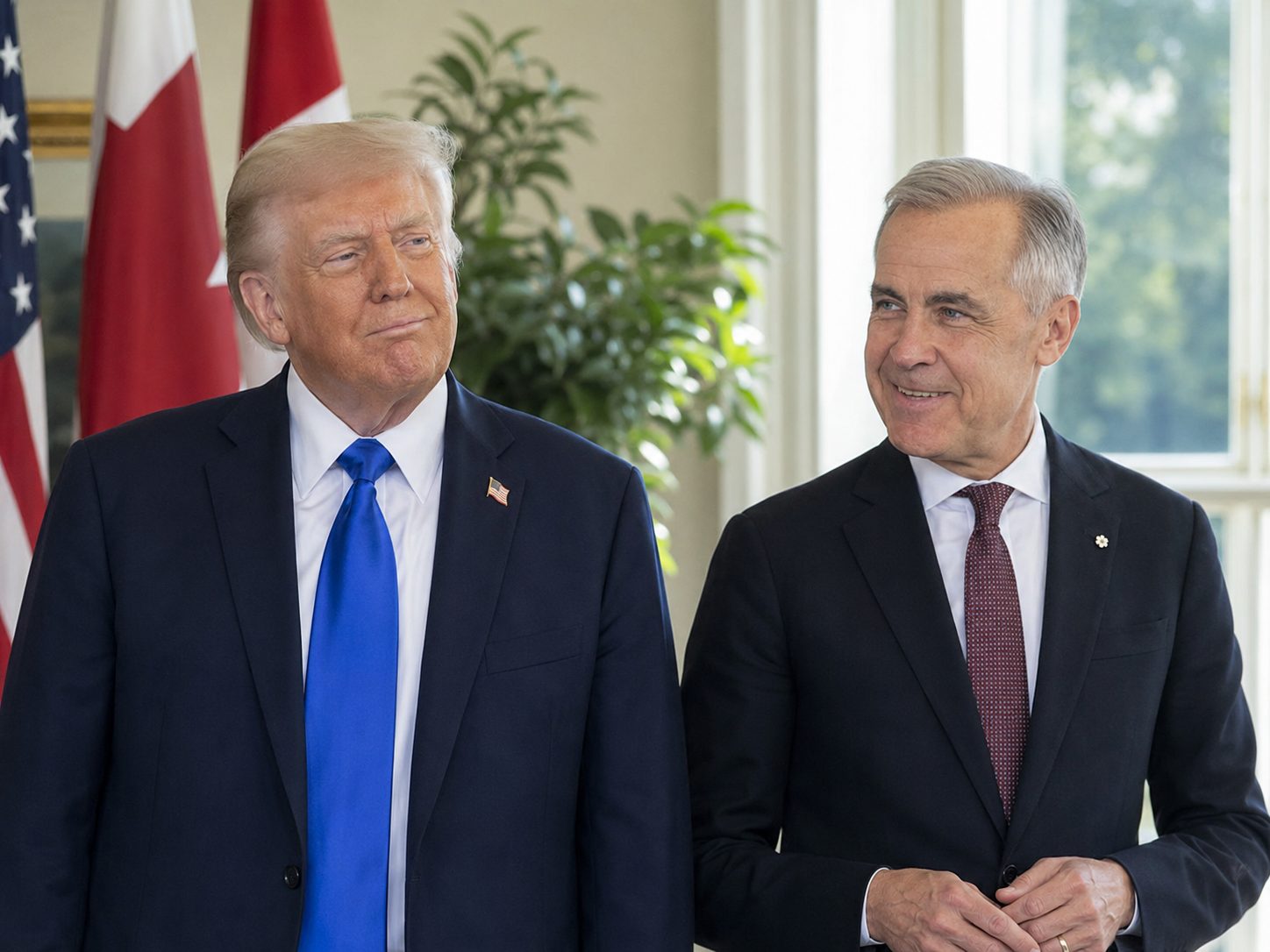
Prime Minister Mark Carney halted discussions and ordered Canadian representatives home from Washington, D.C., following a week of talks between Canadian Trade Minister Dominic LeBlanc and U.S. Trade Representative Jamieson Greer. Carney, who previously campaigned on securing optimal outcomes for Canadians, now oversees a situation where domestic products confront steep tariff hurdles.
“I have decided to suspend trade negotiations with the U.S. and have directed Canada’s negotiators to return to Ottawa,” Carney announced in an official statement. He stated that while negotiators worked hard until the final moments, last-minute changes proposed by the American side were unfair, uneconomic, and undermined trust in a potential deal. He affirmed that Ottawa intends to retaliate “dollar for dollar.”
U.S. Cites Retaliation and Terms Disagreement
Giving the administration’s perspective, U.S. Trade Representative Jamieson Greer stated that talks broke down because Canadian officials declined to finalize the terms on the table. Greer asserted that the offered deal provided Canada the best treatment of any major exporter, but claimed Canadian demands and walk-backs upended the balance while Canada maintained its own retaliatory measures against U.S. goods and services.
Sources indicated that U.S. Commerce Secretary Howard Lutnick had raised objections to the proposed terms earlier in the week. Prior to the walkout, tentative terms under discussion involved lowering sectoral tariffs on Canadian steel, aluminum, and automobiles in exchange for Canadian premiers considering an end to provincial bans on American alcohol.
Tariffs Implemented Under Great Depression-Era Law
The White House enacted the 50 per cent duties using Section 338 of the U.S. Tariff Act, also known as the Smoot-Hawley Act. The Great Depression-era legislation permits the U.S. president to apply tariffs up to 50 per cent on nations deemed to discriminate against the American economy. Products that previously enjoyed exemptions under the Canada-United States-Mexico Agreement (CUSMA) are no longer exempt from these latest measures.
Asked how the two nations might resolve the tit-for-tat dispute, a senior Trump administration official remarked that escalation remained Canada’s choice, noting that additional options could be presented to the U.S. president if Canada follows through on counter-tariffs.
Road Closure in Prince George Following Fatal Emergency Plane Landing
Shift toward populist direction fuels tension and departures in B.C. Conservative Party

Carney’s Exit From U.S. Trade Talks Leaves Canadian Exporters Facing 50% Duties

A 1970 Orca Escape Led to 13 Wild Calves — Now an Author Is Searching for the Person Who Freed Them

Why Okanagan Residents Are Being Urged to Rethink Water Use and Waste as Droughts Worsen

Why Are we Being Urged to Rethink Water Use and Waste as Droughts Worsen

Opinion: John Rustad Has to Go

B.C. Supreme Court Grants Cowichan Tribes Title to Historic Richmond Lands and Fishing Rights

Vancouver Canucks Gear Up for a Make-or-Break 2025–26 Season

Kamloops Blazers Announce Off-Season Changes Ahead of 2025–26 Season

BC Ferries Sparks Outcry Over Contract with Chinese Shipyard

A Taste of Autumn: Fall Okanagan Wine Festival 2025
-

 OPINIONS7 days ago
Canada’s Conservative Influencers Are Fighting for the Future of the Movement
-
 LOCAL7 days ago
Residents told to prepare for return home as fire crews make progress on Quilpituk Creek blaze
-
 BC STORIES7 days ago
What Residents and Boaters Need to Know as Crews Target Bradley Creek Wildfire Hot Spots
-
WORLD7 days ago
Unused Launchers Expose Ukraine’s Severe Patriot Missile Shortage
-
 BC STORIES6 days ago
A 1970 Orca Escape Led to 13 Wild Calves — Now an Author Is Searching for the Person Who Freed Them
-
NATIONAL STORIES7 days ago
Clock Ticks Toward Midnight Tariffs as Canada-U.S. Trade Talks Reach Critical Stage
-

 BC STORIES7 days ago
How Enjoying an Ice Cream Treat Today Helps BC Children’s Hospital
-
 BC STORIES7 days ago
BC Lions Extend Winning Streak to Three After Thrilling Fourth-Quarter Comeback Against Stampeders