POLITICS
B.C.’s Deficit Swells as Growth Outlook Dims


British Columbia’s forecasted deficit has surged to $11.6 billion for the 2025-26 fiscal year—about $665 million more than what was projected in the last budget. This increase largely stems from the government’s move to eliminate the carbon tax, which represented a major revenue source, along with drops in other revenues including the property transfer tax and sales tax. Elevated fire management costs and lower returns from natural resources have added further pressure to the province’s finances.
Projections for economic growth have also been revised downward. Growth in B.C.’s economy for 2025 is now expected to be 1.5 percent, down from an earlier forecast of 1.8 percent. For 2026, the outlook is even softer at 1.3 percent, compared with previous expectations of 1.9 percent. The government cited global trade uncertainty, tariff impacts, and a cooling housing market among the factors contributing to the weaker outlook.
Despite the worsening fiscal picture, Finance Minister Brenda Bailey emphasized that B.C. remains relatively better positioned than many provinces, pointing to its diversified economy and stronger access to non-U.S. markets. The government says it is taking steps to manage costs, prioritize essential services, and make “smart cuts” where possible, while keeping debt to GDP metrics in line through more cautious spending. However, critics warn that deficits of this size—along with rising debt—could limit flexibility for future investments in infrastructure, health, and housing.


BC STORIES
Shift toward populist direction fuels tension and departures in B.C. Conservative Party
B.C. Conservative president Aisha Estey resigns amid caucus friction, executive turnover, and debate over bringing Independent MLAs back into the fold.


Political shifts and executive resignations
The B.C. Conservative Party is undergoing significant structural changes under leader Kerry-Lynne Findlay. According to political analyst Stewart Prest, a political science lecturer at the University of British Columbia, Findlay is steering the party away from the big-tent approach seen under former leader John Rustad toward a sharper, more populist brand of politics.
As this strategy unfolds, the party’s leadership structure is experiencing a major overhaul. Tofino-Ucluelet Westerly News reported that B.C. Conservative party president Aisha Estey resigned on Wednesday after five years at the helm. Following her exit to pursue new opportunities, former federal candidate Mauro Francis assumed the role of party president. Vice-president Sharon White also stepped down, with board member Pavneet Singh stepping into the position. These exits follow the late-July departure of executive director Angelo Isidorou, who was replaced by Elaine Allen, a former federal candidate with close ties to Findlay.
Friction over Independent MLAs
Internal debates regarding whether to readmit former members to the party caucus remain a major point of contention. Speculation grew following an August 7 dinner meeting between Findlay and Vancouver-Quilchena MLA Dallas Brodie at Vancouver’s Arbutus Club. Brodie stated she has not been formally invited back to caucus, though she emphasized both agreed on avoiding a right-wing vote split in the province. Brodie clarified she will not resign her seat to create a by-election opportunity for Findlay, who currently lacks a seat in the legislature.
The possibility of reuniting with former members has raised concerns within the existing caucus. Multiple sources from summer meetings indicated that Findlay initially reassured MLAs in early July that Independent members would not be brought back, but she took a less definitive stance during a meeting on August 15. Other Independent MLAs under discussion include Tara Armstrong and Jordan Kealy. However, Kealy’s recent sexual assault charge appears to block his return, while Armstrong’s status remains unresolved. House Leader Sheldon Clare confirmed there is no formal plan to readmit Independents at this time, noting that final decisions rest with Findlay.
caucus departures and online disputes
The internal strain became public last week when Kamloops Centre MLA Peter Milobar quit the party caucus to sit as an Independent. Meanwhile, opposing camps within the party have engaged in online conflict using anonymous social media accounts like The Findlay Files and BC War Room, sharing insider claims about party leadership and staff.
With house business scheduled to resume in early October, analysts expect these unresolved internal debates and the party’s sharper political focus to set the stage for intense debates in the legislature against the governing NDP.
NATIONAL STORIES
Carney’s Exit From U.S. Trade Talks Leaves Canadian Exporters Facing 50% Duties
U.S. tariffs of 50% hit $28B in Canadian exports as Prime Minister Mark Carney suspends trade negotiations, impacting electronics, wood, and plastics.
Canadian Exporters Face Fresh Economic Blow
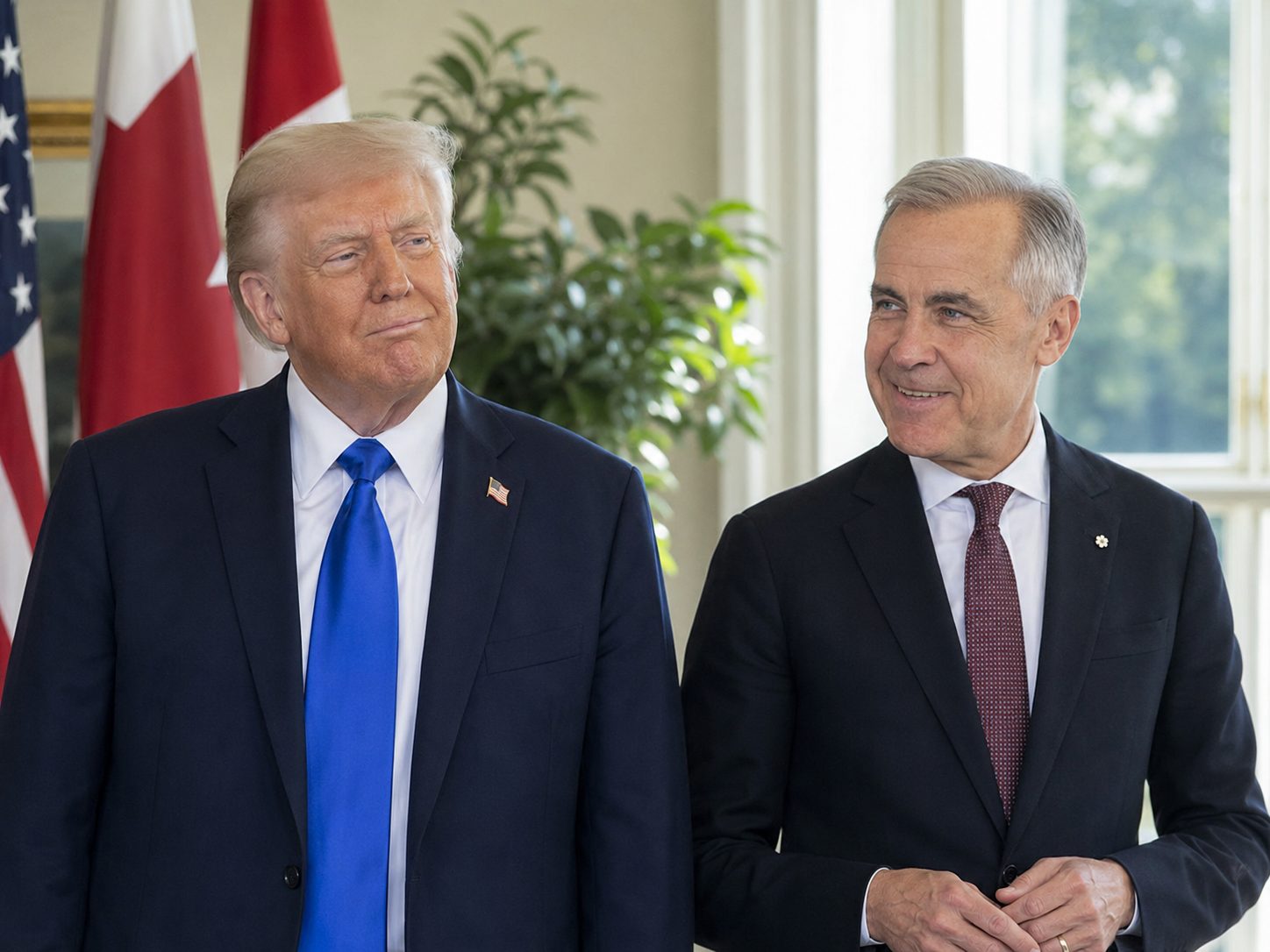
A new wave of American tariffs reached enforcement status just after midnight Saturday, impacting more than $28 billion worth of Canadian products with a severe 50 per cent tax rate. The duties kick in after the collapse of bilateral negotiations, placing significant strain on the national economy and multiple commercial sectors.
Canadian electronics exporters are positioned to take the hardest hit, with over $4 billion US in electronic equipment—such as electrical boards and controllers—subject to the levies. Furthermore, Canada’s plastics industry faces new duties on roughly $3 billion US worth of goods, including bottles, floor coverings, and household items. Products such as cement, plywood, wine, and hockey sticks are also listed under the broad measures.
Provincial Economies to Absorb Disproportionate Impacts
Regional economies will feel the consequences unevenly across the country. British Columbia stands out as the most exposed province, with affected items—predominantly paper and wood—accounting for over 13 per cent of its total exports to the United States. Quebec is similarly vulnerable, with approximately 10 per cent of its export goods facing exposure on top of pre-existing 50 per cent tariffs targeting its steel and aluminum sectors.
Addressing the fallout, the Canadian Chamber of Commerce characterized the levies as non-absorbable and unsustainable for commercial operations, describing the escalation as a body blow to North American competitiveness.
Carney Directs Negotiators to Leave Washington
Prime Minister Mark Carney halted discussions and ordered Canadian representatives home from Washington, D.C., following a week of talks between Canadian Trade Minister Dominic LeBlanc and U.S. Trade Representative Jamieson Greer. Carney, who previously campaigned on securing optimal outcomes for Canadians, now oversees a situation where domestic products confront steep tariff hurdles.
“I have decided to suspend trade negotiations with the U.S. and have directed Canada’s negotiators to return to Ottawa,” Carney announced in an official statement. He stated that while negotiators worked hard until the final moments, last-minute changes proposed by the American side were unfair, uneconomic, and undermined trust in a potential deal. He affirmed that Ottawa intends to retaliate “dollar for dollar.”
U.S. Cites Retaliation and Terms Disagreement
Giving the administration’s perspective, U.S. Trade Representative Jamieson Greer stated that talks broke down because Canadian officials declined to finalize the terms on the table. Greer asserted that the offered deal provided Canada the best treatment of any major exporter, but claimed Canadian demands and walk-backs upended the balance while Canada maintained its own retaliatory measures against U.S. goods and services.
Sources indicated that U.S. Commerce Secretary Howard Lutnick had raised objections to the proposed terms earlier in the week. Prior to the walkout, tentative terms under discussion involved lowering sectoral tariffs on Canadian steel, aluminum, and automobiles in exchange for Canadian premiers considering an end to provincial bans on American alcohol.
Tariffs Implemented Under Great Depression-Era Law
The White House enacted the 50 per cent duties using Section 338 of the U.S. Tariff Act, also known as the Smoot-Hawley Act. The Great Depression-era legislation permits the U.S. president to apply tariffs up to 50 per cent on nations deemed to discriminate against the American economy. Products that previously enjoyed exemptions under the Canada-United States-Mexico Agreement (CUSMA) are no longer exempt from these latest measures.
Asked how the two nations might resolve the tit-for-tat dispute, a senior Trump administration official remarked that escalation remained Canada’s choice, noting that additional options could be presented to the U.S. president if Canada follows through on counter-tariffs.
By Chad Dashly | The Current
Politics has always been a battle of ideas.
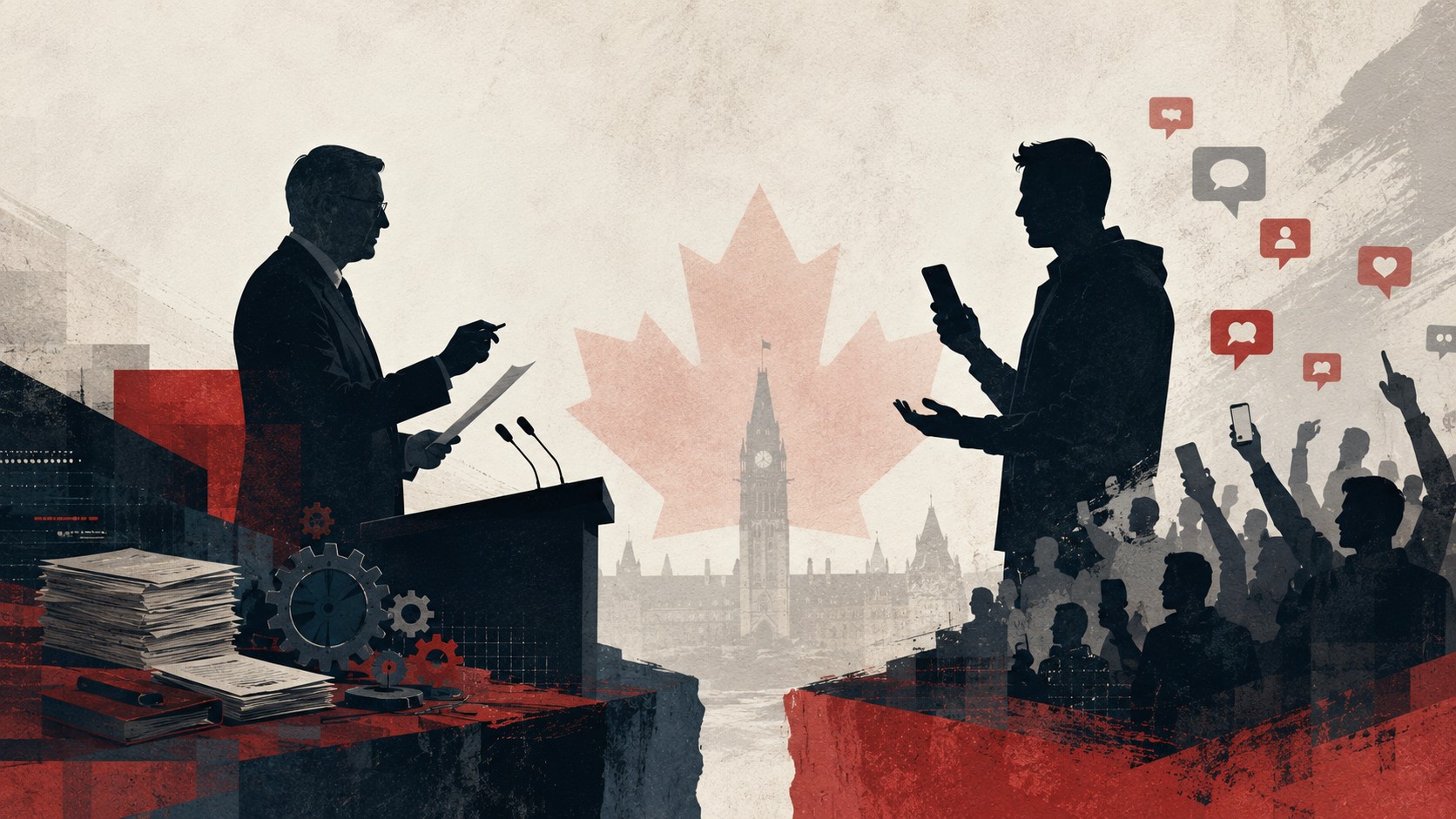
Increasingly, however, it is becoming a battle between personalities, platforms and competing political tribes.
One of the more revealing conservative disputes in Canada has recently unfolded not in a legislature, campaign war room or party convention hall, but online. British Columbia activist and commentator Anthony Russo continues to criticize veteran conservative strategist Kory Teneycke, turning what might appear to be a personal disagreement into a public debate about the future of the conservative movement.
On the surface, it looks like another social-media feud.
In reality, it reflects something much larger: a growing struggle between the conservative establishment and a new generation of online activists who believe the old political playbook is no longer working.
To understand the conflict, it helps to understand what each man represents.
Teneycke is not merely another political commentator. He is one of Canada’s most experienced conservative strategists. His career has included work with former prime minister Stephen Harper, a leading role in the creation of Sun News Network and involvement in Doug Ford’s successful Ontario campaigns.
He represents experience.
He represents pragmatism.
Most importantly, he represents the belief that politics is ultimately about winning elections and forming governments.
Russo comes from a different political world.
Like many emerging conservative voices, he built his profile outside traditional party organizations and political institutions. His influence has grown largely through online commentary and direct engagement with grassroots conservatives—many of whom have become deeply skeptical of party insiders, consultants and professional political operatives.
He represents authenticity to his supporters.
He represents frustration with the political establishment.
Most importantly, he represents the belief that conservative politics should put principles ahead of strategy.
Russo’s methods, however, do not enjoy universal support within the conservative movement. Some conservatives view his confrontational approach as unnecessarily divisive or outside the political mainstream. Others see that same willingness to challenge powerful insiders as precisely what makes independent voices valuable.
Neither man has held elected office, yet both seek to influence those who do.
That fact illustrates how Canadian politics has changed.
Political influence was once concentrated among elected officials, party executives, newspaper columnists and a relatively small group of strategists. Today, a commentator equipped with a smartphone and a social-media account can reach thousands of voters without receiving the approval of any traditional gatekeeper.
The old institutions no longer control the political conversation.
That makes voices such as Russo’s difficult to ignore—but influence and effectiveness are not necessarily the same thing.
The risk for grassroots influencers is that constant confrontation can eventually become counterproductive. When every disagreement is treated as a betrayal and every rival becomes an enemy, personality begins to overshadow principle. Audiences grow exhausted, alliances become impossible and the original message gets lost in the conflict.
Political movements driven entirely by outrage may attract attention, but attention alone does not build a governing coalition.
The risk for establishment strategists is different.
When experienced political professionals dismiss grassroots concerns, they reinforce the belief that ordinary members are valued only for their votes, donations and volunteer hours. Every condescending response can deepen the suspicion that insiders are more interested in protecting their status than advancing conservative principles.
That resentment is not unique to Canada. Similar tensions have reshaped conservative politics in the United States, the United Kingdom and across Europe.
Grassroots activists frequently underestimate how difficult it is to build a coalition capable of winning an election. The political graveyard is filled with passionate movements that lacked organization, discipline and a practical path to power.
Establishment strategists, meanwhile, often underestimate how quickly supporters can withdraw their trust. A campaign may have sophisticated advertising, professional staff and a carefully tested message, but none of those things can replace a political base that genuinely believes in the cause.
Neither side possesses everything a successful movement requires.
Activists create energy.
Strategists turn energy into organization.
Influencers can identify frustrations that established parties have ignored. Political professionals can translate those frustrations into policies, campaigns and electoral victories.
The problem begins when either group concludes that it can succeed without the other.
Conservatives who want to form governments need experienced operators such as Teneycke. Winning elections requires discipline, compromise, coalition-building and an understanding of how voters outside the party base think.
They also need independent voices willing to challenge complacency. Without grassroots pressure, political parties can become disconnected from the people they claim to represent.
Without professional competence, conservatives risk losing elections.
Without grassroots conviction, they risk losing the movement itself.
The central question, therefore, is not whether Russo is right about Teneycke or Teneycke is right about Russo.
It is whether Canada’s conservatives can bridge the widening divide between their online grassroots and their political establishment before that division becomes permanent.
That will require humility from both sides.
Activists must recognize that compromise is not always surrender. Strategists must recognize that criticism is not always disloyalty. Both must understand that public feuds may generate engagement online while making cooperation—and electoral success—more difficult in the real world.
The future of Canadian conservatism will not be secured by consultants alone, nor will it be built entirely through social-media rebellion.
It will depend on whether experience and energy can coexist.
If they cannot, the people celebrating most enthusiastically will not be conservatives.
They will be their political opponents.
Editorial note: This article is presented as political commentary. It addresses the broader debate between grassroots activism and establishment strategy within Canadian conservatism and is not intended as a personal attack on either individual.
Road Closure in Prince George Following Fatal Emergency Plane Landing
Shift toward populist direction fuels tension and departures in B.C. Conservative Party

Carney’s Exit From U.S. Trade Talks Leaves Canadian Exporters Facing 50% Duties

A 1970 Orca Escape Led to 13 Wild Calves — Now an Author Is Searching for the Person Who Freed Them

Why Okanagan Residents Are Being Urged to Rethink Water Use and Waste as Droughts Worsen

Why Are we Being Urged to Rethink Water Use and Waste as Droughts Worsen

Opinion: John Rustad Has to Go

B.C. Supreme Court Grants Cowichan Tribes Title to Historic Richmond Lands and Fishing Rights

Vancouver Canucks Gear Up for a Make-or-Break 2025–26 Season

Kamloops Blazers Announce Off-Season Changes Ahead of 2025–26 Season

BC Ferries Sparks Outcry Over Contract with Chinese Shipyard

A Taste of Autumn: Fall Okanagan Wine Festival 2025
-
 OPINIONS5 days ago
Canada’s Conservative Influencers Are Fighting for the Future of the Movement
-
 LOCAL5 days ago
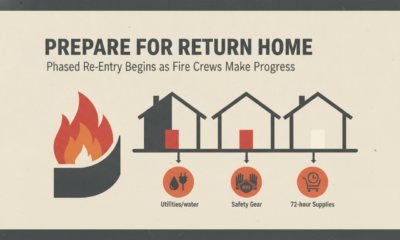
Residents told to prepare for return home as fire crews make progress on Quilpituk Creek blaze
-
 BC STORIES5 days ago
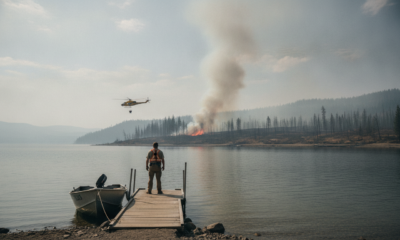
What Residents and Boaters Need to Know as Crews Target Bradley Creek Wildfire Hot Spots
-
WORLD5 days ago
Unused Launchers Expose Ukraine’s Severe Patriot Missile Shortage
-
NATIONAL STORIES5 days ago
Clock Ticks Toward Midnight Tariffs as Canada-U.S. Trade Talks Reach Critical Stage
-
 BC STORIES4 days ago
A 1970 Orca Escape Led to 13 Wild Calves — Now an Author Is Searching for the Person Who Freed Them
-
 COMMUNITY5 days ago
Why Are we Being Urged to Rethink Water Use and Waste as Droughts Worsen
-

 BC STORIES5 days ago
How Enjoying an Ice Cream Treat Today Helps BC Children’s Hospital