WORLD
Dolly Parton, Country Music Legend Dies at Age 80
Country music icon Dolly Parton has died at age 80 in Nashville. Parton sold over 100 million records and wrote classic songs during her six-decade career.


Beloved Singer-Songwriter Passes Away in Nashville
Country music superstar, songwriter, and actress Dolly Parton died peacefully in Nashville on Tuesday at the age of 80, according to a statement from her family. Her publicist confirmed her peaceful passing, though no specific cause of death was disclosed. Parton had recently mentioned dealing with unspecified health concerns in an interview with People magazine, while expressing her intent to keep working. Over a career spanning nearly six decades, the chart-topping artist sold more than 100 million records and earned 11 Grammy awards, including a Lifetime Achievement Award.
From Humble Beginnings to Global Stardom
Born Dolly Rebecca Parton on January 19, 1946, in Pittman Center, Tennessee, she grew up alongside 11 siblings in a one-room cabin in Locust Ridge. She began composing music at around six years old, starting with a song about her corncob doll. Taught early on by her mother Avie Lee, who sang storytelling folk ballads, Parton learned guitar by age eight, was performing on local radio by 11, and joined the Grand Ole Opry at 13. Following high school graduation, she moved to Nashville, where her long-running partnership with Porter Wagoner launched her into the national spotlight.
A Lifetime of Storytelling and Philanthropy
Beyond her musical accomplishments—which include writing an estimated 3,000 songs such as “Jolene,” “Coat of Many Colours,” and “I Will Always Love You”—Parton built an expansive entertainment enterprise. She starred in films like “9 to 5” and “Steel Magnolias,” hosted a television show, and opened the Dollywood theme park in Tennessee. She also maintained a deep connection to philanthropy, founding a global childhood literacy program, funding high school scholarships in her home county, and contributing $1 million toward early COVID-19 vaccine research at Vanderbilt University in 2020. Parton was inducted into the Rock and Roll Hall of Fame in 2022 and always considered her songwriting to be her ultimate legacy.

WORLD
Unused Launchers Expose Ukraine’s Severe Patriot Missile Shortage
U.S.-supplied Patriot interceptor launchers sit idle in Ukraine due to a global supply crunch, leaving cities exposed to Russian ballistic strikes.

Global Shortage Leaves Ukraine Defenseless Against Ballistic Attacks
As Moscow intensifies near-nightly air strikes—making July 2024 the deadliest month for civilians since May 2022—high-tech U.S.-made Patriot missile launchers sit unused in Ukrainian cornfields. Ukrainian officials provided media access to a unit to highlight a critical reality: the nation’s supply of interceptors is virtually exhausted.
A chief engineer identified as Dmytro stated he had not seen a Patriot launcher fire for six weeks, with his first experience of having no interceptors occurring in December 2025. President Volodymyr Zelensky noted that Ukraine requires 5% of the U.S. interceptor stockpile to navigate the winter, but currently possesses only 1%.
Middle East Conflict Accelerates Supply Crunch
The global strain on Patriot interceptors intensified during March and April, when coalition forces in the Gulf expended significant supplies—averaging 225 interceptors daily over the first four days of the war with Iran—frequently to neutralize low-cost Iranian drones. Manufacturer Lockheed Martin produced 620 interceptors in 2025, creating a severe disparity of 132 to one between consumption and manufacturing output.
To address the gap, the Pentagon secured a seven-year agreement with Lockheed Martin in January to expand production capacity to 2,000 units annually by 2030. In response to the crisis, President Zelensky revealed he offered Raytheon and Lockheed Martin full ownership and management rights if they establish interceptor manufacturing facilities within Ukraine under U.S. licensing.
History
Lake Turkana Discovery: Ancient Footprints Challenge Understanding of Extinct Human Relatives
A 1.4-million-year-old footprint discovery in Kenya reveals that Paranthropus boisei was larger than previously thought and traveled in complex social groups.

A Snapshot of Ancient Life at Lake Turkana
Researchers working along the shores of Kenya’s Lake Turkana have unveiled a remarkable set of fossilized footprints that are reshaping our understanding of the extinct hominin Paranthropus boisei. The study, published in the Proceedings of the National Academy of Sciences, details a 1.4-million-year-old trackway that offers a rare glimpse into the body size and social dynamics of a species long considered a distant branch on the human family tree.
The site, known as GaJi10, contains 21 footprints left by eight individuals moving across an ancient mudflat during the early Pleistocene. While the tracks were first spotted by Smithsonian curator Kay Behrensmeyer in 1978, it took decades of careful preservation and subsequent excavations in 2016 and 2023 to reveal the full scope of the discovery. The site also preserves the tracks of hippos and antelope, painting a vivid picture of a bustling prehistoric ecosystem.
Rewriting the Physical Profile of Paranthropus
One of the most startling revelations from the analysis is the sheer size of the individuals who left the tracks. Previously, Paranthropus boisei was thought to be significantly smaller than its contemporary, Homo erectus. However, the footprint data suggests these individuals stood up to 6 feet tall and weighed approximately 165 pounds.
“The sizes of the footprints indicate human-like body sizes,” says Kevin Hatala, an associate professor at Chatham University and the study’s lead author. This suggests that two different, large-bodied hominin species—the stocky P. boisei and the more human-like H. erectus—shared the same habitats for hundreds of thousands of years, potentially competing for similar resources.
Evidence of Complex Social Structures
The tracks also provide clues about how these ancient relatives behaved. The group at GaJi10 appears to have consisted primarily of adult males traveling together without females or juveniles. This suggests a level of social complexity previously unconfirmed for the species.
According to co-author Neil Roach of Harvard University, this male-heavy grouping might indicate a social structure where males tolerated one another for protection against predators in a dangerous environment, even if they competed for mates. As researchers prepare to return to Kenya later this year, the Lake Turkana region continues to prove itself as one of the world’s most vital archives of human evolution.
Climate
Climate Emergency: Mass Evacuations as Wildfires Ravage France and Spain
Wildfires in France and Spain force 330,000 to evacuate as record-breaking heat waves and tinder-dry conditions fuel an unprecedented climate emergency.

Mediterranean Infernos Force Thousands to Flee
In a summer defined by extreme weather, fire crews across Southern Europe are locked in a desperate race against time. A series of monstrous wildfires in southwest France and Spain have already forced the evacuation of more than 330,000 residents and tourists, as authorities warn that an incoming heat wave could further exacerbate an already critical situation. In the Gironde region of France, a blaze four times the size of Paris has displaced 220,000 people, bringing the fire within 15 kilometers of the historic city of Bordeaux.
A Temporary Lull Before the Heat
French Interior Minister Laurent Nunez reported on Monday that the fire’s growth has slowed, providing a brief window of stability. However, the respite is expected to be short-lived. National weather services forecast temperatures climbing above 35 C by Tuesday and potentially higher on Wednesday, creating conditions ripe for new flare-ups. To combat the spread, crews are using earth-movers to create barren firebreaks while farmers assist by transporting water tanks to the front lines. President Emmanuel Macron, following a crisis meeting, has pledged long-term support for the recovery, emphasizing that the state will be present for as long as necessary to rebuild the affected communities.
Spain Faces Record-Breaking Destruction
Across the border, Spain is battling its most devastating fire season on record. In the province of Avila, a single fire has scorched 50,000 hectares, an area five times the size of Barcelona. Spanish Prime Minister Pedro Sanchez has linked the unprecedented violence of these blazes directly to the climate emergency, noting that heat waves are becoming more frequent and intense. With Spain’s fourth heat wave of the year forecast to push temperatures above 40 C, the ecological ministry warns that the danger is far from over. So far this year, fires have destroyed 153,000 hectares in Spain, a six-fold increase compared to the same period in 2025.
International Response and Regional Impact
The scale of the disaster has triggered an international response, with a dozen countries providing aircraft and personnel to support local brigades. Beyond France and Spain, Italy has also seen tourist evacuations in the Puglia region as winds drive flames through pine forests. As August marks the peak of the European tourist season, the economic impact is being felt as authorities ban holiday camps and urge travelers to avoid high-risk zones. This escalating crisis serves as a stark reminder of the challenges posed by a warming planet and the urgent need for robust climate adaptation strategies.
Abbotsford-Mission Riding President Quits Over Leader’s Shift to Far Right
Why B.C. Needs a Common-Sense Wildfire Plan, According to Kelowna-Mission MLA Gavin Dew
What Trade Breakdown Means for Canada as Carney Vows Retaliatory Tariffs
BC Conservative Caucus Reshuffled Following Resignations and Upcoming Byelection Plan
Why the B.C. Conservative Party Caucus Keeps Shrinking as Rosalyn Bird Departs
Dolly Parton, Country Music Legend Dies at Age 80

Opinion: John Rustad Has to Go

B.C. Supreme Court Grants Cowichan Tribes Title to Historic Richmond Lands and Fishing Rights

Vancouver Canucks Gear Up for a Make-or-Break 2025–26 Season

Kamloops Blazers Announce Off-Season Changes Ahead of 2025–26 Season

BC Ferries Sparks Outcry Over Contract with Chinese Shipyard

A Taste of Autumn: Fall Okanagan Wine Festival 2025
-

 NATIONAL STORIES3 days ago
Carney’s Exit From U.S. Trade Talks Leaves Canadian Exporters Facing 50% Duties
-
BC STORIES3 days ago
Road Closure in Prince George Following Fatal Emergency Plane Landing
-
BC STORIES3 days ago
Shift toward populist direction fuels tension and departures in B.C. Conservative Party
-
 BC STORIES1 day ago
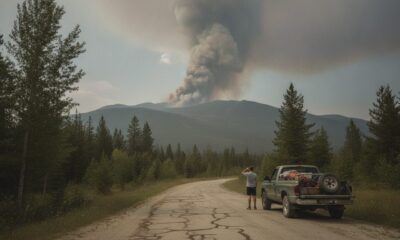
Thunderstorms Leave Four Out-of-Control Wildfires Burning Near Tulameen
-
COMMUNITY1 day ago
The week ahead in West Coast: Mon 24 — Sun 30 August
-
BC STORIES1 day ago
What the Canada-U.S. Trade Breakout Means for B.C. Consumers and Businesses
-
NATIONAL STORIES1 day ago
What to Know About Canada’s Plan to Counter 50 Per Cent U.S. Tariffs Next Month
-
BC STORIES1 day ago
Why two B.C. MLAs are stepping away to build a new option for ‘politically homeless’ voters