BC STORIES
Growing Tensions Over Temporary Foreign Workers in Canada


What is the Temporary Foreign Worker Program?
The Temporary Foreign Worker Program (TFWP) allows Canadian employers to hire foreign nationals when there are no Canadians or permanent residents available to fill certain jobs. Workers admitted under the program receive time-limited work permits tied to a specific employer and job, meaning they cannot easily switch employers without government approval. Originally intended as a short-term measure to address acute labor shortages in sectors like agriculture, hospitality, and caregiving, the program has expanded significantly over the past two decades. Today, it remains a controversial tool, seen by some as essential to sustaining industries that struggle to recruit domestically, and by others as a system that fosters exploitation, suppresses wages, and undermines opportunities for Canadian workers.
Historical Background and Systemic Flaws
Canada’s Temporary Foreign Worker Program (TFWP) was created to fill labor shortages when no Canadian workers are available, with employers required to secure a positive Labour Market Impact Assessment (LMIA) before hiring foreign workers. While intended to address legitimate labor gaps, the program has faced mounting criticism over the years. A report by the UN Special Rapporteur described the program as a “breeding ground for contemporary forms of slavery,” citing systemic issues such as debt bondage, wage theft, hazardous working conditions, and power imbalances that disproportionately affect vulnerable foreign workers. Amnesty International echoed these concerns, stating that the structure of the program facilitates broad exploitation beyond isolated cases.
Documented abuses include not only mistreatment but also bureaucratic shortcomings. Many migrants find themselves in limbo when facing long delays in processing applications. Reuters reported that LMIA processing times nearly tripled—from 58 to 165 business days between September 2023 and March 2025. This backlog has forced some migrants into undocumented employment or forced them to work without access to healthcare or other essential services. The plight of individuals like Devi Acharya underscores that this is not theoretical—loss of status due to administrative delays can have serious, even life-threatening consequences.
Economic and Social Backlash
On the economic front, critics argue that an overreliance on low-wage temporary workers can suppress wages, hinder productivity, and avoid investment in training domestic workers. Some economists suggest that continuing to integrate low-skilled foreign labor without ensuring upward mobility may burden public services while not contributing to long-term economic advancement. Popular sentiment in recent years has also shifted. As of 2025, temporary migrants—including foreign workers and international students—account for fewer than 5% of Canada’s population, down from a high of 7.3%, as the government seeks to contain pressures on housing and infrastructure.
David Eby’s Critical Perspective
In a recent and forceful public statement, BC Premier David Eby urged the federal government to either significantly reform or cancel the TFW program. Speaking on September 4, 2025, he emphasized that the program exacerbates youth unemployment, strains housing and social services, and contributes to systemic vulnerabilities, including fraud in LMIA sales. Eby called the program “not working,” and urged the federal government to either terminate it or overhaul it fundamentally to prevent abuse and better align with provincial needs.
However, Eby didn’t advocate for a blanket ban without nuance. He acknowledged sectors—like agriculture—that genuinely rely on temporary labor, and suggested that reforms must preserve flexibility for essential industries while addressing broader systemic issues. To this end, he offered to collaborate with other provinces in a “serious, grown-up conversation about immigration in Canada” to assess the program’s impact on critical infrastructure and local economies.
Broader Political Implications
Premier Eby’s remarks—aligned with similar calls from Conservative leader Pierre Poilievre—add pressure to an already fraught national debate over immigration and labor policy. The Canadian Federation of Independent Business (CFIB) has warned that outright cancellation could harm small businesses in rural areas that depend on the program to fill staffing gaps. On the federal level, Prime Minister Mark Carney has pledged a review, indicating that while the program may still play a role, reforms are needed. Changes underway include rejecting low-wage stream applications in high-unemployment regions, shortening permit duration from two years to one, and limiting how many TFWs a business can employ.


BC STORIES
A 1970 Orca Escape Led to 13 Wild Calves — Now an Author Is Searching for the Person Who Freed Them
Author Grant Lawrence searches for the mystery scientist who freed two captive orcas from Pedder Bay in 1970, sparking a wild population revival.

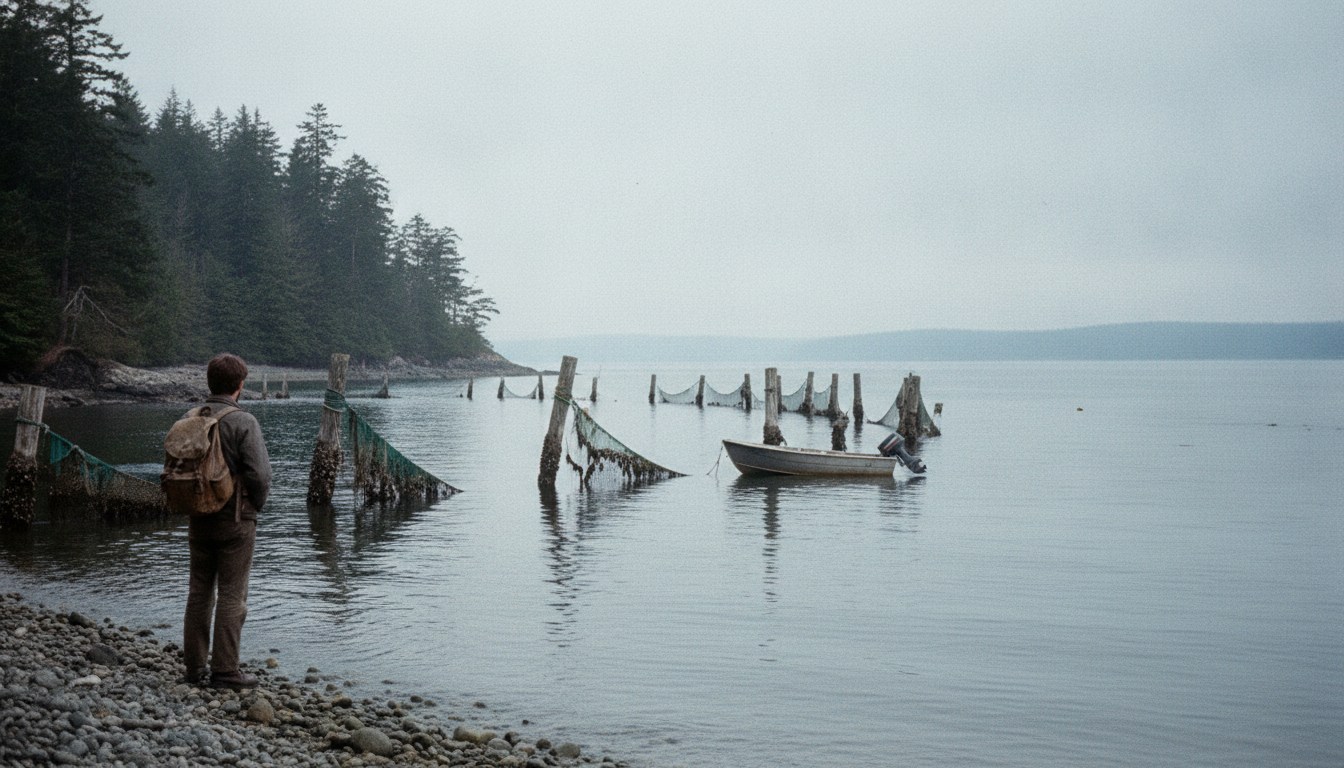
An Enduring Mystery from Pedder Bay
Thirteen wild killer whales roaming the coast today owe their existence to an act of secret sabotage carried out in 1970. Now, author Grant Lawrence is attempting to solve the mystery of who cut the net pens in Metchosin’s Pedder Bay to free two captive orcas more than five decades ago.
The story began when five killer whales, later designated as the Pedder Bay Five, were captured by Sealand of the Pacific owner Bob Wright. While two whales were sent to the Oak Bay oceanarium and one died of starvation, a male named Charlie and his mother Flo were held in a net pen awaiting shipment to an aquarium in Texas. After nearly eight months, someone secretly freed the pair, allowing them to swim back into the wild.
Following Clues to a Mystery Liberator
Lawrence, who is writing an upcoming book titled Whale Tale, was given a set of clues by an anonymous interviewee who claims to know the identity of the person responsible. The source revealed that the liberator was a highly respected scientist who passed away prematurely, leaving behind a wife and daughter. The scientist, who reportedly lacked a big ego and believed freeing the animals was simply the right thing to do, is also suspected of liberating another captive whale in Pender Harbour in 1968.
Although marine biologist Michael Bigg was initially considered as a potential suspect because of his balanced stance during the capture era, that lead proved to be a dead end. Lawrence’s source has promised to confirm the name if the author can successfully deduce it.
A Lasting Impact on B.C. Orcas
The secret liberation had a profound ecological effect. Flo went on to give birth to a daughter named Tasu, who became the matriarch of the T002C pod. Lawrence notes that at least 13 wild calves have been born as a direct result of the escape.
The descendants of those freed whales now form part of a thriving population of 400 to 500 transient Bigg’s killer whales along the coast. Lawrence, who frequently spots the T002C pod near his family cabin in Desolation Sound, hopes to identify the unsung liberator before completing his book. Anyone with relevant information is encouraged to contact Lawrence at grantlawrence12@gmail.com.
BC STORIES
What Residents and Boaters Need to Know as Crews Target Bradley Creek Wildfire Hot Spots
BC Wildfire Service and OKIB respond to a hot spot at the Bradley Creek wildfire complex. Evacuation orders remain as crews mop up along Westside Road.
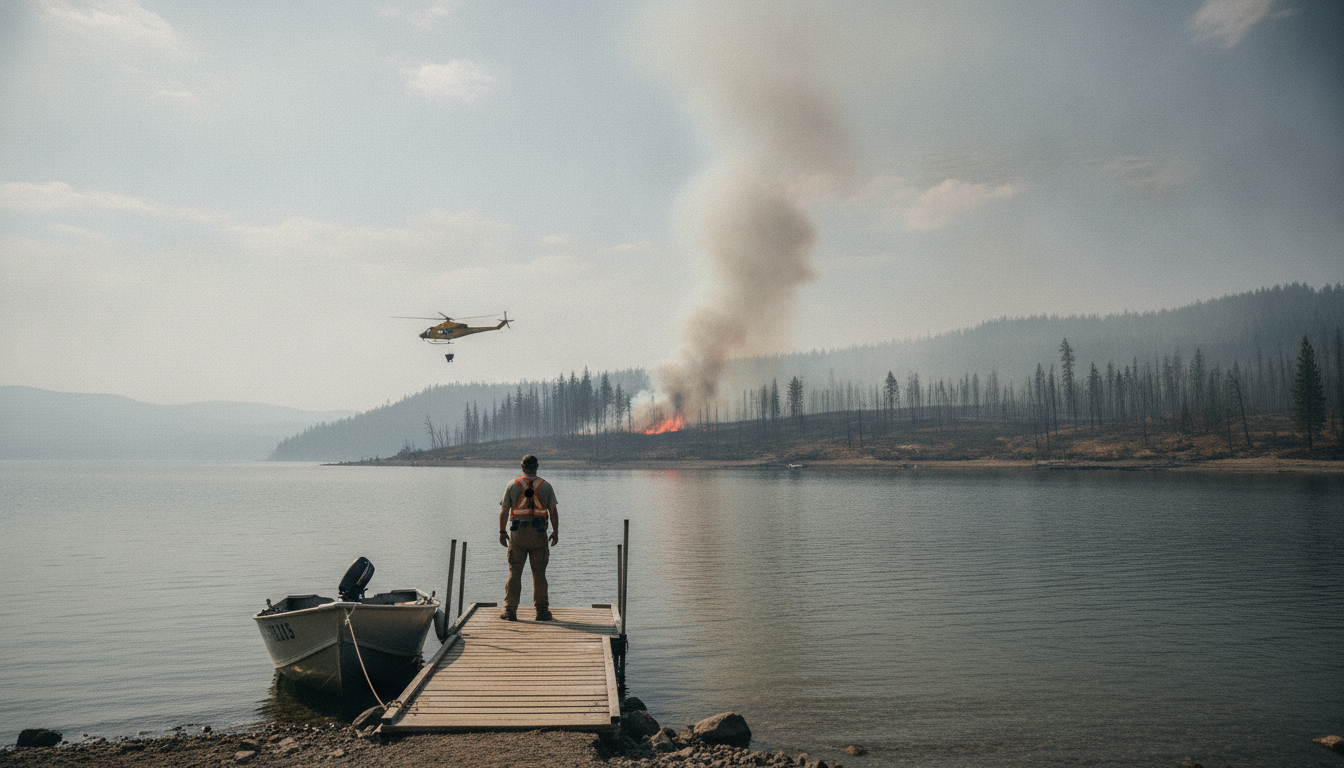
Emergency Response Directed to New Flare-Up
Firefighting personnel and dedicated resources are en route to address a newly detected hot spot northwest of the Westside Road and Irish Creek Road South intersection. Following the update from the Okanagan Indian Band (OKIB), officials are instructing community members to maintain a safe distance from the active zone. Authorities have specifically requested that individuals on the water exit immediately if aircraft are operating nearby, remaining close to the shoreline to protect emergency responders and ensure air operations proceed without interruption.
Current Fire Status and Weather Outlook
The Bradley Creek wildfire, which was initially discovered on July 31, spans 2,650.3 hectares and stands as one of 109 active blazes across British Columbia. The fire remains classified as ‘being held’—a status maintained since Saturday indicating that available resources, weather conditions, and fuel barriers should keep the flames within established boundaries. However, officials warn that rising afternoon temperatures, fluctuating humidity, and potential thunderstorm gusts reaching up to 60 km/h could elevate fire behavior and make deep-burning heat pockets more visible as morning haze clears.
Extensive Suppression Efforts Continue
Ground teams are concentrating efforts along the northern and southern flanks, executing patrol and mop-up tasks extending roughly 25 to 100 feet inward from the fire line. Across the broader Bradley Creek wildfire complex, which encompasses the Quilpituk Creek blaze, response operations involve an Incident Management Team, over 100 firefighters, multiple helicopters, heavy equipment units, and structure protection personnel. Concurrently, heavy crews continue building a control line along Newport Creek toward Irish Creek Road, while BC Hydro technicians work along Westside Road to re-energize lines and mitigate hazards from damaged trees. Two evacuation orders and two evacuation alerts remain in effect, while public updates from the BC Wildfire Service will transition to once daily unless major developments occur.
BC STORIES
BC Lions Extend Winning Streak to Three After Thrilling Fourth-Quarter Comeback Against Stampeders
The B.C. Lions won their third straight game, defeating the Calgary Stampeders 30-26 behind Nathan Rourke’s 301 passing yards and a late T.J. Lee interception.

Late Interception Clinches B.C. Victory in Calgary
T.J. Lee intercepted a pass in the end zone with 31 seconds remaining to secure a 30-26 road victory for the B.C. Lions over the Calgary Stampeders on Thursday night at McMahon Stadium. The win marked the third consecutive victory for B.C., pushing their record to 4-5 and dropping Calgary (4-6) to the bottom of the West Division.
Quarterback Nathan Rourke guided the Lions back in the final minutes after two fourth-quarter turnovers had handed Calgary a late lead. Rourke completed touchdown passes to Keon Hatcher and added a rushing score of his own while passing for 301 yards. Running back Zander Horvath delivered a strong performance on the ground, rushing for 102 yards and a touchdown.
Late-Game Drama Follows Turnovers and Injuries
Calgary took a 26-23 lead with 4:02 remaining when Quincy Vaughn scored on a one-yard plunge following an Anthony Johnson interception. Shortly after, the Stampeders recovered a fumble on the kickoff return at the Lions 36-yard line, but kicker Jude McAtamney missed a 39-yard field goal attempt to keep B.C. within three points.
Taking advantage of the defensive stop, Rourke connected with Justin McInnis on a 59-yard play, setting up an 11-yard touchdown pass to Hatcher with 2:09 left on the clock. Kicker Sean Whyte added the extra point to make it 30-26. Calgary backup quarterback Josh Love, who replaced an injured Vernon Adams Jr. in the fourth quarter, drove the Stampeders inside the B.C. 10-yard line before Lee recorded the game-ending interception.
Slow Start Gives Way to Offensive Surge
The Stampeders initially led 9-0 after the opening quarter through three field goals by McAtamney, while B.C. managed just 19 total yards of first-quarter offence. The Lions responded early in the second quarter when Rourke hit Jermaine Jackson for an 85-yard pass, setting up a short touchdown run by Horvath. Erik Brooks caught a touchdown for Calgary, and Rourke found Hatcher for his first touchdown catch just before halftime, sending Calgary into the break with an 18-13 lead.
Rourke gave B.C. its first lead early in the third quarter with a 10-yard rushing score, capped by a 40-yard run from Horvath earlier in the drive. Whyte added a 45-yard field goal in the fourth quarter to put the Lions ahead 23-18 before Calgary’s late surge.
Individual Milestones and Upcoming Schedule
Defensively, Lee posted a team-high nine tackles alongside his game-sealing interception, while linebacker Darnell Sankey achieved his 500th career tackle during the game. Defensive lineman Mathieu Betts brought down Adams earlier in the match for his seventh sack of the season. On offence, Jackson led all receivers with 89 yards, with McInnis registering 86 yards and Hatcher collecting 83.
The Lions return home to face the Saskatchewan Roughriders on Sunday, Aug. 23 at BC Place.

A 1970 Orca Escape Led to 13 Wild Calves — Now an Author Is Searching for the Person Who Freed Them

Why Okanagan Residents Are Being Urged to Rethink Water Use and Waste as Droughts Worsen

Why Are we Being Urged to Rethink Water Use and Waste as Droughts Worsen

Canada’s Conservative Influencers Are Fighting for the Future of the Movement
Clock Ticks Toward Midnight Tariffs as Canada-U.S. Trade Talks Reach Critical Stage
Unused Launchers Expose Ukraine’s Severe Patriot Missile Shortage

Opinion: John Rustad Has to Go

B.C. Supreme Court Grants Cowichan Tribes Title to Historic Richmond Lands and Fishing Rights

Vancouver Canucks Gear Up for a Make-or-Break 2025–26 Season

Kamloops Blazers Announce Off-Season Changes Ahead of 2025–26 Season

BC Ferries Sparks Outcry Over Contract with Chinese Shipyard

A Taste of Autumn: Fall Okanagan Wine Festival 2025
-
 LOCAL2 days ago
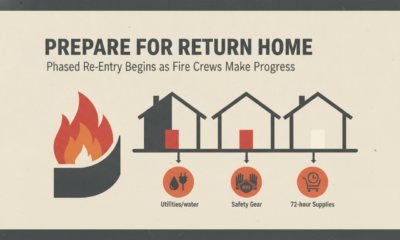
Residents told to prepare for return home as fire crews make progress on Quilpituk Creek blaze
-
 OPINIONS2 days ago
Canada’s Conservative Influencers Are Fighting for the Future of the Movement
-
WORLD2 days ago
Unused Launchers Expose Ukraine’s Severe Patriot Missile Shortage
-

 BC STORIES2 days ago
How Enjoying an Ice Cream Treat Today Helps BC Children’s Hospital
-
 BC STORIES2 days ago
What Residents and Boaters Need to Know as Crews Target Bradley Creek Wildfire Hot Spots
-

 BC STORIES2 days ago
BC Lions Extend Winning Streak to Three After Thrilling Fourth-Quarter Comeback Against Stampeders
-
NATIONAL STORIES2 days ago
Clock Ticks Toward Midnight Tariffs as Canada-U.S. Trade Talks Reach Critical Stage
-
 COMMUNITY2 days ago
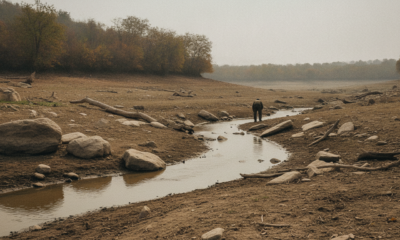
Why Are we Being Urged to Rethink Water Use and Waste as Droughts Worsen