LOCAL
North Cowichan Urges Province to Tackle Street Disorder and Addiction


NORTH COWICHAN, B.C. — The Municipality of North Cowichan is pressing the provincial government to take stronger action on the growing challenges of street disorder, homelessness, and addiction in the community. Local officials say that municipalities have been left to manage the visible impacts of the crisis without sufficient resources, creating mounting pressure on local services, businesses, and residents. Council members have emphasized that while the municipality is doing what it can, long-term solutions require provincial leadership and funding.
Public Safety and Community Concerns
At the heart of the concerns is the strain on public safety and community well-being. Residents and business owners have raised alarms over increased crime, open drug use, and social disorder in public spaces. The municipality has called for expanded provincial support in areas such as addiction treatment, supportive housing, and mental health services, arguing that without significant investment and coordination, local governments will remain overwhelmed. Officials noted that piecemeal approaches have not kept pace with the scale of the crisis.
Calls for Coordinated Provincial Leadership
The push from North Cowichan echoes similar calls from municipalities across British Columbia, where local governments are grappling with the same issues. By amplifying these concerns, North Cowichan aims to ensure that the province prioritizes systemic responses to addiction and homelessness rather than leaving municipalities to shoulder the burden alone. Council members have stressed that meaningful change will require integrated action between all levels of government, combined with direct support for the communities most affected.


LOCAL
Why B.C. Needs a Common-Sense Wildfire Plan, According to Kelowna-Mission MLA Gavin Dew
Kelowna-Mission MLA Gavin Dew calls for increased B.C. wildfire prevention, active forest management, and tech investment to reduce disastrous emissions.


Focusing on Wildfire Prevention Over Suppression
British Columbia currently spends about nine times more money reacting to and fighting wildfires than it does on preventing them, according to Kelowna-Mission MLA and B.C. Conservative Critic for Finance Gavin Dew. In severe fire years, emissions generated by Canadian wildfires can reach two to three times the total greenhouse gas emissions produced by all human and industrial activity in Canada combined.
Highlighting recent Angus Reid Institute polling, Dew noted that wildfire concerns transcend individual beliefs regarding climate change. The survey reveals that 84 per cent of British Columbians view climate change as a fact, while 58 per cent attribute it mostly to human actions. However, concern remains widespread across the board, with 80 per cent worried about smoke and air quality, 82 per cent concerned about property damage, and 87 per cent anxious about impacts on wildlife and natural areas.
Advocating Active Management and Technology
To address the ongoing threat, Dew is advocating for active forest management, including thinning, prescribed burning, fuel reduction, and strategic harvesting involving the forest industry. He emphasizes that government policy must move toward proactive stewardship rather than paying for disaster after it strikes.
Dew also highlights the role of modern technology in early fire detection and response, pointing to innovations such as artificial intelligence, predictive modelling, drones, sensors, and specialized cameras. He referenced a proposal from the Council of Canadian Innovators for a $100-million Wildfire Innovation Fund to support real-world testing, government procurement, and global export of B.C.-developed wildfire tools.
While B.C. recently allocated $1 million toward an AI project to project lightning strikes and wildfire risks, Dew argues that provincial ambition should be significantly larger to safeguard communities, reduce emissions, and support economic growth.
COMMUNITY
Campbell River RCMP Arrest Two People and Seize $77K in Cash During Search
Campbell River RCMP seized $77,000 in cash, marijuana, and suspected cocaine after executing a search warrant on South Alder Street. Two people were arrested.

Local Search Warrant Yields Cash and Suspected Illicit Substances
A 62-year-old man and a 58-year-old woman were arrested in Campbell River after law enforcement officers executed a search warrant in the 500 block of South Alder Street on July 9, 2026. Following their arrest, both individuals were released and are scheduled to make their first court appearance on October 5, 2026.
During the operation, officers discovered and confiscated more than $77,000 in cash, along with 4.5 kilograms of marijuana, over 225 grams of suspected cocaine, and 10 grams of suspected crack cocaine.
Three-Month Police Operation Involves Multiple Units
The July search was the culmination of a three-month probe led by the Campbell River RCMP Street Crime unit. General duty officers, Major Crime personnel, and Police dog services assisted with the operation.
“This is another excellent example of how our investigators are working to remove illicit drugs from the street and hold traffickers accountable,” said RCMP spokesperson Cst. Maury Tyre.
Authorities encourage anyone holding details about active criminal enterprises or illegal drug trafficking to contact the Campbell River RCMP at 250-286-6221.
COMMUNITY
Why Rathrevor and Tofino Beaches Stand Out Among Canada’s Best Shorelines
Four Vancouver Island beaches, including Rathrevor and Chesterman, earned top 10 spots in a national ranking based on visitor ratings and review analysis.
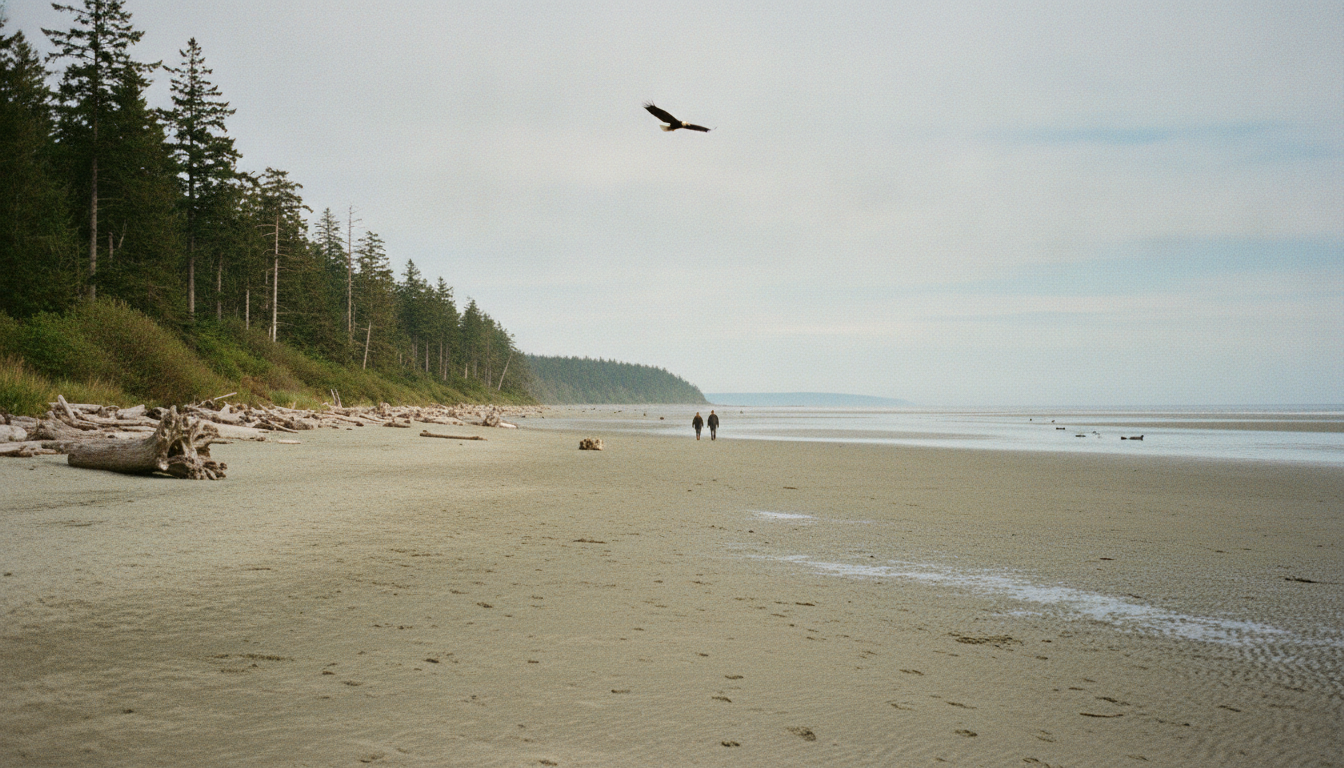
Vancouver Island Shorelines Lead National Ranking
Vancouver Island holds four spots in the top 10 list of Canada’s best beaches, according to recent research released by Spin Casino. Parksville’s Rathrevor Beach secured third place overall for the second consecutive year, while Tofino’s Chesterman Beach earned the top national ranking for 2026.
Long Beach and Schooner Cove, both located in Tofino, placed fourth and tenth respectively. The top 10 list was predominantly featured by destinations in British Columbia and Ontario, with Prince Edward Island’s Cavendish Beach ranking fifth as the sole entry outside those two provinces. Ontario’s Sandbanks Provincial Park took second place.
High Visitor Marks for Tranquility and Natural Scenery
Rathrevor Beach Provincial Park gained high praise from travelers, with 94 per cent of reviewers giving it four or five stars. The park, known for a sandy shoreline that extends nearly 1.5 kilometres into the Strait of Georgia during low tide, recorded the highest number of mentions regarding peacefulness among all evaluated sites. Approximately 32 per cent of its reviews highlighted its unspoilt natural environment, where visitors can watch seals off the coast or see bald eagles overhead as the shoreline recedes by nearly a kilometre.
Top-ranked Chesterman Beach earned first place after receiving the highest volume of four- and five-star TripAdvisor ratings. It recorded romantic mentions most frequently, with 37 per cent of reviewers describing its Pacific Ocean setting and sands as beautiful.
Study Methodology and Coastal Appeal
The rankings were compiled by Spin Casino using an index score out of 500 derived from TripAdvisor data. The study evaluated 50 popular beaches across seven coastal provinces, excluding Yukon. Researchers measured ratings over four stars along with specific keyword mentions of clean, beautiful, peaceful, and romantic.
A spokesperson for Spin Casino noted that millions of people visit Canadian beaches annually, particularly in the summer when average temperatures ranging between 20 C and 25 C create favorable conditions with warm waters and light breezes.
What Escalating Canada-U.S. Tariffs Mean for B.C. Jobs and Local Businesses
B.C. Mass Murderer Remains Behind Bars as Parole Board Cites Elevated Reoffending Risk

Why the B.C. Lions Must Stay Focused After Winning Big Over Saskatchewan
Sexual Assault Trial for Central Saanich Police Officer Delayed to 2027

They have proven they can win votes. Kerry-Lynne Findlay now has to prove they can govern.
Abbotsford-Mission Riding President Quits Over Leader’s Shift to Far Right

Opinion: John Rustad Has to Go

B.C. Supreme Court Grants Cowichan Tribes Title to Historic Richmond Lands and Fishing Rights

Vancouver Canucks Gear Up for a Make-or-Break 2025–26 Season

Kamloops Blazers Announce Off-Season Changes Ahead of 2025–26 Season

BC Ferries Sparks Outcry Over Contract with Chinese Shipyard

A Taste of Autumn: Fall Okanagan Wine Festival 2025
-

 NATIONAL STORIES4 days ago
Carney’s Exit From U.S. Trade Talks Leaves Canadian Exporters Facing 50% Duties
-
BC STORIES4 days ago
Road Closure in Prince George Following Fatal Emergency Plane Landing
-
BC STORIES4 days ago
Shift toward populist direction fuels tension and departures in B.C. Conservative Party
-
 BC STORIES2 days ago
Thunderstorms Leave Four Out-of-Control Wildfires Burning Near Tulameen
-
NATIONAL STORIES2 days ago
What to Know About Canada’s Plan to Counter 50 Per Cent U.S. Tariffs Next Month
-
COMMUNITY2 days ago
The week ahead in West Coast: Mon 24 — Sun 30 August
-
BC STORIES2 days ago
What the Canada-U.S. Trade Breakout Means for B.C. Consumers and Businesses
-
BC STORIES2 days ago
Why two B.C. MLAs are stepping away to build a new option for ‘politically homeless’ voters