BC STORIES
What Escalating Canada-U.S. Tariffs Mean for B.C. Jobs and Local Businesses
B.C. Premier David Eby backs retaliatory tariffs against the U.S. as business groups warn that 11,200 provincial jobs could be threatened by the trade dispute.


Escalating Trade War Triggers Economic Concerns
As trade tensions worsen between Canada and the United States, British Columbia could face severe economic fallout, with estimates indicating 11,200 jobs in the province are in jeopardy. The situation makes B.C. the most impacted province per capita across Canada, according to the B.C. Chamber of Commerce, which noted that roughly 14 per cent of the province’s overall exports are directly affected.
Provincial Leadership Pushes for Stronger Countermeasures
Speaking from a Vancouver liquor store on Tuesday afternoon—a location highlighting B.C.’s standing ban on American alcohol products—Premier David Eby backed federal countermeasures while pressing for further action. “The only way to deal with a thug and a bully is to stand up to him,” Eby said. “That’s why the prime minister’s step was the right one.”
Eby urged Prime Minister Mark Carney to consider non-tariff pressure tactics, such as restricting U.S. access to thermal coal export terminals located at Roberts Bank. The American energy sector relies on the B.C. facility because shipping coal from domestic U.S. ports remains difficult. Eby mentioned the idea, previously brought forward by former B.C. Conservative leader John Rustad, stating, “I think that this is something that the federal government should be looking at as well.”
Tariffs Follow Collapsed Trade Negotiations
The latest bilateral strain follows the breakdown of bilateral talks over the weekend. U.S. President Donald Trump launched a 50 per cent tariff targeting roughly $30 billion in Canadian exports, which went into force on Saturday. In response, Prime Minister Carney announced matching retaliatory duties on American products ranging from 15 to 50 per cent to offset the impact “dollar for dollar.” The Canadian tariffs are scheduled to take effect on Sept. 8.
Local Businesses and Supply Chains Face Hardships
Describing the retaliatory actions as a “body blow” for the provincial business community, B.C. Chamber of Commerce President Jen Riley warned that sectors like forestry are facing heightened risks. The industry is already struggling under existing softwood lumber duties that triggered mill closures provincewide. Riley pointed out that damage spreads beyond primary sites to downstream regional industries, such as Delta trucking operations forced to transport reduced freight loads. B.C. firms are also struggling with critical imported inputs, such as specialized agricultural machinery that cannot be easily replaced locally.
Riley plans to meet with federal and provincial representatives to advocate for long-term economic relief and sector-specific supports. Meanwhile, Ryan Mitton of the Canadian Federation of Independent Businesses cautioned governments against repeating previous pandemic-era relief errors, where small business owners faced complicated applications and long delays. Mitton cited complex cross-border supply chains, such as local agricultural products exported south for pet food processing before returning to Canadian retail shelves, as examples of operations getting hit from both directions.
Eby signaled agreement with these business concerns, promising that B.C. is advocating for simplified support programs for small and medium enterprises. “They’re going to need additional support, and they don’t need a huge number of complicated processes to go through,” Eby said.

BC STORIES
B.C. Mass Murderer Remains Behind Bars as Parole Board Cites Elevated Reoffending Risk
The Parole Board of Canada has denied full parole for the fourth time to David Ennis, who killed six family members in Wells Gray Provincial Park in 1982.

Parole Board Rejects Full Release
The Parole Board of Canada determined on Aug. 19 that releasing David Ennis on full parole would pose an undue risk to the public, concluding his risk of committing another offence remains elevated. Ennis, previously known as David Shearing, is currently serving a life sentence for six counts of second-degree murder.
In its written decision, the board emphasized that Ennis’ release would fail to support public safety or facilitate his safe reintegration into the community as a law-abiding citizen. His prospects for successfully returning to society were rated as low, with officials noting he lacked a submitted community strategy, confirmed housing, or employment plans. Although Ennis expressed a desire to reside near his wife—who, alongside two friends, was recognized as a positive support—these factors were insufficient to mitigate safety concerns.
Psychological Assessment Details Risk Factors
A Psychological Risk Assessment conducted in June 2026 revealed that while Ennis claimed he no longer experiences violent sexual fantasies, he continues to report non-violent sexual role-playing fantasies with dominant themes. During evaluations, the convict admitted that he likely would have carried out similar crimes in the future had he not been arrested.
Psychologists evaluated his risk of sexual violence recidivism as low for escorted absences, low-to-medium for unescorted absences, and moderate regarding full parole. However, the report cautioned Ennis that any future sexual offence could cause severe harm or death, warning that his risk will never be fully eliminated.
Details of the 1982 Crime
Ennis was convicted for the August 1982 murders of six family members visiting from West Kelowna. The victims included Bob and Jackie Johnson, their daughters Janet, 13, and Karen, 11, as well as Jackie’s parents, George and Edith Bentley. Ennis stalked the group for days while they were camping at Wells Gray Provincial Park before fatally shooting all four adults at their campsite.
He then held the two young girls captive for several days, sexually assaulting the eldest, before murdering them both. To destroy evidence, Ennis placed all six bodies into the family vehicle and set it on fire. Following a waiver of his right to a hearing in March, the board conducted a legislative review that culminated in this fourth denial of full parole.
BC STORIES
Sexual Assault Trial for Central Saanich Police Officer Delayed to 2027
The sexual assault trial of Central Saanich police officer Const. Ryan Johnston has been rescheduled to February 2027 following evidence hearings.

New Court Dates Set Following In-Camera Hearing
A new trial date of February 2027 has been scheduled for Const. Ryan Johnston, a Central Saanich Police Service officer facing a sexual assault charge.
Johnston was originally slated to go to trial on Monday, Aug. 24. However, proceedings before Justice Bradford Smith took place mostly in camera while the court and legal counsel addressed an upcoming hearing regarding the admissibility of undisclosed evidence. Justice Smith scheduled an application hearing on the matter for December.
Background and Involvement of Multiple Agencies
The Vancouver Police Department initially announced charges in December 2024 against Johnston and Sgt. Matthew Ball, alleging each officer had a single count of sexual assault. Ball was additionally accused of breach of trust. According to investigators from the Vancouver Police Department, evidence indicated both officers separately engaged in intimate, inappropriate relationships at different times with a vulnerable woman they encountered through their official duties. Ball died by suicide the day after the charges were made public, as reported by other media outlets.
During Monday’s court appearance, legal representatives attended on behalf of Johnston, the Crown, the victim, the Central Saanich Police Service, the Victoria Police Department, and an unnamed female VicPD officer. The reason for VicPD’s legal representation in the proceedings remains unclear.
According to coverage by the Tofino-Ucluelet Westerly News, Vernon Morning Star, and Penticton Western News, Johnston was officially charged with one count of sexual assault in 2024.
BC STORIES
Abbotsford-Mission Riding President Quits Over Leader’s Shift to Far Right
Abbotsford-Mission riding president Randy Hawes resigned from the B.C. Conservatives, citing leader Kerry-Lynne Findlay’s move toward the far right.

Former Mayor Criticizes Party’s Shift to Far Right
Randy Hawes announced on social media Monday, Aug. 24, that he has stepped down as president of the Abbotsford-Mission riding association and departed the Conservative Party of B.C. His resignation comes as party leader Kerry-Lynne Findlay seeks to run for the seat. Hawes, a former Mission mayor and BC Liberal MLA, stated that Findlay represents “a huge step to the far right,” adding that her political direction is not what the province needs or wants.
Surprise Resignation of Sitting MLA Prompts Concerns
Hawes had served as riding association president since Gasper was elected, helping recruit new members and fundraise. However, Gasper recently stepped down as MLA to make way for Findlay, taking a new role as Findlay’s deputy chief of staff. Hawes said he received no advance notice of Gasper’s departure, learning about it entirely through news reports and social media. He criticized the move, arguing that an Abbotsford-Mission byelection is an unnecessary expense and suggesting Findlay should have instead asked her husband, Surrey South MLA Brent Chapman, to vacate his seat.
Broader Party Departures and Political Uncertainty
Reflecting on the party’s direction since Findlay became leader in May, Hawes expressed disappointment, noting he had hoped the party would remain centre-right rather than adopting what he described as a “MAGA-style right where you hate people.” He indicated he intends to work against Findlay’s candidacy while hoping a centrist alternative emerges. The departure follows other recent exits within the party, including party president Aisha Estey, vice-president Sharon White, and MLAs Ian Paton and Peter Milobar. In a Tuesday press conference in Vancouver, Findlay acknowledged the instability, telling reporters, “There may even be others that leave our caucus; I don’t know.” The Conservative Party of B.C. was not contacted for comment.
What Escalating Canada-U.S. Tariffs Mean for B.C. Jobs and Local Businesses
B.C. Mass Murderer Remains Behind Bars as Parole Board Cites Elevated Reoffending Risk

Why the B.C. Lions Must Stay Focused After Winning Big Over Saskatchewan
Sexual Assault Trial for Central Saanich Police Officer Delayed to 2027

They have proven they can win votes. Kerry-Lynne Findlay now has to prove they can govern.
Abbotsford-Mission Riding President Quits Over Leader’s Shift to Far Right

Opinion: John Rustad Has to Go

B.C. Supreme Court Grants Cowichan Tribes Title to Historic Richmond Lands and Fishing Rights

Vancouver Canucks Gear Up for a Make-or-Break 2025–26 Season

Kamloops Blazers Announce Off-Season Changes Ahead of 2025–26 Season

BC Ferries Sparks Outcry Over Contract with Chinese Shipyard

A Taste of Autumn: Fall Okanagan Wine Festival 2025
-

 NATIONAL STORIES3 days ago
Carney’s Exit From U.S. Trade Talks Leaves Canadian Exporters Facing 50% Duties
-
BC STORIES3 days ago
Road Closure in Prince George Following Fatal Emergency Plane Landing
-
BC STORIES3 days ago
Shift toward populist direction fuels tension and departures in B.C. Conservative Party
-
 BC STORIES1 day ago
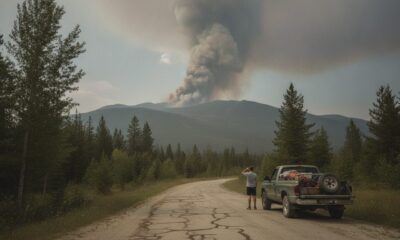
Thunderstorms Leave Four Out-of-Control Wildfires Burning Near Tulameen
-
COMMUNITY1 day ago
The week ahead in West Coast: Mon 24 — Sun 30 August
-
NATIONAL STORIES1 day ago
What to Know About Canada’s Plan to Counter 50 Per Cent U.S. Tariffs Next Month
-
BC STORIES1 day ago
What the Canada-U.S. Trade Breakout Means for B.C. Consumers and Businesses
-
BC STORIES1 day ago
Why two B.C. MLAs are stepping away to build a new option for ‘politically homeless’ voters