Health
The Strategic Edge: Why Sleep Is the Executive’s Most Underutilized Asset
Discover why top executives are prioritizing sleep as a strategic tool for better decision-making, cognitive performance, and long-term brain health.

The Biological Cost of High-Performance Leadership
In the high-stakes world of corporate leadership, sleep is often viewed as a luxury or a sign of weakness. However, emerging research and insights from experts like Dr. Matthew Walker, author of Why We Sleep, suggest that sleep is actually the most effective daily reset available to the human brain. While many executives believe they can function on four to six hours of rest, the biological reality is far more demanding. Less than 1% of the population carries the rare DEC2 genetic variant that allows for true high-level performance on minimal rest; for everyone else, sleep deprivation is a direct tax on cognitive output.
The Glymphatic System: Your Brain’s Nightly Waste Removal
One of the most critical functions of sleep occurs through the glymphatic system, a waste-clearance mechanism that operates at ten times its normal capacity during deep sleep. During this period, the brain is flooded with cerebrospinal fluid to flush out toxic metabolic byproducts, such as amyloid-beta, which has been linked to Alzheimer’s disease. For a CEO, operating on five hours of sleep means entering critical board meetings or negotiations with yesterday’s neural waste still cluttering their cognitive processors. This disruption directly suppresses brain networks governing memory, focus, and emotional intelligence.
The Paradox of Self-Assessment
A significant risk for leaders is the sleep paradox: the more sleep-deprived an individual becomes, the less accurately they can judge their own level of impairment. A landmark study published in the journal Sleep found that individuals restricted to six hours of rest for two weeks developed cognitive deficits equivalent to two full nights of total sleep deprivation. Remarkably, these participants reported feeling only slightly tired, demonstrating a dangerous disconnect between subjective feeling and objective performance. This lack of self-awareness can lead to poor hiring decisions and flawed capital allocation.
Sleep as a Strategic Tool
Modern titans of industry, such as Jeff Bezos, have famously prioritized eight hours of sleep to preserve the cognitive state required for high-leverage decision-making. During slow-wave sleep, the brain consolidates information and extracts patterns from complex data sets, allowing leaders to find connections that others miss. Ultimately, the difference between a good decision and a trajectory-shifting great one is often found in the quality of the leader’s rest. For today’s executive, sleep isn’t just maintenance; it is a competitive advantage.

Africa
Deadly Bundibugyo Outbreak in Congo Outpacing Global Response as Deaths Surge
The DRC’s Ebola Bundibugyo outbreak is outpacing global efforts with 220 dead. Lack of vaccines, funding cuts, and conflict create a perfect storm for catastrophe.
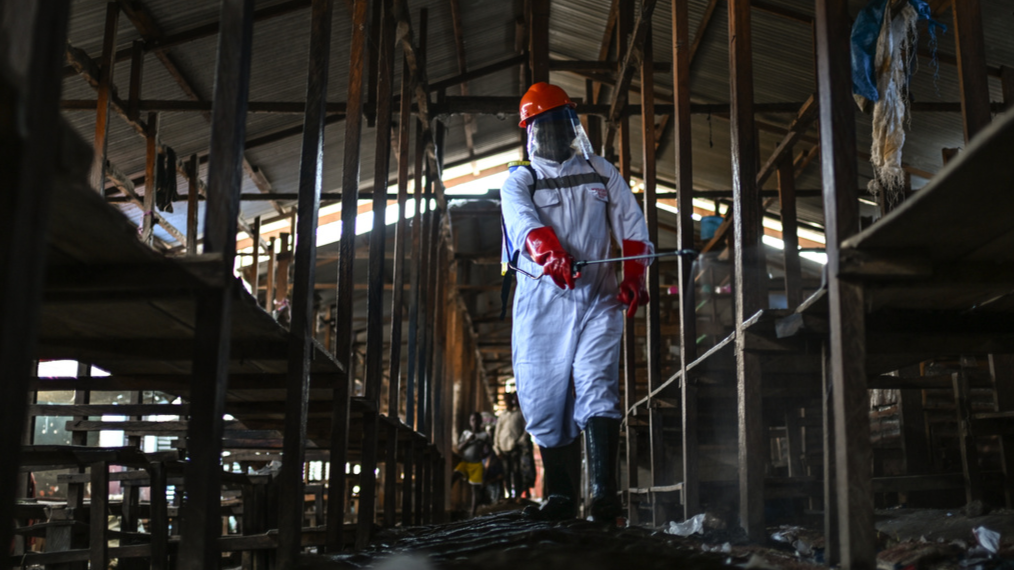
A Race Against Time in Ituri
The Democratic Republic of Congo is facing a catastrophic escalation in its latest Ebola outbreak, as health officials warn that the virus is spreading at a \”breakneck speed\” that has already overwhelmed international response efforts. Centered in the volatile Ituri province, the outbreak involves the rare Bundibugyo strain—a variant for which there is currently no approved vaccine or effective medical treatment. According to the World Health Organization (WHO), the crisis has already claimed an estimated 220 lives out of 900 suspected cases, with the virus now confirmed to have crossed the border into neighboring Uganda.
The Critical Gap in Contact Tracing
Leaked documents from a high-level coordination meeting between the WHO and the Africa Centres for Disease Control and Prevention (Africa CDC) reveal a terrifying reality: the response is weeks behind the virus’s trajectory. As of last week, only 7 percent of the over 1,200 identified contacts of suspected patients had been tracked. That number of potential exposures has since risen to more than 2,000, yet the majority remain unmonitored. Experts point out that the virus circulated undetected for six weeks before the first official report, giving it a massive head start in a region already destabilized by conflict.
A Perfect Storm of Funding and Fear
The global health response is struggling under the weight of several systemic failures. The withdrawal of the United States from the WHO and significant cuts to international aid have left a leadership vacuum and a shortage of essential resources, from fuel for transport vehicles to specialized diagnostic tests. Locally, health workers face violent resistance; hospitals have been attacked and isolation units burned by communities wary of outside intervention. This mistrust, coupled with the absence of modern vaccines, has forced medical teams like Mdecins Sans Frontires to return to the \”basics\” of containment used decades ago.
Lessons from the Past
Comparison to the devastating 2014-2016 West African epidemic is inevitable. Epidemiologists warn that unless funding and personnel increase immediately, the current situation in the DRC could mirror the tragedy of the past, where fear led families to hide the sick, further fueling the contagion. With healthcare workers already among the casualties, every day without a fully resourced response allows the virus to claim more ground in one of the world’s most vulnerable regions.
Canadian News
New National Study Reveals Hormonal Shifts Are Reshaping Identity for Majority of Canadian Women
A new Leger survey finds 59% of Canadian women feel hormonal changes impact their identity, highlighting gaps in healthcare and the need for better support.

The Invisible Crisis: Hormonal Health and the Female Identity
A groundbreaking national survey has pulled back the curtain on a silent struggle facing millions of women across Canada. The Leger survey, commissioned by hormone health platform Science&Humans, reveals that nearly 60% of Canadian women feel hormonal changes have fundamentally altered their sense of identity. This data underscores a critical intersection between biological health and psychological well-being that has long been neglected by traditional medical frameworks.
Barriers to Care and the ‘Normal Aging’ Trap
Despite the profound impact on confidence, relationships, and professional performance, the study highlights significant systemic failures within the healthcare landscape. Over half of the respondents reported facing barriers when seeking hormone-related care, with 29% being told their debilitating symptoms were simply a result of “normal aging.” This dismissal often leads to a cycle of isolation; approximately 41% of women surveyed admitted that feeling unheard by medical professionals makes them less likely to speak openly about their health concerns in the future.
From Adolescence to Menopause: A Lifelong Journey
The research indicates that the struggle with hormonal identity is not limited to midlife. Data shows that 43% of women aged 18–24 identified their teenage years as the period they felt most unsure of themselves due to hormonal fluctuations. To combat this lifelong stigma, Science&Humans has launched the “Who Am I?” campaign, featuring tech entrepreneur Michele Romanow. The initiative aims to normalize discussions around conditions ranging from PCOS to perimenopause, advocating for a healthcare model that prioritizes informed, compassionate support over clinical dismissal.
A Call for Better Medical Training
The findings conclude with a clear demand for change: 81% of Canadian women believe that healthcare providers require significantly better training and resources regarding hormone health. As the conversation shifts, advocates like Romanow and Science&Humans co-founder Hira Siddiqui are pushing for a data-driven, integrative approach to ensure that women can navigate these inevitable biological transitions without losing their sense of self.
Health
Ebola Crisis Escalates in Congo as WHO Raises Risk Assessment to ‘Very High’
WHO upgrades Congo Ebola risk to ‘very high’ as cases surge. Learn about the Bundibugyo strain, lack of vaccines, and the international response efforts.

Rapid Spread Triggers National Emergency
The World Health Organization (WHO) has upgraded its risk assessment for the ongoing Ebola outbreak in the Democratic Republic of Congo (DRC) to “very high” at the national level. Director-General Tedros Adhanom Ghebreyesus warned on Friday that the virus is spreading rapidly, with confirmed cases jumping to 82 and suspected cases nearing 750. The assessment reflects a significant escalation from the previous “high” rating, though the global risk currently remains low.
The Challenge of the Bundibugyo Strain
Unlike many previous outbreaks driven by the Zaire strain, the current epidemic is caused by the Bundibugyo virus. This presents a critical challenge for health officials because there are currently no approved vaccines or therapeutics specifically for this strain. Historically, the Bundibugyo virus was first identified during a 2007 outbreak in Uganda and reappeared in 2012 in Isiro, Congo. Because of the lack of established treatments, the WHO is moving aggressively to fast-track clinical trials for experimental monoclonal antibodies and the antiviral drug obeldesivir.
International Impact and Containment Efforts
The outbreak has already crossed borders, with two confirmed cases in neighboring Uganda involving travelers from the DRC. However, the WHO noted that Uganda’s proactive measures—including intense contact tracing and the cancellation of major public gatherings—appear to have stabilized the situation there. The crisis has also affected international workers; an American national working in the DRC has tested positive and was evacuated to Germany, while another high-risk contact was transferred to the Czech Republic.
Community Resistance and Security Concerns
Response efforts are facing significant hurdles on the ground due to community mistrust and security issues. In the town of Rwampara, an Ebola treatment center was set on fire on Thursday. Reports suggest the arson was sparked after locals were prevented from retrieving the body of a deceased relative. Because bodies of Ebola victims remain highly contagious, authorities must manage burials to prevent further transmission, a practice that frequently clashes with traditional funeral customs and fuels local tensions.
Tensions Surge as US Strikes Iranian Targets Amid High-Stakes Nuclear Negotiations
Deadly Bundibugyo Outbreak in Congo Outpacing Global Response as Deaths Surge
CFL Scores Historic $500 Million Media Rights Deal with Bell Media, DAZN, and YouTube
UBC Dementia Research Receives $500,000 Boost for Revolutionary Blood-Based Testing
The Strategic Edge: Why Sleep Is the Executive’s Most Underutilized Asset
A Geopolitical Shift: Canada and Germany Strike Landmark 20-Year LNG Export Deal

Opinion: John Rustad Has to Go

B.C. Supreme Court Grants Cowichan Tribes Title to Historic Richmond Lands and Fishing Rights

Vancouver Canucks Gear Up for a Make-or-Break 2025–26 Season

Kamloops Blazers Announce Off-Season Changes Ahead of 2025–26 Season

BC Ferries Sparks Outcry Over Contract with Chinese Shipyard

A Taste of Autumn: Fall Okanagan Wine Festival 2025
-
National News5 days ago
Confusion and Skepticism Mount Over Alberta’s Separation Referendum
-
Alberta News5 days ago
Elections Alberta Alleges Key Organizer Refuses Cooperation in Massive Voter Data Misuse Probe
-
Finance4 days ago
Oil Prices Pivot as U.S. Strikes in Iran Dampen Hopes for Diplomatic Breakthrough
-
Religion5 days ago
The Vatican’s Digital Crusade: Pope Leo XIV Issues Landmark AI Encyclical Warning Against ‘Opaque Algorithms’
-
Canadian News4 days ago
New National Study Reveals Hormonal Shifts Are Reshaping Identity for Majority of Canadian Women
-
Global Economy5 days ago
Strategic Patience: Trump Advises Negotiators Against Rushed Iran Agreement
-
Hockey5 days ago
Hurricanes Even Eastern Conference Final in Overtime Grinder Against Canadiens
-
BCNEWS4 days ago
Tim Hortons Pivots to Local Hiring Strategy Amid Rising Youth Unemployment and Fast-Food Competition