POLITICS
The Phoenix Rebirth: Erika Kirk and the Chaotic Future of Turning Point USA
Explore the chaotic Turning Point USA AmericaFest in Phoenix, where Erika Kirk takes leadership after Charlie Kirk’s death, shaping the future of conservative youth activism.


The Shadow of a Founder
The air in the Phoenix Convention Center was thick with more than just the scent of overpriced coffee and youthful ambition; it was heavy with the weight of a movement undergoing a violent transformation. This year’s AmericaFest, the flagship event for Turning Point USA (TPUSA), arrived at a critical juncture in American conservative history. Following the assassination of its founder, Charlie Kirk, in September, the organization found itself at a crossroads between collapse and radical evolution. For many in attendance, the event was less a traditional political convention and more a high-stakes vigil for the future of the American Right. The scorching Arizona sun, even in the winter months, mirrored the heat of the debates occurring inside the glass walls. Outside, small pockets of protesters and counter-protesters traded insults, creating a perimeter of tension that defined the physical and ideological boundaries of the AmFest experience.
Erika Kirk Takes the Stage
At the center of this storm is Erika Kirk, who stepped into the leadership role vacated by her husband under the most tragic of circumstances. Addressing a crowd of thousands, she maintained a composure that many found both surprising and defiant. “Say what you want about AmFest, but it’s definitely not boring,” she told the audience midway through the convention. Her words served as a mantra for an event that frequently veered into the unpredictable, blending the high-octane aesthetics of a rock concert with the solemn fervor of a political revival. Erika has been forced to balance her private grief with a very public demand for strength, a role she has embraced with a mix of traditionalist rhetoric and modern media savvy. Her presence on stage was a visual reminder of the organization’s shift toward a legacy-driven narrative.
A Movement in Transition
The atmosphere was described by many attendees as “controlled chaos.” From the main stage, speakers decried the “radical left” and the “deep state” with renewed intensity, framing Charlie Kirk’s death not just as a personal loss but as a political martyrdom. The halls were filled with Gen Z activists donning “Kirk Forever” hats, mingling with veteran political consultants who seemed unsure of the movement’s stability without its primary architect. The demographic makeup of the event remained overwhelmingly young, a testament to the organization’s continued grip on a specific segment of the American electorate that values disruption over tradition. Young men in suits and young women in cocktail dresses treated the event like a high-stakes networking mixer, their eyes constantly flitting to their phones to check the latest trending hashtags and viral clips from the floor.
The Logistics of Chaos
Despite the mourning, the convention prioritized momentum over melancholy. Large-scale pyrotechnics, rock-concert lighting, and a relentless schedule of influencers ensured that the energy remained at a fever pitch. However, cracks in the facade were visible to the trained eye. Reports of shouting matches between different factions of the MAGA movement surfaced in the media lounges, highlighting a power vacuum that Erika Kirk is still struggling to navigate. Security was noticeably tighter than in previous years, with bag checks and armed guards serving as a constant reminder of the tragedy that had catapulted Erika into the spotlight. Some attendees expressed concerns that without Charlie’s specific brand of polarizing charisma, the organization might splinter into smaller, more radicalized groups, losing its cohesive power on the national stage.
Mainstage Rhetoric and Digital Warfare
The rhetoric from the podium was sharper and more existential than in previous years. Speakers who once focused on fiscal conservatism or campus free speech now pivoted to themes of national survival and spiritual retribution. The digital footprint of the event was equally massive, with millions of impressions on social media platforms as TPUSA influencers live-streamed every moment to their followers. This digital warfare is the hallmark of the Kirk legacy, and the convention proved that the infrastructure for viral content remains robust. However, the absence of Charlie’s voice, the one that could tie disparate grievances into a single, cohesive narrative, was felt during the quieter moments between panels. The speakers often struggled to find a unifying theme beyond the shared sense of loss and the desire for political victory at any cost.
Political Implications and the Road Ahead
Political analysts watching the event from afar noted that AmFest has become a litmus test for the Republican party’s youth appeal. “TPUSA has always been the bridge between online meme culture and grassroots activism,” said one political strategist present at the event. “With Erika at the helm, we are seeing a shift toward a more emotional, legacy-driven narrative. It is less about policy and more about the survival of the movement itself.” The stakes are high as the next election cycle looms, and the unity of this base is far from guaranteed. The convention served as a siren call to the party’s leaders that the youth wing will not be easily tamed or redirected by traditional party structures.
The Lasting Impact of AmFest
As the sun set over the Phoenix skyline on the convention’s final day, the legacy of the event remained a subject of intense debate. Was it a defiant stand against adversity or the beginning of a slow decline for an organization that defined a decade of conservative youth activism? For Erika Kirk, the answer was simple: the movement is too big to fall. As she navigated the backstage corridors, surrounded by security and adoring fans, the chaotic spirit of AmericaFest seemed to be the only thing keeping the grief at bay. The convention proved that while leaders may fall, the infrastructure of modern political spectacle is designed to endure, fueled by a mixture of anger, hope, and an unwavering commitment to the idea that the future of America must be fought for on the stage. The phoenix, it seems, is still rising, though it is currently wreathed in the smoke and fire of a movement in deep mourning and desperate search for its next chapter.




BC STORIES
Why Fake Signs Targeted a Small Green Party Campaign on B.C. Election Eve
Green Party candidate Tim Binnema reported 100 to 200 fake election signs in Surrey-Fleetwood to Elections BC on the eve of the B.C. provincial election.

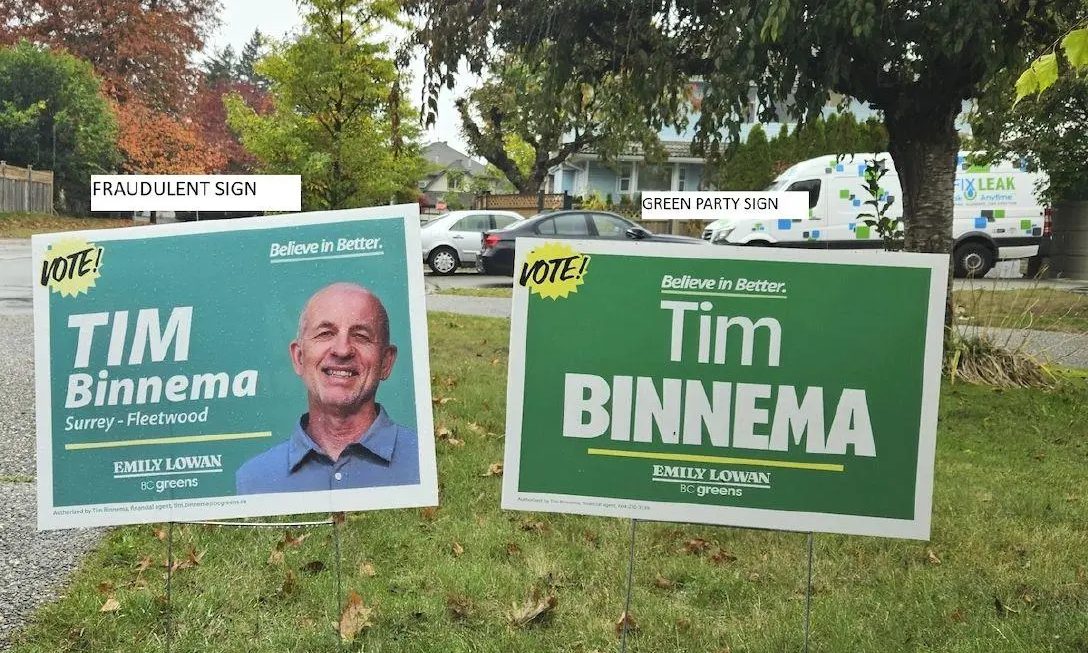
Unauthorized Signage Reported in Surrey-Fleetwood
Elections BC has been notified after between 100 and 200 unauthorized election signs appeared in Surrey-Fleetwood on the eve of the provincial vote. Green Party candidate Tim Binnema discovered the unauthorized material featuring his name and face on Oct. 23, the day before final voting ended.
Binnema, a manager at an engineering firm, noted that the signs contained key discrepancies compared to his official campaign materials. Unlike his legitimate signage, the unauthorized placards displayed his photo, which appeared to be taken directly from his campaign website. The signs also featured an incorrect shade of green and falsely claimed to be authorized by his financial agent.
Potential Vote-Splitting Tactics
The unauthorized placards were discovered near third-party political signs around Surrey and Fleetwood, particularly near 152nd Street and 96th Avenue. Binnema observed that his fake signs were positioned alongside materials expressing opposition to the government, such as “Vote NDP out” and “Why a snap election?” signs, suggesting a deliberate placement pattern.
The riding outcome saw Conservative candidate Garry Purewal secure victory with 8,691 votes, defeating NDP incumbent Jagrup Brar, who received 6,522 votes. Binnema finished in third place with 1,030 votes at the latest tally.
“It was shocking, to tell you the truth. When I turned around the corner and saw my mug (on signs), I thought, ‘Oh my goodness, how did this happen?’” Binnema said, adding that he ran a modest campaign with few signs and feels a responsibility to clear the fraudulent materials.
BC STORIES
Why the Conservatives’ Majority Win in Kelowna-Mission Signals Big Changes for Local Healthcare and Economy
Conservative Gavin Dew wins re-election in Kelowna-Mission as his party secures a majority government in B.C., promising action on healthcare and jobs.
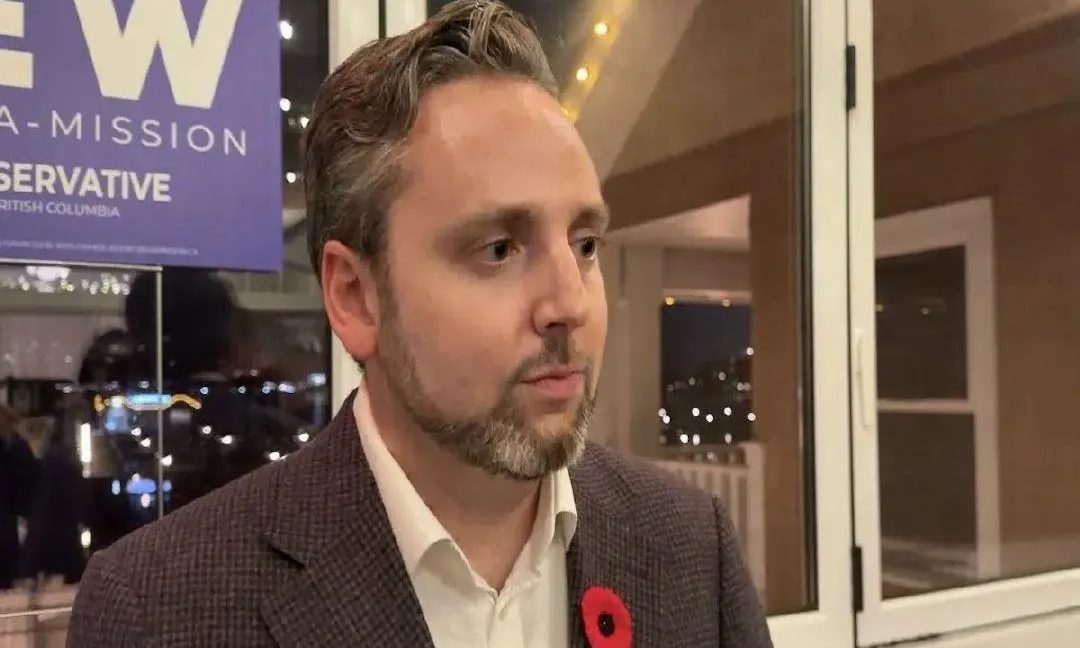
Big Blue Wave Ends Nearly a Decade of NDP Rule
Voters in Kelowna-Mission have chosen incumbent Gavin Dew to return as their MLA, helping propel the Conservative Party to a landslide majority victory across British Columbia on Oct. 24. Over one million voters participated in the election, effectively ending nine years of NDP governance under Premier David Eby, whose decision to call an early fall election backfired.
Dew, who secured nearly 60 per cent of the vote in his riding after first being elected in 2024, celebrated the result alongside family and supporters. He attributed the party’s rapid integration and strong campaign performance to leader Lorne Doerkson, who is projected to become the province’s next premier.
Local Priorities and Economic Focus
With the Conservatives moving from opposition into government, Dew emphasized that his focus will pivot toward delivering tangible improvements. His key local agenda includes opening unused spaces at Kelowna General Hospital, expanding mandatory care programs at Oliver’s Okanagan Correctional Centre, advancing regional transportation projects, and boosting overall economic recovery.
Addressing local economic pressures is a top priority, as Kelowna has recorded the highest unemployment rate among major Canadian cities for five consecutive months. Dew noted that a Conservative administration plans to target growth across key sectors such as tourism, housing, aerospace, and the local wine industry.
Preparing for Governance
Reflecting on the strong mandate received both locally and provincially, Dew expressed optimism as the new Conservative caucus prepares for its initial meetings. He indicated that transitioning into government will allow the party to take direct action on healthcare, public safety, and economic renewal for residents across the province.
BC STORIES
Why B.C.’s Latest Election Results Are Sparking Renewed Calls for Voting Reform
B.C. Conservatives won a majority of seats on Oct. 24 despite getting 48.1% of votes, prompting calls from Fair Vote Canada for voting system reform.
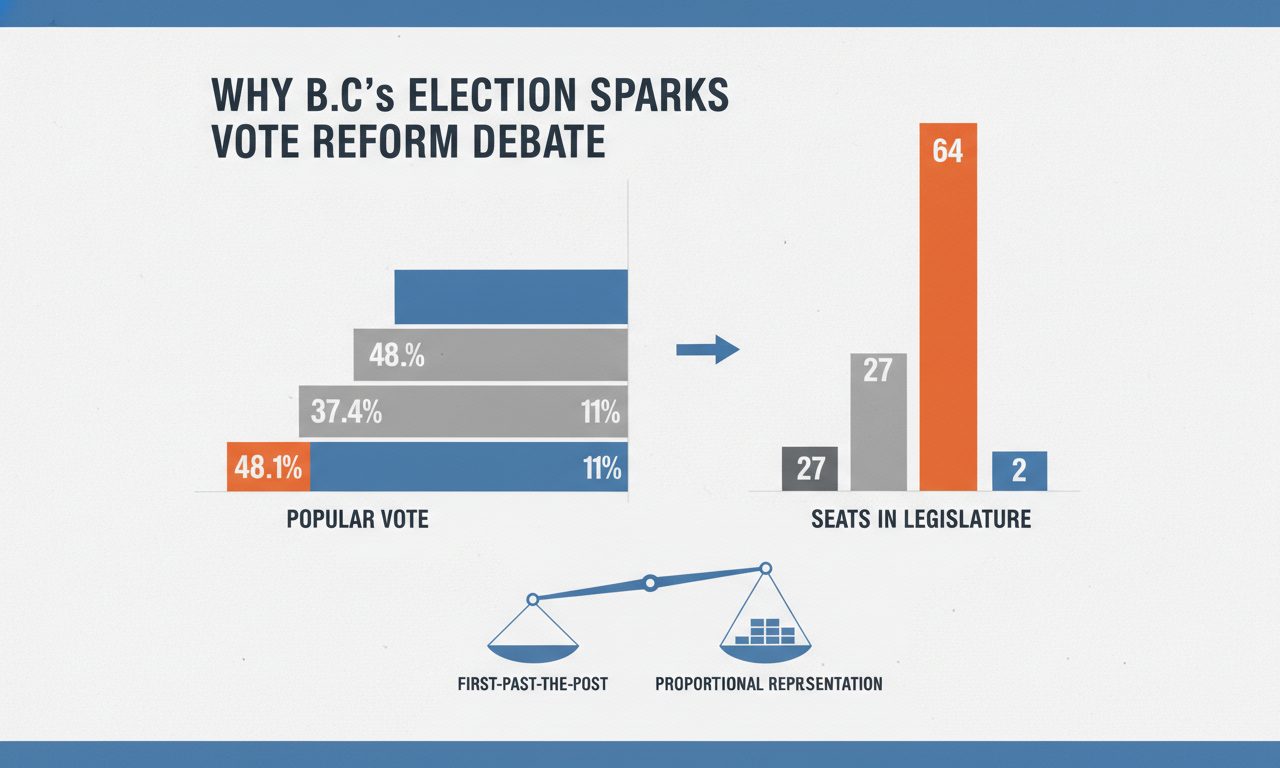
Majority Seat Yield Under First-Past-the-Post
The Oct. 24 British Columbia provincial election concluded with the Conservatives capturing a majority government, securing 64 of the 93 seats in the legislature. The BC New Democratic Party won 27 seats, while the BC Greens won two. However, fewer than half of total voters chose a Conservative candidate, as the party received 48.1 per cent of the popular vote.
By comparison, the BC NDP received 37.4 per cent of the vote, and the BC Greens earned 11 per cent. Additional parties shared the remaining 3.5 per cent of votes, with Centre BC taking 1.6 per cent and OneBC securing 1.5 per cent. Because British Columbia utilizes the first-past-the-post voting system, political parties can secure a majority of legislative seats without obtaining a majority of individual votes.
Advocates Push for Proportional Representation
In response to the outcome, advocacy group Fair Vote Canada renewed its critique of the current electoral model, urging a shift to proportional representation. The organization noted that over 80 per cent of Western democracies employ proportional systems.
“In many countries with proportional representation, cooperation across the aisle is the norm and better long-term outcomes on the economy, health and the environment are the result,” Fair Vote Canada said in a statement. “For the sake of all BC voters, it’s time to put proportional representation back on the agenda.”
Fair Vote Canada pointed to a 2025 poll indicating that 75 per cent of British Columbians back the adoption of a proportional voting model.
Federal Pattern Shows Similar Disparity
Discrepancies between vote share and seat counts also regularly occur in Canadian federal elections. During the 2019 federal election, Justin Trudeau’s Liberals won 157 seats with 33.12 per cent of the vote to form a minority government, despite the Conservatives winning 34.34 per cent of the popular vote and 121 seats.
A similar outcome occurred in 2021 when the federal Liberals retained a minority government by winning 160 seats with 32.62 per cent voter support, while the federal Conservatives won 119 seats with 33.74 per cent of the vote.

Why the Early Election Gamble Backfired on the NDP

Why Fake Signs Targeted a Small Green Party Campaign on B.C. Election Eve

Why the Conservatives’ Majority Win in Kelowna-Mission Signals Big Changes for Local Healthcare and Economy

Why B.C.’s Latest Election Results Are Sparking Renewed Calls for Voting Reform
Your Current 3 Day Forecast — October 27, 2026
Why First Nations Leaders Are Gathering in Ottawa to Push Back on Fast-Tracked Resource Projects

Opinion: John Rustad Has to Go

B.C. Supreme Court Grants Cowichan Tribes Title to Historic Richmond Lands and Fishing Rights

Vancouver Canucks Gear Up for a Make-or-Break 2025–26 Season

BC Ferries Sparks Outcry Over Contract with Chinese Shipyard

Kamloops Blazers Announce Off-Season Changes Ahead of 2025–26 Season

A Taste of Autumn: Fall Okanagan Wine Festival 2025
-

 SPORTS5 days ago
Why B.C. Lions Starters Are Resting as the Regular Season Concludes Against Winnipeg
-

 BC STORIES5 days ago
BC Conservatives Promise Forestry Overhaul to Revive Jobs as NDP Points to Millions in Existing Investment
-

 OPINIONS5 days ago
How Minor Parties and Strategic Balloting Could Shift the Upcoming B.C. Election
-

 BC STORIES6 days ago
Police Seek Witnesses After Fatal Wrong-Way Collision Near Merritt
-
5 days ago
Your Current 3 Day Forecast — October 22, 2026
-
6 days ago
Your Current 3 Day Forecast — October 21, 2026
-
NATIONAL STORIES6 days ago
Highland Valley Copper Workers Could Strike Saturday as Union Issues Notice
-

 HEALTH6 days ago
Coquihalla Highway Reopens Near Merritt Following Morning Crash That Injured Four